
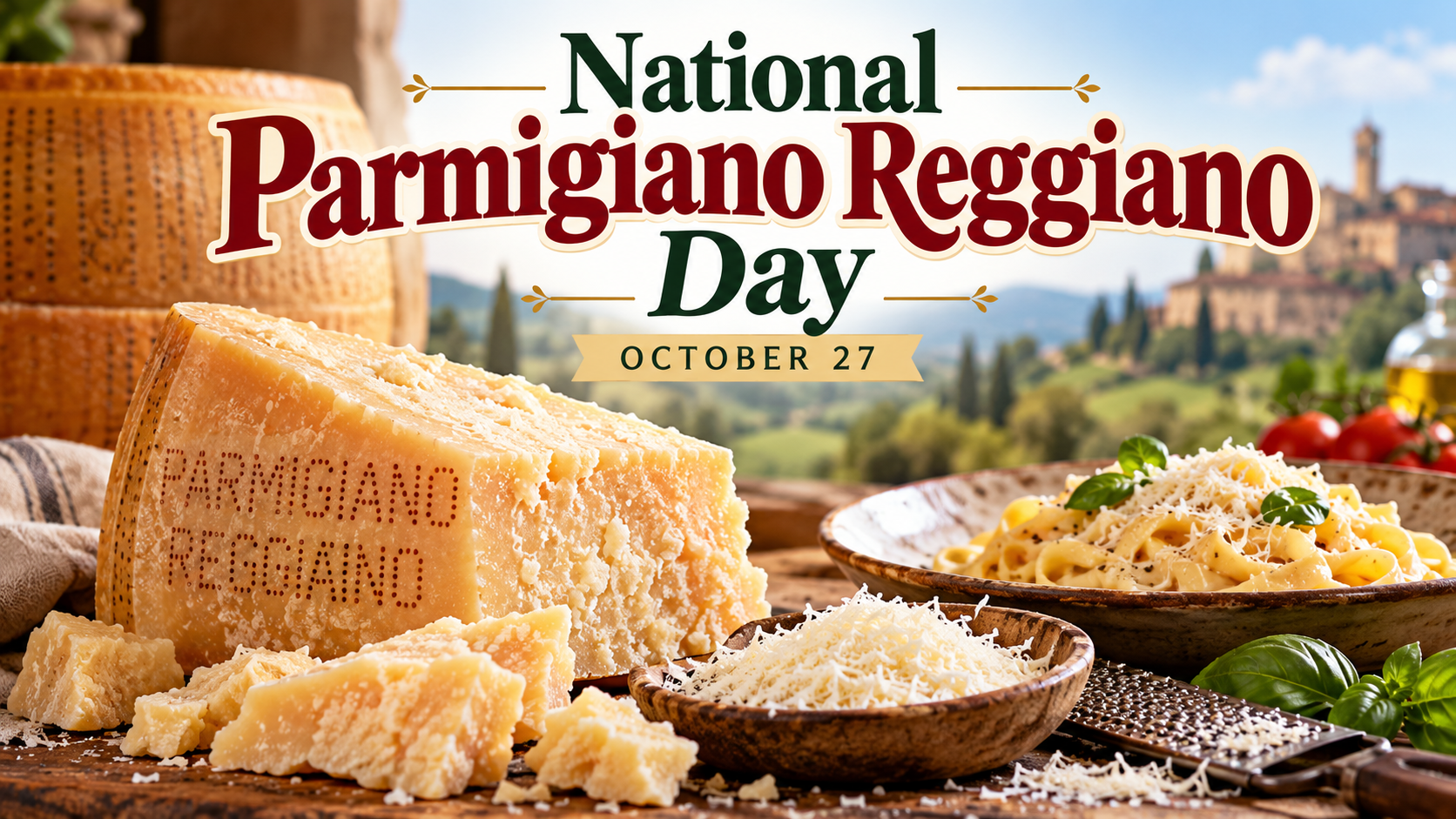
Few foods represent the rich culinary traditions of Italy quite like Parmigiano Reggiano. Known around the world as the King of Cheeses, this extraordinary Italian cheese has been enjoyed for centuries, bringing incredible flavor, texture, and tradition to countless dishes.
Every year on October 27, National Parmigiano Reggiano Day offers food lovers an opportunity to celebrate one of the world’s most respected cheeses. From its centuries-old production methods to its unmistakable nutty flavor, Parmigiano Reggiano represents much more than an ingredient. It is a symbol of craftsmanship, heritage, patience, and culinary excellence.
Whether you enjoy it freshly grated over pasta, shaved onto a salad, stirred into creamy risotto, or eaten by itself, Parmigiano Reggiano has a way of transforming ordinary meals into something memorable.
Today is the perfect opportunity to learn about its fascinating history, discover what makes it special, and explore delicious ways to enjoy this legendary cheese.
What Is National Parmigiano Reggiano Day?
National Parmigiano Reggiano Day is observed on October 27 to celebrate the history, craftsmanship, and culinary importance of authentic Parmigiano Reggiano cheese.
The date is associated with the devastating earthquakes that struck the Emilia-Romagna region of Italy in 2012, damaging cheese production facilities and destroying or displacing thousands of aging cheese wheels.
The disaster threatened the livelihoods of cheesemakers whose families had preserved traditional production methods for generations.
In response, consumers, chefs, restaurants, and supporters helped raise awareness and support the affected producers.
The observance became an opportunity to recognize not only the cheese itself but also the resilience of the people who produce it.
Today, the celebration honors the extraordinary dedication required to create Parmigiano Reggiano and encourages people to appreciate authentic Italian food traditions.
The History of Parmigiano Reggiano
The history of Parmigiano Reggiano stretches back nearly 900 years.
Its origins are generally traced to the Middle Ages, when Benedictine and Cistercian monks in northern Italy developed methods for producing large wheels of cheese that could be preserved for extended periods.
During this period, monasteries maintained agricultural lands, raised livestock, and experimented with food preservation techniques.
Milk was an important agricultural resource, but without modern refrigeration, preserving it presented challenges.
By transforming fresh milk into hard, aged cheese, cheesemakers created a nutritious food that could be stored, transported, and traded.
Over time, the cheese became increasingly popular throughout Italy and beyond.
Historical references to the cheese appear in medieval literature, including Giovanni Boccaccio’s The Decameron, written during the 14th century.
As trade expanded, Parmigiano Reggiano became an important regional product.
Despite advances in technology, many of the essential production techniques have remained remarkably consistent.
Modern producers continue to rely on traditional ingredients, careful craftsmanship, and lengthy aging periods to develop the cheese’s distinctive characteristics.
This connection between past and present makes Parmigiano Reggiano a remarkable example of culinary heritage.
Why Is Parmigiano Reggiano Called the King of Cheeses?
Parmigiano Reggiano has earned its famous nickname because of its exceptional quality, complex flavor, and extraordinary versatility.
Unlike many mass-produced cheeses, authentic Parmigiano Reggiano must follow strict production standards.
It is made using only three ingredients:
-
Cow’s milk
-
Salt
-
Rennet
No added preservatives are permitted under its traditional production specifications.
The cheese must also be produced within a designated geographical area of northern Italy.
Its production region includes Parma, Reggio Emilia, Modena, parts of Bologna west of the Reno River, and parts of Mantua east of the Po River.
These geographical restrictions help preserve the agricultural conditions, production methods, and regional traditions that define authentic Parmigiano Reggiano.
Every wheel must undergo inspection before receiving its official quality markings.
The combination of traditional methods, geographical authenticity, and rigorous quality control helps explain why Parmigiano Reggiano commands such respect throughout the culinary world.
How Parmigiano Reggiano Is Made
Producing authentic Parmigiano Reggiano is a fascinating process requiring skill, patience, and attention to detail.
Fresh Milk Collection
The process begins with fresh cow’s milk collected from farms operating under specific production requirements.
Evening milk is traditionally allowed to rest so that some of its cream naturally rises to the surface.
This partially skimmed milk is combined with whole milk from the morning milking.
The combination helps achieve the proper balance of fat and protein.
Heating and Curd Formation
The milk is poured into large copper-lined vats.
Natural whey starter cultures and calf rennet are added to begin fermentation and coagulation.
The curd is then broken into tiny granules and carefully heated.
As the curds settle, they form a compact mass at the bottom of the vat.
Forming the Cheese Wheels
Cheesemakers lift the curd mass from the vat and divide it into portions that will become individual wheels.
The cheese is placed into molds that establish its recognizable round shape.
During this stage, identifying markings are applied to help trace the cheese to its producer and production date.
Salting
After molding, the wheels are placed in a saltwater brine.
The salt contributes to flavor development, preservation, and the formation of the cheese’s natural rind.
Aging
Perhaps the most important stage is maturation.
Parmigiano Reggiano must be aged for at least 12 months, although many wheels mature for 24, 30, or even 36 months or longer.
During this period, enzymes gradually break down proteins and fats, producing increasingly complex flavors and textures.
The result is a firm, granular cheese with a rich aroma and unmistakable character.
What Makes Parmigiano Reggiano Different From Parmesan?
Many shoppers assume that Parmigiano Reggiano and Parmesan are exactly the same.
However, there are important distinctions.
Parmigiano Reggiano is a protected geographical product within the European Union.
To carry the authentic name, cheese must meet specific production requirements and originate from its designated Italian region.
In the United States, the word Parmesan can also appear on cheeses produced outside Italy.
These products may resemble Parmigiano Reggiano, but their ingredients, aging periods, manufacturing methods, and flavors can vary considerably.
Authentic Parmigiano Reggiano is usually recognized by the dotted lettering stamped repeatedly around its rind.
When shopping, look for the words “Parmigiano Reggiano” and the official protected designation markings.
Purchasing a wedge cut from a whole wheel can also help you experience its characteristic flavor and texture.
The Flavor of Parmigiano Reggiano
One of the most fascinating qualities of Parmigiano Reggiano is how its flavor changes as it ages.
Younger cheese tends to have a milder, more delicate character.
As maturation continues, the cheese develops deeper savory flavors, a firmer texture, and a more pronounced aroma.
12 to 18 Months
Younger Parmigiano Reggiano typically has a relatively mild, balanced flavor.
It may offer notes of fresh milk, yogurt, butter, and delicate fruit.
Its texture is slightly softer than that of older wheels.
This cheese works beautifully with fresh fruit, vegetables, and lighter dishes.
24 Months
At approximately two years of aging, Parmigiano Reggiano develops a more pronounced savory character.
Nutty flavors become increasingly noticeable, while the texture grows more crumbly and granular.
This is a versatile age for grating over pasta, adding to risotto, or enjoying with bread and fruit.
30 to 36 Months and Beyond
Longer-aged Parmigiano Reggiano offers an intense and complex flavor.
You may notice roasted nuts, broth-like savory notes, and a lingering richness.
The texture becomes increasingly crystalline and crumbly.
Those tiny crunchy crystals are a natural result of maturation and are often associated with high-quality aged cheese.
For cheese enthusiasts, tasting several ages side by side is an excellent way to appreciate the transformation.
The Nutritional Benefits of Parmigiano Reggiano
Parmigiano Reggiano is valued not only for its flavor but also for its nutritional qualities.
Because it is a concentrated dairy product, it provides several important nutrients.
Protein: Parmigiano Reggiano contains substantial amounts of protein, which supports the maintenance and repair of body tissues.
Calcium: It is an excellent source of calcium, an essential mineral for maintaining strong bones and teeth.
Phosphorus: This mineral works alongside calcium to support healthy bones and other important bodily functions.
Vitamin B12: Parmigiano Reggiano provides vitamin B12, which supports normal nerve function and red blood cell production.
Very low lactose content: The traditional cheesemaking and lengthy aging process remove or break down most of the lactose. Authentic Parmigiano Reggiano is generally considered naturally lactose-free, although people with milk allergies must still avoid it.
Despite these benefits, Parmigiano Reggiano is also relatively high in sodium and saturated fat.
Enjoying moderate portions as part of a balanced diet is a sensible approach.
A small amount can provide considerable flavor, making it possible to enhance a meal without using large quantities.
Delicious Ways to Celebrate National Parmigiano Reggiano Day
One of the best things about Parmigiano Reggiano is its incredible versatility.
Whether you are preparing a traditional Italian dinner or experimenting with new recipes, there are countless ways to enjoy it.
Make Fresh Pasta With Parmigiano Reggiano
Few combinations are more satisfying than freshly cooked pasta and authentic Parmigiano Reggiano.
Try tossing spaghetti, fettuccine, or linguine with butter, a little reserved pasta water, and freshly grated cheese.
The ingredients combine to create a rich, silky sauce without requiring heavy cream.
Finish with freshly cracked black pepper for an especially delicious meal.
Prepare Creamy Parmesan Risotto
Risotto is another classic dish that showcases Parmigiano Reggiano.
Arborio or Carnaroli rice is slowly cooked with warm broth until it develops a creamy consistency.
Butter and freshly grated Parmigiano Reggiano are stirred in near the end of cooking.
The cheese adds savory depth and helps create a luxurious texture.
For additional flavor, include mushrooms, roasted garlic, or seasonal vegetables.
Create a Parmigiano Reggiano Cheese Board
A simple cheese board allows the flavor of Parmigiano Reggiano to take center stage.
Serve bite-sized pieces alongside fresh grapes, sliced pears, apples, walnuts, almonds, and crusty bread.
A small drizzle of aged balsamic vinegar can complement the cheese’s savory character.
For an especially interesting tasting experience, include Parmigiano Reggiano aged for different lengths of time.
Add It to Roasted Vegetables
Parmigiano Reggiano pairs beautifully with roasted vegetables.
Try sprinkling freshly grated cheese over broccoli, cauliflower, Brussels sprouts, asparagus, or potatoes.
The cheese adds savory richness and can create a lightly crisp topping when heated.
Make Homemade Parmesan Crisps
For a simple snack, place small mounds of freshly grated Parmigiano Reggiano on a parchment-lined baking sheet.
Flatten them slightly and bake at 400°F for approximately 5 to 7 minutes, watching carefully until golden.
Allow the crisps to cool before removing them.
They are delicious by themselves or served with soups and salads.
Enjoy Parmigiano Reggiano by Itself
Sometimes the simplest preparation is the best.
Break a wedge of authentic Parmigiano Reggiano into small, irregular pieces and enjoy it at room temperature.
This allows its aroma, texture, and complex flavors to become more noticeable.
Pair it with fresh fruit or a small amount of honey for a delightful contrast between sweet and savory.
Easy Parmigiano Reggiano Pasta Recipe
If you want a simple dish to prepare for National Parmigiano Reggiano Day, this creamy pasta recipe is an excellent choice.
Prep time: 10 minutes | Cook time: 15 minutes | Servings: 4
Ingredients
-
12 ounces spaghetti or fettuccine
-
1 cup finely grated Parmigiano Reggiano
-
4 tablespoons unsalted butter
-
½ teaspoon freshly ground black pepper
-
½ to 1 cup reserved pasta cooking water, as needed
-
Salt for the pasta water
-
Fresh parsley for garnish, optional
Instructions
1. Bring a large pot of water to a boil and season lightly with salt.
2. Add the pasta and cook according to the package directions until al dente.
3. Before draining, reserve approximately 1 cup of the starchy pasta cooking water.
4. Melt the butter in a large skillet over low heat and add the black pepper.
5. Add the drained pasta to the skillet and toss until evenly coated.
6. Remove the skillet from direct heat. Gradually add the finely grated Parmigiano Reggiano, alternating with small amounts of warm pasta water.
7. Toss continuously until the cheese melts into a smooth, creamy sauce. Add more pasta water as needed.
8. Serve immediately, topped with additional Parmigiano Reggiano and fresh parsley if desired.
The secret to this recipe is using freshly grated cheese and controlling the heat.
Excessive heat can cause the cheese to clump rather than blend smoothly into the sauce.
This simple preparation highlights why Parmigiano Reggiano has remained a beloved ingredient for generations.
Interesting Facts About Parmigiano Reggiano
There is much more to this famous cheese than its delicious flavor.
It takes a remarkable amount of milk to make one wheel. A typical wheel requires approximately 550 liters of milk.
Each wheel weighs around 40 kilograms. That is approximately 88 pounds, although individual wheels vary.
The cheese is inspected before official certification. Specialized inspectors examine the wheels, including their internal structure, using traditional tools.
Its rind is edible. After cleaning the rind properly, you can add pieces to soups, stews, and sauces to contribute extra savory flavor. Remove any remaining tough rind before serving if necessary.
Parmigiano Reggiano is never truly mass-produced in the ordinary sense. Although production occurs on a substantial scale, strict rules preserve traditional techniques and regional identity.
Its flavor continues developing during maturation. Extended aging produces complex aromas and a distinctive granular texture.
The name identifies a specific place and tradition. Authentic Parmigiano Reggiano is inseparable from the Italian region where it is produced.
These details reveal why the cheese is considered both an agricultural product and an important part of Italian cultural heritage.
How to Store Parmigiano Reggiano Properly
Proper storage helps preserve the cheese’s flavor and prevent unnecessary waste.
For best results, purchase Parmigiano Reggiano in wedges rather than buying large quantities of pre-grated cheese.
Once opened, wrap the wedge in cheese paper or another food-safe wrapping suitable for refrigerated cheese storage.
Place it in a covered container or resealable bag to help prevent excessive drying and absorption of other refrigerator odors.
Store the cheese in the refrigerator, ideally in a section with relatively stable temperatures.
For the best flavor, remove the portion you plan to eat shortly before serving and allow it to warm slightly.
If you need grated cheese for cooking, grate only the amount required.
Freshly grated Parmigiano Reggiano generally offers better flavor and texture than cheese that has been sitting in an open container for extended periods.
You can also save clean rind pieces in the freezer for later use in soups and sauces.
Reducing waste is another way to appreciate the time, resources, and craftsmanship invested in producing every wheel.
The Cultural Importance of Parmigiano Reggiano
Food has always been an important part of cultural identity.
Recipes, ingredients, and cooking techniques are often passed from one generation to another, preserving family memories and regional traditions.
Parmigiano Reggiano is a powerful example of this connection.
For centuries, families in northern Italy have depended on dairy farming and cheesemaking as sources of livelihood.
The process involves farmers, milk producers, cheesemakers, aging specialists, inspectors, distributors, and countless others.
Each wheel represents the combined efforts of an entire community.
In Italian kitchens, Parmigiano Reggiano is more than a finishing ingredient.
It appears in traditional pasta dishes, soups, risottos, stuffed pastas, and numerous regional specialties.
Its presence at the dinner table reflects a long-standing appreciation for quality ingredients and carefully prepared meals.
When people celebrate National Parmigiano Reggiano Day, they also recognize the importance of preserving culinary traditions in an increasingly fast-paced world.
Why Supporting Authentic Cheesemakers Matters
Behind every authentic wheel of Parmigiano Reggiano are people who have dedicated their lives to preserving a demanding craft.
Producing this cheese requires substantial investments of time, labor, milk, equipment, and storage space.
Unlike products that can be manufactured and sold almost immediately, Parmigiano Reggiano must mature for at least a year before it can be marketed under its protected name.
During that time, producers must carefully maintain the cheese and monitor its development.
Natural disasters, economic uncertainty, rising production costs, and changes in consumer behavior can create serious challenges for traditional producers.
The 2012 earthquakes demonstrated how vulnerable agricultural communities can become when unexpected disasters strike.
Supporting authentic products helps sustain the farms, cheesemakers, and local economies that maintain these traditions.
It also encourages the preservation of food production methods that might otherwise disappear.
Choosing authentic Parmigiano Reggiano is one small way consumers can support a centuries-old culinary heritage.
How to Celebrate National Parmigiano Reggiano Day on October 27
You do not need to be a professional chef or an expert in Italian cuisine to enjoy this delicious food holiday.
Start by preparing a favorite pasta dish using freshly grated Parmigiano Reggiano.
Visit a specialty cheese shop or grocery store and look for an authentic wedge with the official markings.
Try a cheese tasting with friends or family, comparing younger and longer-aged varieties.
Explore traditional Italian recipes that feature Parmigiano Reggiano, such as risotto, lasagna, tortellini, or vegetable soups.
You could also prepare a homemade meal and invite loved ones to share it.
Food celebrations are often about more than the ingredients themselves.
They create opportunities to slow down, enjoy a delicious meal, and spend meaningful time with the people around us.
Even something as simple as a bowl of pasta topped with freshly grated Parmigiano Reggiano can become a memorable experience when shared with others.
The Importance of Preserving Food Traditions
Modern life often encourages convenience, speed, and mass production.
While these developments have made food more accessible, they can sometimes overshadow the value of traditional craftsmanship.
Parmigiano Reggiano reminds us that certain things cannot be rushed.
Its distinctive flavor develops through patience, experience, and a careful relationship between people and their environment.
Every wheel tells a story that began long before it reached the grocery store.
It represents farmers caring for their animals, cheesemakers following precise methods, and generations of knowledge passed from one person to another.
Preserving these traditions helps maintain cultural diversity and allows future generations to experience foods with genuine historical roots.
National Parmigiano Reggiano Day encourages us to appreciate not only what we eat but also the people, places, and traditions that make our food possible.
Final Thoughts: Celebrating the King of Cheeses
National Parmigiano Reggiano Day on October 27 is a celebration of flavor, history, craftsmanship, and resilience.
For nearly nine centuries, this extraordinary cheese has remained an important part of Italian culinary culture.
Its distinctive flavor, traditional production methods, and remarkable versatility have earned it a respected place in kitchens around the world.
From simple pasta dishes to elaborate Italian meals, Parmigiano Reggiano demonstrates how one exceptional ingredient can transform an entire recipe.
But perhaps the greatest lesson behind this celebration is the importance of appreciating the work and dedication that go into creating something truly special.
Great food often requires patience, tradition, and people who care deeply about their craft.
So, on October 27, take a moment to enjoy a delicious dish featuring authentic Parmigiano Reggiano.
Whether you prepare a homemade Italian dinner, share a cheese board with friends, or simply sprinkle freshly grated cheese over your favorite pasta, celebrate the history and craftsmanship behind every bite.
After all, the King of Cheeses deserves a day of its own.
Happy National Parmigiano Reggiano Day!
What is your favorite way to enjoy Parmigiano Reggiano — freshly grated over pasta, melted into a creamy dish, or served on a cheese board?



Leave a ReplyCancel reply