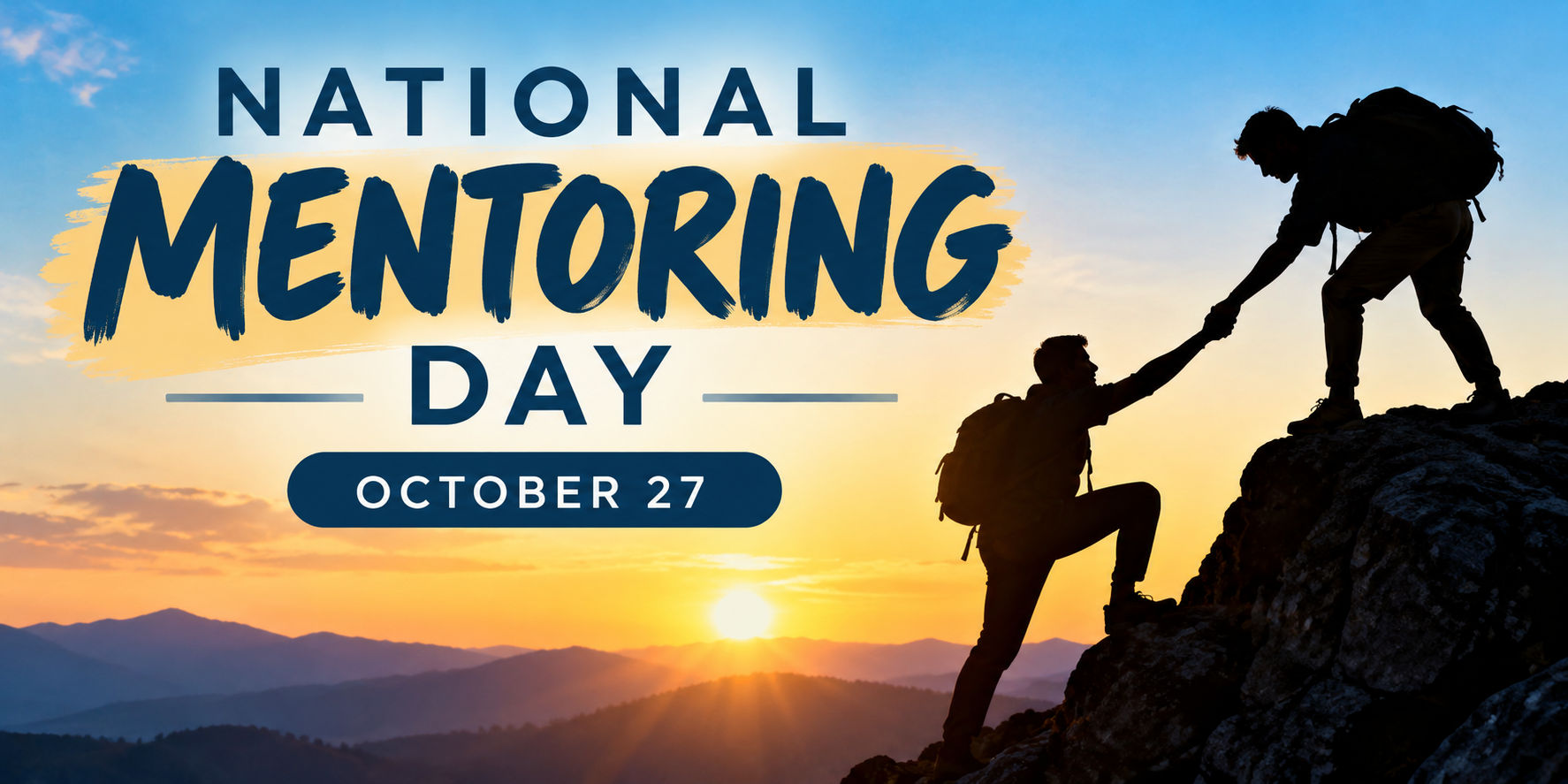
Sometimes, all it takes is one person to change the direction of someone else’s life.
One person who believes in you when you struggle to believe in yourself. One person who offers encouragement when life becomes overwhelming. One person who shares their experiences, listens without judgment, and reminds you that your dreams are worth pursuing.
That person may be a mentor.
Every year on October 27, National Mentoring Day celebrates the extraordinary impact mentors have on individuals, families, workplaces, schools, and communities. It is a day dedicated to recognizing those who generously share their knowledge, experience, wisdom, and time to help others grow.
Mentorship is about much more than teaching someone how to succeed professionally or academically. It is about building relationships, developing confidence, providing emotional support, and helping people recognize their potential.
Whether it is a teacher encouraging a struggling student, a coach helping a young athlete develop confidence, a business professional guiding someone beginning their career, or an experienced individual helping another person navigate life’s challenges, mentoring can create lasting change.
National Mentoring Day reminds us that we all have something valuable to offer someone else.
You do not have to be wealthy, famous, highly educated, or professionally successful to become a mentor. Sometimes, the most powerful lessons come from ordinary people who have experienced extraordinary challenges.
And sometimes, simply being there for someone can make all the difference.
What Is National Mentoring Day?
National Mentoring Day is observed annually on October 27 to celebrate mentorship and encourage people to recognize the importance of positive guidance and supportive relationships.
The observance was founded in the United Kingdom in 2014 by Chelsey Baker to raise awareness about the benefits of mentoring and encourage greater participation in mentoring relationships.
Although it began in the United Kingdom, its message is relevant to communities around the world.
The day highlights the contributions of mentors across many areas of life, including education, business, personal development, community service, and youth development.
Its central message is simple: mentoring matters.
Mentoring relationships can help individuals develop new skills, overcome obstacles, make informed decisions, and gain confidence in their abilities.
For many people, a mentor becomes someone they remember throughout their lives.
National Mentoring Day encourages individuals and organizations to celebrate mentors, share mentoring experiences, and create opportunities for more people to benefit from meaningful guidance.
Why Mentoring Is So Important
Everyone encounters moments when they need advice, reassurance, or someone who understands what they are experiencing.
Life does not come with an instruction manual.
We learn through experiences, mistakes, relationships, and the wisdom of those who have traveled similar paths before us.
Mentoring provides an opportunity to learn from someone else’s experiences while developing the confidence to create our own future.
Mentors Help Build Confidence
One of the greatest gifts a mentor can give another person is confidence.
Many people struggle with self-doubt, fear of failure, or uncertainty about their abilities.
They may have dreams but lack the courage to pursue them.
A mentor can help change that perspective.
Through encouragement, constructive feedback, and genuine support, mentors help individuals recognize strengths they may not see in themselves.
Sometimes, hearing someone say, “I believe you can do this,” becomes the encouragement a person needs to take the next step.
Confidence does not always develop overnight. It often grows through consistent support and small accomplishments.
A mentor helps celebrate those accomplishments while encouraging continued progress.
Mentors Share Valuable Life Experiences
Experience is one of life’s greatest teachers.
However, learning every lesson through personal mistakes can be difficult and sometimes costly.
Mentors provide valuable insight by sharing what they have learned through their own successes, failures, and challenges.
They can explain what worked, what did not work, and what they might do differently.
This knowledge can help others make better decisions and avoid unnecessary obstacles.
A mentor does not have to possess every answer.
Sometimes, the greatest wisdom comes from admitting past mistakes and explaining what those experiences taught them.
Mentors Provide Encouragement During Difficult Times
Life can become overwhelming.
People experience disappointment, rejection, grief, financial difficulties, career setbacks, and personal struggles.
During these moments, having someone willing to listen can provide meaningful comfort.
A mentor can offer perspective, encouragement, and reassurance that difficult circumstances do not have to determine someone’s future.
They may not be able to solve every problem, but they can help someone feel less alone while working through challenges.
The presence of a caring and dependable person can make an enormous difference.
Mentors Help People Discover Their Potential
Sometimes, people underestimate what they are capable of achieving.
They become comfortable with limitations they have placed upon themselves or accepted from others.
A good mentor challenges those limitations.
They encourage individuals to explore new possibilities, develop their talents, and pursue meaningful goals.
Mentors help people see opportunities where they previously saw obstacles.
They remind us that growth often begins when we become willing to step outside our comfort zones.
The Different Types of Mentors
Mentorship can take many forms, and each type provides unique benefits.
Educational Mentors
Teachers, professors, tutors, and educational volunteers often serve as mentors.
They help students develop academic skills, discover interests, and prepare for future opportunities.
A teacher who recognizes a student’s potential can influence that student’s confidence and future direction.
Educational mentors often provide encouragement that extends far beyond the classroom.
Career and Professional Mentors
Professional mentors help individuals navigate employment, career advancement, workplace challenges, and professional development.
They may provide guidance about building resumes, preparing for interviews, improving communication skills, or pursuing leadership opportunities.
Experienced professionals can also introduce mentees to new perspectives and opportunities within their industries.
A strong professional mentoring relationship benefits both individuals through shared learning and professional growth.
Business and Entrepreneurial Mentors
Starting or growing a business can be challenging.
Entrepreneurs often face difficult decisions involving finances, marketing, customer relationships, leadership, and long-term planning.
Business mentors provide insight based on their own experiences.
They can help aspiring entrepreneurs develop realistic goals, recognize opportunities, and avoid common mistakes.
Perhaps most importantly, they can provide encouragement when business challenges become discouraging.
Youth Mentors
Young people often benefit from positive adult role models who provide stability, encouragement, and guidance.
Youth mentors may be coaches, teachers, community volunteers, relatives, or professionals participating in structured mentoring programs.
These relationships can help young people build confidence, develop communication skills, and make positive decisions.
For a young person facing difficult circumstances, a dependable mentor may become an important source of support.
Personal Development Mentors
Personal development mentors focus on helping individuals improve their habits, confidence, communication, relationships, and overall direction in life.
They may encourage goal-setting, accountability, self-reflection, and personal growth.
These mentors remind people that improving themselves is an ongoing journey rather than a destination.
Community and Volunteer Mentors
Community organizations, nonprofit groups, and volunteer programs frequently bring mentors and mentees together.
These relationships can strengthen neighborhoods, encourage community involvement, and provide opportunities for people from different backgrounds to learn from one another.
Community mentorship demonstrates how sharing time and knowledge can create positive change beyond a single individual.
The Difference Between a Mentor and a Role Model
Although mentors and role models can have similar influences, they are not necessarily the same.
A role model is someone whose actions, achievements, character, or values inspire others.
People may admire role models without ever meeting them.
A mentor, however, typically develops a direct relationship with someone they are guiding.
Mentors listen, communicate, provide feedback, and offer individualized support.
A person can be both a mentor and a role model.
For example, a coach may inspire young athletes through personal discipline while also providing direct guidance about teamwork, perseverance, and responsibility.
Both roles are valuable.
What matters most is the positive influence someone has on another person’s life.
How Mentoring Can Change a Young Person’s Life
Childhood and adolescence are important periods of emotional, social, and personal development.
Young people are learning who they are, what they believe, and what they hope to become.
Unfortunately, not every young person has consistent access to positive guidance.
Some experience family difficulties, academic struggles, bullying, loneliness, or uncertainty about their future.
A caring mentor can provide another source of stability and encouragement.
Mentors can help young people develop important life skills, including communication, responsibility, decision-making, problem-solving, and perseverance.
They can also encourage healthy interests and positive community involvement.
Imagine a teenager who believes they will never accomplish anything meaningful.
Perhaps they struggle academically or feel overlooked by the people around them.
Then someone takes an interest in their life.
That person begins asking questions, listening to their concerns, and encouraging their interests.
Over time, the teenager starts developing confidence.
They begin setting goals and recognizing possibilities they had never considered.
Not every mentoring relationship produces dramatic results, and mentoring cannot replace all the other support a young person may need.
However, consistent encouragement and a trustworthy relationship can become meaningful parts of a young person’s development.
Sometimes, a mentor helps plant the seeds of confidence that continue growing for years.
Mentorship Is Not Just About Success
When people discuss mentoring, they often focus on professional achievements, educational accomplishments, and financial success.
While these outcomes can be valuable, mentorship involves much more.
Some of life’s most important lessons have nothing to do with money, careers, or recognition.
Mentors can teach compassion, patience, kindness, forgiveness, responsibility, and resilience.
They can help people understand the importance of treating others with dignity and respect.
They can demonstrate how to handle disappointment without losing hope.
They can also show others how to remain humble during success.
A mentor’s greatest accomplishment may not be helping someone become wealthy or professionally successful.
It may be helping someone become a kinder, more confident, and more compassionate human being.
That kind of influence can continue through generations.
How Personal Struggles Can Make Someone a Powerful Mentor
Some of the most meaningful guidance comes from people who have experienced tremendous hardship.
Individuals who have endured grief, loss, betrayal, financial struggles, illness, or other life-changing challenges often develop perspectives that cannot be learned from textbooks.
They understand what it feels like to struggle.
They know that progress is not always easy and that healing does not follow a predictable timeline.
Their experiences may help them connect with others facing similar circumstances.
Someone who has experienced grief, for example, may understand why certain days are more difficult than others.
They may recognize that people sometimes need someone to listen rather than offer solutions.
A person who has overcome professional setbacks may understand the fear of starting over.
Someone who has experienced rejection may recognize how deeply it can affect another person’s confidence.
Our struggles do not automatically make us mentors, but the lessons we learn from them can become valuable gifts when shared with compassion.
We do not have to pretend that everything worked out perfectly.
Sometimes, the most powerful message we can offer is that life can be difficult, progress can be slow, and there is still value in continuing forward.
Mentorship allows people to transform personal experiences into opportunities to help others.
The Importance of Listening in Mentorship
One of the most overlooked qualities of an effective mentor is the ability to listen.
People often assume mentors must provide advice, instructions, and answers.
However, good mentorship begins with understanding.
Before offering guidance, mentors should take time to learn about the person they are helping.
What are their goals?
What challenges are they facing?
What motivates them?
What concerns or fears are holding them back?
Listening creates trust.
It communicates that someone’s thoughts, feelings, and experiences matter.
A mentor who listens carefully can provide more thoughtful and relevant guidance.
Sometimes, people already know what they need to do but lack the confidence to move forward.
Having someone listen without judgment can help them organize their thoughts and recognize their next steps.
Effective mentors understand that they are not there to control another person’s life.
Their purpose is to provide support while encouraging independence and personal responsibility.
How to Become a Good Mentor
You do not need special recognition or an impressive professional title to make a positive difference.
Becoming a good mentor begins with a genuine willingness to help.
Be Consistent
Trust develops through dependable actions.
If you commit to mentoring someone, make an effort to remain consistent with communication and scheduled meetings.
Keeping promises demonstrates respect and reliability.
Listen Without Judgment
Allow people to share their concerns, experiences, and ideas without immediately criticizing them.
Create an environment where honest conversations are welcomed.
Share Experiences, Not Just Instructions
Explain what you have learned through your own experiences.
Discuss both successes and mistakes.
Personal stories can provide meaningful lessons while reminding others that nobody has everything figured out.
Encourage Independent Thinking
A mentor should not make every decision for someone else.
Instead, help individuals evaluate options, understand consequences, and develop confidence in their judgment.
Celebrate Progress
Recognize improvements, even when they appear small.
Learning a new skill, overcoming a fear, or completing a difficult task deserves acknowledgment.
Encouragement helps reinforce positive growth.
Be Patient
Personal development takes time.
People learn at different speeds and face different circumstances.
A good mentor understands that setbacks are part of the learning process.
Respect Boundaries
Healthy mentoring relationships require mutual respect, appropriate boundaries, and clear expectations.
Mentors should recognize the limits of their knowledge and responsibilities.
When someone needs professional medical, mental health, legal, or financial assistance, mentors should encourage them to seek qualified support.
Lead by Example
Actions often communicate more effectively than words.
Demonstrating honesty, kindness, responsibility, and perseverance can have a lasting influence.
People remember how mentors treated them and others.
How to Find a Mentor
Finding the right mentor can be an important step toward personal or professional growth.
Begin by identifying the areas where you would benefit from guidance.
Perhaps you want to improve your career, start a business, develop leadership skills, or become more confident.
Once you understand your goals, look for individuals with relevant experience and values you respect.
Potential mentors may include teachers, former supervisors, business owners, community leaders, experienced colleagues, or members of professional organizations.
You can also explore established mentoring programs that help match participants with suitable mentors.
When approaching someone, explain why you value their experience and what you hope to learn.
Be respectful of their time and responsibilities.
Remember that mentorship is a relationship built on trust and mutual understanding.
The best mentor is not necessarily the most successful person you know.
It is someone who genuinely wants to help you grow and whose guidance aligns with your needs and values.
The Benefits of Being a Mentor
Mentoring is often described as an opportunity to give back, but mentors can benefit from these relationships as well.
Helping others can provide a sense of purpose and personal fulfillment.
Mentors may also strengthen their communication, leadership, and listening skills.
Working with someone from a different generation or background can introduce new perspectives and ideas.
Mentoring encourages reflection.
When explaining lessons learned through personal experiences, mentors may develop a deeper understanding of their own journeys.
They may recognize how much they have grown or discover areas where they still want to improve.
Perhaps one of the most rewarding aspects of mentoring is witnessing someone become more confident and independent.
Knowing that your encouragement contributed to another person’s progress can be deeply meaningful.
And the influence often extends beyond the original relationship.
Someone who receives guidance may eventually become a mentor themselves.
That creates a continuing cycle of encouragement, knowledge, and support.
Ways to Celebrate National Mentoring Day on October 27
National Mentoring Day provides an opportunity to recognize mentors and encourage more meaningful connections.
Here are several ways to participate.
-
Thank a mentor. Reach out to someone who positively influenced your life and explain what their guidance meant to you.
-
Become a mentor. Consider volunteering with a school, youth organization, nonprofit, or professional mentoring program.
-
Share your story. Talk about how mentorship helped you overcome challenges, develop confidence, or pursue opportunities.
-
Offer encouragement. Take time to support someone who is struggling or uncertain about their next steps.
-
Recognize mentors publicly. Celebrate teachers, coaches, volunteers, supervisors, and community members who invest their time in others.
-
Support mentoring organizations. Consider donating, volunteering, or helping raise awareness for established mentoring programs.
-
Encourage mentorship at work. Help create opportunities for experienced employees to support newer team members.
-
Reconnect with someone you have helped. Ask how they are doing and celebrate the progress they have made.
-
Learn something new. Seek guidance from someone whose experiences and knowledge can help you grow.
-
Practice kindness. Remember that positive influence often begins with everyday conversations and thoughtful actions.
You do not have to organize a major event to celebrate National Mentoring Day.
A meaningful conversation, a thoughtful message, or an offer to help someone can be a wonderful beginning.
Mentoring in the Digital Age
Technology has expanded the ways people can connect with mentors.
Online communities, video meetings, professional networks, and educational platforms allow individuals to communicate across geographic boundaries.
Someone living in a small community may be able to connect with an experienced professional hundreds or thousands of miles away.
Digital mentoring can provide greater flexibility for individuals with busy schedules or limited access to local programs.
It can also create opportunities for people with different backgrounds and experiences to learn from one another.
However, effective online mentorship still requires trust, consistency, respect, and clear communication.
Mentors should protect personal information, maintain appropriate boundaries, and use safe communication practices, especially when working with minors.
Technology may change how mentoring relationships begin, but the foundation remains the same.
People helping people.
Why Mentorship Matters in Our Communities
Strong communities are built through relationships.
When individuals invest their time and knowledge in helping others, they contribute to a culture of support and shared responsibility.
Mentorship can help strengthen educational opportunities, workplace development, youth programs, and community organizations.
It can also encourage individuals to become more involved in the places where they live.
Imagine a community where experienced business owners regularly guide aspiring entrepreneurs.
Imagine schools where students have access to supportive adults who encourage their interests and aspirations.
Imagine neighborhoods where young people have opportunities to learn from coaches, volunteers, and community leaders.
These relationships can create meaningful opportunities for growth.
Mentorship also reminds us that community improvement is not solely the responsibility of large organizations or government programs.
Individuals can contribute through everyday acts of encouragement and service.
When people share what they know, support one another, and invest in future generations, communities become more connected.
The Mentors We Never Forget
Most people can remember someone who made a difference in their lives.
Perhaps it was a teacher who stayed after class to explain a difficult lesson.
Maybe it was a coach who refused to let you give up.
It could have been a parent, grandparent, friend, supervisor, or neighbor who offered guidance during a challenging period.
Sometimes, we do not recognize the importance of those relationships until years later.
We look back and realize that someone’s encouragement helped us make a decision, overcome a fear, or discover something important about ourselves.
Their words may still influence how we approach challenges.
Their example may shape how we treat other people.
And their kindness may inspire us to extend that same support to someone else.
The most meaningful mentors are not always the people who give the greatest speeches or possess the most impressive accomplishments.
Often, they are the people who consistently show up.
They listen.
They care.
They encourage.
And they help us believe that our lives have value and possibility.
One Person Can Make a Difference
It is easy to underestimate the impact we can have on another person’s life.
We may believe that helping others requires special skills, financial resources, or extraordinary accomplishments.
But meaningful change often begins with something much simpler.
A conversation.
An encouraging word.
A willingness to listen.
A few minutes of someone’s time.
A person who is struggling may remember your kindness long after you have forgotten the interaction.
Someone who feels discouraged may find renewed confidence because you recognized their potential.
A young person searching for direction may discover a new opportunity because you shared your experiences.
We cannot always predict how our actions will influence others.
That is part of what makes mentorship so powerful.
Sometimes, the smallest moments create the longest-lasting memories.
National Mentoring Day Reminds Us That Everyone Has Something to Give
No one has lived a perfect life.
We have all made mistakes, experienced disappointments, and encountered situations we did not know how to handle.
But those experiences can teach us valuable lessons.
We learn about perseverance through challenges.
We learn about compassion through suffering.
We learn about patience through difficult seasons.
We learn about courage when circumstances force us to confront our fears.
And we learn about the importance of kindness when someone offers it during a moment when we need it most.
These lessons can become gifts we share with others.
You do not need to have everything figured out before helping someone.
You simply need to approach others with humility, sincerity, and a willingness to make a positive difference.
Sometimes, being a mentor means teaching someone how to accomplish a goal.
Other times, it means reminding them that they are capable of trying again.
Both are valuable.
Final Thoughts: Be the Person Who Makes a Difference
National Mentoring Day on October 27 is more than a celebration of teachers, coaches, business leaders, and volunteers.
It is a reminder of the extraordinary power of human connection.
Every person has a story.
Every person has experienced challenges.
And every person has something they can teach or learn from someone else.
Mentorship allows us to share knowledge, build confidence, encourage growth, and create relationships that can influence lives for years to come.
You may never know the full impact of the encouragement you give someone.
You may never realize how much your advice helped them.
You may never see every accomplishment that follows a conversation you once shared.
But that does not make your influence any less meaningful.
Sometimes, the greatest legacy we leave behind is not measured by money, possessions, recognition, or professional achievements.
It is measured by the lives we touched and the people we helped along the way.
On National Mentoring Day, remember that you do not have to change the entire world to make a difference. Sometimes, changing one person’s world is enough.
And perhaps the person who needs your encouragement today will become the person who inspires someone else tomorrow.
A Question to Reflect On
Who has been the most influential mentor in your life, and what is one lesson they taught you that you still carry with you today?
Frequently Asked Questions About National Mentoring Day
When is National Mentoring Day celebrated?
National Mentoring Day is celebrated every year on October 27.
Who founded National Mentoring Day?
National Mentoring Day was founded in 2014 by Chelsey Baker in the United Kingdom to raise awareness about mentoring and its benefits.
What is the purpose of National Mentoring Day?
The purpose is to recognize mentors, celebrate successful mentoring relationships, and encourage more people to share their knowledge and experiences through mentorship.
Can anyone become a mentor?
Many people can become mentors if they have relevant knowledge or life experience, good communication skills, and a genuine desire to help. Some formal mentoring programs have additional training, screening, and eligibility requirements.
What qualities make a good mentor?
Important qualities include patience, empathy, honesty, reliability, strong listening skills, respect, encouragement, and a willingness to share experiences.
What is the difference between National Mentoring Day and National Mentoring Month?
National Mentoring Day is observed on October 27 and originated in the United Kingdom. National Mentoring Month is observed throughout January in the United States and focuses on raising awareness about mentoring and encouraging participation.
How can I celebrate National Mentoring Day?
You can thank someone who mentored you, volunteer with a mentoring organization, offer guidance to someone who needs support, or share a positive mentoring experience.



Leave a Reply