
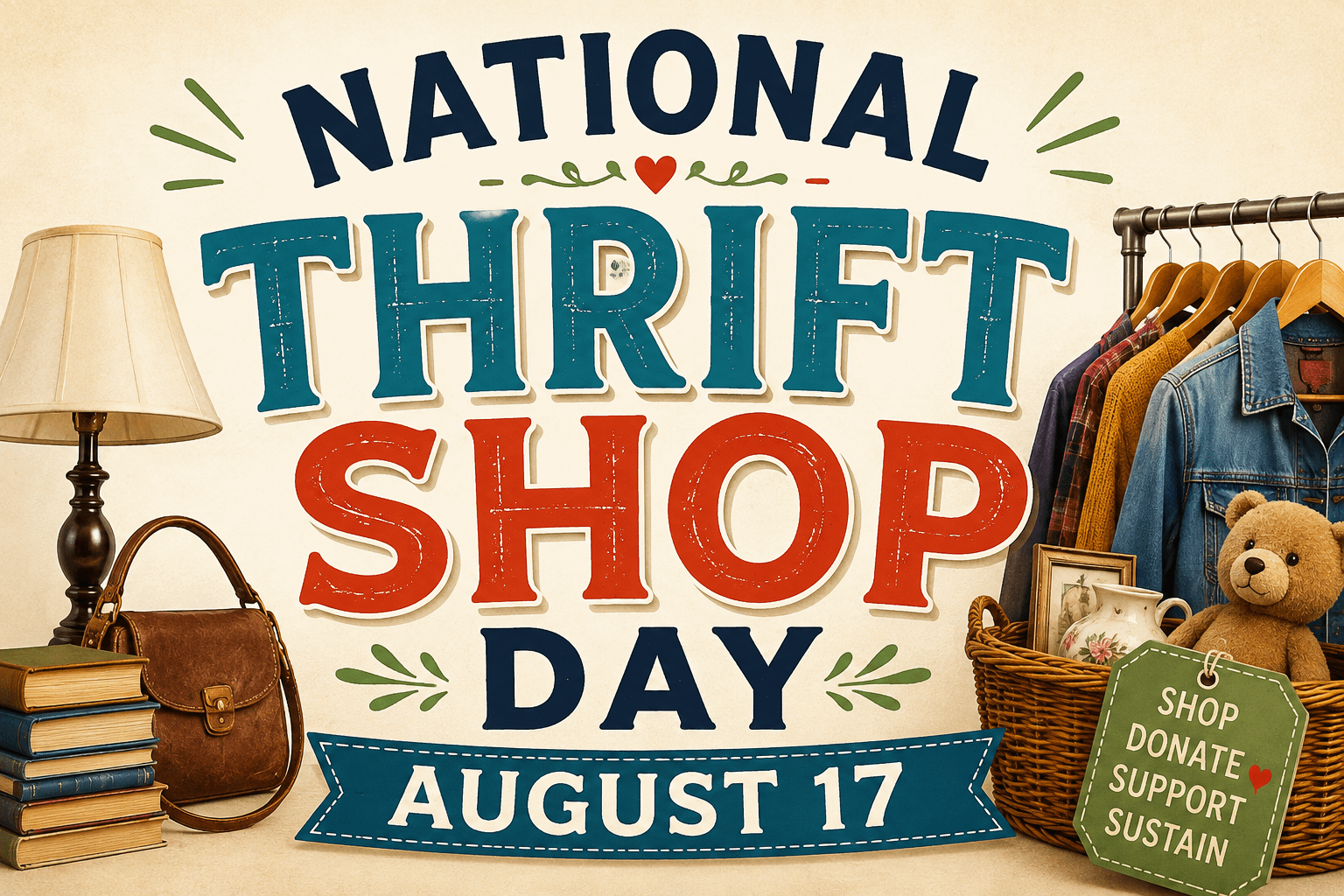
Every year on August 17, bargain hunters, treasure seekers, vintage lovers, collectors, DIY enthusiasts, and environmentally conscious shoppers have a reason to celebrate: National Thrift Shop Day.
For some people, walking into a thrift shop is simply a way to save money. For others, it is an adventure. You never know what might be waiting on the next rack, buried on a shelf, tucked inside a box, or sitting unnoticed in the corner.
A nearly new jacket might cost a fraction of its original price. An old cookbook could contain recipes you remember from childhood. A vintage lamp might be exactly what your living room needs. A forgotten vinyl record could become the highlight of your collection.
That’s part of what makes thrift shopping special.
Unlike traditional retail shopping, where stores usually carry predictable merchandise, thrift shops are constantly changing. Every donation can introduce something completely different.
National Thrift Shop Day celebrates those discoveries while recognizing something even more important: perfectly good things deserve another chance to be useful.
What Is National Thrift Shop Day?
Observed annually on August 17, National Thrift Shop Day celebrates thrift stores, secondhand shops, charity shops, resale stores, vintage stores, and the people who shop, donate, volunteer, and work in them.
Thrift shops generally sell previously owned merchandise at reduced prices.
Depending on the store, you might find:
- Clothing
- Shoes
- Handbags
- Jewelry
- Furniture
- Books
- Kitchenware
- Glassware
- Home decorations
- Artwork
- Electronics
- Toys
- Games
- Sporting goods
- Records
- CDs and movies
- Tools
- Holiday decorations
- Vintage merchandise
- Collectibles
Some thrift stores benefit charitable organizations and community programs, while others operate as independent resale businesses.
Regardless of the business model, thrift shops have something in common: they help connect unwanted belongings with people who want or need them.
Why Thrift Shopping Feels Like a Treasure Hunt
One of the biggest differences between thrift shopping and traditional retail shopping is unpredictability.
Walk into a department store and you generally know what you’re going to see.
Walk into a thrift shop and almost anything could be waiting.
Someone might have donated an entire collection the day before. A family could have cleaned out an attic. Someone moving across the country might have donated furniture, kitchen supplies, books, and decorations.
That means every visit can be different.
You might walk through the clothing section without finding anything interesting and then suddenly discover the perfect vintage jacket.
You might browse dozens of ordinary coffee mugs before finding one that reminds you of your childhood.
You might search through a shelf of books and discover a title you’ve wanted to read for years.
Thrifting rewards curiosity.
Sometimes it also rewards patience.
The History of Thrift Shopping
Buying and selling used goods is certainly not a modern idea.
People have reused, traded, repaired, and resold belongings for centuries. Before today’s culture of inexpensive mass-produced consumer goods, repairing and reusing possessions was often a normal part of everyday life.
Clothing could be altered and handed down.
Furniture could be repaired.
Tools could serve multiple generations.
Household goods were reused until they were no longer practical.
As cities expanded and charitable organizations developed more organized systems for collecting donated goods, thrift stores became increasingly familiar parts of communities.
Over time, secondhand shopping evolved considerably.
What might once have been associated primarily with necessity is now embraced by people from many different backgrounds.
Some shoppers visit thrift stores because they need affordable essentials.
Others are searching for vintage fashion.
Some want sustainable alternatives.
Others collect antiques and memorabilia.
And plenty of people simply enjoy finding a bargain.
Saving Money Through Thrift Shopping
One of the most obvious advantages of thrift stores is affordability.
Buying everything brand new can become expensive quickly, especially when you’re purchasing clothing, furniture, kitchen supplies, decorations, children’s items, or books.
Secondhand shopping can make those purchases more manageable.
Someone moving into a first apartment, for example, may need:
- Plates
- Glasses
- Silverware
- Pots and pans
- Lamps
- Towels
- Furniture
- Decorations
Purchasing everything new could cost a significant amount of money.
Finding even some of those items secondhand can reduce the expense considerably.
The same applies to families buying children’s clothing, students purchasing books, hobbyists looking for supplies, or anyone simply trying to spend more carefully.
A Bargain Is Only Valuable If You Need It
Thrift shopping can save money, but there is an important lesson worth remembering:
Something isn’t automatically a good deal just because it’s inexpensive.
It can be tempting to fill your cart when items cost only a few dollars.
But unnecessary purchases can still become clutter.
Before buying something, ask yourself:
- Will I actually use this?
- Do I already own something similar?
- Do I have room for it?
- Can it be repaired if necessary?
- Am I buying it because I love it or simply because it’s cheap?
Smart thrift shopping isn’t about buying the most things.
It’s about finding the right things.
Thrift Stores and Sustainable Living
Another important reason people choose secondhand merchandise is sustainability.
Manufacturing new products requires resources.
Raw materials must be collected or produced. Products must be manufactured, packaged, shipped, stored, displayed, and eventually transported to customers.
Meanwhile, millions of perfectly usable products already exist.
When something is donated and purchased again, its useful life can be extended.
A chair that one household no longer wants might serve another family for years.
A jacket might be worn by several owners.
A book can entertain countless readers.
A set of dishes might move from one kitchen to another.
Thrift stores help create opportunities for reuse instead of immediate disposal.
Giving Clothing Another Life
Clothing is one of the most popular categories in thrift shops.
Fashion changes quickly, and people frequently donate clothing because it no longer fits, their personal style changed, or they simply stopped wearing it.
But unwanted doesn’t necessarily mean unusable.
A shirt that has been sitting untouched in one person’s closet could become someone else’s favorite.
Buying secondhand clothing can also make experimenting with fashion more affordable.
You might try:
- Vintage jackets
- Retro T-shirts
- Classic denim
- Unique dresses
- Sweaters
- Sports apparel
- Accessories
- Handbags
- Shoes
Mixing older pieces with modern clothing can create a personal style that isn’t easily duplicated.
Vintage Fashion Is Back Again
Fashion has a habit of repeating itself.
Styles that disappear often return years or decades later.
Denim jackets, oversized shirts, vintage sportswear, classic sneakers, patterned sweaters, high-waisted pants, and countless other trends have moved in and out of popularity.
Thrift stores can sometimes offer authentic pieces from previous eras instead of newly manufactured reproductions.
That makes them especially appealing to people who enjoy vintage style.
Of course, the word “vintage” doesn’t automatically mean valuable.
Sometimes an old shirt is simply an old shirt.
But when you find something that fits your personality perfectly, its value may have nothing to do with a price guide.
Furniture With Character
Furniture can be another great thrift-store category.
Solid wood tables, bookshelves, chairs, desks, cabinets, nightstands, and dressers can sometimes be found for far less than the cost of comparable new pieces.
Older furniture may also have character that modern mass-produced furniture doesn’t always provide.
A scratched dresser might look worn at first glance.
But imagine it sanded, refinished, painted, or fitted with new hardware.
Suddenly, that inexpensive thrift-store purchase could become a centerpiece.
When buying secondhand furniture, inspect it carefully.
Check for structural damage, odors, moisture problems, pests, broken components, or repairs that may be more expensive than the item is worth.
Sometimes a bargain needs a little work.
Other times it needs too much work.
Knowing the difference is important.
Thrift Stores Are a DIY Paradise
People who enjoy crafting and do-it-yourself projects can find tremendous inspiration in thrift shops.
Instead of seeing an outdated object, a creative shopper sees possibilities.
An old picture frame can become a decorative mirror.
A wooden dresser can receive new paint and hardware.
Glass jars can become storage containers.
Fabric from old clothing can become craft material.
A bookshelf can be refinished.
Vintage dishes can become wall decorations.
An old table can become a desk.
Sometimes the best DIY projects begin with something another person no longer wanted.
Books Deserve Another Reader
Book lovers should never skip the thrift-store book section.
Used bookstores are wonderful, but thrift shops can also contain surprising literary treasures.
You might discover:
- Classic novels
- Recent bestsellers
- Cookbooks
- Biographies
- History books
- Children’s books
- Religious books
- Travel guides
- Reference books
- Coffee-table books
- Poetry collections
- Old magazines
There is something particularly meaningful about used books.
Sometimes they contain inscriptions.
Sometimes someone underlined a favorite passage.
Sometimes an old bookmark remains between the pages.
Those small details are reminders that the book had another reader before you.
Now the story continues with someone new.
Vinyl Records and Music Treasures
Music collectors often head directly toward the record section.
Thrift shops can contain vinyl albums from many different decades and genres.
Sometimes you’ll find common records.
Sometimes you’ll discover something unusual.
The excitement comes from searching.
Collectors should inspect records carefully for scratches, warping, damaged sleeves, or other problems.
Even when a record isn’t particularly valuable, it might still be worth purchasing simply because you love the music.
Not every collection needs to be about money.
Sometimes collecting is about memories.
Toys From Another Generation
The toy section can become an unexpected trip into the past.
Older board games, action figures, dolls, stuffed animals, toy cars, puzzles, and children’s books can instantly bring back childhood memories.
You may suddenly see something and think:
“I had one of those!”
Nostalgia is powerful.
Sometimes the item itself isn’t valuable, but the memory attached to it feels priceless.
Collectors may also search thrift stores for discontinued toys or merchandise from previous decades.
Again, condition matters, especially with children’s products. Safety standards change over time, so older toys should be carefully evaluated before being given to children.
Thrift Shopping for Holiday Decorations
Holiday decorations can become expensive when purchased new every year.
Thrift stores often have sections dedicated to seasonal merchandise.
Depending on the time of year, you might find:
- Christmas ornaments
- Halloween decorations
- Easter baskets
- Thanksgiving decorations
- Artificial wreaths
- Lights
- Holiday dishes
- Outdoor decorations
- Costume pieces
Decorations that were part of someone else’s celebration can become part of yours.
And because holiday merchandise is only used briefly each year, many secondhand decorations may still have plenty of life remaining.
Thrift Shopping for a First Apartment
Moving into your first home or apartment can be exciting—and expensive.
Thrift shops can be useful places to search for basic household items.
Instead of trying to furnish everything immediately with new merchandise, you can build your home gradually.
Look for practical items such as:
- Plates and bowls
- Drinking glasses
- Utensils
- Cookware
- Lamps
- Small tables
- Bookshelves
- Storage baskets
- Picture frames
- Mirrors
- Wall decorations
Not everything needs to match perfectly.
In fact, mixing different styles can make a home feel more personal.
Thrift Shopping for Kids
Children grow quickly.
A shirt that fits today might be too small a few months from now.
Because of that, children’s clothing is frequently donated while it still has plenty of usable life.
Parents may be able to find affordable:
- Shirts
- Pants
- Jackets
- Shoes
- Costumes
- Books
- Toys
- Games
As with any secondhand purchase for children, inspect items carefully for condition and safety.
Certain products—especially safety equipment—may not be appropriate to purchase used unless their history and condition can be reliably verified.
The Joy of Finding Something From Your Childhood
Some thrift-store discoveries are valuable for reasons that cannot be measured in dollars.
Maybe you find the same coffee cup your grandmother had.
Perhaps you discover a board game you played with your siblings.
Maybe an old cookbook reminds you of meals your parents made.
Perhaps a record takes you back to high school.
Objects can become connected to memories.
That is why thrift shopping can sometimes feel unexpectedly emotional.
You’re not always searching for the past.
Sometimes the past simply appears on a shelf.
Supporting Local Communities
Many thrift stores do more than sell inexpensive merchandise.
Charitable thrift shops may use proceeds to support programs related to housing, employment, food assistance, community outreach, disaster relief, or other services.
Independent resale shops can also contribute to their communities by supporting local employment and entrepreneurship.
When celebrating National Thrift Shop Day, consider learning about the organization or business behind the store you’re visiting.
Your purchase might have a bigger impact than you realize.
Don’t Forget the People Behind the Thrift Shop
A thrift store doesn’t organize itself.
Employees and volunteers may sort through enormous quantities of donations.
Items must be inspected.
Clothing must be organized.
Furniture must be moved.
Shelves must be stocked.
Prices must be determined.
Unusable donations must be separated.
Customer areas must be maintained.
National Thrift Shop Day is also an opportunity to appreciate the people who make secondhand shopping possible.
A little patience and kindness toward thrift-store employees and volunteers can go a long way.
Donate What You No Longer Need
National Thrift Shop Day isn’t only about shopping.
It is also an excellent opportunity to donate.
Walk through your home and look for things you haven’t used in months or even years.
Perhaps there are clothes that no longer fit.
Maybe your children outgrew toys.
Perhaps you’ve finished books that are collecting dust.
You might have dishes, decorations, or household items that no longer match your needs.
Someone else might appreciate them.
Before donating, check your local thrift shop’s policies because not every location accepts the same types of merchandise.
Donate With Respect
Donation should not be treated as a substitute for throwing something away.
If something is broken beyond repair, heavily stained, unsafe, contaminated, or otherwise unusable, a thrift store may have to pay to dispose of it.
Whenever possible, donate items that still have useful life remaining.
Ask yourself:
Would I be comfortable giving this item to someone I care about?
If the answer is yes, it may be worth donating.
Tips for Finding the Best Thrift-Store Treasures
Successful thrifting usually requires patience.
Visit Often
Inventory can change daily.
If you don’t find anything today, next week’s selection could be completely different.
Search Every Section
Don’t assume treasures will always be where you expect them.
A collectible might be mixed in with ordinary household items.
Inspect Everything Carefully
Look for:
- Stains
- Tears
- Cracks
- Missing pieces
- Broken zippers
- Loose buttons
- Water damage
- Unusual odors
- Structural problems
Know Your Measurements
Clothing sizes vary between manufacturers and eras.
Knowing your actual measurements can be more helpful than relying entirely on the number printed on the tag.
Check Before Buying Electronics
When possible, verify that electronics work and understand the store’s return policy before purchasing.
Think Creatively
Don’t focus only on what something currently looks like.
Think about what it could become.
Set a Budget
Small purchases add up quickly.
Give yourself a spending limit before beginning your treasure hunt.
The Thrill of the Unexpected Find
Every regular thrift shopper eventually has a story.
Maybe they found a designer jacket for a few dollars.
Perhaps they discovered an antique piece of furniture.
Maybe they found a rare book.
Or perhaps they simply discovered the perfect coffee mug.
The monetary value isn’t always what makes the story memorable.
It’s the surprise.
You weren’t expecting to find it.
Then suddenly there it was.
That feeling is what keeps many thrift shoppers coming back.
Try a National Thrift Shop Day Challenge
Make August 17 more entertaining by turning your shopping trip into a challenge.
Give yourself a budget—perhaps $10, $20, or $25—and see what you can find.
Challenge friends or family members to locate:
- The strangest item
- The oldest-looking item
- The best bargain
- The funniest decoration
- The best vintage outfit
- The most useful household item
- The most nostalgic item
- The best DIY project
At the end, compare your discoveries.
You may be surprised by what everyone finds.
Build an Entire Outfit From Thrifted Clothing
Another fun challenge is creating an entire outfit using only secondhand items.
Set a budget and search for:
- Shirt
- Pants or skirt
- Jacket
- Shoes
- Accessories
The goal isn’t necessarily to find expensive brands.
The goal is creativity.
You may discover combinations you would never have considered in a traditional clothing store.
Give Yourself a “One In, One Out” Rule
If you’re trying to reduce clutter, thrift shopping can create a problem: inexpensive items are easy to accumulate.
Consider using a simple rule.
For every new-to-you item you bring home, donate something you no longer use.
Buy a shirt?
Donate a shirt.
Bring home a book?
Pass along a book you’ve already finished.
Find a new coffee mug?
Donate one sitting unused in the cabinet.
This keeps the cycle of reuse moving.
Share Your Thrift-Store Finds
National Thrift Shop Day can also be celebrated online.
Take a picture of your favorite discovery and share the story behind it.
You could post:
“Look what I found for $5!”
Or show before-and-after pictures of a furniture restoration.
You could even highlight your favorite local thrift store and encourage others to support it.
Sharing secondhand finds may inspire someone else to consider thrifting instead of automatically buying new.
Every Item Has a Story
Perhaps one of the most fascinating parts of thrift shopping is thinking about where everything came from.
That coffee mug once sat in someone’s kitchen.
That jacket may have traveled across the country.
That book might have been someone’s favorite.
That dining table could have been surrounded by a family for decades.
That record might have played at parties long before you were born.
We usually never learn those stories.
But the objects remain.
When someone buys them again, another chapter begins.
Secondhand Doesn’t Mean Second Best
One of the most important messages behind National Thrift Shop Day is simple:
Used doesn’t mean worthless.
Something doesn’t lose its usefulness simply because someone owned it before.
A pre-owned table can still hold family dinners.
A secondhand jacket can still keep someone warm.
A used book can still inspire a reader.
A donated toy can still make a child smile.
A vintage record can still fill a room with music.
Sometimes the things we overlook still have tremendous value.
They simply need someone new to recognize it.
Celebrate National Thrift Shop Day on August 17
National Thrift Shop Day is a celebration of bargains, creativity, sustainability, nostalgia, community, and second chances.
You don’t need to spend much money to participate.
Visit a local thrift store.
Donate clothing you no longer wear.
Search for a good book.
Hunt for vintage treasures.
Find something for your next DIY project.
Support a charitable thrift organization.
Give an unwanted household item another chance.
Or simply walk through the aisles and enjoy the treasure hunt.
You may walk through the doors looking for absolutely nothing and leave holding something you never knew you wanted.
That’s the magic of thrift shopping.
Every shelf offers possibility.
Every rack holds another surprise.
Every donated object has already lived one story—and it may be waiting for you to help write the next one.
So grab your reusable shopping bag, set yourself a budget, and start exploring on August 17.
You never know what treasure is waiting around the corner.
Happy National Thrift Shop Day!
Leave a ReplyCancel reply