
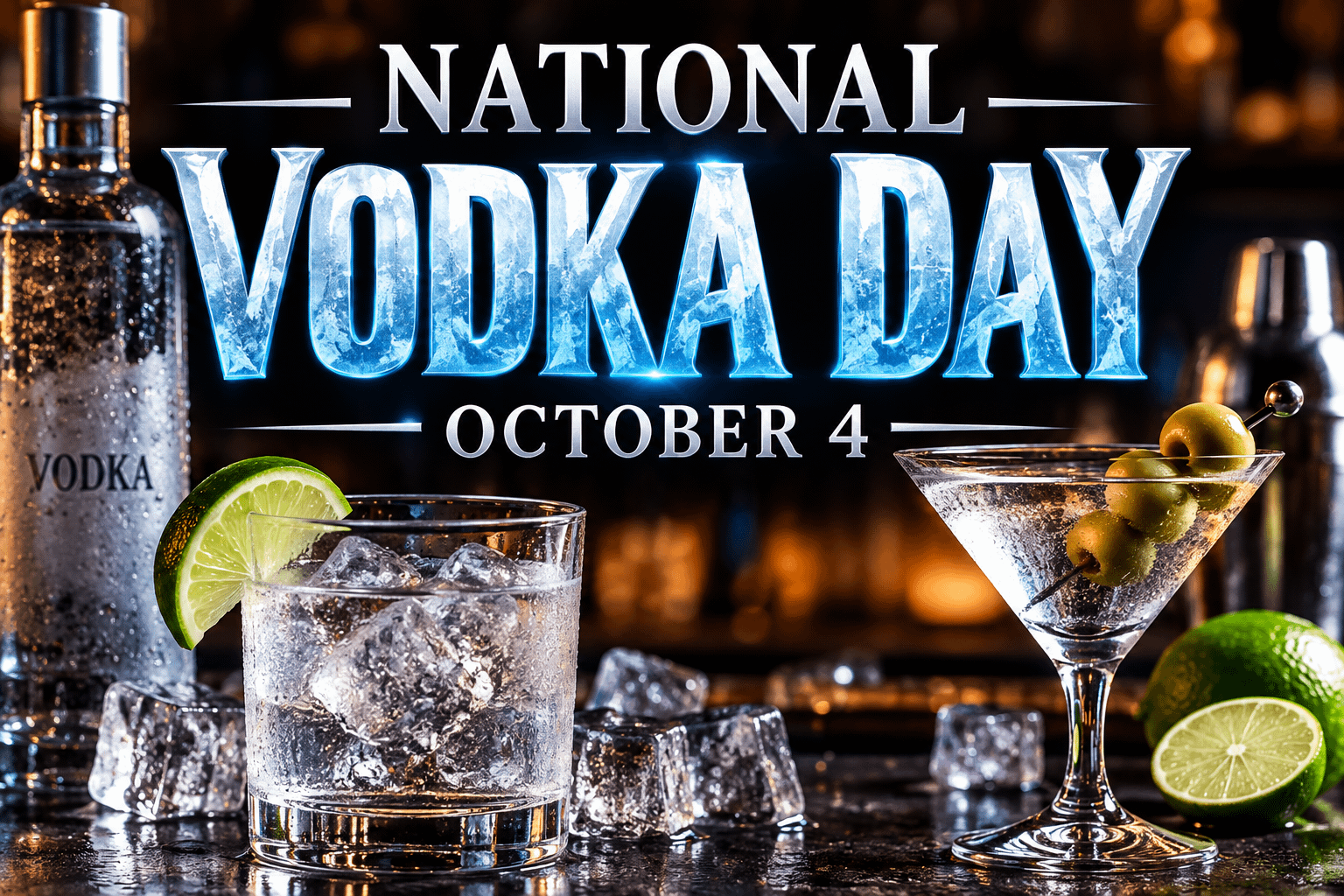
Every year on October 4, vodka lovers across the United States have an excuse to raise a glass to one of the world’s most recognizable and versatile spirits: National Vodka Day.
Vodka may have a reputation for being simple, clear, and neutral, but there is much more behind this famous spirit than meets the eye. It has centuries of history, deep cultural connections to Eastern and Northern Europe, and an enormous influence on modern cocktail culture.
From the classic Moscow Mule and Bloody Mary to the sophisticated Vodka Martini and the incredibly simple Vodka Soda, vodka has found its way into almost every kind of drinking occasion.
National Vodka Day is a chance to learn a little about its history, discover a new cocktail, and appreciate why this clear spirit has remained so popular for generations.
What Is Vodka?
Vodka is a distilled spirit traditionally associated with countries including Poland and Russia, although today it is produced throughout the world.
The name is generally connected to the Slavic word for water, reflecting vodka’s clear appearance.
Vodka can be produced from a variety of fermentable ingredients. Grain and potatoes are probably the ingredients most people associate with it, but producers may also use corn, wheat, rye, grapes, and other agricultural products.
After fermentation, the liquid is distilled to increase its alcohol concentration. Depending on the producer and style, it may undergo additional filtration before being diluted to bottling strength.
Although vodka is frequently described as a “neutral” spirit, different vodkas can have noticeably different characteristics. The ingredients, water, distillation process, filtration, and production methods can all influence texture, aroma, and flavor.
Some are incredibly clean and crisp. Others have subtle sweetness, peppery notes, grain characteristics, or a creamy texture.
A Spirit With Centuries of History
The exact birthplace of vodka has long been debated, particularly because both Poland and Russia have centuries-old traditions surrounding the spirit.
Early versions were considerably different from the smooth bottled vodka we recognize today. Distillation technology was less advanced, and spirits could have stronger flavors and impurities.
Over time, improvements in distillation and filtration helped producers create increasingly refined versions.
Vodka eventually became deeply intertwined with the cultures of Eastern Europe.
But it didn’t remain there.
During the 20th century, vodka’s popularity expanded dramatically throughout Western Europe and the United States.
One reason was its versatility.
Bartenders discovered that vodka could provide the alcoholic foundation of a cocktail without overpowering the other ingredients. Fruit juices, ginger beer, coffee, tomato juice, citrus, herbs, syrups, and countless other flavors could be combined with it.
That adaptability helped create some of the world’s best-known cocktails.
The Rise of Vodka in America
Vodka wasn’t always the dominant spirit it would eventually become in the United States.
American drinking culture historically revolved heavily around spirits such as whiskey, rum, and gin.
That began changing during the middle of the 20th century.
Creative marketing and the growing popularity of cocktails introduced more Americans to vodka. Drinks such as the Moscow Mule played an important role in helping vodka gain recognition.
By the following decades, vodka cocktails were appearing everywhere from neighborhood bars to upscale restaurants.
Vodka became particularly attractive because it could easily be mixed with ingredients people already enjoyed.
Orange juice?
Add vodka and you have a Screwdriver.
Tomato juice and spices?
Add vodka and you’ve got the foundation for a Bloody Mary.
Ginger beer and lime?
That’s the famous Moscow Mule.
The possibilities seemed almost endless.
Classic Vodka Cocktails
National Vodka Day provides the perfect opportunity to revisit some classic drinks.
Moscow Mule
One of vodka’s most recognizable cocktails combines vodka, ginger beer, and lime juice.
It is traditionally served in a copper mug, giving the drink its unmistakable presentation.
The spicy ginger beer and bright lime create a refreshing combination that works particularly well with vodka’s relatively neutral character.
Bloody Mary
Few cocktails have developed as many variations as the Bloody Mary.
Vodka and tomato juice form the base, while recipes frequently include ingredients such as Worcestershire sauce, hot sauce, lemon juice, horseradish, celery salt, and black pepper.
Then there are the garnishes.
A simple celery stalk may be enough, but some restaurants have transformed Bloody Mary garnishes into entire meals featuring bacon, shrimp, cheese, pickles, olives, and other elaborate additions.
Vodka Martini
The traditional Martini is associated with gin, but the Vodka Martini has developed an identity of its own.
Vodka is combined with dry vermouth and typically garnished with an olive or lemon twist.
Simple ingredients make technique particularly important.
Screwdriver
It doesn’t get much easier than this.
Vodka and orange juice.
That’s essentially the entire drink.
Its simplicity helped make the Screwdriver a familiar cocktail for generations.
Cosmopolitan
The Cosmopolitan became especially famous during the late 1990s and early 2000s.
Typically made with citrus vodka, cranberry juice, orange liqueur, and lime juice, the Cosmo delivers a balance of sweet and tart flavors.
Its bright appearance also makes it instantly recognizable.
Espresso Martini
Despite its name, the Espresso Martini isn’t technically a traditional Martini.
It commonly combines vodka, espresso, and coffee liqueur.
The combination of coffee and vodka has helped the Espresso Martini experience major waves of popularity, particularly among people looking for an after-dinner cocktail.
Why Vodka Works So Well in Cocktails
Vodka’s greatest strength may be its adaptability.
Whiskey brings oak, vanilla, spice, caramel, and other distinctive flavors. Gin typically introduces noticeable botanical characteristics. Rum can contribute sweetness and flavors associated with sugarcane or molasses.
Vodka can take a different role.
Instead of dominating a drink, it often allows the other ingredients to become the stars.
That makes it an excellent foundation for experimentation.
Vodka works with:
- Citrus fruits
- Berries
- Tropical fruit
- Coffee
- Chocolate
- Ginger
- Herbs
- Tomato juice
- Cream
- Soda water
- Lemonade
- Tea
The number of possible combinations is enormous.
Flavored Vodka Changed the Game
Another major development in vodka culture has been the rise of flavored varieties.
Walk through the vodka section of many stores today and you’ll find considerably more than traditional unflavored vodka.
Depending on the brands available, flavors may include lemon, lime, orange, raspberry, vanilla, whipped cream, peach, watermelon, cucumber, pepper, and many others.
Some producers also create botanical or naturally infused varieties.
These flavored vodkas make it easy to experiment with cocktails because some of the flavor is already incorporated into the spirit.
Vanilla vodka can complement coffee or dessert cocktails.
Citrus vodka works naturally with lemonade and cranberry juice.
Cucumber vodka can pair nicely with soda water, lime, and fresh herbs.
The combinations are limited largely by creativity.
Simple Ways to Celebrate National Vodka Day
If you’re 21 or older and choose to drink alcohol, National Vodka Day can be celebrated without making things complicated.
Try making a classic vodka cocktail you’ve never prepared before. If you normally order a Moscow Mule, experiment with a Cosmopolitan or Espresso Martini.
You could also organize a small cocktail tasting with friends, comparing drinks that use the same spirit in completely different ways.
Another option is exploring vodka as an ingredient rather than simply drinking it.
Vodka sometimes appears in cooking as well.
One famous example is vodka sauce, the creamy tomato-based pasta sauce traditionally made with tomatoes, cream, seasonings, and a small amount of vodka.
You can even celebrate without drinking alcohol. Many classic vodka cocktails can be transformed into mocktails by removing the vodka and adjusting the remaining ingredients.
A ginger beer and lime mocktail, for example, can capture much of the refreshing character associated with a Moscow Mule.
Enjoy It Responsibly
National Vodka Day should be about enjoying the history, craftsmanship, and cocktail culture surrounding the spirit—not about excessive drinking.
If you’re drinking, pace yourself, eat something, drink water, and arrange a safe way home before the celebration begins.
Never drink and drive.
There is nothing wrong with skipping alcohol completely, either. The celebration can be just as much about learning cocktail history, experimenting with alcohol-free drinks, or preparing vodka-inspired foods.
Raise a Glass to a Versatile Classic
For generations, vodka has demonstrated an unusual ability to adapt.
It can be served simply, mixed into elaborate cocktails, infused with flavors, incorporated into recipes, or used as the foundation for bartenders’ newest creations.
Perhaps that versatility explains why vodka has remained such an important part of drinking culture.
So when National Vodka Day arrives on October 4, you might celebrate by revisiting an old favorite or discovering something completely new.
Whether it’s a Moscow Mule, Bloody Mary, Cosmopolitan, Espresso Martini, Vodka Martini, or a creative cocktail of your own, remember that the best drink is one enjoyed responsibly.
What’s your favorite vodka cocktail—or what vodka drink would you like to try for National Vodka Day?
Leave a ReplyCancel reply