
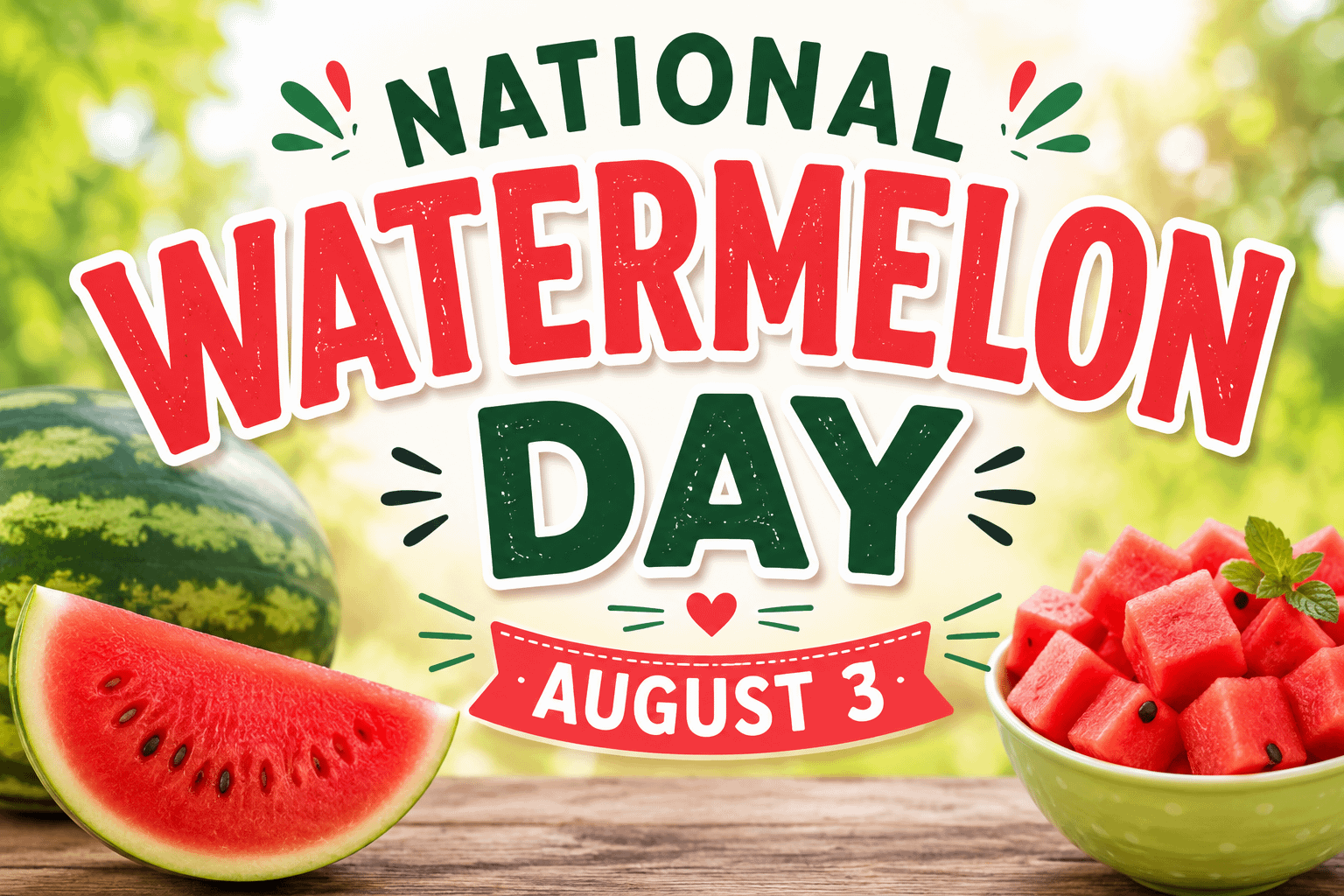
Every year on August 3, people across the United States celebrate National Watermelon Day, a fun summer holiday dedicated to one of the world’s most refreshing fruits. Sweet, juicy, colorful, and packed with hydration, watermelon has become a symbol of sunshine, family gatherings, backyard barbecues, and carefree summer afternoons.
Whether you’re enjoying a cold slice by the pool, blending it into a refreshing smoothie, or serving it at a picnic, watermelon has a way of bringing people together. Its bright colors, delicious flavor, and impressive health benefits make it one of the most popular fruits of the season.
National Watermelon Day is more than just an excuse to eat another slice—it’s an opportunity to appreciate the rich history, nutritional value, and traditions surrounding this iconic summer favorite.
The Long History of Watermelon
Watermelon has been enjoyed by humans for thousands of years. Historians believe its ancestors originated in northeastern Africa, where wild melons grew naturally in dry climates. Unlike today’s sweet varieties, these early melons were smaller and less flavorful but were valued for the water they contained.
Archaeological evidence shows that watermelons were cultivated in ancient Egypt over 4,000 years ago. Seeds have even been discovered inside the tomb of Pharaoh Tutankhamun, suggesting the fruit was considered valuable enough to accompany royalty into the afterlife.
From Egypt, watermelon spread through trade routes into the Middle East, Europe, and Asia. By the 1500s, European explorers introduced watermelon to the Americas, where it quickly flourished in the warm climate.
Today, watermelon is grown on every continent except Antarctica and remains one of the most widely consumed fruits in the world.
Why Watermelon Is the Perfect Summer Fruit
There’s a reason watermelon becomes the star of summer.
With temperatures climbing, people naturally crave foods that help cool them down while keeping them hydrated. Since watermelon is made up of approximately 92% water, it’s one of nature’s best ways to beat the heat.
Its natural sweetness satisfies dessert cravings without requiring added sugar, and it’s light enough to enjoy any time of day.
From family reunions to camping trips and neighborhood cookouts, watermelon has become a staple of summer celebrations.
Incredible Health Benefits of Watermelon
Watermelon isn’t just delicious—it’s packed with nutrients that support overall health.
Excellent Source of Hydration
Because it’s mostly water, watermelon helps replenish fluids lost through sweating during hot weather.
Proper hydration supports:
- Healthy digestion
- Brain function
- Joint lubrication
- Temperature regulation
- Energy levels
Eating watermelon can be an enjoyable way to stay hydrated throughout the summer.
Rich in Vitamin C
Vitamin C helps:
- Strengthen your immune system
- Support healthy skin
- Promote collagen production
- Aid wound healing
- Protect cells from damage
One serving of watermelon provides a healthy boost of this essential nutrient.
High in Vitamin A
Watermelon also contains beta-carotene, which the body converts into Vitamin A.
Vitamin A contributes to:
- Healthy vision
- Strong immune function
- Healthy skin
- Proper cell growth
Contains Lycopene
The vibrant red color of watermelon comes from lycopene, a powerful antioxidant.
Researchers have studied lycopene for its potential role in supporting:
- Heart health
- Healthy blood vessels
- Reduced oxidative stress
- Cellular protection
Interestingly, watermelon contains more lycopene than many people realize—even more than some tomatoes.
Citrulline: A Unique Amino Acid
Watermelon contains an amino acid called citrulline, especially concentrated in the rind.
Citrulline has been studied for its potential to support:
- Healthy circulation
- Exercise recovery
- Muscle function
- Blood flow
Although watermelon shouldn’t replace medical treatments, it’s one more reason this fruit is considered a nutritional powerhouse.
Naturally Low in Calories
One cup of watermelon contains only about 45 calories while providing plenty of flavor and satisfaction.
It’s naturally:
- Fat free
- Cholesterol free
- Low in sodium
That makes it a great snack for nearly everyone.
Amazing Watermelon Facts
Watermelon is full of surprises.
Here are some fascinating facts:
- More than 1,200 varieties of watermelon are grown around the world.
- Watermelons belong to the same botanical family as cucumbers, pumpkins, and squash.
- They are technically classified as a berry known as a “pepo.”
- Flesh colors include red, pink, yellow, orange, and white.
- Seedless watermelons aren’t genetically modified—they’re created through traditional plant breeding.
- The world’s heaviest watermelon weighed over 350 pounds.
- Japan is famous for growing square watermelons, primarily as decorative novelty items.
- Every part of the watermelon is edible, including the rind and seeds.
Watermelon Around the World
Different cultures enjoy watermelon in unique ways.
Mexico
Fresh watermelon is blended into agua fresca, a lightly sweetened fruit drink that’s perfect during hot afternoons.
Greece
Watermelon is commonly served alongside salty feta cheese, creating a delicious combination of sweet and savory flavors.
China
Roasted watermelon seeds are enjoyed as a snack during holidays and family gatherings.
Japan
Farmers produce square, heart-shaped, and pyramid-shaped watermelons as novelty gifts and decorative displays.
Southern United States
Watermelon has long been a favorite at church picnics, county fairs, family reunions, and Independence Day celebrations.
Choosing the Perfect Watermelon
Picking a ripe watermelon can seem difficult, but these simple tips make it much easier.
Look for the Field Spot
A ripe watermelon should have a creamy yellow or golden patch where it rested on the ground.
Avoid melons with white or green field spots.
Feel the Weight
Choose a watermelon that feels heavy for its size.
A heavier melon usually contains more water and is often juicier.
Examine the Skin
Look for:
- A dull finish instead of shiny
- Firm rind
- No major dents
- No soft spots
- Uniform shape
Give It a Tap
A ripe watermelon often produces a deep, hollow sound when tapped rather than a dull thud.
Creative Ways to Enjoy Watermelon
Most people simply slice watermelon into wedges, but there are countless delicious possibilities.
Watermelon Smoothie
Blend:
- Fresh watermelon
- Frozen strawberries
- Banana
- Lime juice
- Ice
You’ll have a refreshing drink perfect for hot afternoons.
Watermelon Lemonade
Combine fresh watermelon juice with homemade lemonade for a colorful summer beverage.
Grilled Watermelon
Grilling caramelizes the fruit’s natural sugars while adding a subtle smoky flavor.
Serve with balsamic glaze and fresh mint for an impressive appetizer.
Watermelon Salsa
Dice together:
- Watermelon
- Tomatoes
- Jalapeños
- Red onion
- Cilantro
- Lime juice
Serve with tortilla chips or grilled fish.
Watermelon Fruit Pizza
Top a large watermelon slice with Greek yogurt and fresh berries for a healthy dessert that’s as beautiful as it is delicious.
Frozen Watermelon Pops
Puree watermelon with strawberries and freeze into popsicle molds for a naturally sweet frozen treat.
Watermelon Salad
Mix watermelon with:
- Feta cheese
- Cucumbers
- Mint
- Basil
- Olive oil
- Balsamic glaze
It’s a refreshing side dish that pairs perfectly with grilled meats.
Fun Family Activities for National Watermelon Day
Looking for ways to celebrate?
Here are a few family-friendly ideas.
Host a Backyard Watermelon Party
Invite friends and family for:
- Fresh watermelon
- Games
- Barbecue
- Outdoor music
- Lawn games
Watermelon Seed-Spitting Contest
A classic summer tradition that both kids and adults enjoy.
Watermelon Carving
Instead of carving pumpkins, try carving watermelons into:
- Fruit baskets
- Animal shapes
- Decorative centerpieces
Visit a Farmers Market
Support local growers while finding freshly harvested watermelons at their peak flavor.
Try a New Recipe
Challenge yourself to cook something you’ve never made before using watermelon.
Share on Social Media
Post your favorite watermelon recipe, picnic photos, or family traditions using #NationalWatermelonDay.
Watermelon and Sustainability
Buying locally grown watermelon supports nearby farmers and often reduces transportation emissions.
To minimize waste:
- Compost the rind.
- Pickle the rind for a tangy snack.
- Roast watermelon seeds with your favorite seasonings.
- Freeze leftover watermelon cubes for smoothies or infused water.
Making the most of the entire fruit helps reduce food waste while introducing new flavors to enjoy.
Why Watermelon Brings People Together
Some foods are tied to memories, and watermelon is one of them.
For many people, it brings back images of:
- Family reunions
- Neighborhood cookouts
- Fourth of July celebrations
- Church picnics
- Camping trips
- County fairs
- Summer vacations
- Childhood afternoons spent outdoors
Watermelon reminds us to slow down, enjoy the moment, and appreciate time with the people we love.
Final Thoughts
National Watermelon Day is a joyful reminder that life’s greatest pleasures are often the simplest. A ripe watermelon, a warm summer afternoon, and the company of family or friends can create memories that last a lifetime.
Whether you enjoy it fresh from the refrigerator, blended into a smoothie, grilled on the barbecue, or tossed into a colorful salad, watermelon offers something for everyone. It’s nutritious, refreshing, affordable, and deeply woven into summer traditions around the world.
So this August 3, celebrate National Watermelon Day by sharing a slice, trying a new recipe, visiting a local farmers market, or simply enjoying one of nature’s sweetest gifts. Here’s to sunshine, laughter, and the unmistakable taste of summer!
Read More Holidays & National Days
Leave a ReplyCancel reply