
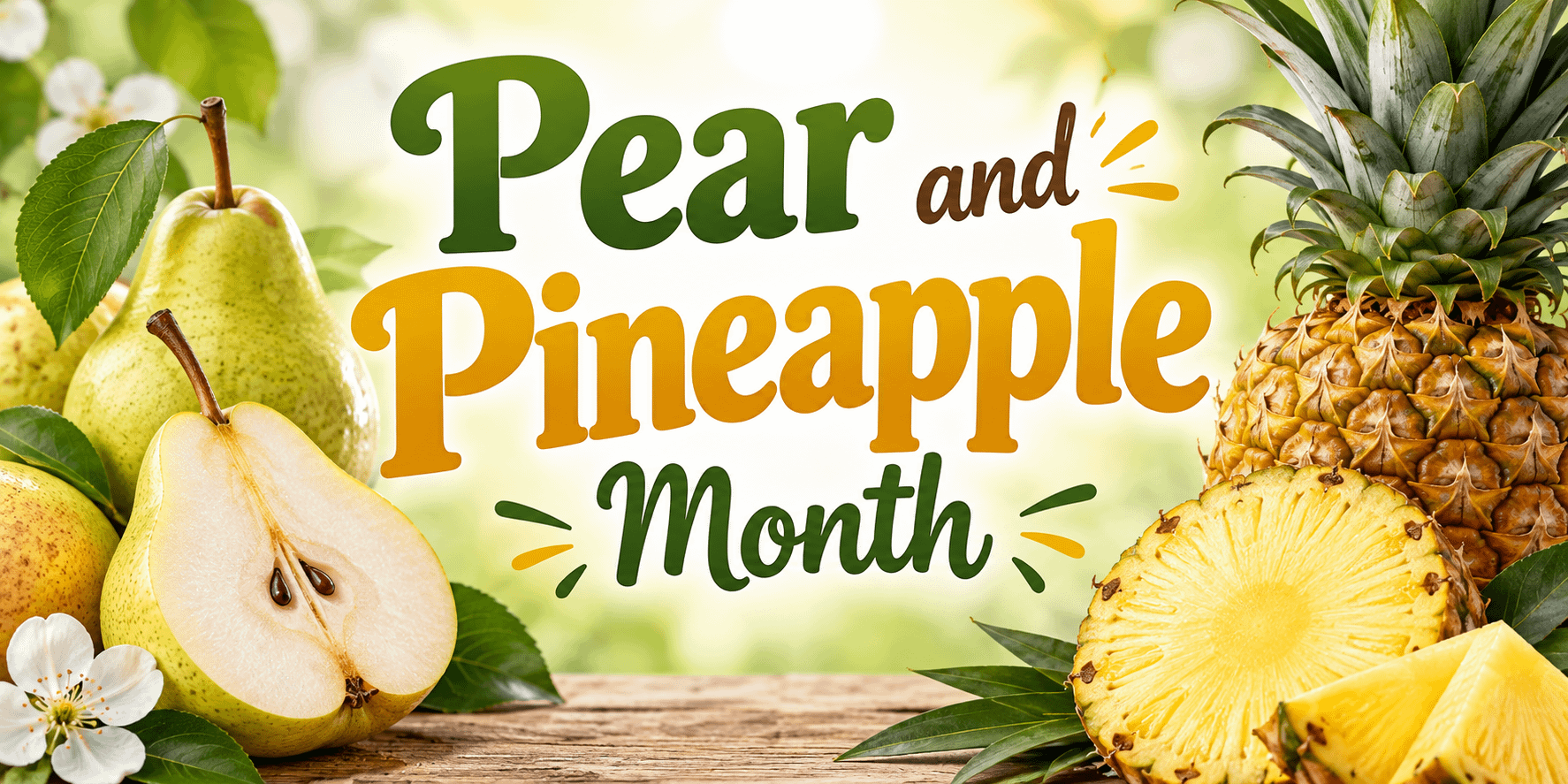
Some fruits are best known for being refreshing, others for their sweetness, and others for the many ways they can be used in the kitchen. Pears and pineapples manage to bring all of those qualities together.
Pear and Pineapple Month is a wonderful opportunity to appreciate two fruits that may seem very different but have plenty in common. Both are naturally sweet, versatile, nutritious, and delicious whether eaten fresh or incorporated into recipes.
Pears bring a soft, delicate sweetness that fits perfectly with the cooler days of fall. Pineapples provide a bright tropical flavor that can make almost any day feel a little warmer.
From breakfast and desserts to salads, drinks, sauces, and savory meals, there are countless ways to enjoy these two fruits.
Two Fruits From Very Different Worlds
One of the interesting things about celebrating pears and pineapples together is just how different they are.
Pears grow on trees and have been cultivated for thousands of years. Their soft flesh and mild sweetness have made them popular throughout many parts of the world.
Pineapples are tropical plants. Instead of growing on trees, the fruit develops from a cluster of flowers on a relatively low-growing plant. Its distinctive appearance, juicy interior, and sweet-tart flavor have made pineapple one of the world’s most recognizable tropical fruits.
Put the two together, and you get an interesting celebration of the incredible variety nature provides.
The Beauty of the Pear
Pears sometimes don’t receive as much attention as apples, oranges, bananas, or berries, but they deserve a place among our favorite fruits.
A properly ripened pear has a wonderfully tender texture and naturally sweet flavor. Depending on the variety, it may taste floral, buttery, crisp, juicy, or slightly spicy.
There are numerous varieties of pears, including Bartlett, Anjou, Bosc, Comice, and Asian pears.
Each brings something different to the table.
Bartlett pears are juicy and sweet, making them excellent for eating fresh and using in desserts. Bosc pears tend to have firmer flesh and hold their shape particularly well when baked or poached. Asian pears are noticeably crisp and can almost resemble an apple in texture.
Trying several varieties during Pear and Pineapple Month can help you discover just how diverse pears really are.
The Tropical Flavor of Pineapple
Pineapple has an entirely different personality.
Cut into a ripe pineapple and you’re greeted with a juicy golden interior and an unmistakable tropical aroma.
Its flavor combines sweetness with noticeable acidity, which is one reason pineapple works in so many different dishes.
It can provide sweetness in desserts while adding acidity and brightness to savory foods.
Fresh pineapple can be enjoyed by itself, added to fruit salads, blended into smoothies, grilled, incorporated into salsa, or used as part of a marinade.
And, of course, pineapple has earned a famously controversial place as a pizza topping.
Whether you love pineapple on pizza or wouldn’t let it anywhere near your slice, there is no denying that people have strong opinions about it.
Nutritional Benefits of Pears
Pears aren’t just delicious.
They’re also a nutritious addition to a balanced diet.
A medium pear provides dietary fiber along with vitamin C and other nutrients. Much of a pear’s fiber is associated with its skin, so eating the fruit unpeeled after washing it is an easy way to enjoy more of what the fruit naturally provides.
Fiber is particularly important because it contributes to normal digestive health and can help make meals and snacks more satisfying.
Pears also contain plenty of water, making fresh fruit an enjoyable way to add variety to a diet.
Instead of thinking about individual foods as miracle ingredients, it’s more useful to see fruits such as pears as part of an overall eating pattern built around variety and balance.
Nutritional Benefits of Pineapple
Pineapple has its own nutritional strengths.
It is particularly known as a source of vitamin C and also provides manganese along with smaller amounts of other nutrients.
Pineapple naturally contains bromelain, a group of enzymes capable of breaking down proteins. This characteristic is one reason fresh pineapple can behave differently from many other fruits when used in cooking.
It is also why fresh pineapple is sometimes used in marinades.
Like pears, pineapple contains water and fiber, although the amount of fiber depends on how the fruit is prepared.
Eating whole pieces of pineapple generally preserves more fiber than drinking pineapple juice.
Fresh Fruit Makes a Simple Snack
You don’t need a complicated recipe to celebrate Pear and Pineapple Month.
Sometimes the easiest option is the best.
Slice a ripe pear and enjoy it on its own. Cut fresh pineapple into chunks and refrigerate them for a refreshing snack.
You could also combine the two.
Try a fruit bowl containing diced pear, pineapple, strawberries, blueberries, grapes, oranges, or whatever other fruits you have available.
A little fresh lime juice can provide an additional burst of flavor.
Pear and Pineapple Breakfast Ideas
Breakfast offers plenty of opportunities to use both fruits.
Add diced pears to oatmeal with cinnamon, walnuts, and a drizzle of honey. Pear slices also work wonderfully on toast with nut butter.
Pineapple can be blended into smoothies with banana, mango, strawberries, or Greek yogurt.
For something more substantial, make a yogurt parfait with alternating layers of yogurt, granola, pears, and pineapple.
You can even make a tropical oatmeal bowl by combining pineapple with coconut and banana.
Breakfast doesn’t always need to be complicated. Adding fresh fruit to something you already eat can completely change the flavor.
Bake Something With Pears
Pears are fantastic for baking because heat intensifies their natural sweetness and softens their texture.
Some delicious ideas include:
- Pear crisp
- Pear cobbler
- Pear cake
- Pear muffins
- Pear bread
- Pear turnovers
- Pear pie
- Cinnamon-baked pears
- Pear cheesecake
- Pear bread pudding
One of the easiest desserts is simply a baked pear.
Cut the pear in half, remove the core, sprinkle it with cinnamon, and bake until tender. Add chopped nuts, oats, yogurt, or a small amount of honey if desired.
It proves that dessert doesn’t necessarily need dozens of ingredients to be satisfying.
Make a Tropical Pineapple Dessert
Pineapple is equally comfortable at the dessert table.
Pineapple upside-down cake may be one of the most recognizable pineapple desserts, but that’s only the beginning.
You could make pineapple coconut cake, pineapple cheesecake, pineapple sorbet, pineapple muffins, pineapple bread, grilled pineapple, or pineapple parfaits.
Grilled pineapple is particularly simple.
Heat transforms the fruit, concentrating some of its sweetness while adding lightly caramelized flavors.
Serve grilled pineapple by itself or pair it with yogurt, ice cream, cinnamon, toasted coconut, or other fruit.
Combine Pear and Pineapple
Why choose one when you can use both?
Pears and pineapples can work surprisingly well together because the mild sweetness of pear balances pineapple’s stronger sweet-and-tart personality.
Try combining them in a homemade fruit salsa.
Dice pear and pineapple and mix them with lime juice and other ingredients such as red onion, cilantro, or jalapeño, depending on the flavor you’re looking for.
For a sweeter version, leave out the savory ingredients and combine the fruits with berries, mango, or citrus.
Pear and pineapple can also be combined in smoothies, fruit salads, baked desserts, chutneys, and homemade sauces.
Add Fruit to Savory Meals
Fruit doesn’t belong exclusively in desserts.
Pears work beautifully in salads, particularly when paired with leafy greens, nuts, cheese, and vinaigrette.
Try sliced pear with spinach, walnuts, and crumbled cheese for a combination of sweet, savory, creamy, and crunchy textures.
Pineapple is famous for crossing into savory territory.
It can be incorporated into salsa, stir-fries, rice dishes, tacos, barbecue sauces, and grilled meals.
The sweetness of pineapple can complement smoky, spicy, salty, and tangy flavors.
That’s one reason pineapple works especially well with barbecue-style dishes.
Blend a Pear-Pineapple Smoothie
One easy way to celebrate the month is with a smoothie featuring both fruits.
Combine pear, pineapple, banana, yogurt, and ice in a blender. Add milk or your preferred alternative until you reach the consistency you like.
For additional tropical flavor, add mango or coconut.
For something greener, blend in a handful of spinach. Its mild flavor can disappear surprisingly well behind the sweetness of the fruit.
Smoothies are also a convenient way to experiment. Adjust the ingredients until you create your own favorite combination.
How to Tell When a Pear Is Ripe
Choosing ripe fruit makes an enormous difference.
Many pears ripen after harvesting. One common method for checking ripeness is to gently press near the neck of the pear with your thumb.
If it yields slightly, the pear may be ready to eat.
If it is extremely hard, give it additional time at room temperature.
Once pears reach your preferred ripeness, refrigeration can help slow further ripening.
Don’t wait until the entire fruit becomes extremely soft. Depending on the variety, that can mean you’ve waited too long.
Choosing a Pineapple
Picking a pineapple can sometimes feel like a guessing game.
Look for fruit that appears fresh and healthy rather than dried out or badly damaged. A ripe pineapple often gives off a pleasant sweet aroma near its base.
The exterior color can vary depending on the variety and growing conditions, so color alone isn’t always a perfect indicator.
The fruit should generally feel firm rather than excessively soft.
Once you cut into it, the flesh should look juicy and inviting.
Reduce Food Waste
Celebrating fruits is also an opportunity to think about reducing food waste.
If pears are becoming too ripe to eat the way you normally prefer them, don’t immediately throw them away.
Use them in smoothies, sauces, baked goods, oatmeal, or desserts.
Extra pineapple can be frozen for future smoothies or frozen treats.
Cut fruit into manageable pieces, freeze it, and transfer the frozen pieces into an appropriate freezer container.
Later, you have fruit ready whenever you’re craving a smoothie.
Finding ways to use ripe produce instead of discarding it saves food and money.
Try Something You’ve Never Made Before
Monthly food celebrations can be more than an excuse to eat something delicious.
They can encourage experimentation.
Maybe you’ve eaten pears your entire life but have never tried poaching them.
Maybe you regularly buy pineapple but have never grilled it.
Perhaps you’ve never made homemade pineapple salsa or baked pears with cinnamon.
Choose one recipe or preparation method you’ve never attempted before.
You may discover a new favorite.
Make It a Family Activity
Pear and Pineapple Month can also become a simple family activity.
Visit a grocery store or farmers market and look for different varieties of pears. Bring several home and hold a taste test.
Cut each variety into slices and compare sweetness, texture, aroma, and juiciness.
You can do something similar with pineapple products by comparing fresh pineapple with frozen or canned versions.
Children can participate in preparing fruit bowls, parfaits, smoothies, or other age-appropriate recipes with adult supervision.
Food becomes more interesting when people participate in preparing it.
A Celebration of Simple Foods
We often spend so much time searching for complicated recipes that we overlook the pleasure of simple ingredients.
A perfectly ripe pear doesn’t require much improvement.
Neither does a juicy piece of fresh pineapple.
Both remind us that some of the most enjoyable foods are naturally simple.
At the same time, their versatility means you can transform them into countless dishes whenever you want something more creative.
That combination makes Pear and Pineapple Month worth celebrating.
Celebrate Pear and Pineapple Month Your Way
There isn’t one correct way to participate.
Enjoy a pear with breakfast.
Cut pineapple for an afternoon snack.
Bake a pear crisp.
Make pineapple salsa.
Blend the two fruits into a smoothie.
Grill pineapple at your next cookout.
Try a pear variety you’ve never tasted.
Create a tropical fruit salad for your family.
Or invent an entirely new recipe combining both fruits.
The purpose of a food celebration doesn’t have to be complicated. Sometimes it’s simply an invitation to appreciate foods we may normally walk past without giving them much thought.
Final Thoughts
Pear and Pineapple Month brings together two fruits from very different culinary worlds.
Pears offer delicate sweetness, satisfying texture, and wonderful possibilities for everything from fresh snacks to comforting fall desserts. Pineapples deliver bold tropical flavor and an impressive ability to move between sweet and savory recipes.
Together, they remind us how much variety can come from something as simple as fruit.
So during Pear and Pineapple Month, bring home a few pears and a fresh pineapple. Eat them as they are, experiment with a new recipe, add them to breakfast, bake something sweet, or combine them into your own creation.
Sometimes celebrating the season can be as simple as cutting into a piece of fresh fruit and enjoying what nature has provided.
Which do you prefer—the soft sweetness of a ripe pear or the bright tropical flavor of pineapple?
Leave a ReplyCancel reply