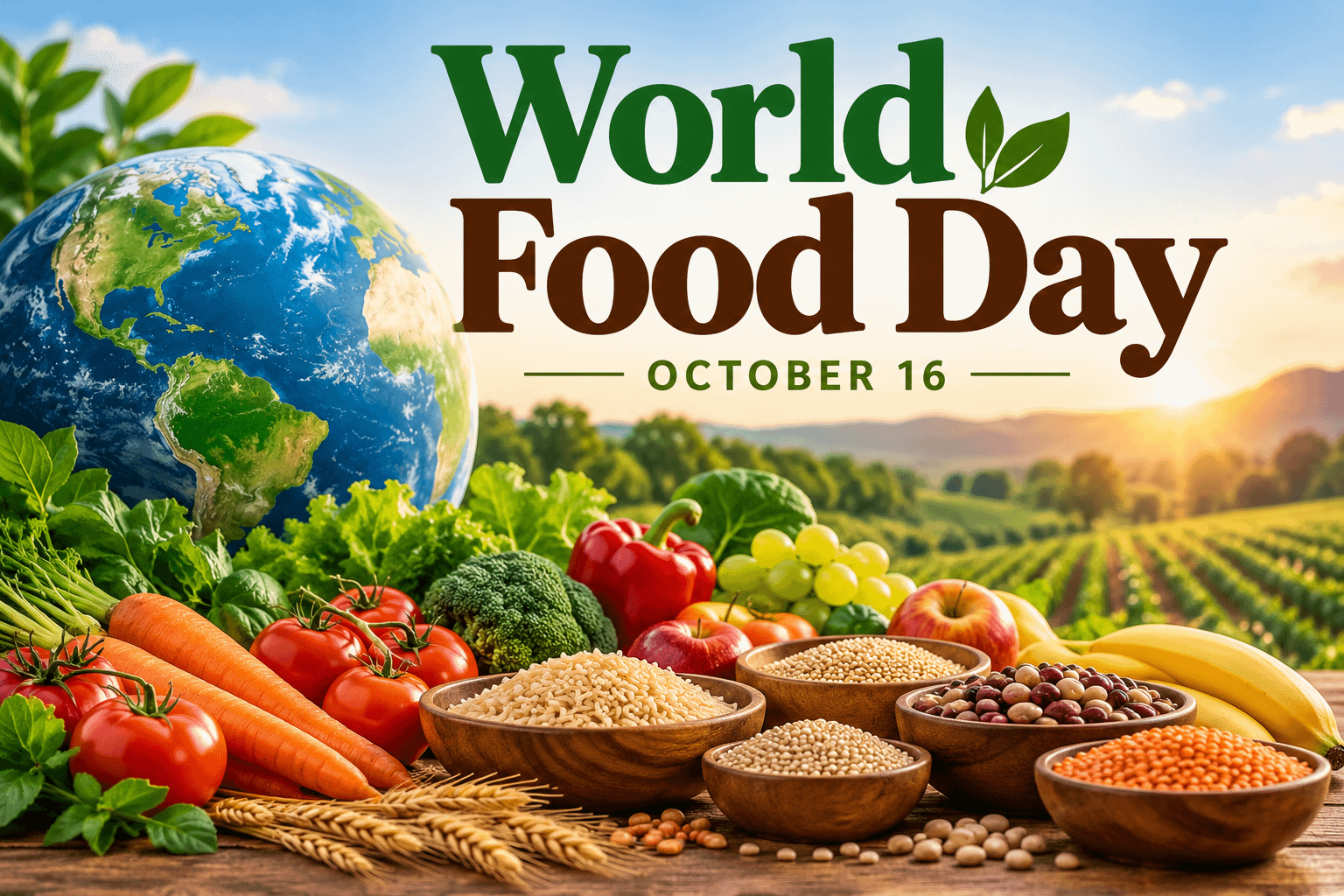
Every year on October 16, people around the world observe World Food Day, a day that reminds us of something incredibly simple yet deeply important: everyone deserves access to enough nutritious food to live a healthy life.
Food is something many of us interact with several times every day. We wake up thinking about breakfast. We plan what we are going to have for lunch. Families gather around dinner tables. Friends meet at restaurants. Communities celebrate holidays with special meals and recipes that have been passed from generation to generation.
Food is more than fuel.
Food is family.
Food is culture.
Food is tradition.
Food is comfort.
Food is community.
Yet while some people are deciding what they want for dinner, others are wondering whether they will have dinner at all.
World Food Day encourages us to recognize that reality while also reminding us that individuals, communities, farmers, businesses, governments, charities, and organizations can all play a role in building a world where nutritious food is more accessible.
What Is World Food Day?
World Food Day is observed every year on October 16, commemorating the founding of the Food and Agriculture Organization of the United Nations (FAO) in 1945.
The observance has grown into an international opportunity to raise awareness about hunger, nutrition, agriculture, food security, sustainable farming, and the future of the world’s food systems.
But World Food Day is not simply about discussing hunger.
It is also about asking larger questions.
How is our food produced?
How much food do we waste?
Are farmers receiving the support they need?
Can families afford nutritious meals?
How can communities make healthy food more accessible?
How can agriculture adapt to changing environmental conditions?
And perhaps the biggest question of all:
How can we create a future where everyone has enough to eat?
Those questions do not have one simple answer. Food systems are incredibly complex, stretching from farms and fisheries to processing facilities, transportation networks, grocery stores, restaurants, food banks, kitchens, and eventually our plates.
That means improving the system requires cooperation at almost every level.
Food Is a Basic Human Need
There are many things people want in life, but food is something every human being needs.
Our bodies require nutrients and energy to function. Children need adequate nutrition as they grow and develop. Adults need nutritious food to maintain their health and energy. Older adults may have specific nutritional needs that become increasingly important with age.
When people consistently lack access to nutritious food, the consequences can affect nearly every part of life.
It can influence physical health.
It can affect a child’s ability to learn.
It can make working more difficult.
It can create additional stress for families already struggling financially.
It can force parents to make painful choices between groceries, housing, utilities, transportation, medications, and other necessities.
Food insecurity is therefore about much more than an empty refrigerator.
It can become part of a much larger cycle of hardship.
Hunger Can Exist Closer Than We Realize
When people hear the word “hunger,” they sometimes imagine a crisis happening thousands of miles away.
Global hunger is certainly a major issue, particularly in places affected by poverty, conflict, displacement, natural disasters, and unstable food systems.
But food insecurity can also exist in our own communities.
It may be the family living down the street.
It may be a senior citizen living on a limited income.
It may be a college student trying to pay tuition and buy groceries.
It may be a single parent working multiple jobs.
It may be someone who recently lost a job.
It may be someone experiencing homelessness.
It may even be a coworker who has never told anyone they are struggling.
Hunger does not always look the way we expect it to look.
Someone can have a job and still struggle to afford groceries. Someone can have housing and still experience food insecurity. A family can appear financially stable while quietly facing difficult decisions every month.
That is why compassion matters.
We rarely know everything another person is going through.
The People Behind Our Food
World Food Day is also an opportunity to appreciate the enormous number of people responsible for putting food on our tables.
Think about something as simple as a loaf of bread.
Someone grows the grain.
Someone harvests it.
Someone transports it.
Someone processes it into flour.
Someone produces the other ingredients.
Someone bakes the bread.
Someone packages it.
Someone transports it again.
Someone stocks it at a store.
Finally, someone purchases it and brings it home.
One ordinary item can represent the work of dozens—or even hundreds—of people across an interconnected food system.
Farmers are especially important.
Agriculture remains the foundation of the global food supply. Farmers wake up every day knowing their work depends on factors that are not always within their control, including weather, water availability, pests, disease, equipment costs, labor availability, market prices, and transportation.
World Food Day gives us an opportunity to recognize those farmers, ranchers, fishers, agricultural workers, food producers, truck drivers, grocery employees, restaurant workers, warehouse workers, and countless others who keep food moving from its source to our tables.
The Importance of Reducing Food Waste
One of the easiest ways many households can participate in the spirit of World Food Day is by becoming more thoughtful about food waste.
Think about how often food gets thrown away.
Leftovers are forgotten in the refrigerator.
Produce spoils before it gets used.
People buy more groceries than they can eat.
Restaurants may have excess food.
Food can also be lost during harvesting, transportation, storage, processing, and distribution.
Reducing waste begins with small habits.
Plan meals before shopping.
Check your refrigerator and pantry before buying more.
Freeze food that you cannot use immediately.
Learn how to store fruits and vegetables properly.
Use leftovers creatively.
Understand the difference between various food date labels.
Serve smaller portions and get seconds when needed rather than putting too much food on the plate.
One household reducing waste might seem insignificant.
Millions of households doing it can make a meaningful difference.
Supporting Local Food Banks
World Food Day can also become a day of action.
One of the most direct ways to help is supporting organizations already fighting hunger in your community.
Local food banks and food pantries regularly provide groceries and meals to families experiencing difficult circumstances.
Before donating food, however, check what your local organization actually needs.
Commonly requested items may include shelf-stable proteins, canned vegetables, canned fruit, rice, pasta, cereal, peanut butter, beans, cooking staples, and other nonperishable foods.
Some organizations may prefer financial donations because they can purchase food in bulk or obtain exactly what is needed.
Volunteering can be equally valuable.
Food organizations often need people to sort donations, pack boxes, distribute groceries, prepare meals, deliver food, or help with community events.
Giving does not always require writing a large check.
Sometimes it requires a few hours of your time.
Help Without Judgment
There is another important part of addressing hunger that receives less attention:
dignity.
People experiencing food insecurity should not be treated as though they have failed.
Life can change quickly.
A medical emergency can drain savings.
A job can disappear.
Rent can increase.
A vehicle can break down.
A relationship can end.
A natural disaster can destroy a home.
An unexpected expense can completely change a family’s financial situation.
Many people are only a few major setbacks away from needing help themselves.
When someone needs food assistance, compassion should come before judgment.
If we truly want stronger communities, people should be able to ask for help without being humiliated for needing it.
Teach Children About Food
World Food Day also provides parents and teachers with an opportunity to help children understand where food comes from.
Many children primarily experience food after it has already been packaged and placed on a grocery store shelf.
Teaching them about agriculture can help them appreciate the journey behind their meals.
Plant a small vegetable garden.
Visit a farmers market.
Cook a meal together.
Teach children how different fruits and vegetables grow.
Talk about farmers and agriculture.
Explain why wasting food matters.
Let children help choose items to donate to a food pantry.
These experiences can teach responsibility, gratitude, generosity, and respect for the people who produce our food.
Support Local Farmers
Another way to recognize World Food Day is by supporting farmers and local food producers whenever practical.
Farmers markets can provide opportunities to purchase directly from growers while learning more about how food is produced.
Local farms may also offer seasonal produce stands, community-supported agriculture programs, farm tours, or pick-your-own opportunities.
Supporting local agriculture will not solve every problem in the food system, but it can strengthen connections between communities and the people producing their food.
It can also remind us that food does not begin at the supermarket.
It begins with land, water, seeds, animals, labor, knowledge, and people willing to do difficult work.
Food Brings People Together
There is another side of World Food Day worth celebrating.
Food has an extraordinary ability to connect people.
Think about some of your strongest memories.
Chances are food is connected to many of them.
Thanksgiving dinner.
Christmas cookies.
A summer barbecue.
Birthday cake.
Pizza after a baseball game.
Breakfast with your grandparents.
Your mother’s favorite recipe.
Your father’s grilling technique.
A meal your family has prepared for generations.
The restaurant where you went on your first date.
The dish someone made when you were having a difficult week.
Food becomes connected to people, places, traditions, and moments.
Sometimes a recipe becomes a family history written through ingredients.
That is one reason food matters beyond nutrition.
Sharing a meal creates opportunities for conversation and connection.
Invite Someone to Your Table
World Food Day does not necessarily require a major event.
Sometimes the most meaningful thing you can do is invite someone to eat with you.
Maybe there is a neighbor who lives alone.
Maybe someone recently lost a loved one.
Maybe a friend is going through a difficult period.
Maybe there is a coworker who does not have family nearby.
Invite them over.
Cook something simple.
Sit together.
Talk.
Listen.
Laugh if laughter comes.
Sometimes the meal itself is not what someone remembers.
They remember that someone cared enough to make room for them at the table.
Small Actions Matter
Global hunger is an enormous issue, and enormous problems can make individuals feel powerless.
But we should not confuse being unable to solve the entire problem with being unable to help.
You may not be able to feed the world.
You might be able to feed one person.
You may not be able to eliminate food waste worldwide.
You can reduce waste in your home.
You may not be able to transform global agriculture.
You can support a farmer in your community.
You may not be able to stock every food pantry.
You can donate a bag of groceries.
You may not be able to volunteer every week.
You can volunteer once.
You may not be able to change someone’s entire life.
You can make today a little easier.
Small acts become powerful when enough people participate.
Ways to Observe World Food Day
There are many meaningful ways to recognize October 16:
- Donate food or money to a local food bank or pantry.
- Volunteer with an organization providing meals.
- Reduce food waste at home.
- Support local farmers and food producers.
- Cook a nutritious meal with your family.
- Learn about food insecurity in your community.
- Share extra food responsibly when possible.
- Teach children where their food comes from.
- Start a small garden.
- Organize a neighborhood food drive.
- Thank someone working in agriculture or food service.
- Invite someone who may be lonely to share a meal.
- Learn a traditional recipe from another culture.
- Encourage conversations about hunger without judging those who need assistance.
You do not need to do everything.
Choose one thing and start there.
Gratitude for What Is on Our Plates
World Food Day can also remind us to practice gratitude.
It is easy to take ordinary meals for granted.
We open the refrigerator.
We grab something from the pantry.
We stop at a restaurant.
We order delivery.
Food becomes part of the routine.
But every meal represents resources, labor, transportation, agriculture, and opportunity.
Taking a moment to appreciate that can change how we think about what we eat and what we throw away.
Gratitude does not mean feeling guilty for having food.
It means recognizing its value.
And perhaps that gratitude can inspire generosity toward someone who does not have enough.
A Table With Room for Everyone
World Food Day ultimately asks us to imagine something simple:
A world where people do not have to wonder whether they will eat tomorrow.
A world where children receive the nutrition they need to grow.
A world where farmers can continue producing food sustainably.
A world where less food is unnecessarily wasted.
A world where communities take care of people experiencing difficult circumstances.
We may still be far from that goal.
But progress begins when people decide that hunger is not someone else’s problem.
It belongs to all of us.
Because food connects all of us.
Every farm.
Every grocery store.
Every restaurant.
Every kitchen.
Every dinner table.
Every community.
This World Food Day on October 16, take a moment to appreciate the food in front of you—and then consider what you can do to help someone else have a place at the table.
Sometimes changing the world begins with something as simple as sharing a meal.
What is one thing you can do this World Food Day to help make sure someone in your community has enough to eat?