
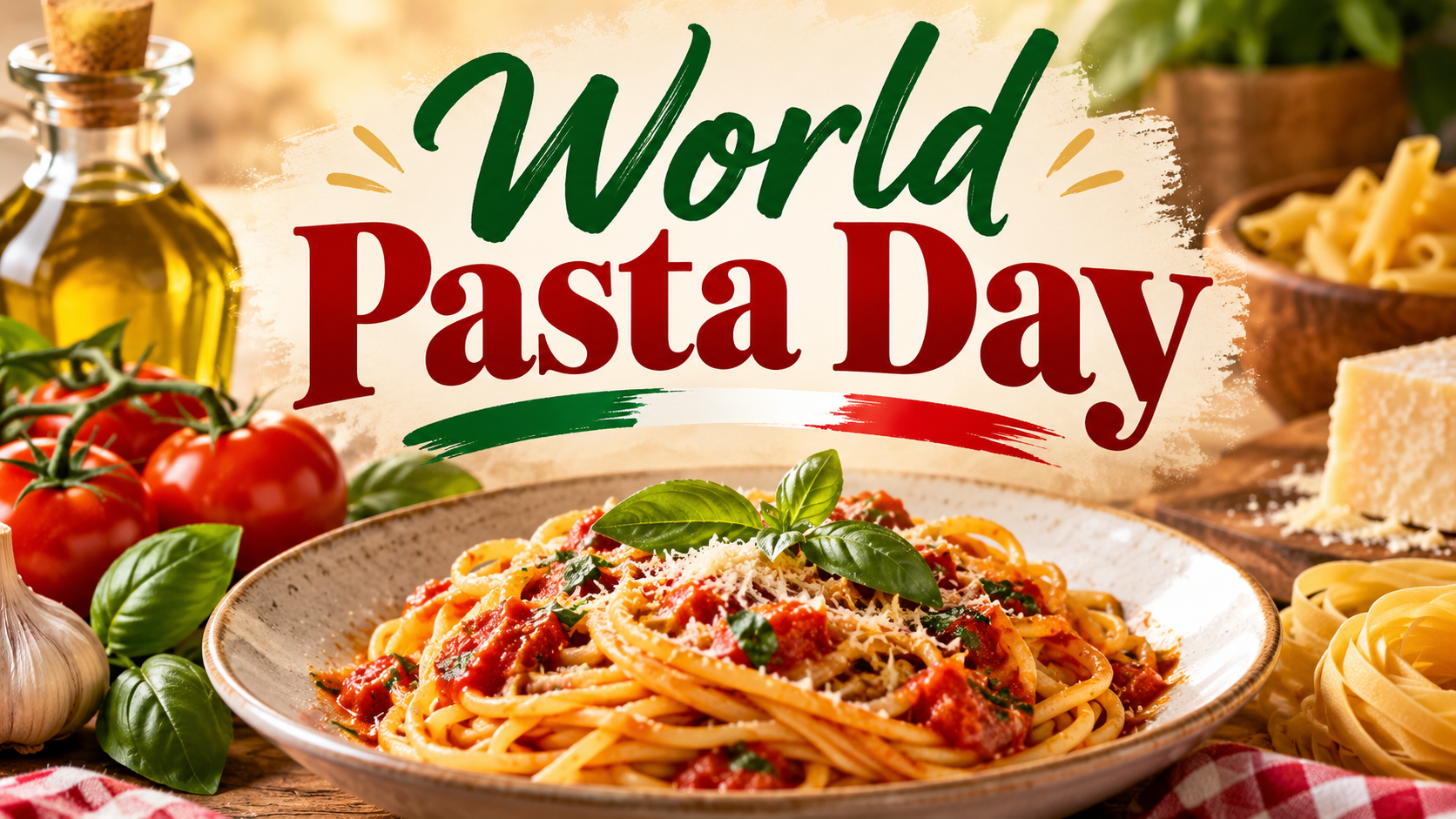
Every year on October 25, pasta lovers around the world have a delicious reason to celebrate: World Pasta Day.
Few foods have achieved the universal popularity of pasta. From a steaming bowl of spaghetti and meatballs to creamy fettuccine Alfredo, hearty lasagna, baked ziti, macaroni and cheese, or a simple plate of pasta tossed with olive oil and garlic, pasta has a way of bringing comfort to the table.
World Pasta Day is more than an excuse to cook your favorite noodles. It is a celebration of food, culture, tradition, creativity, and the simple pleasure of gathering around a meal.
Pasta can be inexpensive or extravagant. It can be served as a quick weeknight dinner or as the centerpiece of an elaborate celebration. It can contain only a handful of ingredients or be transformed into a complex dish that takes hours to prepare.
Perhaps that versatility explains why pasta continues to be loved around the world.
So grab your favorite pasta, prepare the sauce, sprinkle on some Parmesan, and celebrate one of the world’s favorite comfort foods.
When Is World Pasta Day?
World Pasta Day is celebrated annually on October 25.
The observance began in 1995, when pasta producers from around the world gathered for the first World Pasta Congress in Rome.
The celebration was created to recognize pasta’s global popularity and highlight its place in cuisines and cultures around the world.
While pasta is strongly associated with Italy, its popularity extends far beyond Italian cuisine. Today, countless countries have developed their own pasta recipes, cooking traditions, sauces, and variations.
That global appeal makes the name World Pasta Day especially appropriate.
Why Do We Celebrate World Pasta Day?
Food has an incredible ability to connect people.
Recipes are passed from parents to children. Families gather around dinner tables. Friends meet at restaurants. Communities celebrate festivals centered around food.
Pasta fits naturally into all of these traditions.
World Pasta Day celebrates not only the food itself but also the many ways pasta has become part of everyday life.
Think about how many memories can be connected to a pasta dish.
Maybe it was your grandmother’s homemade spaghetti sauce simmering on the stove.
Perhaps it was macaroni and cheese you loved as a child.
Maybe it was the lasagna served every Christmas or another family gathering.
It could even be a simple bowl of noodles you learned to cook when you first lived on your own.
Sometimes our favorite foods aren’t our favorites because they are complicated. They become special because of the people, places, and memories attached to them.
A Brief History of Pasta
The history of pasta is much more complicated than the popular story that Marco Polo brought it back to Italy from China.
Foods made from mixtures of grain and water existed in different civilizations long before Marco Polo’s travels.
Ancient cultures prepared various dough-based foods, and pasta-like dishes developed over centuries in different parts of the world.
By the Middle Ages, forms of dried pasta were already being produced and consumed around the Mediterranean. Dried pasta was especially useful because it could be stored for long periods, making it valuable for travelers and sailors.
Italy eventually became the country most closely associated with the development and refinement of pasta traditions.
Different Italian regions developed their own shapes, sauces, ingredients, and cooking techniques.
Over generations, pasta became deeply woven into Italian culinary culture.
Italian immigration later helped spread pasta dishes around the world, including throughout the United States.
Today, pasta is truly international.
There Are Hundreds of Pasta Shapes
Walk down the pasta aisle at a grocery store and you’ll quickly realize spaghetti is only the beginning.
There are hundreds of pasta shapes and varieties.
Some are long and thin. Others are short and hollow. Some are twisted to capture sauce, while others are shaped specifically for stuffing or baking.
Popular varieties include:
- Spaghetti — long, thin strands that work with countless sauces.
- Fettuccine — wide, flat noodles commonly paired with creamy sauces.
- Penne — short tubes with angled ends that hold thick sauces well.
- Rigatoni — larger tubes with ridges that capture hearty sauces.
- Farfalle — the famous bow-tie-shaped pasta.
- Linguine — long, flat noodles narrower than fettuccine.
- Lasagna — broad sheets layered with sauce, cheese, meat, vegetables, or other fillings.
- Ravioli — stuffed pasta pockets containing cheese, meat, vegetables, or other fillings.
- Tortellini — small ring-shaped stuffed pasta.
- Fusilli — spirals designed to capture sauce in their curves.
- Orecchiette — small pasta shaped somewhat like little ears.
- Macaroni — small curved tubes famously used for macaroni and cheese.
The shape isn’t merely decorative.
Different pasta shapes interact with sauces differently.
A delicate sauce might work beautifully with thin pasta, while a chunky meat sauce benefits from pasta with ridges, curves, or hollow centers that can capture the ingredients.
The Magic Is Often in the Sauce
Pasta itself can be relatively simple, which makes the sauce incredibly important.
One of the wonderful things about pasta is the enormous range of sauces you can pair with it.
Marinara
A classic tomato-based sauce made with ingredients such as tomatoes, garlic, herbs, and olive oil.
Bolognese
A rich meat-based sauce traditionally associated with Bologna, Italy.
Pesto
A flavorful sauce traditionally made with basil, garlic, pine nuts, Parmesan cheese, and olive oil.
Alfredo
A rich and creamy preparation commonly associated in America with butter, Parmesan, and cream.
Carbonara
A Roman pasta dish traditionally made with eggs, cheese, cured pork, and black pepper.
Aglio e Olio
One of the best examples of how simple pasta can be.
The dish primarily combines pasta with garlic and olive oil, often with red pepper flakes and parsley.
Sometimes a few good ingredients are all you need.
Pasta in America
Pasta has become deeply embedded in American food culture.
Spaghetti and meatballs, baked ziti, lasagna, macaroni and cheese, pasta salad, chicken Alfredo, and countless other dishes are staples in American homes and restaurants.
Italian-American communities played a major role in making pasta popular throughout the United States.
Over time, traditional Italian dishes mixed with American ingredients, tastes, and cooking styles.
The result was an enormous Italian-American food culture with pasta at its center.
Today, you don’t need to visit an Italian restaurant to find pasta.
It appears everywhere from family kitchens and school cafeterias to neighborhood restaurants and fine-dining establishments.
Why Pasta Is Such a Great Family Meal
One reason pasta remains popular is practicality.
It can feed several people without requiring an enormous grocery budget.
A simple meal might consist of pasta, tomato sauce, vegetables, garlic bread, and a salad.
For larger families, pasta dishes can easily be doubled or tripled.
Baked dishes such as lasagna, stuffed shells, and baked ziti are especially convenient when feeding a crowd.
Pasta is also easy to customize.
One person might prefer meat sauce while another wants vegetables.
Someone might enjoy spicy arrabbiata while another prefers a mild cream sauce.
With a few different ingredients, everyone can create something they enjoy.
How to Celebrate World Pasta Day
The most obvious way to celebrate October 25 is also the best:
Eat pasta.
But you can make the celebration much more interesting.
Cook Your Favorite Pasta Dish
Start with something you already love.
Make spaghetti and meatballs, lasagna, Alfredo, baked ziti, macaroni and cheese, or your family’s favorite recipe.
Try a Pasta You’ve Never Had Before
Instead of automatically grabbing spaghetti, experiment with a different shape.
Try bucatini, pappardelle, orecchiette, cavatappi, gnocchi, tortellini, or another variety you’ve never cooked.
Make Homemade Pasta
Homemade pasta requires additional work, but the experience can be part of the celebration.
Making dough, rolling it out, cutting the noodles, and preparing a sauce turns dinner into an activity.
It can be especially fun with children, friends, or family.
Have a Pasta Night
Invite family or friends over and create a pasta bar.
Prepare several pasta varieties and sauces, then offer toppings such as Parmesan cheese, fresh herbs, grilled chicken, meatballs, mushrooms, peppers, spinach, and crushed red pepper.
Everyone can build their own plate.
Visit a Local Italian Restaurant
Don’t feel like cooking?
World Pasta Day is a perfect excuse to support a neighborhood Italian restaurant.
Order something familiar or choose a dish you’ve never tried.
Share a Family Recipe
If your family has a pasta recipe that has been passed down through generations, October 25 is a wonderful time to preserve it.
Write it down.
Share it with your children.
Teach someone else how to make it.
Recipes can become pieces of family history.
Make Your Pasta Dinner Even Better
A few small details can transform an ordinary pasta dinner.
Start by generously salting the cooking water.
Cook pasta until it reaches the texture you prefer, with al dente pasta retaining a slight firmness when bitten.
Before draining your pasta, consider saving some pasta water. The starchy water can help sauces cling to the noodles and can be useful when adjusting the consistency of a sauce.
Instead of simply pouring sauce over plain noodles, finish the pasta in the sauce whenever the recipe allows.
Add freshly grated cheese, herbs, cracked pepper, or a drizzle of good olive oil before serving.
Then complete the meal with garlic bread, roasted vegetables, salad, or another simple side.
Pasta Doesn’t Have to Be Complicated
Some of the best pasta dishes demonstrate that good food doesn’t always require dozens of ingredients.
Pasta with olive oil, garlic, Parmesan, and black pepper can be incredibly satisfying.
So can pasta tossed with tomatoes, basil, and mozzarella.
The quality and balance of the ingredients often matter more than the number of ingredients.
That simplicity is one of pasta’s greatest strengths.
You can open the refrigerator, see what ingredients you have available, and create something entirely different every time.
Pasta Brings People Together
There is something naturally communal about a large bowl of pasta in the middle of a table.
People serve themselves.
Someone passes the Parmesan.
Another person grabs the garlic bread.
Conversation begins.
For a little while, everyone slows down and shares a meal.
That experience represents something larger than pasta.
Meals have always helped people connect.
Birthdays, holidays, weddings, family reunions, Sunday dinners, romantic dates, and ordinary Tuesday nights all become opportunities to sit together.
The food eventually disappears.
The memories can remain for decades.
October 25 Is the Perfect Day to Try Something New
World Pasta Day doesn’t require decorations, gifts, or complicated plans.
You only need an appetite.
Use October 25 as an opportunity to explore a pasta dish you’ve never experienced before.
Try making fresh pasta.
Experiment with a new sauce.
Visit a family-owned Italian restaurant.
Ask someone in your family for their favorite pasta recipe.
Or prepare the meal you’ve eaten a hundred times simply because you love it.
There isn’t a wrong way to celebrate.
Final Thoughts on World Pasta Day
World Pasta Day on October 25 celebrates a food that has crossed borders, generations, and cultures.
Pasta can be simple enough for a quick dinner and elegant enough for a special occasion.
It can remind us of childhood, family traditions, favorite restaurants, romantic dinners, holidays, or nights spent cooking with people we love.
That may be the real beauty of pasta.
It’s more than noodles and sauce.
It’s comfort.
It’s tradition.
It’s creativity.
And sometimes it’s simply a warm meal shared with someone who matters.
This World Pasta Day, cook your favorite recipe, try something you’ve never tasted before, or gather the people you care about around the table.
Then raise your fork and celebrate one of the world’s most beloved foods.
What’s your favorite pasta dish—spaghetti and meatballs, lasagna, fettuccine Alfredo, macaroni and cheese, carbonara, or something completely different?




Leave a ReplyCancel reply