
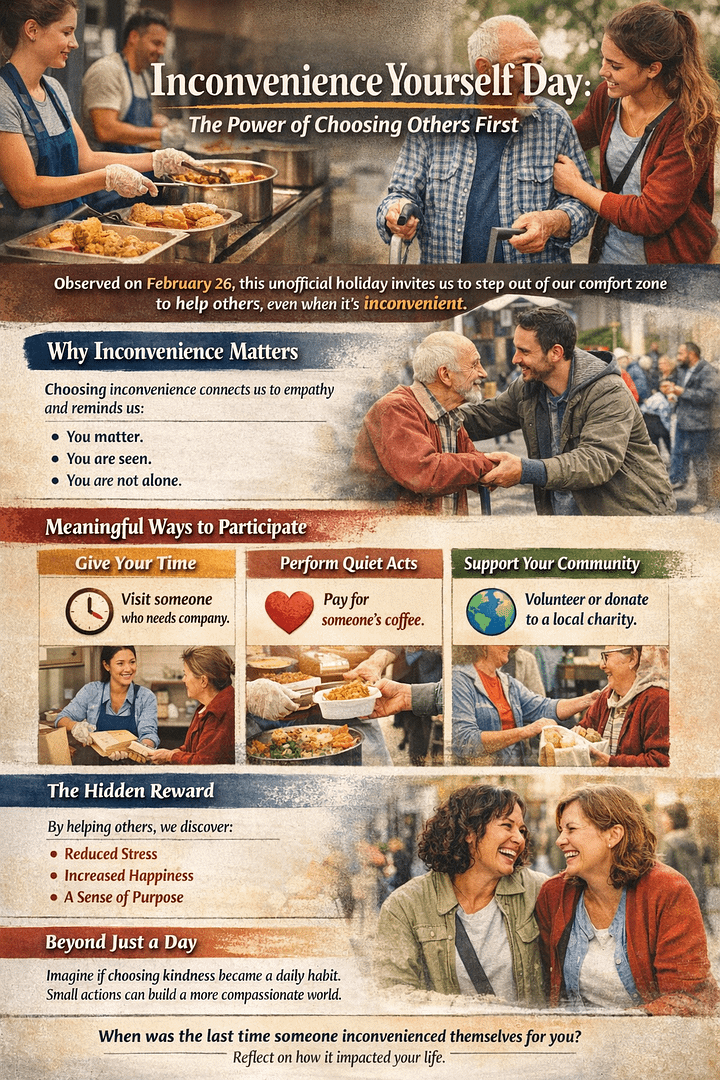
In a culture obsessed with convenience, efficiency, and instant gratification, Inconvenience Yourself Day stands as a quiet but powerful rebellion. Observed each year on fourth Wednesday of February, this unofficial holiday challenges us to do something many of us avoid: intentionally disrupt our comfort for the benefit of someone else.
At first glance, the idea may sound counterintuitive. Why would anyone choose inconvenience in a world designed to eliminate it? Yet the deeper message behind this day reveals a truth often forgotten — meaningful human connection rarely happens when life is perfectly convenient.
The Meaning Behind the Day
Inconvenience Yourself Day encourages individuals to perform acts of kindness that require genuine effort. It’s not about random politeness or surface-level gestures; it’s about stepping beyond what is easy.
Convenience prioritizes self.
Inconvenience makes room for others.
The holiday reminds us that compassion often requires:
Extra time
Emotional energy
Patience
Personal sacrifice
These small costs transform ordinary kindness into something memorable and deeply human.
How Modern Life Made Convenience King
Technology has reshaped how we live:
Groceries arrive with a click.
Conversations happen through screens.
Navigation apps eliminate getting lost.
Entertainment streams instantly.
While these innovations improve daily life, they also subtly reduce opportunities for spontaneous human interaction. We move faster but sometimes feel more disconnected.
Convenience can unintentionally create emotional distance. We pass strangers without noticing them, rush through conversations, and treat interruptions as problems rather than opportunities.
Inconvenience Yourself Day asks us to reverse that mindset — even if only briefly.
The Psychology of Helping Others
Research in psychology consistently shows that helping others benefits both the giver and the receiver. Acts of kindness activate reward centers in the brain, releasing chemicals associated with happiness and bonding.
When we inconvenience ourselves for someone else, we experience:
A stronger sense of purpose
Increased empathy
Reduced feelings of isolation
Greater emotional resilience
In other words, inconvenience becomes an investment in well-being.
The paradox is simple: giving time away often makes life feel richer, not poorer.
Everyday Opportunities We Often Miss
Most chances to inconvenience ourselves don’t appear dramatic. They hide in ordinary moments we usually rush past.
Consider how often we:
Avoid eye contact because we’re busy.
Ignore messages because responding takes effort.
Choose speed over conversation.
Walk past someone struggling because we assume someone else will help.
Inconvenience Yourself Day encourages awareness. It teaches us to pause long enough to notice need — and then respond.
Meaningful Ways to Participate
You don’t need a grand plan. The spirit of the day lives in intentional choices.
⏰ Give Someone Your Time
Time is one of the most valuable gifts we can offer.
Visit a family member or friend you haven’t seen recently.
Listen without checking your phone.
Mentor or encourage someone who needs guidance.
🧡 Perform Quiet Acts of Service
Kindness doesn’t require an audience.
Pay for someone’s coffee.
Leave an encouraging note.
Help a coworker finish a difficult task.
🌎 Support Your Community
Small contributions strengthen collective well-being.
Volunteer locally.
Donate items you no longer use.
Offer skills or knowledge to someone learning something new.
💬 Choose Patience Over Frustration
Sometimes inconvenience is simply choosing grace.
Let someone go ahead in line.
Respond kindly instead of reacting emotionally.
Slow down when others need extra understanding.
The Courage to Be Interrupted
One of the greatest barriers to kindness is the fear of interruption. We guard our schedules tightly, believing productivity defines success.
But many of life’s most meaningful moments arrive unplanned:
A conversation that changes perspective.
A moment of comfort during someone’s hardship.
A simple gesture remembered for years.
Allowing ourselves to be interrupted is an act of humility — an acknowledgment that people matter more than perfect plans.
Building a Habit, Not Just a Holiday
While Inconvenience Yourself Day lasts only 24 hours, its lesson extends far beyond a single date.
Imagine adopting one intentional inconvenience each day:
Sending a thoughtful message.
Offering help before being asked.
Checking on someone who crosses your mind.
Over time, these actions reshape character. Kindness becomes instinct rather than effort.
And when enough individuals embrace that mindset, communities transform.
Why This Message Matters Now
In times marked by division, stress, and digital distance, choosing inconvenience may be one of the simplest ways to restore humanity.
We don’t always need bigger platforms, louder voices, or grand solutions. Often, what people need most is presence — someone willing to slow down long enough to care.
Inconvenience Yourself Day reminds us that compassion isn’t complicated. It simply requires intention.
Final Reflection
Convenience promises comfort.
Inconvenience creates connection.
When we willingly step outside our routines to serve others, we rediscover something essential about being human: we are meant to live not only for ourselves, but alongside one another.
So take the extra step. Spend the extra minute. Offer the extra kindness.
Because sometimes the smallest inconvenience becomes someone else’s greatest blessing — and your own deepest fulfillment.
Read More Holidays & National Days
Leave a ReplyCancel reply