
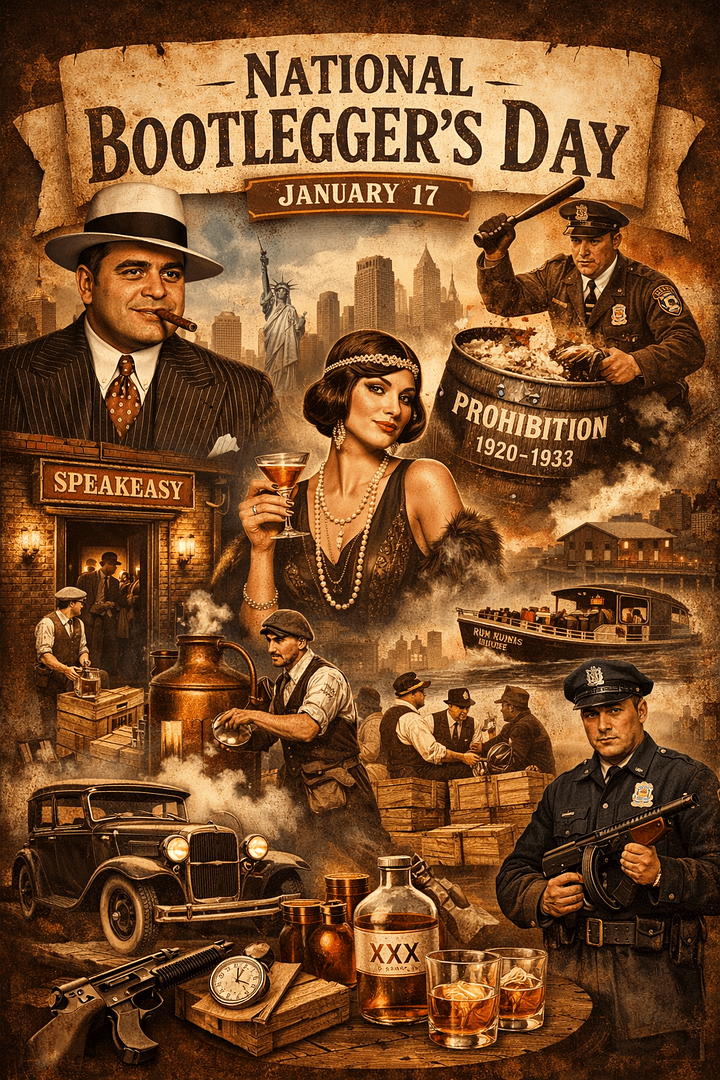
Every year on January 17, National Bootlegger’s Day takes us back to one of the most paradoxical chapters in American history—Prohibition. What began as a moral crusade to clean up society instead fueled rebellion, creativity, and an underground economy that forever changed American culture. This day is not about glorifying crime, but about remembering how laws, culture, and human nature collided in a way no one anticipated.
Prohibition Begins: A Noble Idea with Flawed Execution
On January 17, 1920, the 18th Amendment officially went into effect, banning the production, sale, and transportation of alcohol throughout the United States. Supporters believed alcohol was the root of crime, domestic violence, and poverty. By eliminating it, they hoped to create a healthier, more orderly nation.
Instead, Prohibition created a massive vacuum—one quickly filled by bootleggers.
Alcohol didn’t disappear. It went underground.
Who Were the Bootleggers?
Bootleggers ranged from everyday citizens trying to survive to large-scale criminal organizations running sophisticated smuggling operations. Some brewed alcohol in basements and backwoods stills. Others smuggled liquor from Canada, the Caribbean, and Europe using boats, cars, and even hidden compartments in coffins and ambulances.
The term bootlegger likely comes from the practice of hiding flasks inside boots or pant legs. Over time, these small acts of defiance evolved into sprawling networks that supplied an entire nation unwilling to give up drinking.
For many Americans, bootlegging wasn’t about rebellion—it was about necessity. Farmers lost income, factories closed, and jobs were scarce. Illicit alcohol became a way to survive.
Speakeasies: Where Culture Thrived in the Shadows
As bootleggers supplied alcohol, speakeasies became the heartbeat of the Prohibition era. These hidden bars—often accessed through passwords or secret doors—offered more than drinks. They provided escape.
Jazz music flourished. Women gained new social freedoms. Racial barriers blurred in music and nightlife in ways rarely seen before. The Roaring Twenties found its voice behind closed doors, fueled by illegal cocktails and fearless expression.
In many cities, thousands of speakeasies operated openly despite the law. New York City alone was rumored to have over 30,000 at the height of Prohibition—more bars than before alcohol was banned.
Organized Crime and Corruption
Prohibition didn’t eliminate crime—it professionalized it.
Criminal figures like Al Capone, Lucky Luciano, and Meyer Lansky built empires on bootleg alcohol. Smuggling routes were guarded like military operations. Violence increased as gangs fought over territory, and corruption spread through police departments, courts, and political offices.
Law enforcement agencies were understaffed, underpaid, and often bribed. The law became impossible to enforce consistently, eroding public trust in government and the justice system.
The Fall of Prohibition
By the early 1930s, it was clear Prohibition had failed. The Great Depression worsened the situation, and Americans wanted legal jobs, tax revenue, and an end to widespread corruption.
In 1933, the 21st Amendment repealed Prohibition, making it the only constitutional amendment ever reversed. Breweries reopened, jobs returned, and bootlegging slowly faded—though its legacy remained.
The Cultural Legacy of Bootlegging
Bootlegging left an indelible mark on American culture:
-
Classic cocktails were invented to mask the harsh taste of illegal liquor
-
Jazz and nightlife exploded in popularity
-
Pop culture embraced the anti-hero outlaw
-
Distrust of overreaching laws became deeply ingrained
Even today, the fascination with speakeasies, vintage cocktails, and Prohibition-era style reflects our enduring curiosity about that rebellious time.
What National Bootlegger’s Day Means Today
National Bootlegger’s Day is not a celebration of illegal activity—it’s a historical reflection. It reminds us that when laws clash with culture, people adapt in unexpected ways. It’s a lesson in unintended consequences, resilience, and the power of human ingenuity.
Today, people mark the occasion by:
-
Learning about Prohibition-era history
-
Visiting speakeasy-style bars
-
Exploring classic cocktails
-
Reflecting on personal freedom and social change
A Spirited Reminder from History
National Bootlegger’s Day invites us to remember a time when America tried to legislate morality—and discovered that human behavior is far more complex. The bootlegger became a symbol of resistance, survival, and innovation, shaping an era that still influences how we drink, socialize, and question authority.
History doesn’t just live in textbooks—it lingers in the stories we tell, the music we play, and the glasses we raise.
Read More Holidays & National Days
Leave a ReplyCancel reply