
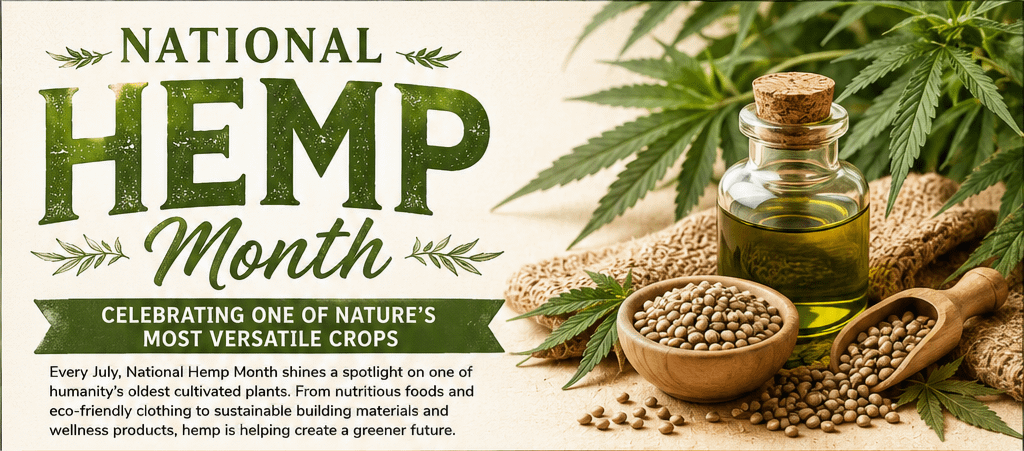
Every July, National Hemp Month shines a spotlight on one of humanity’s oldest cultivated plants. Once misunderstood and often confused with marijuana, hemp has experienced a remarkable resurgence thanks to its incredible versatility, environmental benefits, and growing importance in modern agriculture and manufacturing.
From nutritious foods and eco-friendly clothing to sustainable building materials and wellness products, hemp continues to prove that it is far more than just another crop. National Hemp Month provides an opportunity to educate the public, support farmers, and recognize hemp’s growing role in creating a greener future.
What Is Hemp?
Hemp is a variety of the Cannabis sativa plant species that contains extremely low levels of THC (tetrahydrocannabinol), the compound responsible for marijuana’s intoxicating effects. In the United States, hemp is legally defined as containing no more than 0.3% THC by dry weight.
Because of this low THC content, hemp does not produce a psychoactive “high.” Instead, it is grown for its durable fibers, nutritious seeds, beneficial oils, and industrial applications.
A Plant with Ancient Roots
Hemp has been cultivated for more than 10,000 years, making it one of civilization’s oldest agricultural crops.
Throughout history, hemp has been used to make:
- Rope
- Paper
- Clothing
- Canvas
- Ship sails
- Fishing nets
- Animal feed
- Lamp oil
- Food
Early American farmers, including several of the nation’s founders, grew hemp because of its usefulness and economic value. During World War II, the U.S. government even encouraged hemp production through the famous “Hemp for Victory” campaign to support military supply needs.
Why Hemp Matters Today
Modern technology has revealed that hemp is far more valuable than previously imagined.
Today, hemp is used in dozens of industries including:
Sustainable Textiles
Hemp fibers create durable, breathable fabrics that require fewer pesticides and less water than traditional cotton.
Benefits include:
- Long-lasting clothing
- Softer with age
- Naturally resistant to mold
- Excellent breathability
- Environmentally friendly production
Hemp as a Superfood
Hemp seeds are considered one of nature’s nutritional powerhouses.
They contain:
- Complete protein
- Omega-3 fatty acids
- Omega-6 fatty acids
- Fiber
- Magnesium
- Iron
- Zinc
- Vitamin E
Common hemp foods include:
- Hemp hearts
- Protein powder
- Milk alternatives
- Cooking oil
- Granola
- Nutrition bars
Many athletes and health-conscious consumers include hemp products as part of a balanced diet.
Hemp for Wellness
Many wellness products use hemp-derived ingredients, including cannabidiol (CBD), which is extracted from certain hemp plants.
Popular hemp wellness products include:
- Lotions
- Creams
- Massage oils
- Bath products
- Capsules
- Tinctures
- Topical balms
Consumers should always purchase products from reputable manufacturers that provide third-party testing and comply with applicable regulations.
Hemp Building Materials
One of hemp’s most exciting uses is in sustainable construction.
“Hempcrete” is a lightweight building material created by combining hemp hurds with lime-based binders.
Benefits include:
- Excellent insulation
- Breathability
- Fire resistance
- Mold resistance
- Carbon storage
- Energy efficiency
Although hempcrete is not typically load-bearing, it is increasingly used in environmentally friendly homes and commercial buildings.
A More Sustainable Crop
One reason hemp continues gaining popularity is its relatively low environmental impact.
Compared to many traditional crops, hemp can offer advantages such as:
- Reduced pesticide use
- Less water consumption
- Rapid growth
- Soil improvement
- Carbon sequestration
- Support for crop rotation
These qualities make hemp an attractive option for farmers looking to diversify while supporting more sustainable agricultural practices.
Hemp in Everyday Products
Many people use hemp every day without realizing it.
Products may include:
- Paper
- Bioplastics
- Shoes
- Backpacks
- Wallets
- Cosmetics
- Shampoo
- Soap
- Pet products
- Automotive composites
- Furniture
- Insulation
Researchers continue discovering new applications each year.
Supporting American Farmers
Since federal legalization of hemp cultivation under the 2018 Farm Bill, many American farmers have explored hemp as an alternative crop.
The industry supports:
- Family farms
- Manufacturing jobs
- Research institutions
- Small businesses
- Sustainable agriculture
- Rural economic development
As regulations continue to evolve, the hemp industry is expected to mature with improved processing infrastructure and expanded markets.
Common Misconceptions About Hemp
Despite growing awareness, myths still surround hemp.
Myth: Hemp gets people high.
False. Industrial hemp contains only trace amounts of THC and cannot produce intoxicating effects.
Myth: Hemp and marijuana are identical.
While both belong to the Cannabis sativa species, they are cultivated for very different purposes and contain dramatically different THC levels.
Myth: Hemp only has one use.
In reality, hemp can be incorporated into thousands of products across numerous industries, making it one of the world’s most versatile agricultural resources.
How to Celebrate National Hemp Month
There are many ways to recognize National Hemp Month:
- Try hemp seeds in a smoothie or salad.
- Purchase clothing made from hemp fibers.
- Learn about sustainable farming practices.
- Support local farmers and businesses that produce hemp products.
- Explore hemp-based personal care items.
- Read about the history of hemp cultivation.
- Share educational information to help reduce misconceptions.
- Attend agricultural fairs or sustainability events featuring hemp products.
Looking Toward the Future
Innovation continues to expand hemp’s possibilities. Researchers are exploring its potential in biodegradable plastics, renewable packaging, advanced textiles, construction materials, biofuels, and environmentally friendly manufacturing.
As sustainability becomes an increasingly important global priority, hemp is well positioned to contribute to solutions that reduce waste, conserve resources, and support a more resilient economy.
Final Thoughts
National Hemp Month is about more than celebrating a single crop—it’s about recognizing innovation, sustainability, and the power of agriculture to shape a better future. Hemp’s remarkable versatility allows it to contribute to industries ranging from food and fashion to wellness and construction, all while offering environmental benefits that make it an increasingly attractive choice for farmers and manufacturers alike.
Whether you’re trying hemp foods for the first time, choosing eco-friendly products, or simply learning more about this fascinating plant, National Hemp Month is an excellent reminder that some of the oldest crops can play an important role in building a more sustainable tomorrow.
Read More Holidays & National Days
Leave a ReplyCancel reply