Blog

  • Optimist Day: Celebrating the Power of Positive Perspective

    Optimist Day: Celebrating the Power of Positive Perspective

    Advertisements

    Optimist Day honors something invisible but incredibly powerful: the ability to believe in better.

    In a world filled with headlines, deadlines, and uncertainties, optimism is not a luxury — it’s a lifeline. This day celebrates the mindset that helps people rise after failure, heal after loss, and keep moving forward when giving up would feel easier.

    Optimism isn’t about pretending life is perfect. It’s about believing life can improve, even when the present moment is heavy.

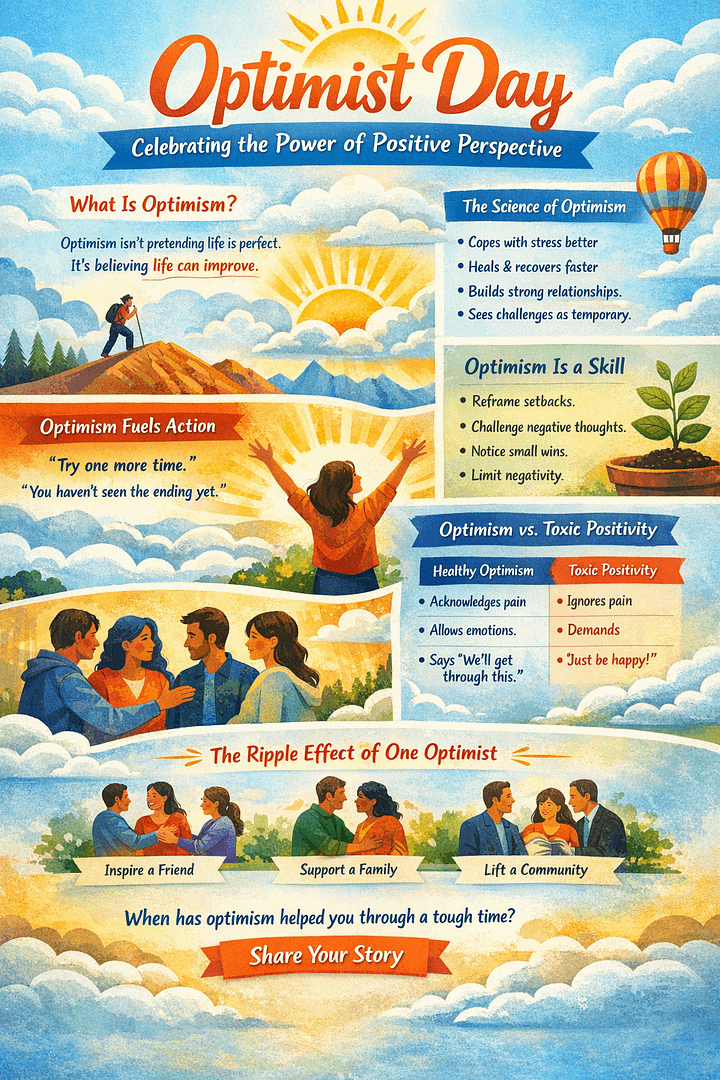
    🌤 What Is Optimism, Really?

    Optimism is often misunderstood.

    It’s not:

    Ignoring problems

    Forcing fake smiles

    Acting like pain doesn’t exist

    True optimism says:
    “This is hard… but it’s not the end of my story.”

    It allows space for grief, frustration, and setbacks — but it refuses to let those moments define the future. Optimism is grounded hope. It acknowledges reality while still believing change is possible.

    🧠 The Science Behind Optimism

    Optimism isn’t just a feel-good idea; it’s backed by psychology.

    Studies show optimistic people tend to:

    Cope with stress more effectively

    Experience lower levels of chronic anxiety

    Recover more quickly from illness and setbacks

    Maintain stronger social connections

    Why? Because optimism influences how the brain processes difficulty. Instead of seeing challenges as permanent and personal failures, optimists view them as temporary and solvable.

    That shift in thinking changes behavior. And behavior changes outcomes.

    🔥 Optimism Fuels Action

    When people lose hope, they stop trying.

    Optimism keeps effort alive. It whispers:

    “Try one more time.”

    “You haven’t seen the ending yet.”

    “There’s still something you can do.”

    That mindset is often the difference between quitting and breakthrough.

    History, innovation, recovery stories, and personal comebacks all share a common thread: someone believed progress was possible before proof existed.

    Optimism is belief in motion.

    🌱 Optimism Is a Skill You Can Practice

    Some people grow up in environments that nurture hope. Others don’t. The good news? Optimism can be learned and strengthened like a muscle.

    ✨ Reframe setbacks

    Instead of: “This always happens to me.”
    Try: “This is one moment, not my whole life.”

    ✨ Challenge worst-case thinking

    Ask yourself:

    Is this permanent?

    Is there another explanation?

    What’s one thing still within my control?

    ✨ Track small progress

    Big wins are rare. Small improvements are daily. Optimism grows when you notice steps, not just leaps.

    ✨ Protect your mental environment

    Limit constant negativity. What you consume influences how you see the world.

    🌧 Optimism in Difficult Seasons

    The strongest optimism doesn’t show up when life is easy — it appears when life feels unfair.

    Optimism during hardship sounds like:

    “I don’t feel strong today, but strength comes back.”

    “This chapter hurts, but it’s still a chapter — not the whole book.”

    “I can grieve and still believe.”

    It’s not denial. It’s endurance with hope attached.

    Optimism gives pain context and prevents it from becoming identity.

    🤝 The Social Power of Optimism

    Optimism isn’t just personal — it’s social.

    A hopeful person can:

    Calm panic in a crisis

    Encourage someone who’s ready to quit

    Inspire teamwork

    Shift the tone of a room

    Optimists often become emotional anchors for others. Their belief creates psychological safety — the sense that even if things go wrong, solutions exist.

    Hope spreads faster than we realize.

    🌞 Optimism vs. Toxic Positivity

    Optimist Day is not about forcing cheerfulness.

    There’s a difference between healthy optimism and toxic positivity:

    Healthy Optimism Toxic Positivity
    Acknowledges pain Dismisses pain
    Encourages growth Shames struggle
    Allows emotions Demands constant happiness
    Says “We’ll get through this” Says “Just be positive”

    Real optimism sits beside you in the dark and says, “We’re still moving toward light.”

    🌟 Everyday Ways to Celebrate Optimist Day

    You don’t need a big event. Small actions matter.

    Send an encouraging message

    Write down three things that are improving

    Compliment someone’s effort

    Take a small step toward a goal you’ve been avoiding

    Choose not to assume the worst

    Optimism often begins with a simple decision: today, I won’t give up on better.

    ❤️ The Heart of Optimist Day

    Optimist Day reminds us that perspective shapes experience. Two people can face the same situation and walk away with completely different futures — based on what they believe is possible.

    Optimism doesn’t guarantee an easy road.
    It guarantees you’ll keep walking it.

    It’s not blind faith.
    It’s brave faith.

    And sometimes, that bravery is what changes everything.

    Read More Holidays & National Days
  • National Homemade Soup Day – A Bowl Full of Comfort, Care, and Connection

    Advertisements

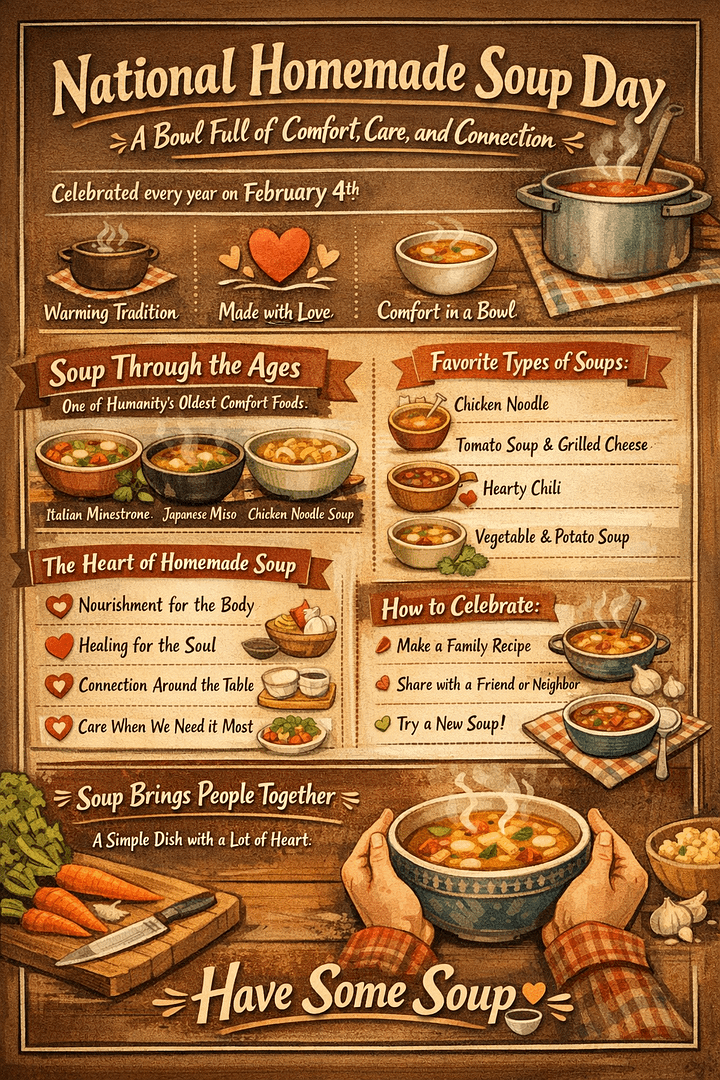
    Every year on February 4th, we celebrate one of the simplest and most soul-soothing foods ever created — homemade soup.

    Not the kind you pop open with a can opener.
    Not the rushed kind from a takeout container.

    We’re talking about the kind that simmers on the stove, fills the house with a familiar smell, and makes everyone ask, “What are you cooking?”

    Homemade soup isn’t just a meal.

    It’s tradition.
    It’s comfort.
    It’s love you can taste.


    Soup: One of Humanity’s Oldest Comfort Foods

    Long before kitchens had timers and gadgets, people were already making soup. All you needed was:

    • Heat

    • Water or broth

    • Whatever ingredients were available

    That meant soup existed in almost every culture:

    • Italian minestrone

    • Japanese miso soup

    • Mexican pozole

    • French onion soup

    • African peanut soup

    • American chicken noodle

    Different flavors. Same purpose: to nourish, stretch ingredients, and bring people together.

    Soup has always been a food of resilience — made during hard times, cold seasons, and moments when families needed something filling and affordable.

    And somehow… it always tastes like care.


    Why Homemade Just Hits Different

    There’s something special about soup made from scratch. It carries a warmth that microwave meals can’t imitate.

    When you make soup at home, you:

    • Choose every ingredient

    • Control the flavors

    • Adjust it to your mood

    • Add extra of what you love

    Too bland? Add herbs.
    Too thick? Add broth.
    Too simple? Toss in more veggies or spices.

    Homemade soup is forgiving. It doesn’t demand perfection — just attention.

    And the process itself can feel grounding. The chopping, stirring, and slow simmer can be surprisingly calming in a world that moves way too fast.


    The Emotional Side of Soup

    Soup is one of the few foods deeply tied to care and compassion.

    Think about when soup shows up:

    🤒 When someone is sick
    💔 After loss or hardship
    ❄ During cold, gloomy weather
    🏠 When someone moves into a new home
    👵 In family traditions passed down generations

    Soup often arrives when words feel small. It says, “I can’t fix everything, but I can feed you.”

    That’s powerful.


    Health in a Bowl

    Beyond comfort, homemade soup can be incredibly nourishing.

    Depending on the ingredients, soup can be:

    • Full of vitamins from vegetables

    • Rich in protein from beans or meat

    • Hydrating from broths

    • Gentle on the stomach

    • Easier to digest than heavy meals

    And unlike many processed foods, homemade soup usually has less sodium, fewer additives, and more real nutrients.

    It’s comfort food that doesn’t have to come with guilt.


    The Endless Variety of Soup

    There’s a soup for every mood and every season:

    🥣 Light & Fresh

    • Vegetable soup

    • Brothy chicken and rice

    • Lemon chicken orzo

    🧀 Creamy & Hearty

    • Potato soup

    • Broccoli cheddar

    • Clam chowder

    🌶 Bold & Filling

    • Chili

    • Tortilla soup

    • Gumbo

    🌍 Cultural Classics

    • Pho

    • Ramen

    • Borscht

    • Lentil soup

    • Split pea

    You could make a different soup every week and never run out of options.


    How to Celebrate National Homemade Soup Day

    You don’t need fancy skills — just a pot and a little time.

    Ideas for celebrating:

    ✔ Cook a family recipe you haven’t made in years
    ✔ Use up vegetables in the fridge before they go bad
    ✔ Make a double batch and freeze half
    ✔ Deliver a container to a neighbor
    ✔ Host a soup night where everyone brings a different kind
    ✔ Try a soup from another culture

    Even a simple broth with noodles and vegetables counts. Homemade is about heart, not perfection.


    Soup Brings People Together

    There’s a reason soup is often served at gatherings, community events, and family dinners. It’s easy to share. It stretches to feed more. It invites people to sit, slow down, and talk.

    A pot of soup on the stove feels welcoming. It makes a house feel like a home.


    A Simple Food with Big Meaning

    In a world full of fast food and busy schedules, homemade soup is a gentle reminder to slow down and care — for ourselves and for others.

    It’s not flashy.
    It’s not trendy.

    But it’s timeless.

    Because sometimes comfort doesn’t come in big gestures.

    Sometimes it comes quietly… in a warm bowl, with steam rising, and someone saying,
    “Have some soup.” 🥣💛

    Read More Holidays & National Days

  • National Snack Food Month: Celebrating the Little Bites That Make Life Better

    Advertisements

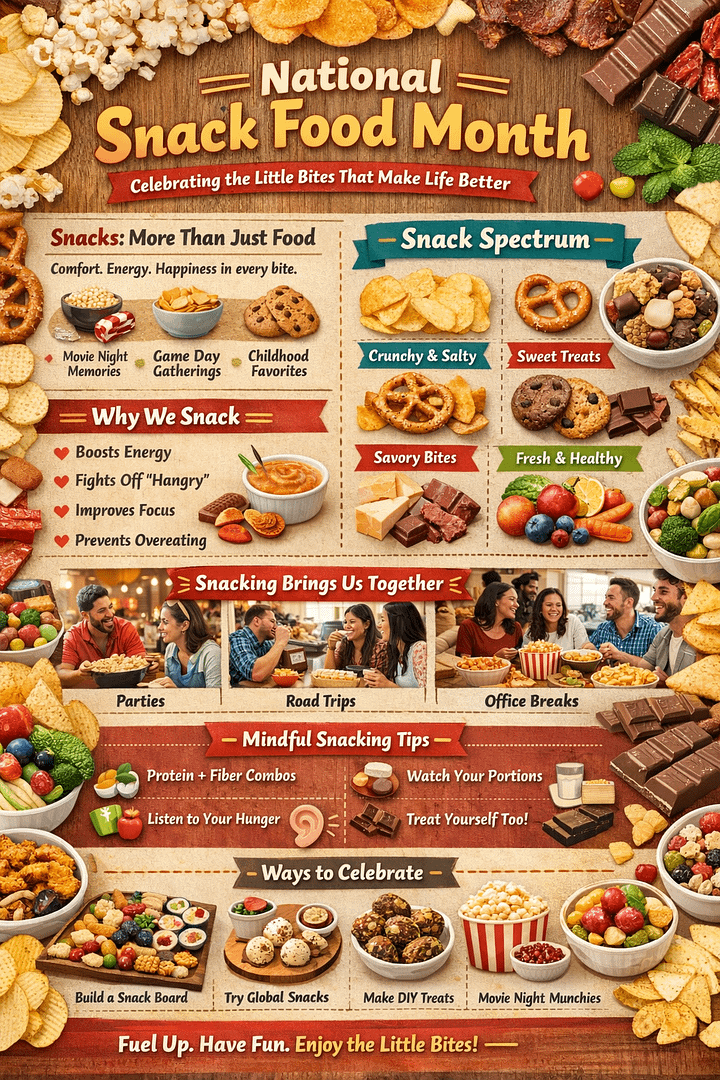
    February may be the shortest month on the calendar, but it carries one of the most universally loved celebrations — National Snack Food Month. It’s a whole month dedicated to the foods we reach for in between meals, during late-night cravings, long workdays, road trips, movie marathons, and those “I just need a little something” moments.

    Snacks are more than fillers between breakfast, lunch, and dinner. They’re part of our routines, our memories, and sometimes even our coping mechanisms. They comfort us, energize us, and occasionally save us from becoming a full-blown hangry disaster.

    The Emotional Side of Snacking

    Snacks are tied to feelings more than we realize.

    • Popcorn reminds us of movie nights and laughter

    • Chips and dip show up at parties and game days

    • Cookies take us back to childhood kitchens

    • A favorite candy bar can instantly lift a bad mood

    There’s a reason people say “comfort food.” Sometimes comfort comes in small packages — a handful of pretzels, a square of chocolate, or a warm mug with a biscotti on the side. Snacks often fill emotional spaces, not just stomachs.

    Snacks Keep Our Days Running

    Beyond comfort, snacks serve a real purpose. Our bodies run on energy, and long gaps between meals can leave us tired, foggy, and irritable. Smart snacking helps:

    • Maintain steady energy levels

    • Improve focus and productivity

    • Prevent overeating later

    • Support metabolism

    That mid-afternoon slump? A good snack can turn it around faster than another cup of coffee.

    The Evolution of Snacking

    Snacking has changed a lot over the years. It used to be simple — fruit, bread, maybe nuts. Now, grocery aisles are entire snack kingdoms. From protein bars and veggie chips to gourmet popcorn and international treats, snack choices are more diverse than ever.

    People snack for different reasons now too:

    • Convenience: Busy lives mean quick bites on the go

    • Health goals: High-protein, low-sugar, plant-based options

    • Indulgence: Because sometimes you just want the cookie

    • Exploration: Trying flavors from around the world

    Snacking has become part of lifestyle culture.

    The Snack Spectrum

    National Snack Food Month celebrates all kinds of snacks — no judgment zone.

    Crunchy & Salty Favorites

    • Potato chips

    • Tortilla chips and salsa

    • Pretzels

    • Popcorn

    • Cheese crackers

    Sweet & Satisfying

    • Cookies

    • Brownie bites

    • Granola bars

    • Chocolate-covered anything

    • Yogurt parfaits

    Savory & Filling

    • Cheese cubes

    • Jerky

    • Hard-boiled eggs

    • Hummus and pita

    Fresh & Lighter Choices

    • Apple slices

    • Berries

    • Baby carrots

    • Nuts and seeds

    • Smoothies

    The beauty of snacks is variety — they can match your mood, time of day, and energy level.

    Snacks Bring People Together

    Think about every gathering you’ve been to. What’s always there? Snacks.

    Bowls of chips at parties. Popcorn at movie nights. Finger foods at family get-togethers. Snacks are social glue. They give people something to share, pass around, and talk over.

    Even workplace break rooms are built around snack culture — coffee, vending machines, shared treats. Snacks create mini social moments in otherwise busy days.

    Mindful Snacking vs. Mindless Munching

    National Snack Food Month isn’t about eating nonstop. It’s about enjoying snacks in a way that works for you.

    Helpful habits include:

    • Combining protein + fiber (like nuts and fruit)

    • Pre-portioning instead of eating from the bag

    • Listening to hunger cues

    • Allowing treats without guilt

    Snacks aren’t “good” or “bad.” It’s the balance that matters.

    Creative Ways to Celebrate

    Make this month fun instead of routine:

    • Build a snack board with sweet, salty, and healthy options

    • Try a snack from another culture

    • Make homemade energy bites or roasted chickpeas

    • Host a movie night with a snack bar

    • Swap favorite snack ideas with friends or coworkers

    Snacks can turn an ordinary moment into something enjoyable.

    The Bottom Line

    National Snack Food Month celebrates the little things that make a big difference. Snacks fuel us, comfort us, connect us, and give us small moments of happiness in the middle of busy days.

    Sometimes joy really does come in handful-sized portions.

    Read More Holidays & National Days

  • National Missing Persons Day

    Advertisements

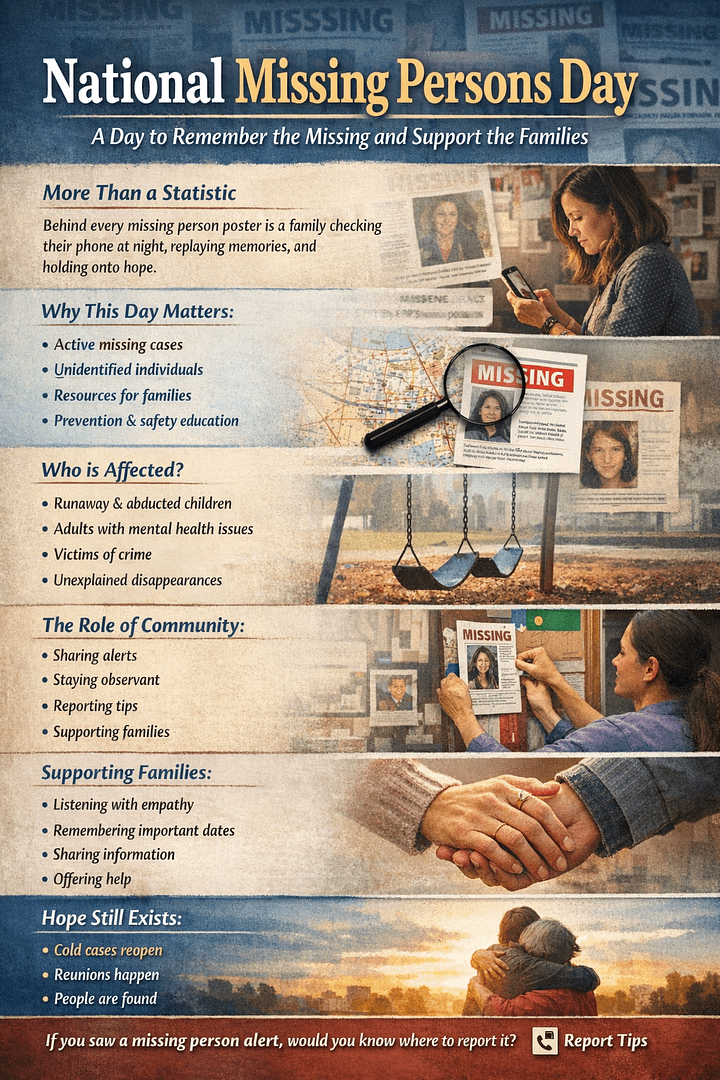
    Every year, thousands of families wake up to a reality they never imagined — someone they love is missing. National Missing Persons Day is a time to pause, remember, and act. It shines a light on the people who are still unaccounted for and the families who live in the painful space between hope and heartbreak.

    More Than a Statistic

    Missing persons cases are often talked about in numbers, but each case represents a real human being — a parent, a child, a sibling, a friend. Someone with a laugh, a routine, a favorite meal, and people who miss them deeply.

    Behind every missing person poster is a family checking their phone at night, replaying memories, and holding onto the smallest signs of possibility. The uncertainty can be one of the hardest parts. There’s no clear ending, no simple way to grieve, and no timeline for answers.

    Why This Day Matters

    National Missing Persons Day raises awareness about:

    • Active missing persons cases

    • Unidentified individuals who may be someone’s missing loved one

    • Resources for families navigating the search process

    • Prevention and safety education

    Awareness leads to attention. Attention leads to tips. And tips can lead to answers — sometimes even years later.

    Who Is Affected?

    Missing persons cases span all ages, backgrounds, and communities. They can involve:

    • Runaway or abducted children

    • Adults with mental health or medical conditions

    • Victims of crime

    • Individuals who disappear under unknown circumstances

    No one is immune. These cases remind us how fragile normal life can be — how an ordinary day can turn into a lifelong search.

    The Role of Community

    Many missing persons cases are solved because someone noticed something — a familiar face, a detail from a flyer, a memory triggered by a news story. Communities play a powerful role in:

    • Sharing missing person alerts

    • Staying observant

    • Reporting tips to authorities

    • Supporting affected families with compassion

    You never know when one small action might help bring someone home.

    Supporting Families

    Families of the missing often carry invisible weight. They live with ongoing uncertainty while navigating law enforcement processes, media attention, and emotional exhaustion. Support can look like:

    • Listening without trying to “fix” their pain

    • Remembering important dates

    • Sharing information respectfully

    • Offering practical help when possible

    Kindness matters, especially when answers are slow to come.

    Hope Still Exists

    As difficult as these stories are, there are reunions. Cold cases get reopened. DNA technology advances. People are found after years or even decades. Hope may change shape over time, but it doesn’t disappear easily.

    National Missing Persons Day reminds us that the missing are not forgotten — and neither are the people who love them.

    Read More Holidays & National Days

  • American Heart Month: A Reminder to Care for the Heart That Carries You

    Advertisements

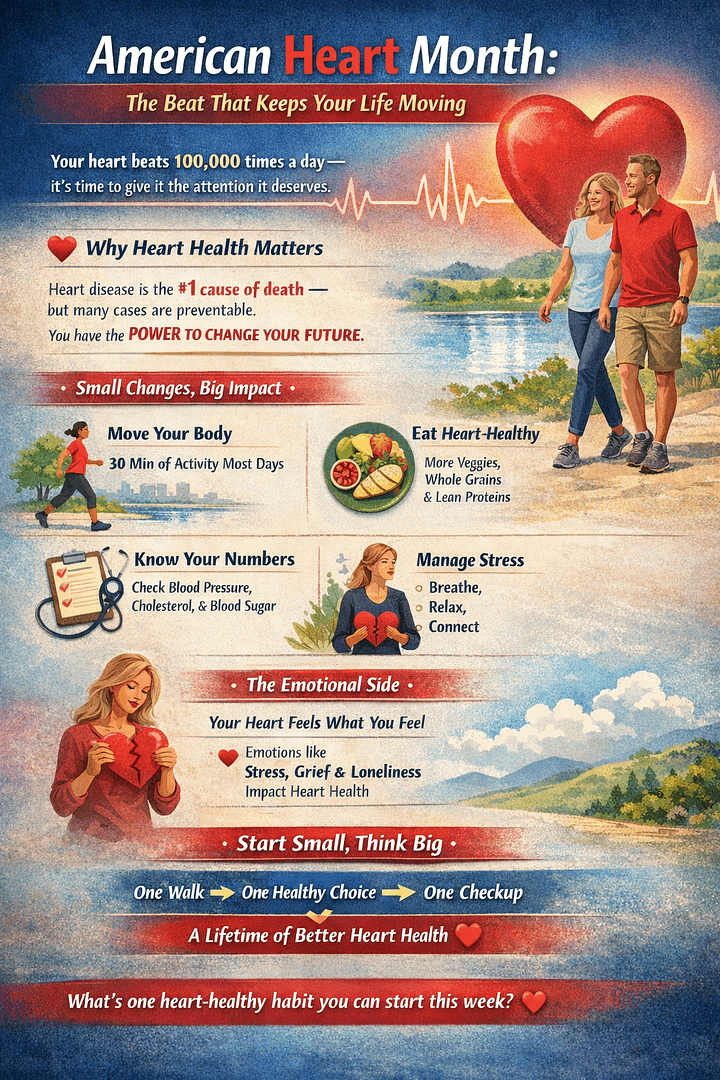
    Your heart is the quiet hero of your body.

    It beats about 100,000 times a day, pumps roughly 2,000 gallons of blood, and works every second of your life — without applause, without rest, without recognition. American Heart Month, observed every February, is our reminder to finally give this powerful organ the attention it deserves.

    Because heart health isn’t just about avoiding illness.

    It’s about protecting your energy, your future, your ability to laugh hard, walk far, hug tightly, and live fully.


    Why American Heart Month Matters

    Heart disease remains the leading cause of death for men and women in the United States. It affects people of all ages, backgrounds, and lifestyles. And one of the most surprising parts?

    Many people don’t realize they’re at risk until a serious event — like a heart attack or stroke — happens.

    American Heart Month isn’t meant to scare you. It’s meant to empower you.

    Most heart disease develops slowly over time, which means you have something powerful on your side:

    Opportunity to prevent it.


    Your Heart Is Strong — But It’s Not Invincible

    Your heart is a muscle. Like any muscle, it gets stronger with care and weaker with neglect.

    Modern life often makes things harder for it:

    • Long hours sitting

    • Processed and high-sodium foods

    • Constant stress

    • Poor sleep

    • Limited physical activity

    Over time, these factors can lead to:

    • High blood pressure

    • High cholesterol

    • Hardened or blocked arteries

    • Increased risk of heart attack or stroke

    The tricky part? These conditions often develop silently. You can feel “fine” while damage is building.

    That’s why awareness is everything.


    Small Changes That Make a Big Difference

    You don’t need to become a marathon runner or overhaul your entire diet overnight. Heart health improves with steady, realistic habits.

    ❤️ Move Your Body Regularly

    Physical activity strengthens the heart muscle, improves circulation, and lowers blood pressure. Even:

    • Brisk walking

    • Dancing in your living room

    • Gardening

    • Taking the stairs

    Thirty minutes most days can dramatically reduce heart disease risk.


    🥗 Eat in a Way That Loves You Back

    Heart-friendly eating isn’t about strict rules — it’s about patterns.

    Focus more on:

    • Fruits and vegetables

    • Whole grains

    • Beans and legumes

    • Fish and lean proteins

    • Nuts and healthy oils

    Cut back on:

    • Excess salt

    • Sugary drinks

    • Fried foods

    • Highly processed snacks

    Your heart responds surprisingly fast to better nutrition.


    🩺 Know Your Numbers

    Many heart risk factors are invisible without testing. Regular checkups help monitor:

    • Blood pressure

    • Cholesterol levels

    • Blood sugar

    • Weight and waist size

    Early detection gives you control.


    😮‍💨 Stress Is a Heart Issue, Too

    Chronic stress keeps your body in “fight or flight” mode, which can raise blood pressure, increase inflammation, and strain your heart over time.

    Helpful stress resets:

    • Deep breathing

    • Quiet time

    • Nature walks

    • Hobbies

    • Talking with someone you trust

    Caring for your emotional state is heart care — not a luxury.


    😴 Sleep Is Repair Time

    Poor sleep increases risk for high blood pressure, obesity, and diabetes — all linked to heart disease. Your heart needs consistent rest just like the rest of you.


    The Emotional Side of Heart Health

    We talk about diet and exercise, but emotions play a powerful role. Grief, loneliness, anxiety, and burnout can physically affect the heart.

    Your emotional well-being and cardiovascular health are connected.

    Connection, laughter, purpose, and support are protective factors — they help regulate the nervous system and reduce strain on the heart.


    This Month Is a Beginning, Not a Deadline

    American Heart Month isn’t about being perfect for 28 days.

    It’s about starting.

    One walk.
    One better meal.
    One glass of water instead of soda.
    One doctor’s appointment scheduled.
    One deep breath instead of one extra worry.

    Your heart doesn’t need dramatic gestures.

    It responds to daily care, repeated over time.


    Your Heart Has Carried You Through Everything

    Every joy.
    Every heartbreak.
    Every stressful day and peaceful moment.

    American Heart Month is your chance to return the favor — to listen, to support, and to protect the beat that keeps your life moving.

    Because a healthy heart isn’t just about living longer.

    It’s about living better.

    Read More Holidays & National Days

  • Candlemas Day: A Celebration of Light, Hope, and Quiet Renewal

    Advertisements

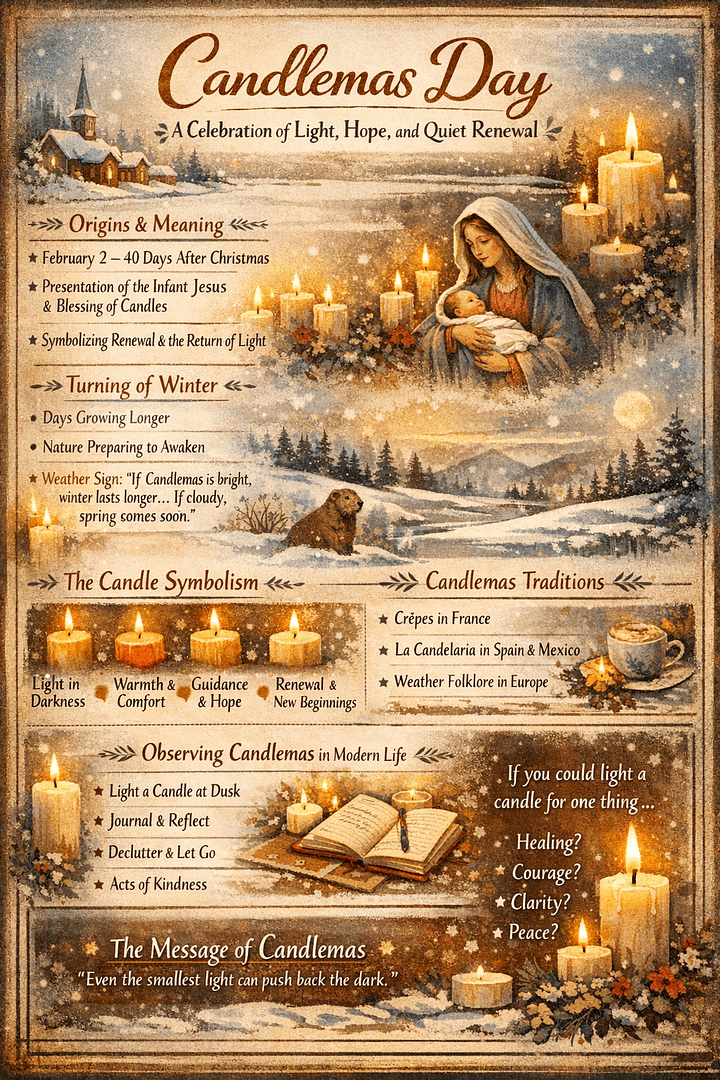
    Every year on February 2, right in the heart of winter, a gentle and often overlooked celebration arrives — Candlemas Day. Unlike the grand, bustling holidays of the season, Candlemas glows softly, like the steady flame of the candles it honors. It reminds us that even in the darkest time of the year, light is returning, and hope is always possible.

    Origins and Meaning

    Candlemas has deep historical roots that span centuries and cultures. Originally observed in the Christian calendar, it commemorates the presentation of the infant Jesus at the Temple, 40 days after his birth, and the purification of Mary according to Jewish tradition. In medieval Europe, the day became associated with blessing candles, which were then used throughout the year in homes and churches.

    The candle, a simple yet powerful symbol, came to represent guidance, protection, and the presence of divine light. Over time, the meaning of Candlemas expanded beyond strictly religious observance. It became a day to reflect on renewal, hope, and the coming of spring — a universal message that resonates even today.

    Candlemas and the Turning of Winter

    Candlemas lands at a unique point in the calendar. Christmas and New Year celebrations have passed, yet spring is still weeks away. February is often the coldest, darkest, and most stagnant month of the year, and Candlemas serves as a midwinter turning point — a reminder that:

    • Days are gradually lengthening

    • Nature is quietly preparing to awaken

    • The cold season is beginning to loosen its grip

    In folk tradition, Candlemas was considered a weather-sign day. People believed that the day’s sunlight or shadow could predict the remainder of winter — a belief that directly inspired the modern Groundhog Day tradition. “If Candlemas Day is bright and sunny, winter will last longer; if it is cloudy, spring will arrive soon.”

    The Candle as a Symbol

    The candle is the heart of Candlemas. Lighting candles on this day holds layers of meaning:

    🕯️ Light in darkness – A symbol of hope during challenging times
    🕯️ Warmth and comfort – Emotional and spiritual warmth when life feels cold
    🕯️ Guidance – Illuminating the path forward when direction is unclear
    🕯️ Renewal – Representing the ability to start anew, even in the smallest ways

    Beyond symbolism, the act of lighting a candle is a ritual of mindfulness. It encourages pause, reflection, and intentionality in our fast-paced lives.

    Cultural Traditions Around the World

    Candlemas traditions vary widely, showing how this holiday resonates across cultures:

    • France – People enjoy crêpes on Candlemas. Their round shape symbolizes the sun, linking light to life and warmth.

    • Spain and Portugal – Candlemas is celebrated as La Candelaria, with processions, candlelit ceremonies, and blessings of crops.

    • Germany and Northern Europe – Candlemas was historically associated with weather predictions, as well as rituals to drive away winter spirits and invite spring.

    • Mexico and Latin America – Candlemas marks the return of the Christ Child to the temple, celebrated with family gatherings, processions, and festive foods.

    These traditions show that Candlemas is not only about faith or ritual but also about community, seasonal rhythm, and connection to nature.

    Observing Candlemas in Modern Life

    Even if you don’t observe Candlemas religiously, it can be a meaningful day to:

    ✨ Light a candle at dusk to set an intention or honor something important
    ✨ Journal about what you’re ready to release or embrace
    ✨ Declutter or simplify your space — symbolically making room for light
    ✨ Perform an act of kindness or generosity
    ✨ Pause for quiet reflection with a warm drink and soft music

    It is a day that invites slowing down, turning inward, and noticing the subtle signs of hope around us.

    The Personal Meaning of Candlemas

    Candlemas is also deeply personal. It reminds us that hope doesn’t always come as grand gestures. Sometimes it is quiet, steady, and fragile. A single candle flame, flickering but persistent, mirrors life itself — even when circumstances feel overwhelming, there is always a spark waiting to grow.

    By honoring this day, we are reminded to seek the light, both in the world around us and within ourselves. It’s an opportunity to reflect on the past, embrace the present, and nurture the future.

    Read More Holidays & National Days

  • National Tater Tot Day: Honoring America’s Favorite Crispy Potato Bite

    Advertisements

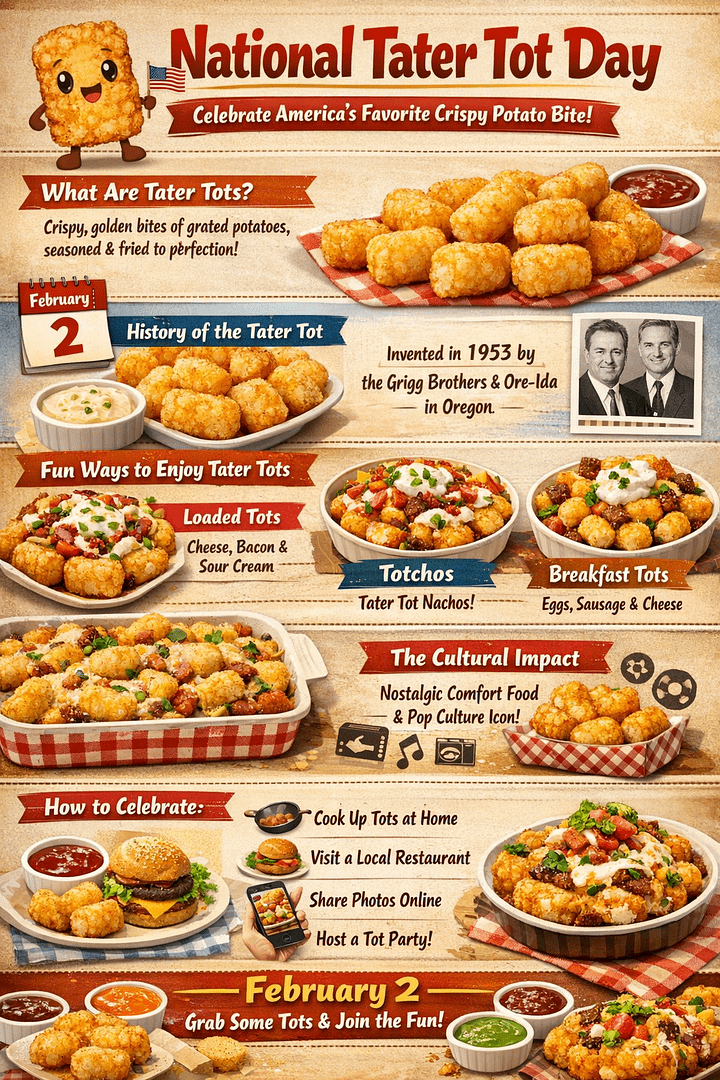
    Every year on February 2, food lovers, home cooks, and potato enthusiasts across the United States delight in a celebration dedicated to one of the most beloved comfort foods: tater tots. What began as a clever kitchen invention has blossomed into a cultural phenomenon — inspiring creativity, nostalgia, and, most importantly, delicious eating.


    🥔 What Exactly Is a Tater Tot?

    At its core, a tater tot is a small, cylindrical bite made from grated potatoes that are seasoned, shaped, and cooked until crispy on the outside and tender on the inside. Though simple in concept, the tater tot’s appeal lies in its texture — a crunchy exterior giving way to soft, flavorful potato.

    Unlike french fries, which seek length and crispiness, tater tots embrace bite-size fun, perfect for sharing, dunking, or topping with adventurous ingredients. Their compact size makes them uniquely versatile — a snack, a side, or even a meal’s centerpiece.


    🍟 The Origins of the Tater Tot

    The story of the tater tot is one rooted in resourcefulness and American ingenuity. In 1953, brothers F. Nephi and Golden Grigg, founders of the Oregon-based food company Ore-Ida, were faced with a common kitchen problem: leftover scraps from potato processing.

    Rather than discard these remnants, the Grigg brothers shredded the pieces, mixed them with seasoning, formed them into small cylinders, and cooked them — revealing a crispy delight. These bite-sized potato pieces were an instant hit, and the name “tater tot” was selected through an internal company contest — blending the slang “tater” (for potato) with “tot” to reflect its small size.

    What started as a waste-reduction idea quickly became a snack-time staple nationwide.


    🎉 Why We Celebrate National Tater Tot Day

    National Tater Tot Day is more than just a quirky food holiday — it’s a celebration of comfort, nostalgia, and culinary creativity. On this day:

    • Restaurants and diners around the country spotlight unique tot creations, from loaded tot platters to haute cuisine versions featuring upscale toppings.

    • Home cooks experiment in kitchens, reinventing recipes and sharing favorites with friends and family.

    • Food influencers and social media users join in with photos, videos, and tot-themed challenges, spreading love for this humble potato bite.

    Altogether, February 2 becomes an annual tribute to a food that has made its way into hearts as well as stomachs.


    🍽️ Ways People Celebrate National Tater Tot Day

    One of the most exciting things about this food holiday is how varied the celebrations can be. Here are some of the most popular — and delicious — ways people mark the day:

    🧂 Classic and Simple

    • Crispy tater tots fresh from the oven or deep fryer, served with favorite dips like ketchup, mustard, barbecue sauce, or ranch.

    • Family-style servings at brunch, lunch, or dinner.

    🧀 Loaded Tots

    • Topped with melted cheese, bacon bits, green onions, sour cream, and jalapeños — a crowd favorite.

    • Perfect for game day, parties, or movie nights.

    🍳 Breakfast Tots

    • Mixed with scrambled eggs, breakfast sausage, and cheese.

    • Served alongside pancakes or waffles for a hearty morning meal.

    🍅 Totchos (Tot Nachos)

    • A playful twist on nachos: tater tots replace tortilla chips and are layered with chili, cheese sauce, black beans, pico de gallo, and sliced olives.

    • Often topped with guacamole and sour cream.

    🥘 Tater Tot Casseroles

    • Hearty family favorite: layers of seasoned ground beef or turkey, vegetables, creamy gravy or sauce, and a crispy tot topping.

    • A warm, comforting baked dish, perfect for winter evenings.

    🍔 Creative and International Inspired Tots

    • Tots with global twists: curry-topped tots, taco-seasoned tots, Mediterranean-style tots with hummus and tzatziki, and more.

    • Chefs and home cooks turn tots into gourmet mini-meals.


    🍟 The Cultural Impact of Tater Tots

    Tater tots have become woven into the fabric of American food culture. For many, they evoke unmistakable nostalgia — memories of school lunches, backyard barbecues, and shared family meals. Their presence in pop culture and media, from sitcoms to food festivals, testifies to their enduring popularity.

    Tots have also inspired creativity in culinary communities. Food festivals and competitions sometimes feature tot-based dishes judged for flavor, originality, and presentation — proving that even the simplest foods can be elevated into art.


    💡 Fun Facts About Tater Tots

    • The name “tater tot” was chosen from suggestions submitted by employees of the Ore-Ida company.

    • Early marketing helped spread their popularity beyond the Pacific Northwest to the rest of the U.S.

    • Tater tots are often celebrated as a retro favorite that has regained popularity thanks to modern food culture.


    🎈 How to Celebrate National Tater Tot Day Yourself

    Here are some fun ways you can take part:

    🏠 Cook at Home

    Try making tots from scratch using real potatoes, or experiment with new toppings and sauces.

    🍽️ Visit a Local Restaurant

    Many eateries highlight specialty tot dishes on February 2 — from loaded tots to signature plates.

    📸 Share on Social Media

    Post photos of your creations with #NationalTaterTotDay or #TaterTotLove.

    👨‍🍳 Host a Tot Party

    Invite friends or family for a tot bar — complete with toppings like cheese, chili, veggies, bacon, and dips galore.


    🍠 A Bite of Joy in Every Tot

    At its heart, National Tater Tot Day celebrates more than just food — it celebrates community, comfort, and creativity. Whether you enjoy them plain or piled high with toppings, tater tots remind us that sometimes the simplest foods are the ones that bring the most delight.

    So this February 2, fire up the oven, gather your favorite toppings, and take part in this deliciously fun holiday — one crispy bite at a time!

    Read More Holidays & National Days

  • Self Renewal Day: The Art of Starting Again Without Leaving Your Life

    Advertisements

    Not every fresh start comes with fireworks.

    Sometimes it doesn’t look like change at all from the outside. You still wake up in the same house. Talk to the same people. Go to the same job. Carry the same responsibilities.

    But something inside shifts.

    Self Renewal Day honors that inner shift — the quiet decision to stop surviving on fumes and begin tending to yourself again. It’s not about escape. It’s about returning.

    Returning to your needs.
    Returning to your feelings.
    Returning to the version of you that got buried under everything you had to carry.


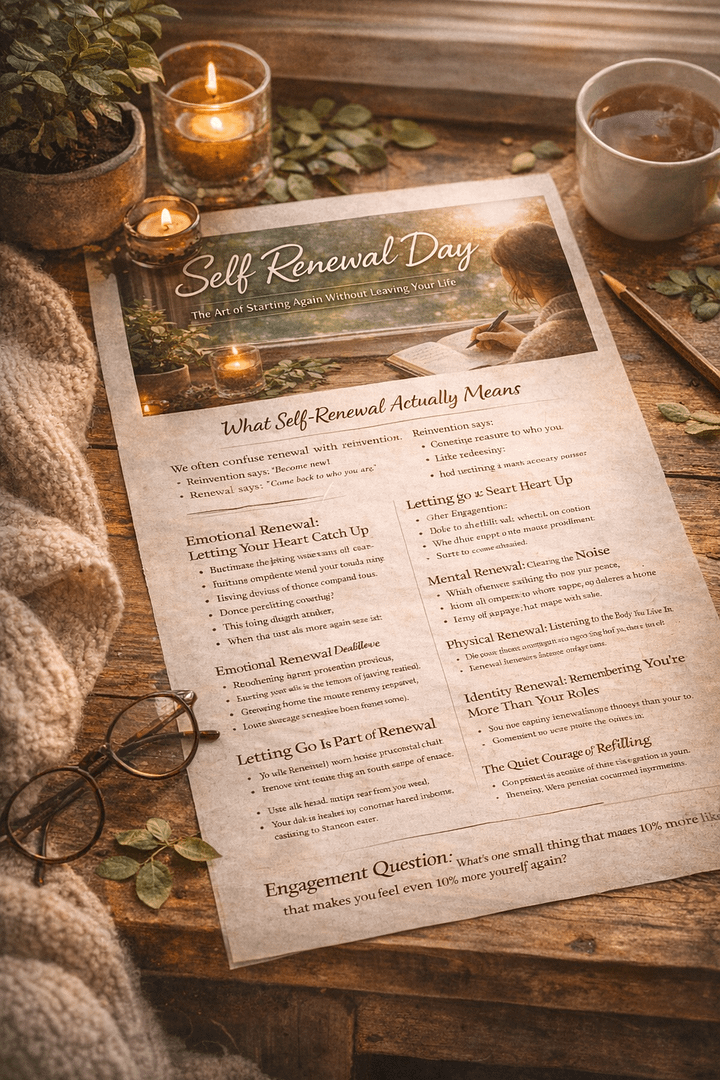
    What Self-Renewal Actually Means

    We often confuse renewal with reinvention.

    Reinvention says: “Become someone new.”
    Renewal says: “Come back to who you are.”

    You don’t need a new personality, new friends, or a brand-new life. You need space to breathe inside the one you already have.

    Self-renewal is:

    • Restoring energy instead of forcing productivity

    • Feeling emotions instead of pushing them down

    • Reconnecting with your identity outside of your roles

    • Letting parts of yourself heal that you’ve ignored

    It’s maintenance for the soul — the same way sleep is maintenance for the body.


    Why We Drift Away From Ourselves

    Nobody plans to lose touch with themselves. It happens slowly.

    You get busy.
    You deal with stress.
    You show up for others.
    You survive hard things.
    You “handle it.”

    And somewhere in all that handling… you stop checking in with you.

    You adapt so well that you forget what you actually need. You become functional but disconnected. Capable but exhausted. Present but not really here.

    Self Renewal Day is the pause that asks:

    “When was the last time you felt like yourself?”


    Emotional Renewal: Letting Your Heart Catch Up

    Sometimes the mind keeps moving while the heart is still carrying old weight.

    Emotional renewal means:

    • Acknowledging grief you rushed past

    • Admitting you’re more tired than you say

    • Letting yourself miss what you lost

    • Giving feelings room without calling them “dramatic”

    You don’t have to solve every emotion. You don’t have to justify it. Renewal often begins with one honest sentence:

    “This has been hard on me.”

    That truth alone can loosen something that’s been tight for a long time.


    Mental Renewal: Clearing the Noise

    Your brain was not designed to carry endless mental tabs open.

    To-do lists. Worries. Conversations replaying. Decisions waiting. Expectations piling up.

    Mental renewal is less about thinking more clearly and more about thinking less for a moment.

    Ways to create mental space:

    • Write everything weighing on your mind onto paper

    • Do one small task you’ve been avoiding

    • Turn off background noise — literal and emotional

    • Step outside without your phone for ten minutes

    Renewal isn’t about controlling your thoughts. It’s about giving your mind a chance to rest from constant demand.


    Physical Renewal: Listening to the Body You Live In

    Your body speaks quietly at first.

    Fatigue. Tension. Headaches. Stiffness. Shallow breathing.

    Physical renewal isn’t about punishing workouts or strict rules. It’s about cooperation with your body, not control over it.

    That might look like:

    • Sleeping earlier instead of scrolling

    • Drinking water before caffeine

    • Stretching for five minutes

    • Sitting in sunlight

    • Taking one deep, slow breath when you remember

    Tiny acts of care, repeated, rebuild the foundation you run your life on.


    Identity Renewal: Remembering You’re More Than Your Roles

    You are not just:

    The strong one.
    The caregiver.
    The employee.
    The fixer.
    The parent.
    The one who holds it together.

    Renewal asks: Who are you underneath what you do?

    What do you like?
    What makes you feel alive?
    What used to light you up before survival took over?

    Sometimes renewal is simply revisiting a forgotten part of yourself — music, creativity, nature, curiosity, quiet.

    Not to be productive. Just to be you again.


    Letting Go Is Part of Renewal

    You can’t refill a cup that’s already overflowing.

    Renewal sometimes requires release:

    • Expectations you can’t meet right now

    • Guilt for needing rest

    • The belief that you must always be strong

    • Comparisons to who you were in a different season

    You’re allowed to be in a rebuilding phase. You’re allowed to move slower. You’re allowed not to have everything figured out.

    That’s not failure. That’s restoration in progress.


    Renewal Is a Return, Not a Reset

    You don’t erase your past to renew yourself.

    You carry your experiences forward — wiser, softer in some places, stronger in others. Renewal doesn’t wipe the slate clean. It integrates what you’ve been through so it doesn’t keep draining you.

    You don’t start over from nothing.

    You start again from understanding.


    The Quiet Courage of Refilling

    There is bravery in stopping long enough to notice you’re empty.

    There is strength in tending to yourself before you break.

    There is hope in believing you are still allowed to feel light again, even after heavy seasons.

    Self Renewal Day is not about dramatic transformation.

    It’s about a quiet promise:

    “I will not abandon myself while I’m trying to live this life.”

    And that promise — kept gently, consistently — changes everything. ✨

    Read More Holidays & National Days

  • National Hot Breakfast Month: Warming Up the Most Important Meal of the Day

    Advertisements

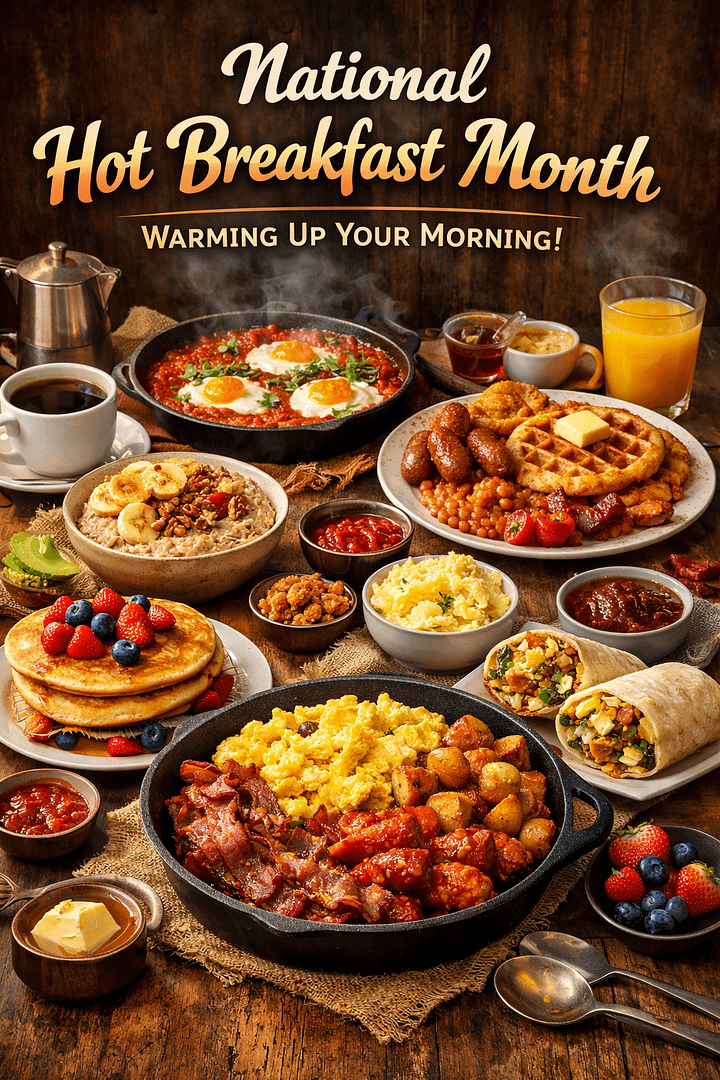
    February may be known for chilly mornings, frosty windshields, and that deep desire to stay under the blankets “just five more minutes,” but it also brings something wonderfully comforting to the table: National Hot Breakfast Month. It’s a celebration of cozy plates, sizzling pans, and the simple joy of starting your day with something warm and satisfying.

    Because let’s be honest — cold cereal on a freezing morning feels less like breakfast and more like a personal challenge.

    This month is your official excuse to trade grab-and-go habits for steam, warmth, and meals that feel like care.


    Why a Hot Breakfast Hits Different

    A hot breakfast isn’t just about temperature. It changes how your whole morning feels.

    1. Steady energy, not a sugar rollercoaster
    Warm, cooked foods like eggs, oats, potatoes, and whole grains digest more slowly than sugary pastries or cold cereals. That means longer-lasting energy and fewer mid-morning crashes where you’re staring at a wall wondering how it’s only 10:17 a.m.

    2. Better focus
    Protein + complex carbohydrates = brain fuel. Eggs, nut butter, whole-grain toast, or oatmeal help your mind actually show up instead of lagging behind your body.

    3. Gentler on the stomach
    Many people find warm, cooked foods easier to digest first thing in the morning. When your body is just waking up, a hot meal can feel grounding instead of jarring.

    4. Emotional comfort (yes, that counts)
    There’s something deeply human about holding a warm mug or watching butter melt into toast. It signals safety, care, and pause — things we don’t get enough of.

    Hot breakfasts don’t just feed you. They settle you.


    The Psychology of a Warm Morning

    Morning sets the emotional tone for the day. When your first action is rushing, skipping meals, or eating while scrolling, your nervous system stays in “go, go, go” mode.

    But when you cook even something simple, like eggs or oatmeal, you create a small ritual:

    • You smell food cooking

    • You wait (even briefly)

    • You sit down

    • You eat something warm

    That pause tells your brain: We’re not in survival mode. We’re starting the day with care.

    That shift is bigger than it sounds.


    Classic Hot Breakfasts That Never Fail

    National Hot Breakfast Month is the perfect time to revisit the comfort foods that have been carrying mornings for generations:

    • Oatmeal with fruit, nuts, maple syrup, or cinnamon

    • Scrambled, fried, or poached eggs with toast

    • Pancakes or waffles (weekday waffles are fully legal in February)

    • French toast with berries or yogurt

    • Breakfast sandwiches with egg, cheese, sausage, or bacon

    • Hash browns or breakfast potatoes

    • Grits or cream of wheat for that old-school warmth

    • Breakfast burritos packed with eggs, peppers, potatoes, and salsa

    These meals are comforting because they’re familiar. They remind us of slow weekends, family kitchens, and mornings that didn’t feel rushed.


    Global Hot Breakfast Inspiration

    Want to branch out? Many cultures already treat hot breakfast as the standard:

    • Shakshuka (Middle East/North Africa) – Eggs poached in spiced tomato sauce

    • Congee (Asia) – Warm rice porridge, savory or sweet

    • Breakfast fried rice – Rice, veggies, egg, and soy sauce

    • Full English breakfast – Eggs, beans, sausage, mushrooms, toast

    • Miso soup with rice (Japan) – Light, warm, and grounding

    National Hot Breakfast Month is a great excuse to explore flavors beyond syrup and toast.


    Hot Breakfasts for People With No Time

    Busy mornings happen. But hot doesn’t have to mean complicated.

    • Microwave oatmeal with peanut butter and banana

    • Egg scrambled in a mug (90 seconds, done)

    • Toast + avocado + fried egg

    • Reheated breakfast burritos from weekend prep

    • Leftover roasted veggies tossed into eggs

    • Instant grits or cream of wheat with add-ins

    Even a 3-minute hot meal feels different than grabbing something cold in a rush.


    Make It Easier on Yourself

    You don’t need to become a sunrise chef. A few small habits make hot breakfasts realistic:

    • Prep ingredients on Sunday – Chop veggies, cook potatoes, boil eggs

    • Batch cook – Make a tray of breakfast burritos or muffins and freeze

    • Keep quick staples on hand – Oats, eggs, whole-grain bread, nut butter

    • Use leftovers creatively – Last night’s veggies become today’s omelet

    Future-you will be grateful.


    The Comfort Factor in Winter

    February can feel long, gray, and heavy. A hot breakfast is a small but powerful form of seasonal self-care.

    The smell of coffee brewing.
    A pan gently sizzling.
    Steam rising from a bowl.

    These sensory moments pull you into the present. They soften the edges of a cold day before it even begins.


    More Than a Meal

    National Hot Breakfast Month isn’t really about pancakes.

    It’s about starting your day with intention instead of chaos.
    It’s about nourishment instead of just “getting by.”
    It’s about warmth — physically and emotionally.

    Because sometimes the difference between a rough day and a manageable one…
    is simply beginning with a warm plate waiting in the morning.

    Read More Holidays & National Days
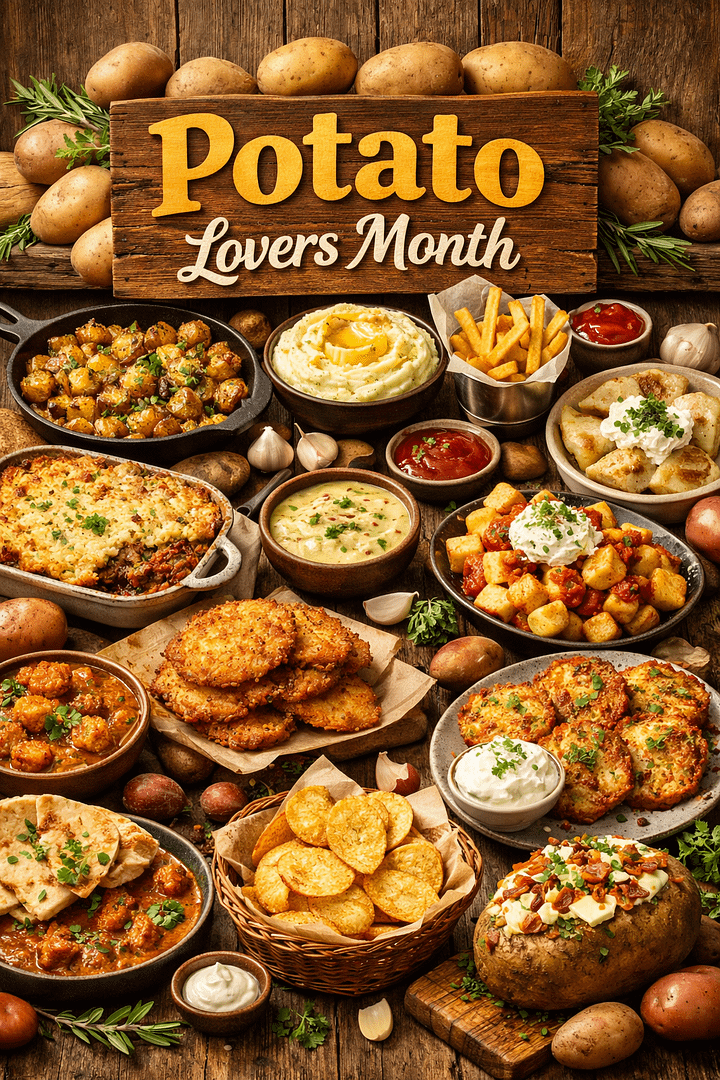
  • National Potato Lovers Month: A Full-On Celebration of the World’s Favorite Comfort Food

    Advertisements

    Some foods come and go with trends.
    Some get hyped, photographed, filtered, and forgotten.

    But potatoes?
    Potatoes never leave.

    Potato Lovers Month is more than just a fun food celebration — it’s a tribute to the ingredient that has quietly fed families, comforted bad days, completed meals, and carried entire cuisines on its starchy little back.

    This is the month we finally admit something:
    Life is just better with potatoes.


    The Humble Beginning of a Global Icon

    The potato didn’t start as a luxury food. It started as survival.

    Originating in the Andes Mountains of South America thousands of years ago, potatoes were cultivated by Indigenous communities long before the rest of the world discovered their magic. When they eventually traveled across oceans, they became one of the most important food crops in human history.

    Why? Because potatoes are:

    • Easy to grow

    • Nutrient-rich

    • Filling

    • Adaptable to many climates

    In other words, potatoes didn’t just become popular — they became essential.


    The Ultimate Comfort Food

    There’s a reason potatoes show up during emotional moments in life.

    Think about it:

    • Holiday tables loaded with mashed potatoes

    • Funeral meals where casseroles and potato dishes fill the room

    • Cold winter nights with baked potatoes or soup

    • Late-night drive-thru fries after a long day

    Potatoes are woven into our emotional memory. They don’t just fill your stomach — they feel familiar, grounding, and safe. When life feels overwhelming, potatoes are often the food equivalent of a deep breath.


    The Most Versatile Food on the Planet

    Very few ingredients can transform as dramatically as the potato.

    One vegetable. Endless personalities.

    Crispy & Indulgent

    • French fries

    • Potato chips

    • Tater tots

    • Wedges

    Soft & Comforting

    • Mashed potatoes

    • Potato soup

    • Scalloped potatoes

    • Au gratin

    Hearty & Filling

    • Baked potatoes

    • Stews

    • Casseroles

    • Shepherd’s pie

    Golden & Roasted

    • Breakfast potatoes

    • Herb-roasted cubes

    • Garlic parmesan potatoes

    It’s almost unfair how many roles potatoes can play — side dish, snack, main course, or the star of the plate.


    Potatoes Around the World

    Potatoes are one of the few foods that truly belong everywhere.

    • India – Spiced aloo dishes

    • Italy – Pillowy gnocchi

    • Spain – Patatas bravas

    • Ireland – Colcannon

    • Peru – Hundreds of native potato varieties

    • United States – Fries, hash browns, loaded baked potatoes

    They adapt to flavors, spices, cooking methods, and traditions without losing their identity. Potatoes are the culinary equivalent of “I get along with everyone.”


    The Underrated Nutrition Story

    Potatoes often get unfairly blamed for things that aren’t really their fault.

    On their own, potatoes offer:

    • Potassium (more than a banana)

    • Vitamin C

    • Fiber (especially in the skin)

    • Complex carbohydrates for energy

    The problem isn’t the potato. It’s what we sometimes do to it. But even then? Worth it occasionally.

    Balance exists — and potatoes absolutely fit into it.


    Why Potatoes Feel Like Home

    Potatoes don’t demand attention. They don’t try to be impressive. They just quietly make meals better.

    They stretch budgets.
    They feed large families.
    They turn leftovers into something new.
    They make simple dinners satisfying.

    In a world that moves fast and feels complicated, potatoes are uncomplicated. And that’s part of their magic.


    How to Celebrate Potato Lovers Month

    This month is about appreciation — and maybe a little extra butter.

    Here are a few ways to celebrate:

    🥔 Try a new potato variety (red, Yukon gold, fingerling, purple)
    🥔 Cook a potato dish from another culture
    🥔 Make homemade fries or roasted potatoes
    🥔 Upgrade your mashed potatoes with garlic, herbs, or cheese
    🥔 Host a “potato bar” dinner with toppings
    🥔 Share your favorite comfort potato meal with family

    Or simply enjoy potatoes without guilt. They’ve earned their place.


    The Real Reason We Love Potatoes

    It’s not just taste.
    It’s not just versatility.

    It’s that potatoes have always been there — through celebrations, struggles, family dinners, and quiet nights at home. They don’t try to be the star, yet somehow they always are.

    Potato Lovers Month reminds us to appreciate the foods that support us quietly… and taste amazing doing it.

    Because sometimes the best things in life aren’t flashy.
    They’re warm, filling, familiar — and covered in butter. 🥔💛

    Read More Holidays & National Days
Exit mobile version