
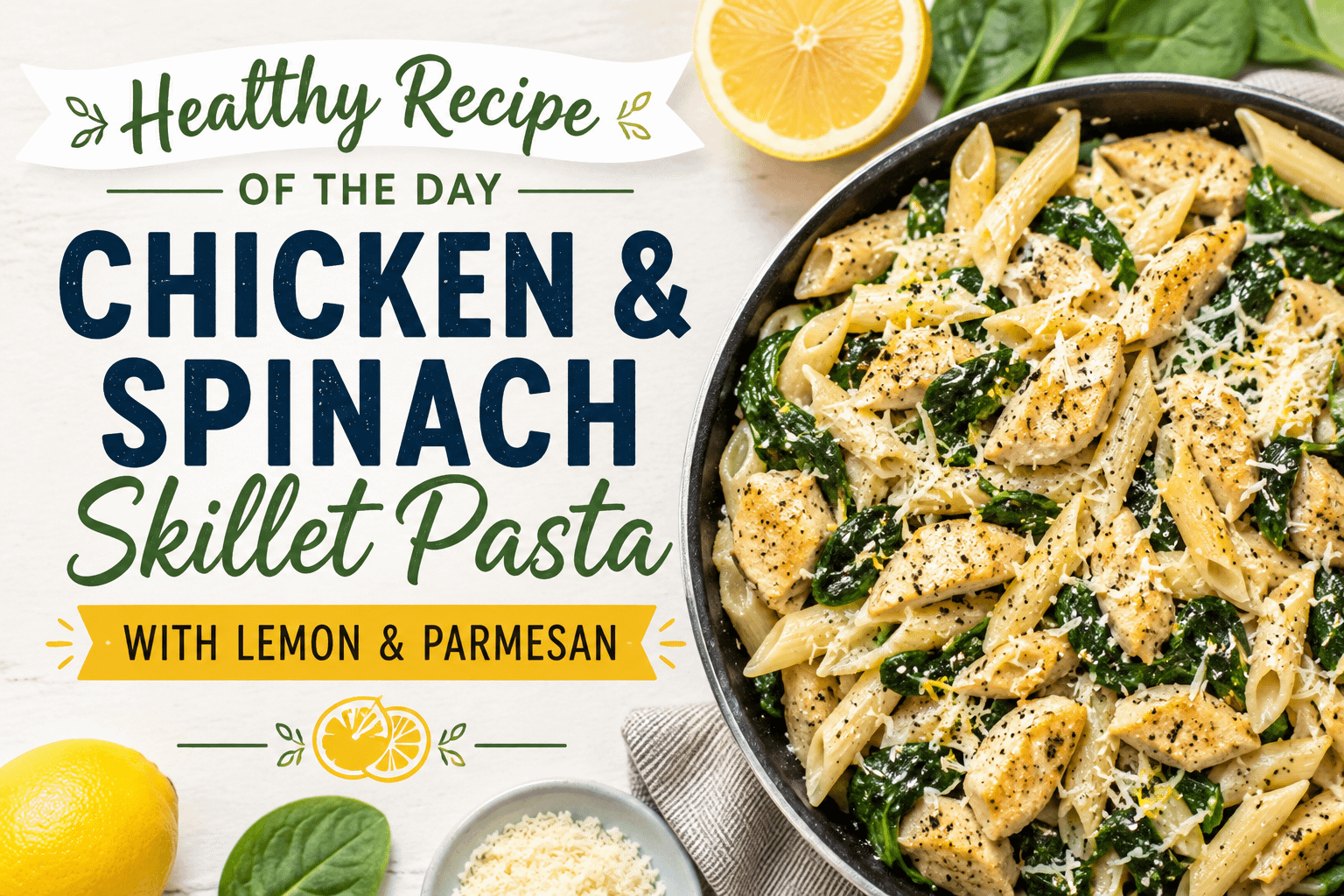
There is something incredibly satisfying about sitting down to a warm bowl of pasta after a long day. Pasta is comforting, versatile, affordable, and easy to prepare, but it can also be part of a balanced meal when paired with lean protein, plenty of vegetables, and flavorful ingredients.
Today’s Healthy Recipe of the Day: Chicken & Spinach Skillet Pasta with Lemon & Parmesan brings all of those elements together in one delicious dinner.
Tender pieces of chicken are combined with pasta, fresh spinach, garlic, lemon, olive oil, chicken broth, and Parmesan cheese to create a meal that’s bright, savory, satisfying, and surprisingly simple to prepare.
Instead of covering the pasta in a heavy cream sauce, this recipe relies on fresh lemon, Parmesan, olive oil, broth, and a little starchy pasta water to create a light coating that brings everything together.
The result is a pasta dish that still delivers the comfort-food experience you want while incorporating lean protein and leafy greens.
Even better, most of the meal comes together in a single skillet after the pasta is cooked, making cleanup relatively easy.
Whether you’re cooking dinner for the family, preparing lunches for the week, or simply looking for a new chicken recipe, this skillet pasta deserves a place in your rotation.
Why You’ll Love This Chicken & Spinach Skillet Pasta
Some healthy recipes require unusual ingredients or complicated preparation. This isn’t one of them.
Everything in this dish is familiar and easy to find.
It’s Quick Enough for Weeknights
Once your ingredients are prepared, the recipe comes together quickly. You can cook the pasta while preparing the chicken, helping reduce the overall cooking time.
It’s Packed with Flavor
Garlic, lemon, Parmesan, Italian seasoning, and black pepper create plenty of flavor without requiring a complicated sauce.
It Includes Lean Protein
Chicken breast provides satisfying protein that helps turn pasta into a complete main course.
It Sneaks in Plenty of Greens
Fresh spinach wilts directly into the skillet, making it an easy way to incorporate leafy greens into dinner.
It’s Easy to Customize
You can add vegetables, change the pasta, adjust the seasoning, or even replace the chicken with another protein.
It Makes Great Leftovers
Make a larger batch and portion the leftovers into containers for lunch or another easy dinner.
It Feels Like Comfort Food
Most importantly, it still tastes like a comforting pasta dinner.
Healthy meals don’t have to feel like you’re sacrificing the foods you enjoy.
Chicken & Spinach Skillet Pasta with Lemon & Parmesan Recipe
Ingredients
For approximately 4 servings, you’ll need:
- 8 ounces whole-wheat penne, rotini, or your favorite pasta
- 1 pound boneless, skinless chicken breast
- 2 tablespoons olive oil, divided
- 3–4 cloves garlic, minced
- 5 ounces fresh baby spinach
- 1 cup low-sodium chicken broth
- 1 medium lemon
- 1/3 cup freshly grated Parmesan cheese
- 1/2 teaspoon Italian seasoning
- 1/4 teaspoon garlic powder, optional
- 1/4 teaspoon crushed red pepper flakes, optional
- Salt, to taste
- Freshly ground black pepper, to taste
- 2 tablespoons chopped fresh parsley, optional
- Additional Parmesan for serving
Step-by-Step Directions
Step 1: Prepare Your Ingredients
Before you begin cooking, prepare everything you’ll need.
Cut the chicken breast into approximately 1-inch pieces.
Mince the garlic.
Wash and dry the spinach if necessary.
Zest your lemon before cutting it in half and squeezing the juice.
Grate the Parmesan.
Having everything ready makes the cooking process much easier because several steps happen fairly quickly once the skillet gets hot.
Step 2: Cook the Pasta
Bring a large pot of water to a boil.
Lightly salt the water and add your pasta.
Cook according to the package directions until the pasta is al dente, meaning it’s cooked but still has a slight firmness when bitten.
Before draining, carefully reserve approximately 1/2 to 1 cup of pasta water.
Drain the pasta and set it aside.
Don’t rinse it.
The thin layer of starch remaining on the pasta helps the sauce cling to it.
Step 3: Season the Chicken
Place the chicken pieces in a bowl.
Season with:
- Italian seasoning
- Black pepper
- A small amount of salt
- Garlic powder, if using
Toss until the chicken is evenly coated.
Because Parmesan and chicken broth already contain sodium, it’s better to start with less salt and add more later if needed.
Step 4: Cook the Chicken
Heat 1 tablespoon of olive oil in a large skillet over medium-high heat.
Once the oil is hot, add the chicken.
Arrange the pieces in a relatively even layer so they can brown rather than steam.
Cook for approximately 5–7 minutes, stirring occasionally, until the chicken is golden on the outside and completely cooked through.
The USDA-recommended safe internal temperature for chicken is 165°F.
Transfer the cooked chicken to a plate and set aside while you prepare the rest of the dish.
Step 5: Sauté the Garlic
Reduce the heat to medium.
Add the remaining tablespoon of olive oil to the skillet.
Add the minced garlic.
Cook for approximately 30 seconds, stirring constantly.
Garlic can burn quickly, so don’t walk away during this step.
You’re looking for fragrant garlic, not dark brown garlic.
Step 6: Wilt the Spinach
Add the fresh spinach.
You may need to add it in several batches depending on the size of your skillet.
Don’t worry if it looks like an enormous amount of spinach at first.
Fresh spinach loses a significant amount of volume as it cooks.
Stir continuously for approximately 1–2 minutes until the spinach has wilted.
Step 7: Add the Lemon and Broth
Pour the chicken broth into the skillet.
Add approximately:
- 1 tablespoon fresh lemon juice
- 1 teaspoon lemon zest
Stir everything together.
Allow the mixture to simmer gently for approximately 1–2 minutes.
As the broth heats, it will pick up the flavorful browned bits remaining in the skillet from cooking the chicken.
Those little browned pieces can contribute a surprising amount of flavor.
Step 8: Return the Chicken
Add the cooked chicken back into the skillet.
Stir so the chicken becomes coated with the garlic, lemon, spinach, and broth mixture.
Allow everything to warm together for about a minute.
Step 9: Add the Pasta
Add the drained pasta.
Toss thoroughly until the pasta, spinach, and chicken are evenly distributed.
If the mixture seems dry, add a few tablespoons of the reserved pasta water.
Don’t pour all the pasta water in at once.
Add a small amount, stir, and continue adding until you reach the consistency you want.
Step 10: Add the Parmesan
Reduce the heat to low.
Sprinkle the freshly grated Parmesan over the pasta.
Toss continuously.
The Parmesan will begin melting into the broth, olive oil, lemon juice, and pasta water, creating a light sauce that coats everything.
Add another splash of pasta water if necessary.
Step 11: Finish the Dish
Taste the pasta.
Add additional:
- Lemon juice
- Lemon zest
- Black pepper
- Parmesan
- Crushed red pepper
- Salt, if necessary
Finish with chopped fresh parsley.
Serve immediately with additional Parmesan sprinkled over each serving.
Why Lemon Makes Such a Difference
Lemon isn’t simply a garnish in this recipe.
It’s one of the main flavors.
Pasta and Parmesan can be rich and savory. Lemon provides acidity that cuts through that richness and creates balance.
Using both lemon juice and lemon zest is particularly effective.
Lemon juice provides acidity.
Lemon zest contains aromatic oils that provide a stronger lemon fragrance and flavor without introducing additional liquid.
Together, they make the entire skillet taste fresher.
If you enjoy lemon, don’t be afraid to add another squeeze immediately before serving.
Why Freshly Grated Parmesan Is Worth It
Parmesan provides saltiness, nuttiness, richness, and umami.
You don’t need an enormous amount to transform a dish.
Freshly grated Parmesan is particularly useful in skillet pasta because it tends to melt more smoothly than many pre-shredded products.
Pre-shredded cheese can contain ingredients that help prevent the pieces from sticking together in the package. While convenient, it doesn’t always melt into sauces as smoothly.
A small block of Parmesan can last for several meals and allows you to grate only what you need.
The Power of Spinach
Spinach is one of the easiest vegetables to add to meals.
It requires very little preparation and cooks in minutes.
A large amount of fresh spinach can disappear into a skillet surprisingly quickly, which makes this recipe particularly useful for anyone trying to incorporate more vegetables into everyday meals.
Spinach provides nutrients including:
- Vitamin A
- Vitamin C
- Vitamin K
- Folate
- Iron
- Potassium
It’s also mild enough that it doesn’t overpower the lemon, garlic, chicken, or Parmesan.
Why Chicken and Pasta Work So Well Together
Pasta provides carbohydrates that can help fuel the body, while chicken contributes protein.
Instead of eating a large bowl made almost entirely from pasta, adding chicken and vegetables changes the balance of the meal.
Every forkful can contain pasta, chicken, spinach, and sauce.
That combination is satisfying and flavorful while providing more variety than plain pasta with sauce.
Whole-Wheat Pasta vs. Regular Pasta
You can make this recipe with either.
Whole-wheat pasta generally provides more fiber than traditional refined pasta and has a slightly nuttier flavor.
If you’re not accustomed to whole-wheat pasta, try starting with a shape such as penne or rotini.
You can also look for pasta made from:
- Chickpeas
- Lentils
- Whole grains
- Protein-enriched flour
There’s no requirement to use a particular pasta. Choose one that fits your preferences and nutritional needs.
Add Even More Vegetables
One of the easiest ways to modify this recipe is by increasing the vegetables.
Broccoli
Lightly steam broccoli florets and add them when you return the chicken to the skillet.
Mushrooms
Sauté sliced mushrooms after cooking the chicken and before adding the garlic.
Zucchini
Dice or slice zucchini and sauté until lightly browned.
Asparagus
Cut asparagus into approximately 1-inch pieces and cook until crisp-tender.
Cherry Tomatoes
Add halved cherry tomatoes near the end so they soften slightly while retaining some freshness.
Bell Peppers
Red, yellow, or orange bell peppers provide sweetness, crunch, and color.
Artichoke Hearts
Drained artichoke hearts pair particularly well with lemon, spinach, and Parmesan.
You can even combine several vegetables for a colorful pasta primavera-inspired variation.
Add Some Heat
If you like spicy pasta, crushed red pepper flakes are an easy addition.
Start with about 1/4 teaspoon and increase according to your preference.
You could also add:
- Freshly cracked black pepper
- Cayenne pepper
- Hot pepper flakes
- A small amount of chili paste
The heat contrasts nicely with the bright lemon flavor.
Make It Extra Garlicky
Garlic lovers can easily increase the garlic from three cloves to five or six.
Another option is to roast garlic beforehand and mash it into the sauce.
Roasted garlic has a softer, sweeter flavor than freshly sautéed garlic and can add another layer of flavor without making the dish overwhelmingly sharp.
Make It Creamier
This recipe is intentionally lighter than traditional creamy pasta, but you can still create a creamier texture.
Try adding a small amount of:
- Plain Greek yogurt
- Ricotta
- Reduced-fat cream cheese
If using Greek yogurt, remove the skillet from high heat before stirring it in.
Another option is simply to add more pasta water and Parmesan.
The starch in the pasta water helps emulsify the cheese and olive oil into a surprisingly creamy coating.
Don’t Throw Away Your Pasta Water
That cloudy water left behind after cooking pasta may not look particularly useful, but it can be one of your best tools for creating a good pasta sauce.
As pasta cooks, starch is released into the water.
Adding a small amount of this starchy liquid can:
- Loosen a sauce that’s too thick
- Help cheese melt into the sauce
- Help sauce cling to pasta
- Add moisture without making the dish watery
Get into the habit of scooping out a cup before draining your pasta.
You may not need all of it, but you’ll be glad you have it if your skillet pasta needs moisture.
Don’t Overcook Your Pasta
Remember that your pasta will continue cooking slightly after it’s transferred into the hot skillet.
That’s why cooking it until al dente is important.
If the pasta is already very soft before it goes into the skillet, it can become mushy while you’re tossing it with the chicken, spinach, broth, and Parmesan.
For the best texture, consider cooking the pasta about a minute less than the longest cooking time listed on the package and checking it.
Tips for Juicy Chicken
Chicken breast is lean, but that also means it can become dry when overcooked.
Cut the pieces into approximately the same size so they cook evenly.
Allow your skillet to get hot before adding the chicken.
Don’t constantly move the chicken around. Letting it sit against the hot skillet briefly helps create browning.
And most importantly, don’t continue cooking it long after it has reached a safe internal temperature.
Meal Prep Instructions
This recipe can be a convenient option for meal preparation.
Prepare the recipe as directed and allow it to cool slightly.
Divide it into individual meal-prep containers.
You can pair each serving with additional vegetables or a small side salad.
Refrigerate promptly and enjoy within approximately 3–4 days.
When reheating, add a splash of water or low-sodium chicken broth before warming.
After reheating, add a squeeze of fresh lemon.
That little burst of fresh acidity helps bring the flavors back to life.
Can You Freeze Chicken & Spinach Pasta?
You can freeze this pasta, although the texture of the pasta and spinach may change slightly after thawing.
If you know you’re preparing the recipe specifically for freezing, consider cooking the pasta slightly firmer than usual.
Allow the food to cool before transferring it to freezer-safe containers.
For the best quality, use frozen leftovers within a few months.
Thaw safely in the refrigerator before reheating thoroughly.
What to Serve With It
Chicken & Spinach Skillet Pasta can easily stand on its own, but side dishes can turn it into an even more substantial meal.
Consider serving it with:
Simple Green Salad
A salad with mixed greens, cucumber, tomatoes, and a light vinaigrette complements the lemon flavor.
Roasted Broccoli
Broccoli develops deeper flavor when roasted and pairs beautifully with Parmesan.
Asparagus
Roasted or grilled asparagus works particularly well with lemon.
Green Beans
Steamed or roasted green beans provide an easy vegetable side.
Tomato and Cucumber Salad
Fresh tomatoes, cucumber, herbs, and a little olive oil provide a cool contrast to the warm pasta.
Fresh Fruit
Berries, grapes, oranges, melon, or sliced apples can add something naturally sweet to the meal.
Turn Leftovers Into Something New
Leftovers don’t necessarily have to be served exactly the same way the next day.
Try adding:
- Extra spinach
- Roasted vegetables
- Fresh tomatoes
- White beans
- Chickpeas
- Additional grilled chicken
You could even serve a smaller portion over a bed of greens for a warm pasta salad.
Budget-Friendly Dinner Tips
Healthy meals don’t have to require expensive specialty ingredients.
This recipe uses several everyday staples.
To keep costs down:
Buy chicken in larger packages when it’s on sale and freeze individual portions.
Use frozen spinach if fresh spinach is expensive. Just thaw it and squeeze out excess moisture before adding it.
Purchase Parmesan in a block and grate it yourself.
Use store-brand whole-wheat pasta.
Buy lemons in bags if you use them frequently for cooking.
Use leftover vegetables from other meals rather than purchasing additional ingredients specifically for this recipe.
A flexible recipe can also help reduce food waste.
Family-Friendly Tips
If you’re serving children or anyone who prefers milder flavors, leave the crushed red pepper flakes out of the main skillet.
Place them on the table instead.
You can also serve extra Parmesan separately so everyone can customize their portion.
If someone isn’t a big fan of spinach, chop it more finely before adding it to the skillet. Once wilted and mixed with pasta, chicken, and Parmesan, smaller pieces tend to blend into the dish.
Easy Recipe Variations
Once you’ve made the original recipe, experiment with different versions.
Lemon Chicken Broccoli Pasta
Replace half of the spinach with steamed broccoli.
Chicken Mushroom Parmesan Pasta
Sauté sliced mushrooms before adding the spinach.
Mediterranean Chicken Pasta
Add cherry tomatoes, artichoke hearts, oregano, and a small amount of feta.
Spicy Lemon Chicken Pasta
Double the crushed red pepper flakes and add plenty of black pepper.
Shrimp & Spinach Lemon Pasta
Replace the chicken with shrimp for a seafood variation.
White Bean & Spinach Pasta
Skip the chicken and add drained white beans for a meatless option.
Extra-Veggie Skillet Pasta
Add zucchini, mushrooms, tomatoes, and spinach for a vegetable-packed version.
A Balanced Approach to Pasta
Pasta sometimes gets treated as something that must be avoided when you’re trying to eat healthier.
But healthy eating isn’t necessarily about eliminating an entire category of food.
It’s often about balance, portions, ingredients, and preparation.
Instead of making pasta the only major ingredient on your plate, combine it with:
Protein: Chicken
Vegetables: Spinach
Healthy fats: Olive oil
Flavor: Lemon, garlic, Parmesan, herbs, and spices
Whole grains: Whole-wheat pasta, if desired
The result is a meal with a greater variety of nutrients and textures.
Simple Ingredients Can Create Big Flavor
One of the best lessons from this recipe is that you don’t need dozens of ingredients to create flavorful food.
Consider what’s doing the work here:
Garlic provides aromatic flavor.
Lemon provides freshness and acidity.
Parmesan provides salty, savory richness.
Olive oil helps carry the flavors throughout the pasta.
Chicken broth provides moisture and depth.
Spinach contributes freshness and color.
Black pepper and red pepper flakes add warmth.
Together, those simple ingredients transform ordinary chicken and pasta into something that tastes much more interesting.
How to Make Healthy Cooking Easier During the Week
Recipes like Chicken & Spinach Skillet Pasta become even easier when you prepare a few ingredients ahead of time.
At the beginning of the week, consider:
- Washing vegetables
- Portioning chicken
- Chopping vegetables
- Grating Parmesan
- Preparing salad ingredients
- Keeping lemons and garlic available
- Stocking whole-grain pasta
- Keeping low-sodium broth in the pantry
You don’t necessarily need to prepare complete meals days in advance.
Even 10–15 minutes of ingredient preparation can make weeknight cooking much easier.
Healthy Eating Should Still Taste Good
One of the biggest misconceptions about healthier cooking is that flavor has to disappear.
It doesn’t.
In fact, herbs, spices, citrus, garlic, onions, vinegars, and small amounts of flavorful cheeses can make nutritious foods much more enjoyable.
A plate filled with plain chicken, plain spinach, and plain pasta might not sound particularly exciting.
But combine those same ingredients with lemon zest, sautéed garlic, Parmesan, olive oil, black pepper, and herbs, and suddenly you have something you may genuinely look forward to eating.
Sustainable healthy eating should include foods you actually enjoy.
Cooking at Home Gives You More Control
Preparing meals at home gives you more control over what’s going into your food.
You can decide:
- How much salt to use
- How much oil to add
- How many vegetables to include
- Which type of pasta to choose
- How much cheese to add
- What size portion works for you
- Which ingredients to substitute
That flexibility is one of the biggest advantages of home cooking.
Recipes should serve as a starting point rather than a rigid set of rules.
A Great Dinner for Busy Nights
After a long day, it’s tempting to assume that cooking dinner will take too much time.
That’s why simple skillet meals can be so useful.
You don’t need an elaborate menu.
You don’t need multiple complicated side dishes.
You don’t need hours of preparation.
A skillet filled with chicken, spinach, pasta, lemon, and Parmesan can provide a satisfying dinner without turning your evening into a major cooking project.
And when dinner is finished, cleanup is relatively simple.
That’s a win on any busy night.
Final Thoughts
Today’s Healthy Recipe of the Day: Chicken & Spinach Skillet Pasta with Lemon & Parmesan is a reminder that healthier meals don’t have to be boring, complicated, or restrictive.
Sometimes the best meals are built from familiar ingredients prepared thoughtfully.
Tender chicken provides protein.
Spinach brings color and leafy greens.
Pasta provides the comforting foundation.
Fresh lemon gives the dish brightness.
Garlic adds aroma and depth.
Parmesan delivers savory richness.
Olive oil and pasta water help bring everything together.
The result is a simple skillet dinner that’s comforting enough to satisfy a pasta craving while still making room for protein and vegetables.
It’s also incredibly adaptable.
Add broccoli.
Throw in mushrooms.
Use shrimp instead of chicken.
Add tomatoes.
Make it spicy.
Increase the spinach.
Try chickpea pasta.
Turn it into your own signature dinner.
Healthy cooking doesn’t have to mean following strict rules or giving up the foods you enjoy. It can simply mean finding practical ways to build more balanced meals from ingredients that taste good together.
So the next time you’re staring into the refrigerator wondering what to make for dinner, grab some chicken, spinach, lemon, Parmesan, and pasta.
You might discover that one of the simplest meals becomes one of your favorites.
Good food doesn’t need to be complicated—and healthy food should still be something you’re excited to eat.
Would you try this Chicken & Spinach Skillet Pasta with Lemon & Parmesan? What would you add—broccoli, mushrooms, tomatoes, asparagus, or something else?
Leave a ReplyCancel reply