
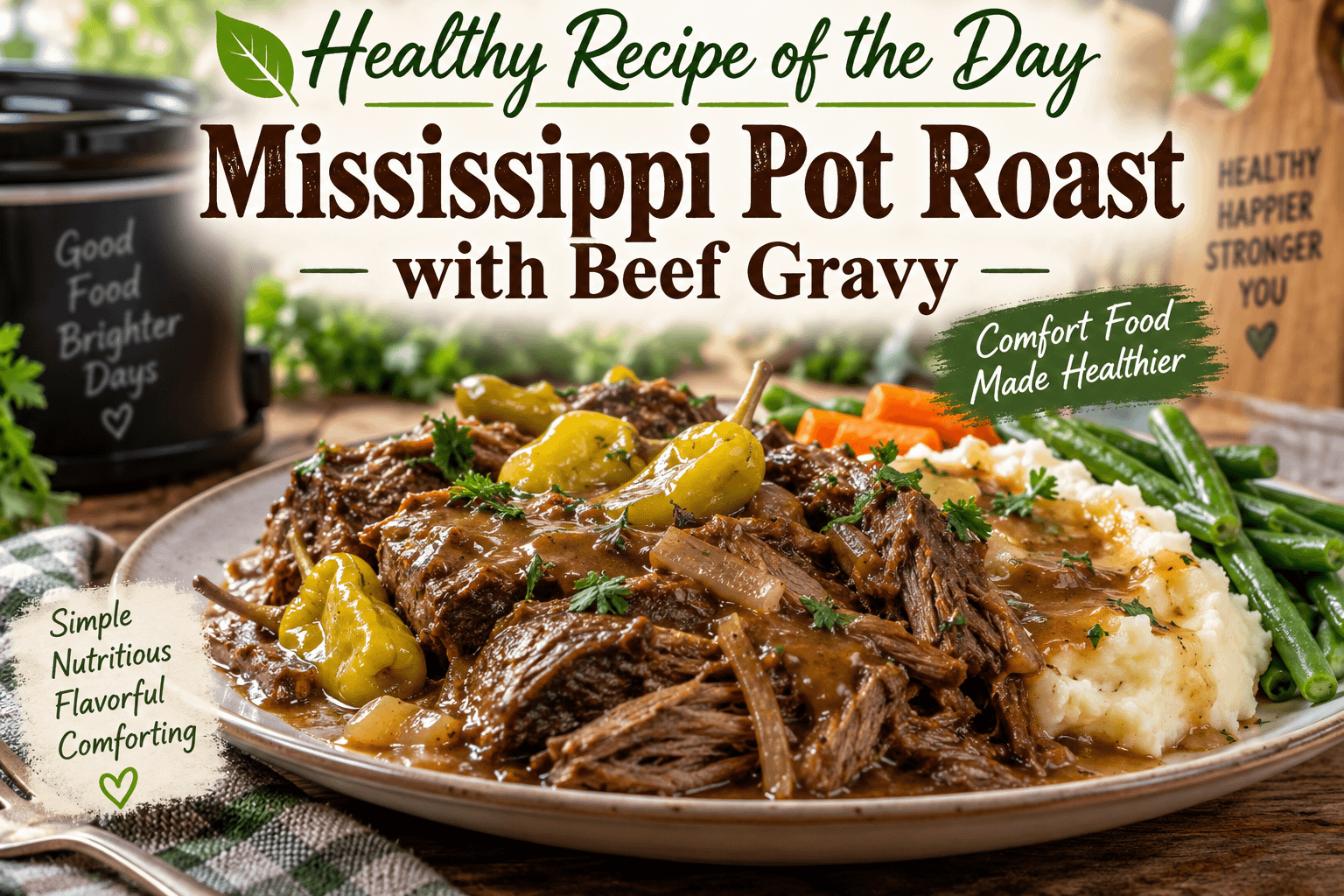
There is something special about a meal that can slowly cook for hours while filling the kitchen with the smell of beef, herbs, garlic, and savory gravy. Mississippi Pot Roast is one of those classic comfort-food dinners that requires very little effort but delivers plenty of flavor.
Traditional Mississippi Pot Roast is famous for its incredibly tender beef, tangy pepperoncini peppers, ranch seasoning, gravy mix, and generous amount of butter. It is delicious, but if you are trying to make healthier meals, the traditional recipe can contain more sodium, saturated fat, and calories than you might want in an everyday dinner.
The good news is that you do not have to give up the dish.
Today’s Healthy Recipe of the Day: Mississippi Pot Roast with Beef Gravy keeps the slow-cooked tenderness and bold flavors while making a few simple adjustments. We will use plenty of herbs and seasonings, reduce the amount of butter, control the sodium, and create our own beef gravy instead of depending entirely on packaged seasoning mixes.
The result is a hearty dinner that still tastes like comfort food.
Why Mississippi Pot Roast Is So Popular
Mississippi Pot Roast became popular because of its simplicity. A piece of beef goes into a slow cooker with a handful of flavorful ingredients, and several hours later it practically falls apart with a fork.
The combination of beef and pepperoncini is especially important.
Pepperoncini peppers provide acidity and a mild tanginess that cuts through the richness of the beef. Meanwhile, ranch-style herbs such as dill, parsley, garlic, and onion create layers of savory flavor.
Then there is the gravy.
As the beef cooks, its natural juices combine with the broth, seasonings, and other ingredients. Instead of serving dry shredded beef, you end up with tender meat surrounded by a savory beef gravy.
That is exactly what we want to preserve in this healthier version.
Healthy Mississippi Pot Roast with Beef Gravy
Prep Time: 15 minutes
Cook Time: 8–9 hours on low or 4–5 hours on high
Servings: 6–8
Ingredients
- 3 to 3½ pounds chuck roast, trimmed of excess visible fat
- 1 tablespoon olive oil
- 1 teaspoon garlic powder
- 1 teaspoon onion powder
- 1 teaspoon dried parsley
- ½ teaspoon dried dill
- ½ teaspoon dried thyme
- ½ teaspoon smoked paprika
- ½ teaspoon freshly ground black pepper
- ¼ teaspoon salt, or to taste
- 1½ cups low-sodium beef broth
- 6–8 pepperoncini peppers
- 2 tablespoons pepperoncini juice
- 1 tablespoon Worcestershire sauce
- 1 tablespoon unsalted butter
- 3 cloves garlic, minced
- 1 medium yellow onion, sliced
- 8 ounces mushrooms, sliced, optional
For the Beef Gravy
- 1½ cups cooking liquid from the slow cooker
- 2 tablespoons cornstarch
- 3 tablespoons cold water
- Black pepper to taste
Step 1: Trim the Roast
Before cooking the beef, look over your chuck roast and remove large pieces of visible exterior fat.
Chuck roast naturally contains marbling, which helps keep the beef tender during the long cooking process. You do not need to remove every bit of fat.
The goal is simply to remove large excess pieces that are not necessary for flavor.
This is one of the easiest ways to make pot roast a little lighter without sacrificing the tenderness that makes it so enjoyable.
Step 2: Season the Beef
In a small bowl, combine the garlic powder, onion powder, parsley, dill, thyme, smoked paprika, black pepper, and salt.
Rub the seasoning mixture over all sides of the roast.
Making your own seasoning blend gives you more control over sodium than using multiple packaged seasoning packets. You still get the familiar ranch-inspired flavor, but you decide exactly how much salt goes into your meal.
Step 3: Sear the Roast
Heat the olive oil in a large skillet over medium-high heat.
Once the skillet is hot, add the roast.
Sear it for approximately 2–3 minutes on each side until a brown crust develops.
You could technically skip this step and put everything directly into the slow cooker. However, browning the beef creates additional flavor that makes the finished gravy even better.
Transfer the browned roast to your slow cooker.
Step 4: Add the Vegetables
Place the sliced onion, minced garlic, and optional mushrooms around the roast.
Onions will soften considerably during cooking and eventually become part of the flavorful cooking liquid.
Mushrooms are optional, but they are an excellent addition if you want more vegetables in the meal. They also complement beef gravy beautifully.
Step 5: Build the Mississippi Pot Roast Flavor
Pour the low-sodium beef broth around the roast.
Add the Worcestershire sauce and pepperoncini juice.
Place the pepperoncini peppers around and on top of the beef.
Finally, add one tablespoon of butter on top.
Traditional recipes may use considerably more butter. Because chuck roast already contains natural fat, you can dramatically reduce the butter and still end up with tender, flavorful meat.
That single tablespoon provides some richness without overwhelming the dish.
Step 6: Cook Low and Slow
Cover the slow cooker.
Cook on LOW for 8–9 hours or HIGH for approximately 4–5 hours.
For the best texture, low and slow is usually the better option.
The roast is ready when it is extremely tender and easily pulls apart with a fork. If you have to fight with the meat to shred it, it probably needs additional cooking time.
Step 7: Shred the Beef
Carefully transfer the cooked roast to a large cutting board or serving dish.
Using two forks, pull the beef into large pieces.
Before returning the beef to the slow cooker, you can skim excess fat from the surface of the cooking liquid. This is another easy way to reduce unnecessary fat while keeping all the savory flavor underneath.
Return the shredded beef to the slow cooker and gently stir.
Step 8: Make the Beef Gravy
The cooking liquid is already packed with flavor, so do not waste it.
Measure approximately 1½ cups of liquid from the slow cooker and place it in a small saucepan.
Bring it to a gentle simmer.
In a separate small bowl, whisk together:
2 tablespoons cornstarch + 3 tablespoons cold water
Once smooth, slowly whisk the cornstarch mixture into the simmering beef liquid.
Continue stirring for a few minutes until the gravy reaches your desired thickness.
Taste before adding additional salt. Between the beef broth, Worcestershire sauce, pepperoncini juice, and natural beef juices, you may find that it does not need any.
Add freshly ground black pepper if desired.
Pour some of the gravy over the shredded beef and reserve the rest for serving.
What Makes This Version Healthier?
Healthy eating does not always mean completely changing your favorite foods. Sometimes it simply means adjusting ingredients and portions.
This Mississippi Pot Roast makes several changes while maintaining the character of the original dish.
Less Butter
Instead of adding a large amount of butter, this recipe uses just one tablespoon.
Chuck roast already contains fat and connective tissue that breaks down during slow cooking. You do not need an entire stick of butter to create tender beef.
Lower-Sodium Ingredients
Using low-sodium beef broth and homemade seasonings gives you more control over the sodium content.
Pepperoncini and Worcestershire sauce still provide plenty of bold flavor.
More Vegetables
Adding onions, garlic, mushrooms, and vegetable side dishes gives you an opportunity to build a more balanced plate around the roast.
Excess Fat Can Be Removed
Trimming the roast before cooking and skimming excess fat from the cooking liquid afterward can reduce some of the fat without sacrificing the flavor of the finished dish.
Healthy Side Dishes for Mississippi Pot Roast
What you serve alongside your roast can make a major difference in the overall meal.
Instead of automatically filling half the plate with mashed potatoes, consider building the meal around vegetables.
Roasted Green Beans
Green beans are simple, flavorful, and excellent with beef gravy. Roast them with a small amount of olive oil, garlic powder, and black pepper.
Steamed Broccoli
Broccoli gives the meal freshness and provides a nice contrast to the rich beef.
Mashed Cauliflower
If you love pouring beef gravy over mashed potatoes, mashed cauliflower can provide a lighter alternative.
Steam cauliflower until extremely tender, then blend it with garlic, black pepper, and a small amount of milk or Greek yogurt.
Roasted Carrots
The natural sweetness of carrots pairs wonderfully with the salty and tangy flavors of Mississippi Pot Roast.
Small Baked Potato
Potatoes can absolutely be part of a balanced meal. Try serving the roast alongside a smaller baked potato rather than a large serving of buttery mashed potatoes.
Cauliflower and Potato Mash
Can’t decide between potatoes and cauliflower?
Use both.
Combining cauliflower with potatoes creates a lighter mash while maintaining much of the familiar potato flavor and texture.
Turn It Into a Mississippi Pot Roast Bowl
Another way to enjoy leftovers is to create a healthy roast bowl.
Start with a generous serving of roasted vegetables or cauliflower rice.
Add shredded Mississippi Pot Roast.
Spoon a small amount of beef gravy over the top.
Add sliced pepperoncini for extra tanginess.
You can also include green beans, roasted broccoli, carrots, or a small amount of brown rice.
It is an easy way to turn leftovers into something that feels like an entirely different meal.
Don’t Forget Portion Size
Pot roast is nutritious and provides protein, but portion size still matters.
Instead of making the beef the entire meal, think about your plate as a combination of protein, vegetables, and a moderate serving of carbohydrates.
A plate might include shredded Mississippi Pot Roast, roasted broccoli, carrots, and a small serving of mashed potatoes.
You still get the comfort-food experience without needing an enormous serving of beef and gravy.
How to Store Leftovers
Mississippi Pot Roast is one of those meals that may taste even better the following day.
Allow leftovers to cool before transferring them into airtight containers.
Store the beef and gravy in the refrigerator for approximately 3–4 days.
When reheating, add a small amount of low-sodium beef broth if the meat has absorbed too much of the gravy.
You can also freeze the cooked beef in freezer-safe containers for longer storage. Portioning it before freezing makes it easy to thaw only what you need.
Ideas for Mississippi Pot Roast Leftovers
Do not feel like you have to eat the exact same plate several nights in a row.
Leftover shredded beef can become the foundation for several different meals.
Use it in a whole-grain wrap with lettuce, tomato, and pepperoncini.
Serve it over a baked potato with steamed broccoli.
Add it to a vegetable soup.
Make a roast beef and vegetable bowl.
Serve it with scrambled eggs for a protein-packed breakfast.
You can even make an open-faced roast beef sandwich using whole-grain bread, shredded beef, and a small spoonful of warm gravy.
Cooking once and creating multiple meals can make healthy eating much easier during a busy week.
Slow Cooker vs. Oven
Although the slow cooker is incredibly convenient, you can also prepare this recipe in the oven.
Use a heavy Dutch oven with a lid.
After searing the roast, add the remaining ingredients, cover, and cook at approximately 300°F until the meat becomes fork-tender.
Depending on the size and thickness of the roast, this will generally take several hours.
The important thing is not simply reaching a certain cooking time. You want the connective tissue in the beef to have enough time to break down so the meat becomes tender.
Why Homemade Beef Gravy Makes a Difference
Making gravy from the cooking liquid is one of my favorite parts of this recipe.
You are not creating flavor from scratch.
The slow cooker has already done most of the work.
For hours, the broth has been cooking with beef, onions, garlic, herbs, Worcestershire sauce, and pepperoncini. Every ingredient contributes something to that liquid.
Thickening it with a small cornstarch slurry turns those concentrated flavors into a silky beef gravy.
It also gives you control over how much gravy you actually use.
You do not have to drown the entire meal in it. A spoonful or two may be all you need.
Healthy Food Can Still Be Comfort Food
One of the biggest misconceptions about eating healthier is that every meal needs to feel like “diet food.”
It doesn’t.
Food is more than numbers on a nutrition label. Meals are connected to family, memories, traditions, celebrations, and comfort.
That is why learning how to modify the foods you already enjoy can be much more sustainable than trying to completely eliminate them.
Mississippi Pot Roast is a perfect example.
We do not have to remove everything that makes it delicious.
Instead, we make thoughtful changes.
Trim excess fat.
Use less butter.
Control the sodium.
Add vegetables.
Make homemade gravy.
Watch the portion size.
Those individual decisions may seem small, but together they can create a meal that better fits a balanced way of eating.
Final Thoughts
Healthy Mississippi Pot Roast with Beef Gravy proves that comfort food and healthier cooking do not have to exist in separate worlds.
You still get the tender, fall-apart beef.
You still get the tanginess of pepperoncini.
You still get the familiar garlic, onion, dill, and herb flavors.
And most importantly, you still get that rich beef gravy that makes pot roast so satisfying.
The difference is simply being more intentional about how the meal is prepared.
Serve your Mississippi Pot Roast with plenty of vegetables, choose a reasonable portion, drizzle a little homemade beef gravy over everything, and you have a hearty dinner that can fit comfortably into a balanced eating plan.
Sometimes healthier cooking isn’t about giving up the meals you love.
It’s about finding a better way to make them.
What is your favorite healthy side dish to serve with a slow-cooked pot roast?
Leave a ReplyCancel reply