
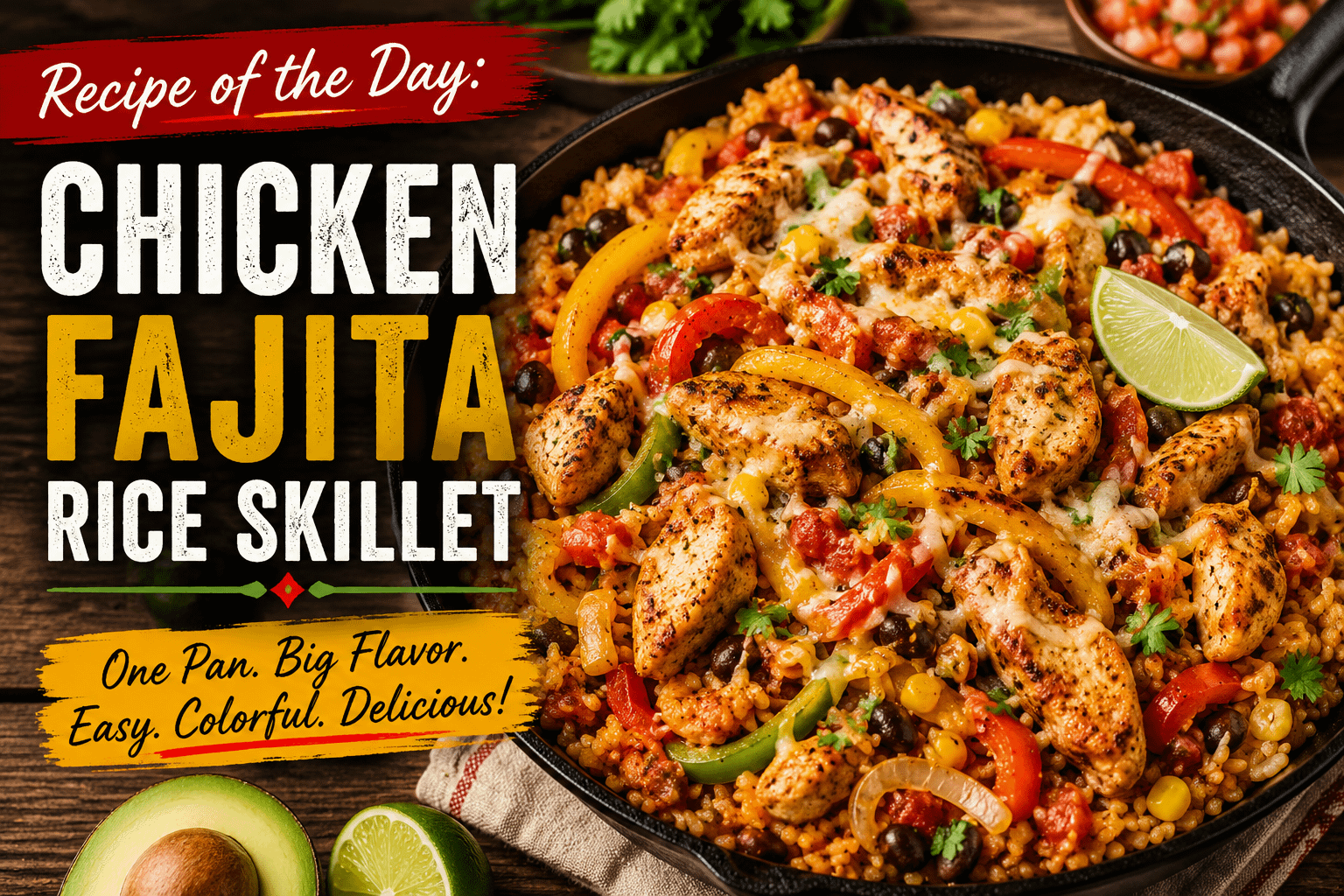
Some dinners earn a permanent place in the weekly rotation because they manage to be flavorful, filling, colorful, and relatively easy to prepare all at the same time. Chicken Fajita Rice Skillet is exactly that kind of meal.
Imagine the familiar flavors of sizzling chicken fajitas—tender seasoned chicken, sweet bell peppers, onions, garlic, smoky spices, and fresh lime—combined with fluffy rice that cooks directly in the same skillet and absorbs all those delicious flavors.
Instead of preparing fajita meat in one pan, rice in another pot, and several side dishes separately, this recipe brings nearly everything together in one satisfying skillet.
It’s comfort food with a Tex-Mex-inspired personality.
The chicken provides plenty of heartiness, the peppers bring sweetness and color, the rice makes the meal filling, and a combination of chili powder, cumin, smoked paprika, garlic, and oregano ties everything together.
Then comes the fun part: toppings.
Finish your skillet with melted cheese, avocado, sour cream, salsa, cilantro, jalapeños, pico de gallo, or a generous squeeze of fresh lime.
Whether you’re feeding your family, preparing meals for the week, or simply looking for something different for dinner tonight, this Recipe of the Day: Chicken Fajita Rice Skillet deserves a spot on your menu.
Why Chicken Fajitas and Rice Work So Well Together
Chicken fajitas already contain many of the ingredients needed for a complete meal.
You have protein from the chicken and vegetables from the peppers and onions. Adding rice turns those ingredients into something even more substantial.
More importantly, cooking the rice alongside the fajita ingredients allows it to absorb flavor.
Instead of plain rice sitting underneath seasoned chicken, every bite of rice can pick up hints of tomato, chicken broth, garlic, cumin, chili powder, smoked paprika, and the juices released from the vegetables.
That’s one of the biggest advantages of preparing everything together.
Each ingredient contributes something to the next.
The chicken leaves flavorful browned bits behind in the skillet. The peppers and onions cook in those flavors. The rice is then added to the same pan, followed by tomatoes, broth, and seasonings.
By the time everything is finished, the flavors have had plenty of time to come together.
Chicken Fajita Rice Skillet Recipe
Prep Time
Approximately 15 minutes
Cook Time
Approximately 30 minutes
Total Time
Approximately 45 minutes
Servings
About 4 to 6 servings
Ingredients
For the Chicken
- 1 ½ pounds boneless, skinless chicken breasts
- 1 tablespoon olive oil
- ½ tablespoon chili powder
- ½ teaspoon ground cumin
- ½ teaspoon smoked paprika
- ½ teaspoon garlic powder
- ¼ teaspoon onion powder
- ¼ teaspoon dried oregano
- ½ teaspoon salt
- ¼ teaspoon black pepper
For the Rice Skillet
- 1 tablespoon olive oil
- 1 medium yellow onion, sliced or diced
- 1 red bell pepper, sliced
- 1 green bell pepper, sliced
- 1 yellow or orange bell pepper, sliced
- 3 cloves garlic, minced
- 1 cup uncooked long-grain white rice
- 1 can (14.5 ounces) diced tomatoes, undrained
- 2 cups chicken broth
- ½ tablespoon chili powder
- ½ teaspoon ground cumin
- ½ teaspoon smoked paprika
- ½ teaspoon garlic powder
- ¼ teaspoon onion powder
- ¼ teaspoon dried oregano
- Salt and black pepper to taste
- Juice of 1 fresh lime
- 1 cup shredded Mexican cheese blend, optional
- Fresh chopped cilantro for garnish
Optional Toppings
- Avocado
- Guacamole
- Sour cream
- Salsa
- Pico de gallo
- Jalapeño slices
- Chopped green onions
- Extra shredded cheese
- Fresh cilantro
- Lime wedges
- Crushed tortilla chips
- Hot sauce
How to Make Chicken Fajita Rice Skillet
Step 1: Prepare the Chicken
Cut the chicken breasts into bite-sized pieces.
Try to keep the pieces relatively similar in size. This helps them cook at approximately the same rate.
Place the chicken in a bowl.
Add the chili powder, cumin, smoked paprika, garlic powder, onion powder, oregano, salt, and black pepper.
Toss everything together until the chicken is evenly coated with seasoning.
For even more flavor, you can season the chicken 15 to 30 minutes before cooking and allow it to rest in the refrigerator.
Step 2: Brown the Chicken
Heat a large, deep skillet over medium-high heat.
Add 1 tablespoon of olive oil.
Once the oil is hot, carefully add the chicken.
Avoid overcrowding the skillet if possible. Giving the chicken some room allows it to brown rather than simply steam.
Cook for approximately 5 to 7 minutes, stirring occasionally.
The outside should develop some color, and the chicken should reach an internal temperature of 165°F.
Transfer the cooked chicken to a clean plate.
Don’t clean the skillet.
Those browned bits remaining on the bottom contain plenty of flavor that will become part of the finished dish.
Step 3: Cook the Peppers and Onions
Reduce the heat slightly and add another tablespoon of olive oil if necessary.
Add the sliced onion and bell peppers.
Cook for approximately 4 to 5 minutes.
Stir occasionally.
The goal isn’t to completely soften the vegetables at this stage. They’ll continue cooking later when the rice simmers.
Ideally, the peppers should retain a little texture.
Add the minced garlic during the final 30 seconds.
Garlic can burn relatively quickly, so adding it toward the end prevents it from becoming bitter.
Step 4: Toast the Rice
Add the uncooked rice directly to the skillet.
Stir it into the vegetables.
Allow the rice to cook for approximately one minute.
This quick toasting step is optional, but it’s worth doing.
Lightly toasting rice before adding the liquid can create a slightly nuttier flavor and help the grains maintain a pleasant texture.
Step 5: Add the Tomatoes
Pour the entire can of diced tomatoes into the skillet, including the juices.
The tomatoes contribute acidity, moisture, color, and flavor.
For an even smokier version, try using fire-roasted diced tomatoes.
You could also use tomatoes with diced green chiles if you prefer a little additional heat.
Step 6: Add the Chicken Broth
Pour in approximately 2 cups of chicken broth.
Stir everything together.
Make sure the rice is evenly distributed throughout the skillet rather than sitting in one large pile.
Add the remaining chili powder, cumin, smoked paprika, garlic powder, onion powder, and oregano.
Taste the liquid carefully and adjust the salt and pepper if necessary.
Remember that chicken broth and cheese may already contain significant amounts of sodium, so it’s easier to add additional salt later than to correct an overly salty skillet.
Step 7: Simmer the Rice
Bring the mixture to a gentle boil.
Once boiling, reduce the heat to low.
Cover the skillet with a tight-fitting lid.
Allow everything to simmer for approximately 18 to 22 minutes.
Avoid repeatedly removing the lid.
The steam trapped inside the skillet is important for properly cooking the rice.
Check the rice toward the end of the cooking time.
It should be tender and most of the liquid should have been absorbed.
If the rice is still firm but the skillet looks dry, add a small splash of chicken broth, cover, and continue cooking for several additional minutes.
Step 8: Return the Chicken
Once the rice is tender, return the cooked chicken to the skillet.
Don’t forget any juices that collected on the plate.
Those juices contain additional flavor.
Gently fold the chicken into the rice and vegetables.
Cover and cook for another 2 to 3 minutes until everything is thoroughly heated.
Step 9: Add the Cheese
If you’re using cheese, sprinkle approximately 1 cup over the top of the skillet.
Mexican cheese blend works wonderfully, but cheddar, Monterey Jack, or Pepper Jack are also excellent options.
Cover the skillet again for approximately 1 to 2 minutes.
The trapped heat should melt the cheese into a creamy layer over the chicken and rice.
For an extra-cheesy skillet, stir about half of the cheese into the rice before sprinkling the remainder over the top.
Step 10: Finish with Fresh Lime
Just before serving, squeeze fresh lime juice over the skillet.
Don’t underestimate this step.
After cooking with smoky spices, chicken broth, tomatoes, and cheese, a little acidity helps brighten the entire meal.
Fresh lime gives the dish that finishing touch that makes the flavors feel fresher and more balanced.
Sprinkle chopped cilantro over the top if desired.
Choosing the Best Chicken
Boneless, skinless chicken breasts work especially well because they’re easy to cut into bite-sized pieces and cook quickly.
However, chicken thighs are another excellent option.
Boneless, skinless chicken thighs contain slightly more fat and tend to remain juicy even when cooked a little longer.
You could also use a combination of breasts and thighs.
Whichever cut you choose, make sure the chicken reaches an internal temperature of 165°F before serving.
The Importance of Browning the Chicken
It can be tempting to simply throw everything into the skillet and cook it together.
Taking a few extra minutes to brown the chicken first makes a noticeable difference.
When chicken comes into contact with a properly heated skillet, the exterior develops flavorful browned areas.
Those browned pieces don’t just improve the chicken.
Some of the seasoning and juices remain on the bottom of the skillet. When the vegetables and liquid are added afterward, those flavorful bits become incorporated into the rest of the meal.
That’s one reason one-pan recipes can develop surprisingly deep flavor.
Why Use Several Colors of Bell Peppers?
You certainly don’t need three different colors of peppers for this recipe.
One or two will work perfectly well.
However, using red, green, yellow, or orange peppers together makes the finished skillet particularly colorful.
Different bell peppers can also provide slightly different flavors.
Green peppers tend to have a more pronounced, somewhat earthy flavor.
Red, yellow, and orange peppers are usually sweeter.
Combining them creates a nice balance while making the finished skillet look inviting.
Homemade Fajita Seasoning Makes a Difference
Store-bought fajita seasoning is convenient, and you can certainly use it when you’re short on time.
Making your own seasoning, however, gives you complete control over the flavor.
The basic combination includes:
- Chili powder
- Ground cumin
- Smoked paprika
- Garlic powder
- Onion powder
- Oregano
- Salt
- Black pepper
From there, you can customize it.
Want more smoke?
Add additional smoked paprika.
Want more heat?
Add cayenne pepper.
Want something milder?
Reduce the chili powder and skip the cayenne.
Want additional depth?
Try a small amount of ground coriander.
Once you find a combination you enjoy, make a larger batch and keep it in an airtight seasoning container for future fajita nights.
How to Make Your Skillet Spicier
Chicken Fajita Rice Skillet can easily be adjusted from mild to fiery.
For moderate heat, add:
- Fresh jalapeños
- Pickled jalapeños
- Pepper Jack cheese
- Hot salsa
- Crushed red pepper
For more intense heat, consider:
- Serrano peppers
- Cayenne pepper
- Chipotle peppers in adobo
- Spicy hot sauce
If you’re serving people with different heat preferences, keep the skillet relatively mild and place spicy toppings on the table.
That way everyone can customize their own bowl.
Add Black Beans
Black beans are one of the easiest additions to this recipe.
Drain and rinse a can of black beans and stir them into the skillet when you return the chicken.
They add additional protein, fiber, texture, and heartiness.
They can also help stretch the recipe when you’re feeding more people.
Add Corn
Corn pairs naturally with fajita flavors.
You can use canned, frozen, or freshly cooked corn.
For additional flavor, try fire-roasted corn.
Stir approximately 1 cup into the skillet during the final few minutes.
The slight sweetness of the corn provides a pleasant contrast to the smoky spices.
Add Green Chiles
A small can of diced green chiles can add another layer of Southwestern flavor without necessarily making the skillet extremely spicy.
Stir them in with the diced tomatoes.
For additional heat, choose hot green chiles instead of mild.
Add Mushrooms
Sliced mushrooms may not be part of everyone’s traditional fajita recipe, but they’re excellent in this skillet.
Cook them alongside the onions and peppers.
Mushrooms absorb seasonings beautifully and provide additional savory flavor.
Turn It Into a Steak Fajita Rice Skillet
The same basic recipe can be adapted using steak.
Thinly slice sirloin, skirt steak, or flank steak.
Season and quickly sear the meat, then remove it from the skillet.
Prepare the rice and vegetables as directed.
Return the steak near the end so it heats through without becoming overcooked.
Make a Shrimp Fajita Rice Skillet
Shrimp is another delicious alternative.
Because shrimp cooks quickly, prepare it separately and remove it from the skillet as soon as it becomes opaque.
Cook the rice and vegetables, then return the shrimp shortly before serving.
This prevents the shrimp from becoming rubbery.
Make It Vegetarian
Skip the chicken and create a vegetable fajita rice skillet.
Try combining:
- Black beans
- Pinto beans
- Bell peppers
- Corn
- Mushrooms
- Zucchini
- Tomatoes
- Onions
You could also add your favorite meat alternative.
Using vegetable broth instead of chicken broth keeps the recipe vegetarian.
Make It Extra Cheesy
For cheese lovers, there’s no reason to stop at a light sprinkle.
Once the rice has finished cooking, stir shredded cheese directly into the skillet.
Then add another layer over the top.
Cover until melted.
Good cheese choices include:
- Sharp cheddar
- Monterey Jack
- Pepper Jack
- Colby Jack
- Mexican cheese blend
Pepper Jack is particularly good when you want a little additional heat.
Create a Fajita Topping Bar
One of the easiest ways to turn this simple skillet into a fun family dinner is to create a topping bar.
Place small bowls around the table containing:
- Guacamole
- Avocado
- Sour cream
- Pico de gallo
- Salsa
- Jalapeños
- Cilantro
- Green onions
- Shredded cheese
- Hot sauce
- Lime wedges
- Crushed tortilla chips
Bring the skillet directly to the table and allow everyone to build their own bowl.
It’s an easy way to accommodate different tastes without preparing several separate meals.
Serve It Inside Tortillas
There’s no rule saying fajita rice has to remain in a bowl.
Warm several flour tortillas and spoon some Chicken Fajita Rice Skillet into the center.
Add cheese, sour cream, salsa, and avocado.
Fold everything together and you’ve essentially created a fajita rice burrito.
Smaller portions can also be served in soft taco-sized tortillas.
Make Fajita Rice Bowls
Another option is turning the skillet into restaurant-style fajita bowls.
Place the chicken fajita rice into bowls and arrange toppings over the surface.
Try adding:
- Lettuce
- Black beans
- Corn
- Pico de gallo
- Avocado
- Cheese
- Sour cream
- Cilantro
Finish with lime juice.
It’s especially useful when preparing individual lunches for the week.
What to Serve with Chicken Fajita Rice Skillet
This meal doesn’t necessarily require anything else because chicken, rice, and vegetables are already included.
But if you’re serving guests or preparing a larger family dinner, there are plenty of sides that work well.
Warm Tortillas
Flour or corn tortillas are probably the easiest addition.
Keep them warm under a clean kitchen towel until dinner is served.
Tortilla Chips and Salsa
Place a basket of tortilla chips on the table with your favorite salsa.
It’s simple and fits perfectly with the meal.
Guacamole
Creamy avocado balances the smoky fajita seasoning wonderfully.
Mexican-Style Corn
Grilled or roasted corn seasoned with lime and spices makes an excellent side.
Black Beans
A simple bowl of seasoned black beans adds additional protein and fiber.
Green Salad
If you’d like something lighter alongside the skillet, serve a crisp salad with lettuce, tomatoes, avocado, corn, and a lime-based dressing.
Tips for Perfect Fajita Rice
Rice is simple to prepare, but a few small details can make a noticeable difference.
Use the Correct Amount of Liquid
Too little liquid can leave the rice undercooked.
Too much can create mushy rice.
Different brands and varieties may require slightly different ratios, so use the recipe as a guide while also paying attention to your rice package directions.
Keep the Lid Closed
Once the rice begins simmering, resist the temptation to constantly check it.
Removing the lid releases steam.
That steam is helping cook the rice.
Keep the Heat Low
Once the mixture reaches a boil, reduce the heat.
You want a gentle simmer rather than aggressive boiling.
Let It Rest
After the rice is finished cooking, turn off the heat and let the covered skillet rest for about 5 minutes.
This allows the remaining moisture to distribute more evenly.
Then fluff the rice gently before adding toppings.
Common Mistakes to Avoid
Overcooking the Chicken
Because the chicken returns to the skillet near the end, avoid cooking it excessively during the initial browning stage.
Cook it safely, then remove it promptly.
Burning the Garlic
Garlic needs very little cooking time.
Add it after the peppers and onions have already started cooking.
Cutting the Chicken Unevenly
Very small pieces may dry out while large pieces remain undercooked.
Try to keep everything approximately the same size.
Using Too Small a Skillet
Rice expands considerably as it cooks.
Use a large, deep skillet with enough room for the ingredients and liquid.
Forgetting the Lime
It may seem like a garnish, but lime juice provides acidity that balances the richer ingredients.
Meal Prep Made Easy
Chicken Fajita Rice Skillet makes an excellent meal-prep option because most of the meal is already contained in one dish.
After cooking, allow everything to cool promptly.
Divide the mixture among individual food-storage containers.
Keep toppings such as avocado, sour cream, salsa, cilantro, and tortilla chips separate.
When you’re ready for lunch or dinner, reheat the chicken and rice until steaming hot and add the fresh toppings afterward.
This gives you a convenient homemade meal without cooking from scratch every day.
How to Store Leftovers
Transfer cooled leftovers to airtight containers and refrigerate promptly.
For best quality and food safety, eat refrigerated leftovers within approximately 3 to 4 days.
Rice can absorb moisture as it sits in the refrigerator, so the leftovers may seem slightly drier the next day.
Add a tablespoon or two of chicken broth or water before reheating.
This creates a little steam and helps restore moisture.
Can You Freeze Chicken Fajita Rice?
Yes.
Chicken and rice generally freeze well.
Allow the skillet to cool, then divide portions into freezer-safe containers.
For best texture, leave off toppings such as:
- Sour cream
- Avocado
- Guacamole
- Fresh cilantro
- Tortilla chips
Add those ingredients fresh after reheating.
Thaw frozen portions safely in the refrigerator before reheating, or use an appropriate reheating method for frozen leftovers.
Why One-Skillet Meals Are So Convenient
One-skillet dinners have become favorites in many kitchens for a simple reason: they reduce the amount of work between cooking and cleanup.
Instead of washing multiple pots and pans, you’re using one primary cooking vessel.
But convenience isn’t the only advantage.
Cooking ingredients together can also improve flavor.
The chicken, vegetables, spices, tomatoes, broth, and rice all contribute to the same cooking liquid.
Nothing important gets left behind in another pan.
That’s particularly helpful with this recipe because the rice essentially becomes a sponge for all those fajita flavors.
A Dinner That Looks as Good as It Tastes
Presentation matters, especially when you’re serving a simple weeknight meal.
Chicken Fajita Rice Skillet naturally looks impressive because of its variety of colors.
You’ve got:
Red from the tomatoes and peppers.
Green from the peppers and cilantro.
Yellow or orange from additional bell peppers.
Golden brown from the seasoned chicken.
White and yellow from melted cheese.
Green from avocado.
Finish everything with fresh cilantro, avocado slices, lime wedges, and a little pico de gallo, and suddenly an easy skillet dinner looks like something you might order at your favorite Mexican-inspired restaurant.
Perfect for Family Dinner
Meals that can be customized are especially useful when feeding a family.
One person may want extra cheese.
Someone else might prefer avocado.
Another person might love jalapeños and hot sauce.
Someone else might want everything wrapped inside a tortilla.
With Chicken Fajita Rice Skillet, the main meal remains the same while everyone can personalize their serving.
Place the skillet in the center of the table, surround it with toppings, and dinner becomes interactive.
Great for Feeding a Crowd
If you’re serving several people, you can stretch this recipe by adding additional ingredients.
Black beans and corn are particularly helpful.
You can also serve plenty of tortillas, chips, salsa, guacamole, and salad alongside the skillet.
For a larger gathering, prepare two skillets—one mild and another spicy.
That gives guests options without making dinner complicated.
A Restaurant-Inspired Dinner at Home
Fajitas are one of those meals that immediately get your attention when they’re carried through a restaurant.
You hear the sizzling platter before you see it.
Then comes the aroma of seasoned meat, peppers, and onions.
This recipe takes inspiration from those familiar flavors but transforms them into something better suited for an easy dinner at home.
You don’t need a sizzling cast-iron platter or several bowls of separate ingredients.
You simply need one good skillet and a handful of everyday ingredients.
And because everything cooks together, the rice captures flavors that would normally remain behind on the fajita platter.
Budget-Friendly Ways to Stretch the Recipe
Chicken prices can vary, so there may be times when you want to make a smaller amount of meat feed more people.
Rice already helps accomplish that.
You can stretch the skillet even further with inexpensive additions such as:
- Black beans
- Pinto beans
- Corn
- Extra peppers
- Additional tomatoes
You could reduce the chicken slightly while increasing the vegetables and beans.
The result remains filling while potentially lowering the cost per serving.
Turn Leftovers Into Something New
Leftovers don’t necessarily have to become the exact same meal tomorrow.
Chicken Fajita Rice Skillet can easily be transformed.
Fajita Burritos
Place leftovers inside large flour tortillas with cheese and beans.
Roll into burritos and warm them.
Fajita Quesadillas
Add a smaller amount of leftover chicken and rice between tortillas with plenty of cheese.
Cook until crisp and melted.
Stuffed Peppers
Spoon the leftovers into hollowed bell peppers, top with cheese, and bake until the peppers are tender.
Fajita Nachos
Spread tortilla chips across a baking sheet.
Add a light layer of leftover chicken fajita mixture and shredded cheese.
Bake until hot and melted, then finish with salsa, jalapeños, sour cream, and guacamole.
Breakfast Fajita Bowl
Warm a small portion and top it with a freshly cooked egg.
It’s an easy way to turn dinner leftovers into a hearty breakfast.
Chicken Fajita Rice Skillet Variations
Once you’ve made the basic recipe, experimenting becomes easy.
Southwest Chicken Fajita Skillet
Add black beans, corn, and green chiles.
Chipotle Chicken Fajita Skillet
Add finely chopped chipotle pepper in adobo for smoky heat.
Extra-Veggie Fajita Skillet
Add zucchini, mushrooms, corn, and extra peppers.
Cheesy Fajita Skillet
Mix cheese directly into the rice and add another layer over the top.
Spicy Jalapeño Fajita Skillet
Cook sliced jalapeños with the peppers and finish with Pepper Jack cheese.
Steak Fajita Rice Skillet
Replace chicken with sliced steak.
Shrimp Fajita Rice Skillet
Use seasoned shrimp and add it near the end of cooking.
Don’t Skip the Fresh Ingredients at the End
The skillet contains plenty of cooked ingredients, but adding something fresh before serving can dramatically improve it.
Fresh cilantro provides herbal flavor.
Lime juice provides acidity.
Avocado provides cool creaminess.
Pico de gallo provides freshness and texture.
Jalapeños provide crunch and heat.
These finishing touches create contrast.
That’s often what separates a good skillet dinner from one that people immediately want to make again.
The Perfect Bite
The best spoonful of Chicken Fajita Rice Skillet has a little bit of everything.
A piece of juicy seasoned chicken.
Some tender rice.
A sweet strip of bell pepper.
A little onion.
Melted cheese.
Fresh cilantro.
Creamy avocado.
And just enough lime juice to brighten the smoky seasoning.
That’s what makes this meal so satisfying.
No single ingredient has to carry the entire dish.
Everything works together.
Final Thoughts
Recipe of the Day: Chicken Fajita Rice Skillet proves that an easy dinner doesn’t have to be boring.
It brings together juicy seasoned chicken, colorful bell peppers, onions, garlic, tomatoes, tender rice, smoky fajita spices, melted cheese, and fresh lime in one comforting skillet.
It’s easy enough for a weeknight but flavorful and colorful enough to serve when you’re feeding friends or family.
You can keep it simple with chicken, peppers, and rice or load it up with black beans, corn, jalapeños, avocado, cheese, salsa, and all your favorite toppings.
Make it mild.
Make it spicy.
Turn it into burritos.
Serve it with tortillas.
Build fajita bowls.
Use the leftovers for lunch.
There are plenty of possibilities.
And perhaps that’s what makes a recipe like this so useful. It isn’t just one dinner. It’s a flexible starting point that you can adjust depending on what you have available and what your family enjoys.
When you need a hearty meal with plenty of flavor and fewer dishes to clean afterward, pull out your largest skillet and give this one a try.
What’s going on top of your Chicken Fajita Rice Skillet—guacamole, sour cream, extra cheese, salsa, jalapeños, or all of the above?
Leave a ReplyCancel reply