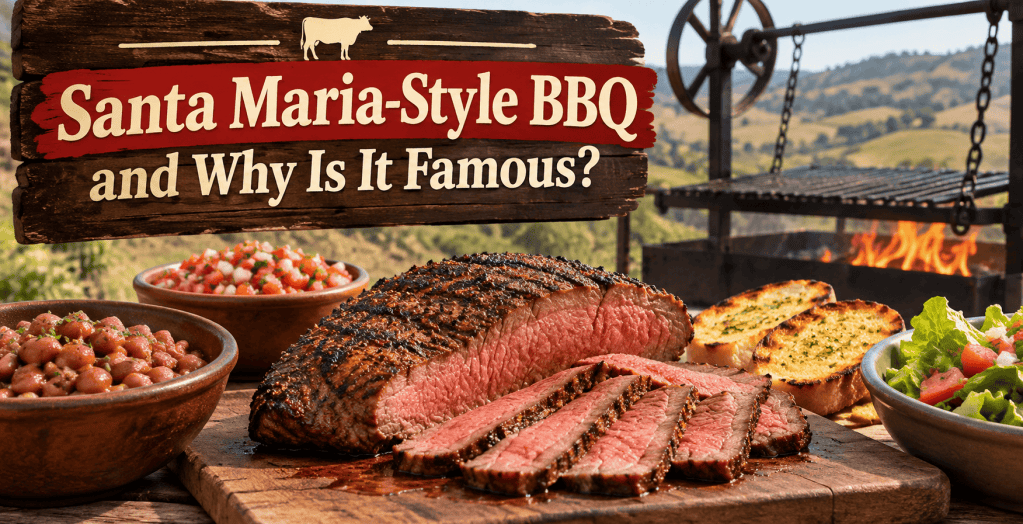
California is home to many distinctive food traditions, but few represent the state’s Central Coast quite like Santa Maria-style barbecue. Known for its smoky flavor, perfectly grilled beef, simple seasonings, and traditional side dishes, Santa Maria-style BBQ has become one of California’s most recognizable regional cooking styles.
Unlike traditional Southern barbecue, which often relies on slow-smoking meat for hours and coating it with thick sauces, Santa Maria-style barbecue focuses on grilling beef over red oak coals. The result is tender, juicy meat with a smoky crust that allows the natural flavor of the beef to shine.
From backyard gatherings to community fundraisers and famous Central Coast steakhouses, this barbecue tradition has become an important part of California’s culinary identity.
But what exactly makes Santa Maria-style BBQ different, where did it originate, and why has it become so famous?
What Is Santa Maria-Style BBQ?
Santa Maria-style BBQ is a traditional California barbecue method that originated in the Santa Maria Valley along California’s Central Coast.
It is best known for cooking beef over an open fire fueled by native red oak wood.
The traditional meal typically includes:
-
Beef tri-tip or top sirloin
-
Simple seasonings featuring salt, black pepper, and garlic
-
Red oak wood for grilling
-
Pinquito beans
-
Fresh salsa
-
Garlic bread or grilled French bread
-
A fresh green salad
Unlike barbecue traditions that depend heavily on sweet or tangy sauces, Santa Maria-style BBQ emphasizes the quality of the meat, the flavor of the wood, and the skill of the person grilling.
The cooking process produces beef that is beautifully browned on the outside while remaining juicy and flavorful inside.
Although tri-tip has become the most recognizable cut associated with this barbecue style, top sirloin was central to its earlier traditions.
Where Did Santa Maria-Style BBQ Originate?
Santa Maria-style barbecue developed in California’s Santa Maria Valley during the 19th century.
Its roots are closely connected to the region’s cattle ranching history.
During the 1800s, ranchers and vaqueros working throughout California’s Central Coast often gathered for large outdoor meals after cattle roundups and other ranching activities.
These gatherings featured beef cooked over open fires using locally available hardwood.
Red oak became a preferred cooking wood because it burned hot and produced flavorful coals.
Over time, these ranch-style cookouts developed into a recognizable regional barbecue tradition.
By the early 20th century, Santa Maria barbecue had become a popular feature of local celebrations, community gatherings, and fundraising events.
The Santa Maria Valley’s barbecue culture continued growing as local restaurants and community organizations helped preserve the cooking tradition.
Today, Santa Maria-style BBQ remains an important part of the region’s identity.
Why Is Santa Maria-Style BBQ Famous?
Santa Maria-style BBQ became famous because it combines a distinctive cooking technique, flavorful beef, and a long-standing California ranching tradition.
Several characteristics help explain its popularity.
1. The Famous Red Oak Flavor
One of the defining features of Santa Maria-style barbecue is the use of red oak wood.
Red oak produces a distinctive smoky flavor that complements beef without overwhelming it.
The wood burns into hot coals that provide the direct heat needed to develop a flavorful crust.
This combination of wood smoke and high-temperature grilling creates a taste that is difficult to duplicate using an ordinary gas grill.
2. The Popularity of Tri-Tip
Tri-tip is one of California’s most famous beef cuts, and Santa Maria-style barbecue played a major role in its popularity.
Tri-tip comes from the bottom sirloin portion of the cow.
It has a triangular shape, rich beef flavor, and enough marbling to remain juicy when cooked properly.
The cut became especially popular in California during the mid-20th century, when Santa Maria-area butchers and cooks helped establish it as a desirable grilling cut.
Today, tri-tip is widely associated with California barbecue.
3. Simple Seasonings
Santa Maria-style BBQ proves that excellent barbecue does not require complicated marinades or heavy sauces.
Traditional seasoning commonly includes salt, black pepper, and garlic.
Some cooks add parsley or other herbs and spices.
The goal is to enhance the natural beef flavor rather than cover it.
4. A Unique Grilling Tradition
Santa Maria barbecue is often prepared using a large open grill with an adjustable cooking grate.
The grate can be raised or lowered to control the distance between the meat and the hot coals.
This allows the cook to manage the temperature without relying entirely on vents or electronic controls.
5. Its Connection to California History
Santa Maria-style BBQ is more than a cooking technique.
It represents California’s ranching heritage, community gatherings, and regional food traditions.
For generations, families, ranchers, restaurants, and community organizations have prepared this barbecue for celebrations and special occasions.
That history makes it a meaningful part of California food culture.
What Kind of Meat Is Used for Santa Maria-Style BBQ?
Although several cuts of beef can be prepared using the Santa Maria method, two cuts are particularly important.
Beef Tri-Tip
Tri-tip is the cut most commonly associated with modern Santa Maria-style barbecue.
It is popular because it offers:
-
Rich beef flavor
-
Tender texture when cooked and sliced correctly
-
A flavorful exterior crust
-
Relatively quick grilling compared with large smoked briskets
-
Excellent results when cooked over wood coals
Tri-tip is usually grilled whole and sliced thinly against the grain before serving.
Because the muscle fibers change direction within the roast, cooks often divide the finished tri-tip into sections before slicing.
Top Sirloin
Top sirloin has deep historical roots in traditional Santa Maria barbecue.
Before tri-tip became widely popular, large cuts of top sirloin were commonly grilled at ranch gatherings and community barbecues.
Top sirloin remains an excellent choice because it offers a bold beef flavor and works well with simple seasonings.
Both cuts can produce authentic Santa Maria-style barbecue when prepared over red oak coals.
Why Is Red Oak Wood Important for Santa Maria BBQ?
Red oak is one of the most important ingredients in authentic Santa Maria-style barbecue.
The wood has several qualities that make it particularly suitable for grilling beef.
First, it produces hot, long-lasting coals.
Second, it creates a pleasant smoky flavor that enhances the meat.
Third, it supports the direct-heat cooking method traditionally used in Santa Maria barbecue.
Unlike low-temperature smoking methods that surround meat with smoke for many hours, Santa Maria-style grilling cooks meat over glowing coals.
The smoke contributes flavor while the heat develops a browned exterior.
Red oak is closely associated with California’s Central Coast, making it a natural part of the region’s barbecue tradition.
When red oak is unavailable, other hardwoods such as white oak may be used, although the flavor will differ somewhat from the traditional version.
How Do You Make Authentic Santa Maria-Style BBQ at Home?
You do not need a commercial barbecue pit to enjoy Santa Maria-style BBQ.
A charcoal grill, hardwood coals, and a quality tri-tip roast can produce excellent results.
Ingredients
For the beef:
-
1 whole beef tri-tip roast, approximately 2–3 pounds
-
2 teaspoons kosher salt
-
2 teaspoons freshly ground black pepper
-
2 teaspoons garlic powder
-
1 teaspoon dried parsley, optional
-
1 tablespoon olive oil, optional
For grilling:
-
Red oak wood or food-safe red oak cooking chunks
-
Charcoal, if needed to establish the fire
Step 1: Prepare the Beef
Remove the tri-tip from its packaging and pat it dry with paper towels.
Trim away excess surface fat if necessary, leaving a modest amount to help protect the meat during grilling.
Lightly coat the meat with olive oil if desired.
Step 2: Season the Tri-Tip
Combine the salt, black pepper, garlic powder, and optional parsley in a small bowl.
Rub the seasoning evenly over the entire roast.
Allow the seasoned meat to rest in the refrigerator while preparing the grill.
Step 3: Prepare the Grill
Build a charcoal or hardwood fire and allow the wood to burn down into glowing coals.
Arrange the coals to create two cooking zones:
-
A hotter area for searing
-
A cooler area for finishing the meat
Traditional Santa Maria grills use adjustable grates, but a standard charcoal grill with two-zone heat can work well.
Step 4: Grill the Tri-Tip
Place the tri-tip over the hotter section of the grill.
Sear the meat for approximately 4–6 minutes per side, depending on the heat.
Move the roast to the cooler section and continue cooking with the lid closed when using a conventional grill.
Turn occasionally to promote even cooking.
Total cooking time commonly ranges from 25–45 minutes, depending on roast thickness, grill temperature, and desired doneness.
Use a meat thermometer rather than relying only on cooking time.
For food safety, the USDA recommends cooking whole beef roasts to an internal temperature of 145°F followed by a minimum three-minute rest.
Step 5: Rest the Meat
Transfer the finished tri-tip to a cutting board.
Allow it to rest for approximately 10–15 minutes before slicing.
Resting helps retain moisture when the beef is cut.
Step 6: Slice Against the Grain
One of the most important steps when preparing tri-tip is slicing it correctly.
Tri-tip contains muscle fibers that run in different directions.
Identify the direction of the grain in each section and slice thinly across the fibers.
This produces more tender, easier-to-chew pieces.
Serve immediately with traditional Santa Maria barbecue sides.
What Are Traditional Santa Maria-Style BBQ Side Dishes?
Santa Maria-style barbecue is famous not only for its beef but also for the foods served alongside it.
The traditional combination creates a complete meal that balances smoky meat with beans, bread, vegetables, and salsa.
Pinquito Beans
Pinquito beans are perhaps the most distinctive side dish associated with Santa Maria barbecue.
These small pink beans are closely connected to the Santa Maria Valley.
They have a firm texture and rich, earthy flavor.
Traditional preparations often simmer the beans with seasonings, tomatoes, and sometimes bacon or other pork ingredients.
The beans complement the smoky beef and help make the meal filling.
Fresh Salsa
Santa Maria-style salsa usually features tomatoes, onions, peppers, and seasonings.
Unlike thick barbecue sauce, fresh salsa adds acidity and brightness to the meal.
It helps balance the richness of the grilled beef.
Garlic Bread
Grilled French bread or garlic bread is another classic accompaniment.
The bread is often toasted until golden and lightly crisp.
It can be served alongside the beef or used to soak up juices from the meat and beans.
Green Salad
A simple green salad adds freshness and contrast to the meal.
Traditional versions may include lettuce, tomatoes, and a straightforward dressing.
The salad provides a lighter element alongside the rich grilled beef.
What Is the Difference Between Santa Maria BBQ and Texas BBQ?
Santa Maria-style BBQ and Texas barbecue are both famous for their beef, but their cooking traditions differ significantly.
| Feature | Santa Maria-style BBQ | Texas BBQ |
|---|---|---|
| Famous meat | Tri-tip and top sirloin | Brisket and beef ribs |
| Cooking method | Direct grilling over coals | Often low-and-slow smoking |
| Traditional wood | Red oak | Post oak and other hardwoods |
| Seasoning | Salt, pepper, garlic | Often salt and pepper |
| Cooking time | Usually under an hour for tri-tip | Often many hours for brisket |
| Traditional sides | Pinquito beans, salsa, bread | Beans, pickles, onions, bread |
Both styles emphasize beef and wood-fired flavor.
However, Santa Maria barbecue generally uses hotter, more direct cooking, while Texas brisket barbecue relies on extended smoking to tenderize tougher cuts.
Is Santa Maria-Style BBQ the Same as Regular Barbecue?
Not exactly.
The word barbecue describes many cooking traditions throughout the United States.
Some regional styles rely on smoking, while others emphasize direct grilling.
Santa Maria-style barbecue stands apart because of its specific combination of beef, red oak, simple seasoning, and traditional accompaniments.
For example, Carolina barbecue is widely associated with pork and vinegar-based sauces.
Kansas City barbecue is known for smoked meats and thick, sweet sauces.
Memphis barbecue is famous for pork ribs and dry rubs.
Santa Maria-style BBQ, by comparison, focuses primarily on grilled beef and the natural flavors produced by wood-fired cooking.
There is no single style of barbecue that represents the entire country.
Each regional tradition reflects local history, ingredients, and cooking preferences.
Where Can You Find Authentic Santa Maria-Style BBQ in California?
The Santa Maria Valley remains the center of this barbecue tradition.
Santa Maria and nearby communities along California’s Central Coast are known for restaurants, markets, and community events that celebrate regional barbecue.
The tradition is especially associated with Santa Barbara County.
Restaurants throughout the region serve grilled tri-tip, top sirloin, pinquito beans, salsa, and garlic bread.
Santa Maria-style barbecue has also spread to other parts of California.
Today, tri-tip sandwiches and grilled tri-tip plates are common at California barbecue restaurants, fairs, sporting events, and neighborhood cookouts.
Although many establishments offer their own interpretations, the traditional combination of red oak grilling and simple seasonings remains the defining feature.
Why Is Tri-Tip So Popular in California?
Tri-tip holds a special place in California food culture.
Although the cut exists everywhere cattle are processed, its popularity as a whole grilled roast developed particularly strongly in California.
Santa Maria-area cooks and meat markets helped establish tri-tip as a regional specialty.
Its popularity grew because it offered several advantages.
It was flavorful, versatile, relatively affordable compared with some premium steak cuts, and suitable for feeding groups.
A whole tri-tip could be grilled, sliced, and served at family gatherings or community events.
Over time, California restaurants began featuring tri-tip sandwiches, salads, and barbecue plates.
Today, tri-tip remains one of the state’s most recognizable beef specialties.
Can You Make Santa Maria-Style BBQ Without a Santa Maria Grill?
Yes.
Although the traditional adjustable-grate grill is an important part of Santa Maria barbecue history, home cooks can achieve similar results with other equipment.
A charcoal grill is usually the closest practical alternative.
Using red oak cooking chunks with charcoal helps recreate the traditional wood-fired flavor.
A kettle grill also works well because it allows cooks to establish hot and cooler cooking zones.
A gas grill can prepare delicious Santa Maria-seasoned tri-tip, although it will not naturally produce the same red oak smoke flavor.
For the most authentic results, focus on three essentials: good-quality beef, simple seasonings, and hardwood grilling.
What Makes Santa Maria-Style BBQ Different From Other California Foods?
California cuisine is often associated with fresh produce, avocados, seafood, Mexican influences, and health-conscious cooking.
Santa Maria-style barbecue represents another important side of the state’s culinary history.
It reflects the cattle ranching traditions that helped shape Central California.
The barbecue also highlights the state’s regional diversity.
Northern California is known for its own food traditions, including sourdough bread and seafood dishes.
Southern California is famous for foods such as fish tacos and California burritos.
The Central Coast contributes Santa Maria-style barbecue, a tradition built around beef, hardwood fires, and community meals.
Together, these regional specialties demonstrate how California’s geography and history have influenced its food culture.
Frequently Asked Questions About Santa Maria-Style BBQ
What is the most famous Santa Maria-style BBQ meat?
Tri-tip is the meat most commonly associated with modern Santa Maria-style BBQ. However, top sirloin played an important role in the tradition’s early history.
What seasoning is used for Santa Maria BBQ?
Traditional Santa Maria-style seasoning typically features salt, black pepper, and garlic. Some recipes include parsley and additional herbs.
Is Santa Maria BBQ smoked or grilled?
Santa Maria-style BBQ is primarily grilled over hot hardwood coals. The red oak fire contributes smoke flavor, but the cooking method is different from traditional low-and-slow smoking.
Does Santa Maria BBQ use barbecue sauce?
Traditional Santa Maria barbecue generally does not rely on thick barbecue sauce. The meat is seasoned simply and commonly served with fresh salsa.
What beans are served with Santa Maria BBQ?
Pinquito beans are the traditional accompaniment. These small pink beans are closely associated with California’s Santa Maria Valley.
Is Santa Maria BBQ spicy?
Santa Maria-style barbecue is not usually very spicy. Its primary flavors come from beef, garlic, black pepper, salt, and red oak smoke.
Why is Santa Maria tri-tip so tender?
Tri-tip can be tender because of its natural characteristics, proper cooking, resting, and thin slicing against the grain. Overcooking or slicing incorrectly can make it chewy.
Can you cook Santa Maria tri-tip in the oven?
Yes. Tri-tip can be roasted in the oven using Santa Maria-style seasoning. However, oven roasting will not produce the same wood-fired flavor as traditional grilling.
What makes Santa Maria-style BBQ authentic?
The defining elements are beef, simple seasoning, grilling over red oak coals, and traditional side dishes such as pinquito beans, salsa, and grilled bread.
Final Thoughts: Why Santa Maria-Style BBQ Is a California Classic
Santa Maria-style BBQ is famous because it combines outstanding flavor with a rich California tradition.
Its roots in Central Coast cattle ranching, its distinctive red oak cooking method, and its emphasis on simply seasoned beef have helped it become one of the state’s most celebrated regional foods.
Unlike barbecue styles that depend on complicated sauces or lengthy smoking techniques, Santa Maria barbecue demonstrates how a few quality ingredients and careful cooking can create an unforgettable meal.
From perfectly grilled tri-tip to flavorful pinquito beans and fresh salsa, every part of the traditional meal reflects the history and character of California’s Santa Maria Valley.
Whether enjoyed at a Central Coast steakhouse, a community barbecue, or a backyard gathering, Santa Maria-style BBQ continues to bring people together around good food and an open fire.
Ultimately, Santa Maria-style BBQ is more than a way to cook beef. It is a lasting piece of California’s culinary heritage and one of the reasons the state’s food traditions are so diverse and memorable.
Leave a Reply