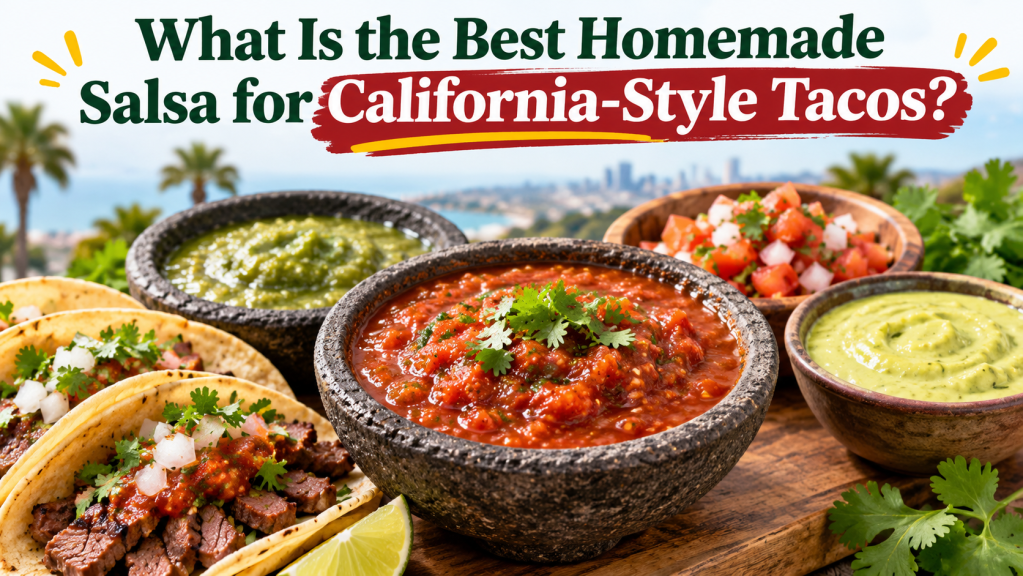
California-style tacos are known for their fresh ingredients, bold flavors, and delicious combinations of grilled meats, seafood, vegetables, and homemade toppings. Whether you’re enjoying carne asada tacos from a Southern California taco shop, grilled fish tacos along the coast, or street tacos inspired by California’s Mexican food traditions, one ingredient can make all the difference: salsa.
The right homemade salsa brings together freshness, acidity, heat, and flavor without overpowering the ingredients inside the tortilla.
But what is the best homemade salsa for California-style tacos?
The best all-around homemade salsa for California-style tacos is a fresh roasted tomato salsa roja made with tomatoes, jalapeños, onion, garlic, cilantro, and lime juice. It delivers a combination of smoky flavor, mild-to-medium heat, and bright acidity that complements everything from grilled steak and chicken to shrimp and fish.
However, California’s diverse taco culture means there isn’t just one perfect salsa. Salsa verde, creamy avocado salsa, fresh pico de gallo, and spicy roasted chile salsa all have their place.
This guide explores the best homemade salsa for California-style tacos, how to prepare it, which salsa works best with different taco fillings, and the secrets to making restaurant-quality salsa at home.
What Makes California-Style Taco Salsa Different?
California-style taco salsa reflects the state’s strong Mexican culinary influences, particularly the cooking traditions of Baja California, Sonora, and other regions of Mexico.
California taco shops and street vendors often serve several types of salsa, allowing customers to choose the flavors and heat levels they prefer.
Some common characteristics of California-style taco salsa include:
-
Fresh tomatoes, tomatillos, peppers, and cilantro.
-
Bright citrus flavors from fresh lime juice.
-
Roasted or charred vegetables for smoky depth.
-
Fresh ingredients that complement grilled meats and seafood.
-
A range of heat levels, from mild to extremely spicy.
-
Smooth, blended salsas alongside chunky, freshly chopped varieties.
Unlike thick commercial jarred salsa, many taco-shop salsas are relatively thin, making them easy to spoon or drizzle over tacos.
The goal is to enhance the filling rather than cover up its natural flavors.
The Best Homemade California-Style Taco Salsa Recipe
For a versatile salsa that works with almost any California-style taco, roasted tomato salsa roja is an excellent choice.
Roasting the vegetables creates a deeper flavor while fresh cilantro and lime juice add brightness.
RECIPE DETAILS
Prep
10 min
Cook
15 min
Total
25 min
Yield
2 cups
Ingredients
-
4 medium Roma tomatoes
-
2 jalapeño peppers
-
1/2 medium white onion
-
3 garlic cloves, unpeeled
-
1/4 cup fresh cilantro, chopped
-
2 tablespoons fresh lime juice
-
1/2 teaspoon salt, or to taste
-
1/4 teaspoon ground cumin (optional)
-
2–4 tablespoons water, as needed
Instructions
Step 1: Prepare the vegetables
Wash the tomatoes and jalapeños thoroughly.
Cut the tomatoes in half and remove the stems from the jalapeños.
Peel the onion and cut it into large pieces.
Leave the garlic cloves in their skins to prevent them from burning during roasting.
Step 2: Roast the ingredients
Preheat your oven to 450°F.
Place the tomatoes, jalapeños, onion, and garlic on a baking sheet.
Roast for approximately 12–15 minutes, turning the vegetables as needed, until they begin to soften and develop dark, charred spots.
The tomatoes should become juicy, while the peppers and onions develop a slightly smoky aroma.
Step 3: Blend the salsa
Allow the roasted vegetables to cool slightly.
Remove the garlic skins and transfer the roasted ingredients to a blender or food processor.
Add the cilantro, lime juice, salt, and optional cumin.
Pulse several times until the salsa reaches your preferred consistency.
For authentic taco-shop-style salsa, blend until mostly smooth.
For a chunkier salsa, use fewer pulses.
Step 4: Adjust the flavor
Taste the salsa and adjust the seasoning.
Add more lime juice for acidity, additional salt for flavor, or a little water if the salsa is too thick.
If you prefer a spicier salsa, blend in an additional roasted jalapeño or serrano pepper.
Step 5: Let the flavors develop
Refrigerate the salsa in a covered container for approximately 20–30 minutes before serving.
This allows the flavors to combine and creates a more balanced taste.
Serve with warm corn tortillas, grilled meats, seafood, or your favorite California-style taco fillings.
Why Roasted Tomato Salsa Is Perfect for California-Style Tacos
Roasted tomato salsa works especially well because it balances several important flavors.
Smokiness: Roasted tomatoes, peppers, and onions develop deeper flavors that complement grilled meats.
Acidity: Fresh lime juice cuts through rich ingredients such as carne asada, cheese, and avocado.
Heat: Jalapeños provide adjustable spice without overwhelming the other ingredients.
Freshness: Cilantro brightens the salsa and balances the roasted vegetables.
Versatility: The same recipe works with steak, chicken, pork, shrimp, fish, and vegetarian tacos.
This combination makes roasted tomato salsa one of the most practical homemade taco sauces for everyday California-inspired cooking.
What Are the Best Types of Salsa for California-Style Tacos?
Although roasted salsa roja is an excellent all-purpose choice, different taco fillings benefit from different salsa styles.
1. Fresh Pico de Gallo
Pico de gallo is a chunky, uncooked salsa made with fresh tomatoes, onion, jalapeños, cilantro, lime juice, and salt.
It is especially popular when a taco needs additional freshness and texture.
Best for: Carne asada tacos, grilled chicken tacos, shrimp tacos, and California-style burritos.
Pico de gallo works particularly well with rich fillings because its fresh vegetables and citrus provide contrast.
2. Salsa Verde
Salsa verde is typically made with tomatillos, green chiles, onion, garlic, and cilantro.
It has a bright, tangy flavor that pairs beautifully with grilled and slow-cooked meats.
Best for: Chicken tacos, carnitas, pork tacos, and grilled fish tacos.
Roasting the tomatillos produces a slightly smoky salsa, while boiling them creates a lighter, brighter flavor.
3. Creamy Avocado Salsa
Creamy avocado salsa combines ripe avocado, lime juice, cilantro, jalapeño, garlic, and water.
The result is a smooth, rich sauce that adds creaminess without requiring sour cream.
Best for: Baja fish tacos, shrimp tacos, grilled chicken tacos, and vegetarian tacos.
Avocado salsa is particularly useful when the taco filling is spicy or heavily seasoned.
4. Spicy Salsa Roja
Spicy salsa roja uses roasted tomatoes and hotter peppers such as serranos or dried árbol chiles.
The result is a bold, spicy sauce commonly associated with Mexican taco stands.
Best for: Carne asada, al pastor, chorizo, and grilled steak tacos.
Because the salsa can be intensely spicy, a small amount is often enough.
5. Mango or Pineapple Salsa
Fruit-based salsa combines sweet fruit with lime juice, cilantro, onion, and fresh peppers.
Although not traditional for every California taco style, these salsas are popular in modern coastal and fusion-inspired cooking.
Best for: Grilled fish tacos, shrimp tacos, chicken tacos, and blackened seafood tacos.
The sweetness of the fruit balances spicy seasoning and smoky grilled flavors.
Which Salsa Goes Best With Different California-Style Tacos?
Choosing the right salsa depends on the main filling.
| Taco filling | Best salsa |
|---|---|
| Carne asada | Roasted salsa roja |
| Baja-style fish | Creamy avocado salsa |
| Grilled shrimp | Mango salsa or salsa verde |
| Carnitas | Tangy salsa verde |
| Grilled chicken | Pico de gallo |
| Al pastor | Spicy salsa roja or pineapple salsa |
| Vegetarian | Avocado salsa or pico de gallo |
| California street tacos | Roasted tomato salsa |
| Blackened fish | Avocado salsa with lime |
These combinations are suggestions rather than strict rules. California taco shops frequently offer multiple salsas so customers can customize their tacos.
How Do You Make Authentic California Taco-Shop Salsa?
One of the secrets to making taco-shop-style salsa at home is achieving the right consistency.
Many restaurant-style salsas are smoother and thinner than typical chunky salsa served with tortilla chips.
To create that texture, roast or simmer your vegetables until softened, then blend them with a small amount of water.
The salsa should be thin enough to drizzle over tacos but thick enough to cling to the filling.
Other useful techniques include using fresh peppers rather than bottled hot sauce, balancing acidity with lime juice, and seasoning gradually.
For additional smoky flavor, roast the peppers and tomatoes in a dry skillet or under the broiler until lightly charred.
A small amount of char can add complexity, but avoid burning the vegetables completely, which may create bitterness.
Should You Use Fresh or Roasted Tomatoes for Taco Salsa?
Both fresh and roasted tomatoes work well, but they produce different flavors.
Fresh Tomatoes
Fresh tomatoes create a lighter, brighter salsa.
They are particularly useful for pico de gallo and fresh blended salsa.
Fresh tomato salsa is ideal for seafood tacos and lighter fillings.
Roasted Tomatoes
Roasted tomatoes develop a richer, slightly sweeter flavor.
They are especially good for grilled steak, chicken, pork, and other smoky taco fillings.
For a versatile California-style taco salsa, roasted tomatoes generally provide a more complex flavor.
However, the best choice ultimately depends on the filling and your personal preference.
What Peppers Are Best for Homemade California Taco Salsa?
The type of pepper determines much of the salsa’s heat and flavor.
Jalapeño Peppers
Jalapeños are an excellent choice for mild-to-medium salsa.
They provide a fresh, slightly grassy flavor that works with tomatoes and cilantro.
Serrano Peppers
Serranos are generally hotter than jalapeños.
They are commonly used in Mexican-style green and red salsas when a stronger kick is desired.
Chile de Árbol
Dried árbol chiles provide sharp heat and a distinctive toasted chile flavor.
They are often used in spicy taco-shop salsas.
Poblano Peppers
Poblanos are relatively mild and provide an earthy flavor when roasted.
They work well when you want a smoky salsa without excessive heat.
For most home cooks, jalapeños offer the best balance between flavor, availability, and adjustable spiciness.
How Do You Make Taco Salsa Less Spicy?
If your homemade salsa turns out hotter than expected, several adjustments can help.
Start by adding more roasted tomatoes or tomatillos to dilute the concentration of hot peppers.
Additional lime juice may improve the flavor balance, although it does not actually remove the heat-producing compounds.
You can also serve the salsa alongside avocado or sour cream to soften the perceived heat when eating.
For future batches, remove the pepper’s inner ribs and seeds before blending. Much of the capsaicin is concentrated in the inner membranes.
Remember that pepper heat varies naturally, even among peppers of the same variety.
How Do You Make Homemade Salsa Taste Like a California Taco Shop?
Making restaurant-quality salsa at home requires more than simply combining vegetables.
Several small details can dramatically improve the finished result.
Roast the Ingredients Properly
Light charring creates depth and brings out the natural sweetness of tomatoes and onions.
Use Fresh Lime Juice
Fresh lime juice provides brightness that balances rich taco fillings.
Don’t Forget the Salt
Underseasoned salsa often tastes flat, even when the ingredients are fresh.
Add salt gradually and taste between additions.
Blend to the Right Texture
For a classic taco-shop experience, use a blender to create a relatively smooth consistency.
Let the Salsa Rest
Allowing the salsa to sit in the refrigerator for 20–30 minutes helps the flavors combine.
Taste It With the Taco
A salsa that tastes strong on its own may be perfectly balanced when combined with grilled meat, tortillas, and other toppings.
Always test your salsa with the food you intend to serve.
Can You Make California-Style Taco Salsa Without a Blender?
Yes. A blender makes smooth salsa easier to prepare, but it isn’t required.
For a chunky roasted salsa, finely chop the roasted tomatoes, peppers, onion, and garlic with a sharp knife.
Combine everything in a bowl with cilantro, lime juice, and salt.
For a more traditional hand-ground texture, use a molcajete, a Mexican mortar and pestle.
Grinding the roasted ingredients releases their juices and produces a rustic consistency.
A food processor is another option if you prefer a smoother salsa without completely puréeing the vegetables.
Is Homemade Salsa Better Than Store-Bought Salsa for Tacos?
Homemade salsa offers several advantages, especially when preparing California-style tacos.
First, you can control the heat level by adjusting the peppers.
Second, you can customize the consistency to match your preferred taco style.
Third, homemade salsa allows you to use fresh lime juice, cilantro, and vegetables without relying on the flavor profile of a commercial product.
Finally, making salsa from scratch allows you to create different varieties for different fillings.
Store-bought salsa can still be convenient, but homemade salsa provides greater control over freshness, seasoning, and texture.
How Long Does Homemade Taco Salsa Last?
Fresh homemade salsa should be refrigerated promptly in a clean, airtight container.
As a practical guideline:
-
Fresh pico de gallo: Best within 1–2 days.
-
Roasted tomato salsa: Generally best within 3–4 days.
-
Homemade salsa verde: Generally best within 3–4 days.
-
Fresh avocado salsa: Best within 1 day because avocado browns quickly.
These are conservative quality and storage guidelines, not guarantees of safety. Keep salsa refrigerated at 40°F or below, use clean utensils, and discard it if it develops mold or signs of spoilage.
Do not leave perishable homemade salsa at room temperature for more than two hours, or one hour when temperatures exceed 90°F.
Homemade salsa should not be stored at room temperature unless it has been prepared using a tested, properly processed canning recipe.
Can You Freeze Homemade Taco Salsa?
Yes. Many cooked or roasted tomato-based salsas freeze reasonably well.
Allow the salsa to cool, then transfer it to a freezer-safe container, leaving room for expansion.
Freeze for approximately 2–3 months for best quality.
Thaw it in the refrigerator and stir before serving.
Freezing may change the texture because tomatoes release water when thawed.
Fresh pico de gallo and avocado salsa generally do not freeze as well because their texture deteriorates.
For the best results, freeze roasted tomato salsa or cooked salsa verde rather than fresh chopped salsa.
What Toppings Go Well With Homemade Salsa on California Tacos?
Homemade salsa is even better when combined with the right toppings.
Traditional street-style tacos often feature simple garnishes such as chopped white onion, cilantro, and lime.
Other popular California-inspired taco toppings include shredded cabbage, sliced avocado, pickled red onions, cotija cheese, fresh radishes, and creamy lime sauce.
For carne asada tacos, roasted salsa roja with onion and cilantro is an excellent combination.
For Baja-style fish tacos, creamy avocado salsa and crunchy shredded cabbage create a delicious contrast.
For grilled shrimp tacos, fresh mango salsa and a squeeze of lime add sweetness and brightness.
The key is choosing toppings that complement the main filling without overwhelming it.
Frequently Asked Questions About California-Style Taco Salsa
What Is the Most Popular Salsa for California Street Tacos?
Red and green salsas are common choices at California taco shops. Roasted tomato salsa roja is especially versatile because it complements grilled meats, while salsa verde works beautifully with pork and chicken.
What Salsa Is Best for Carne Asada Tacos?
Roasted salsa roja made with tomatoes, serrano or jalapeño peppers, garlic, onion, and cilantro is an excellent choice for carne asada tacos. Its acidity and heat complement the rich flavor of grilled beef.
What Salsa Is Best for California Fish Tacos?
Creamy avocado salsa, salsa verde, and fresh pico de gallo are all excellent options. Baja-style fish tacos also pair well with creamy lime sauces and crunchy cabbage.
Can You Make Homemade Taco Salsa Ahead of Time?
Yes. Roasted tomato salsa can be prepared a day before serving and stored in the refrigerator. Its flavors often become more balanced after resting.
Do California Taco Shops Use Red or Green Salsa?
Many California taco shops offer both. Red salsa commonly features tomatoes or red chiles, while green salsa often uses tomatillos, green peppers, cilantro, or avocado.
What Makes Taco Salsa Different From Regular Salsa?
Taco salsa is often smoother and thinner than chunky salsa served with chips. This makes it easier to drizzle over taco fillings while distributing the flavor evenly.
Can You Make California Taco Salsa Without Cilantro?
Yes. Simply omit the cilantro or replace it with a small amount of fresh parsley if desired. The salsa will have a different flavor but can still taste delicious.
Is Salsa Roja or Salsa Verde Better for Tacos?
Neither is universally better. Salsa roja is excellent with grilled steak and richly seasoned meats, while salsa verde provides a tangy flavor that complements chicken, pork, and seafood.
Final Thoughts: What Is the Best Homemade Salsa for California-Style Tacos?
The best homemade salsa for California-style tacos depends on the filling, but roasted tomato salsa roja is one of the most versatile options for home cooks.
Its combination of roasted tomatoes, peppers, garlic, onion, cilantro, and lime juice creates a flavorful balance of smokiness, acidity, freshness, and heat.
For carne asada and grilled steak tacos, roasted red salsa adds bold flavor. For fish and shrimp tacos, creamy avocado salsa or fresh pico de gallo provides a lighter, refreshing contrast. For carnitas and chicken tacos, tangy salsa verde is an excellent alternative.
One of the best things about California taco culture is the freedom to experiment with different flavors and combinations.
Whether you’re recreating the taste of a Southern California taco shop, preparing Baja-inspired fish tacos, or making a simple taco dinner at home, fresh homemade salsa can transform an ordinary taco into something memorable.
And with just a handful of fresh ingredients and about 25 minutes of preparation, you can make a delicious California-style taco salsa right in your own kitchen.
Leave a Reply