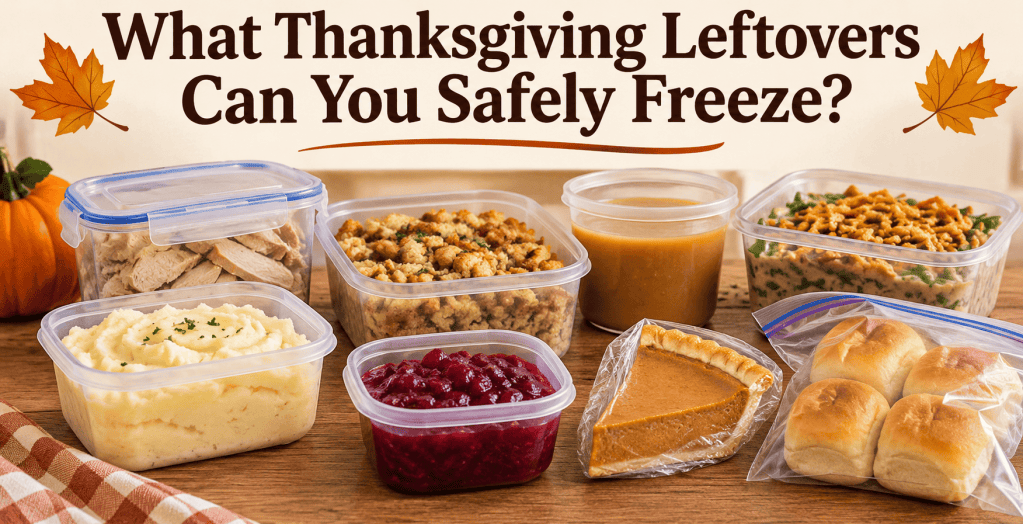
Thanksgiving is a time for family, gratitude, and delicious food. From perfectly roasted turkey and creamy mashed potatoes to homemade stuffing, savory gravy, and traditional holiday desserts, Thanksgiving dinner often includes more food than anyone can finish in one sitting.
While enjoying leftovers is part of the holiday tradition, knowing how to store them properly is essential for preventing food waste and keeping your family safe.
One of the most common questions after Thanksgiving is: What Thanksgiving leftovers can you safely freeze?
The good news is that most traditional Thanksgiving foods can be frozen successfully. Cooked turkey, mashed potatoes, stuffing, gravy, casseroles, cranberry sauce, dinner rolls, and many holiday desserts can all be stored in the freezer for future meals.
However, not every dish freezes equally well. Some foods maintain their original flavor and texture, while others may become watery, grainy, or mushy after thawing.
Understanding which Thanksgiving leftovers freeze best, how long they can be stored, and the safest ways to thaw and reheat them can help you enjoy your holiday meal long after Thanksgiving is over.
Why Should You Freeze Thanksgiving Leftovers?
Freezing Thanksgiving leftovers is one of the easiest ways to reduce food waste while saving money on future meals.
Most cooked Thanksgiving dishes can be safely stored in the refrigerator for three to four days when refrigerated promptly at 40°F or below. Freezing them before that period ends allows you to preserve food that might otherwise go to waste.
Freezing leftovers offers several benefits.
1. Reduce Food Waste
Thanksgiving meals often involve preparing large portions of turkey, side dishes, and desserts. Freezing extra servings prevents perfectly good food from being thrown away.
2. Save Money on Groceries
Leftover turkey, vegetables, and casseroles can become ingredients for future lunches and dinners, reducing the need to purchase additional groceries.
3. Make Meal Preparation Easier
Having prepared meals in the freezer makes busy weeknights more convenient. Many Thanksgiving leftovers only require thawing and reheating.
4. Enjoy Holiday Favorites Longer
Freezing allows you to enjoy traditional Thanksgiving flavors throughout the winter instead of trying to finish everything within a few days.
What Thanksgiving Leftovers Can You Freeze?
Most cooked Thanksgiving dishes can be frozen safely when they have been handled and stored correctly.
Here are some of the most common Thanksgiving leftovers that freeze well:
-
Cooked turkey
-
Mashed potatoes
-
Stuffing and dressing
-
Turkey gravy
-
Sweet potato casserole
-
Green bean casserole
-
Cranberry sauce
-
Macaroni and cheese
-
Cooked vegetables
-
Dinner rolls and biscuits
-
Pumpkin pie
-
Pecan pie
-
Turkey broth and stock
Although these foods can be frozen, their recommended storage times vary depending on their ingredients, moisture content, and packaging.
Can You Freeze Leftover Thanksgiving Turkey?
Yes. Cooked Thanksgiving turkey is one of the best holiday leftovers to freeze.
Both white meat and dark meat freeze well, making turkey an excellent ingredient for future sandwiches, soups, casseroles, and other meals.
How to Freeze Cooked Turkey
-
Remove the turkey meat from the bones.
-
Divide the meat into smaller portions.
-
Place the portions in airtight freezer containers or freezer-safe bags.
-
Add a small amount of turkey broth if desired to help maintain moisture.
-
Remove excess air from the packaging.
-
Label each container with the freezing date.
-
Place the turkey in the freezer promptly.
For the best quality, use frozen cooked turkey within approximately three to four months.
Can You Freeze Turkey Bones?
Yes. Turkey bones and the remaining carcass can be frozen for making homemade turkey stock.
Place the bones in a large freezer-safe bag and remove as much air as possible before sealing.
Can You Freeze Thanksgiving Mashed Potatoes?
Yes. Mashed potatoes can be frozen, although their texture may change slightly after thawing.
Mashed potatoes prepared with butter, cream, or whole milk generally freeze better than those made with very little fat.
The added fat helps maintain a smoother consistency.
How to Freeze Mashed Potatoes
Allow the potatoes to cool promptly in shallow containers.
Divide them into individual or family-sized portions.
Transfer the potatoes into airtight freezer containers or freezer-safe bags.
Flatten freezer bags to make storage easier and help the potatoes freeze more quickly.
For the best texture, use frozen mashed potatoes within one to two months.
How to Reheat Frozen Mashed Potatoes
Thaw the potatoes overnight in the refrigerator or reheat them directly from frozen.
Warm them gently on the stovetop or in the microwave.
Add a little butter, milk, or cream while stirring to restore their creamy consistency.
Can You Freeze Thanksgiving Stuffing or Dressing?
Yes. Both traditional bread stuffing and Southern-style cornbread dressing can be frozen successfully.
However, the texture may become slightly softer after thawing.
How to Freeze Stuffing
Transfer cooked stuffing into airtight freezer containers or freezer-safe bags.
Divide large batches into smaller portions for easier storage and reheating.
For the best quality, use frozen stuffing within one to three months.
When reheating, place the stuffing in an oven-safe dish and cover it with aluminum foil.
Add a small amount of chicken or turkey broth if the stuffing appears dry.
Reheat until the center reaches 165°F.
Can You Freeze Leftover Turkey Gravy?
Yes. Turkey gravy can be frozen and reheated for future meals.
Gravy made with turkey drippings, broth, and flour generally freezes well.
However, gravy containing milk or cream may separate during freezing.
How to Freeze Turkey Gravy
Allow the gravy to cool promptly.
Pour it into small freezer-safe containers, leaving room for expansion.
You can also freeze gravy in ice cube trays and transfer the frozen portions into freezer bags.
This allows you to thaw only the amount needed.
For the best quality, use frozen gravy within two to three months.
How to Reheat Frozen Gravy
Thaw the gravy in the refrigerator or reheat it directly from frozen.
Warm it on the stovetop while stirring frequently.
If the gravy separates, whisk it thoroughly and add a little broth if necessary.
Bring leftover gravy to a full rolling boil when reheating.
Can You Freeze Sweet Potato Casserole?
Yes. Sweet potato casserole freezes well, especially when the filling contains butter, brown sugar, and spices.
However, the topping may not maintain its original texture.
Freezing Sweet Potato Casserole With Marshmallows
Marshmallow toppings may become sticky or watery after freezing.
For the best results, freeze the casserole without marshmallows whenever possible.
Add fresh marshmallows when reheating.
Freezing Sweet Potato Casserole With Pecans
Pecan toppings may lose some of their crunch after freezing.
You can improve the texture by reheating the casserole uncovered near the end of cooking or adding fresh pecans.
Sweet potato casserole is generally best enjoyed within two to three months of freezing.
Can You Freeze Green Bean Casserole?
Yes. Green bean casserole can be safely frozen, although its texture may change.
The green beans may become softer, and the creamy sauce may separate slightly.
The crispy fried onion topping is particularly likely to become soggy.
Best Way to Freeze Green Bean Casserole
Remove the crispy onion topping when practical.
Transfer the casserole into an airtight freezer-safe container.
Freeze for approximately one to two months for the best quality.
When ready to serve, reheat the casserole until it reaches 165°F.
Add fresh crispy fried onions before finishing the dish in the oven.
Can You Freeze Homemade Cranberry Sauce?
Yes. Homemade cranberry sauce is one of the easiest Thanksgiving leftovers to freeze.
Both smooth and whole-berry cranberry sauces generally maintain their flavor well.
How to Freeze Cranberry Sauce
Place the sauce in an airtight freezer container.
Leave a small amount of space at the top for expansion.
Label the container with the date.
For the best quality, use within two to three months.
Thaw cranberry sauce overnight in the refrigerator and stir before serving.
Can You Freeze Thanksgiving Macaroni and Cheese?
Yes. Baked macaroni and cheese can be frozen, although the pasta may become softer after thawing.
The cheese sauce may also separate slightly.
Macaroni and cheese made with a rich, creamy sauce generally freezes better than drier versions.
How to Freeze Macaroni and Cheese
Divide the macaroni and cheese into individual portions.
Place each portion in an airtight freezer container.
Remove excess air and seal tightly.
For the best quality, use within one to two months.
When reheating, add a small splash of milk if necessary to help restore creaminess.
Can You Freeze Thanksgiving Dinner Rolls?
Yes. Dinner rolls, biscuits, and many homemade breads freeze extremely well.
They are among the easiest Thanksgiving leftovers to preserve.
How to Freeze Dinner Rolls
Allow freshly baked rolls to cool completely.
Place them in freezer-safe bags or airtight containers.
Remove excess air before sealing.
For the best quality, use frozen rolls within two to three months.
Thaw at room temperature and warm briefly in the oven before serving.
Can You Freeze Thanksgiving Pumpkin Pie?
Yes. Pumpkin pie can be frozen, although the custard filling may become slightly watery after thawing.
How to Freeze Pumpkin Pie
Chill the pie thoroughly in the refrigerator.
Wrap it tightly in plastic wrap, followed by aluminum foil, or place it in an airtight freezer-safe container.
Freeze for approximately one to two months for the best quality.
Thaw overnight in the refrigerator before serving.
Because pumpkin pie contains eggs and dairy, it should not be thawed on the kitchen counter.
Can You Freeze Thanksgiving Pecan Pie?
Yes. Pecan pie generally freezes very well.
Its dense filling helps maintain its structure during freezing.
Wrap the cooled pie tightly and place it in freezer-safe packaging.
For the best flavor and texture, use within one to two months.
Thaw the pie overnight in the refrigerator before serving.
What Thanksgiving Leftovers Do Not Freeze Well?
Although most Thanksgiving leftovers can be frozen safely, some foods lose their original texture after thawing.
Fresh Green Salads
Lettuce, cucumbers, and many raw vegetables become limp and watery after freezing.
These foods are better enjoyed fresh.
Mayonnaise-Based Salads
Coleslaw and other mayonnaise-based dishes may separate and become watery after thawing.
Crispy Fried Foods
Fried onions and other crispy toppings often lose their crunch after freezing.
Whipped Cream Toppings
Regular whipped cream may separate or lose its fluffy consistency after thawing.
Raw Tomatoes
Fresh tomatoes become soft and watery after freezing.
Although frozen tomatoes can still be used in cooked recipes, they are not ideal for fresh salads.
These foods are not necessarily unsafe to freeze, but their quality may decline significantly.
How Long Can Thanksgiving Leftovers Stay in the Refrigerator Before Freezing?
Most cooked Thanksgiving leftovers should be refrigerated and eaten or frozen within three to four days.
For example, if Thanksgiving dinner is prepared on Thursday, properly refrigerated leftovers should generally be consumed or frozen by Monday.
However, freezing does not make spoiled food safe again.
If leftovers have been stored improperly or left at room temperature too long, they should be discarded.
For the best quality, freeze Thanksgiving leftovers as soon as you know they will not be eaten within the recommended refrigerated storage period.
How Long Can Frozen Thanksgiving Leftovers Last?
The amount of time Thanksgiving leftovers maintain their best quality depends on the type of food.
Here are general freezer storage recommendations:
| Thanksgiving Leftover | Recommended Freezer Storage for Best Quality |
|---|---|
| Cooked turkey | 3–4 months |
| Mashed potatoes | 1–2 months |
| Stuffing or dressing | 1–3 months |
| Turkey gravy | 2–3 months |
| Sweet potato casserole | 2–3 months |
| Green bean casserole | 1–2 months |
| Cranberry sauce | 2–3 months |
| Macaroni and cheese | 1–2 months |
| Dinner rolls | 2–3 months |
| Pumpkin pie | 1–2 months |
| Pecan pie | 1–2 months |
These recommendations focus on maintaining flavor and texture.
Food kept continuously frozen at 0°F or below can remain safe indefinitely, although its quality may gradually decline.
What Is the Safest Way to Freeze Thanksgiving Leftovers?
Proper freezing starts with safe food handling.
1. Refrigerate Leftovers Within Two Hours
Perishable Thanksgiving dishes should be refrigerated or frozen within two hours after cooking or serving.
If the surrounding temperature is above 90°F, refrigerate them within one hour.
2. Divide Food Into Smaller Portions
Large containers of hot food may take too long to cool.
Use shallow containers to encourage faster cooling.
3. Use Freezer-Safe Containers
Choose airtight freezer containers, heavy-duty freezer bags, or other packaging specifically designed for freezing.
4. Remove Excess Air
Air exposure can cause freezer burn and reduce food quality.
Remove as much excess air as possible before sealing packages.
5. Label Each Container
Write the name of the food and the date it was frozen.
This makes it easier to identify leftovers and use older portions first.
6. Maintain the Correct Freezer Temperature
Keep your freezer at 0°F or below.
A freezer thermometer can help confirm the temperature.
How Do You Safely Thaw Frozen Thanksgiving Leftovers?
There are three recommended methods for safely thawing frozen leftovers.
Refrigerator Thawing
Place frozen leftovers in the refrigerator and allow them to thaw gradually.
This method works particularly well for turkey, casseroles, stuffing, and pies.
Cold Water Thawing
Place food in leakproof packaging and submerge it in cold water.
Change the water every 30 minutes.
Reheat food immediately after thawing with this method.
Microwave Thawing
Use the microwave’s defrost setting when appropriate.
Reheat leftovers immediately after microwave thawing.
Never thaw perishable Thanksgiving leftovers on the kitchen counter.
What Temperature Should Thanksgiving Leftovers Be Reheated To?
Most cooked Thanksgiving leftovers should be reheated to an internal temperature of 165°F.
This includes turkey, stuffing, casseroles, and cooked vegetable dishes.
Use a food thermometer to confirm the temperature.
Soups, sauces, and gravies should be brought to a rolling boil when reheating.
Proper reheating helps reduce the risk of foodborne illness.
Can You Refreeze Thanksgiving Leftovers After Thawing?
Yes, in certain situations.
Thanksgiving leftovers thawed safely in the refrigerator can generally be refrozen if they have remained properly refrigerated and within safe storage limits.
However, repeated freezing and thawing can reduce food quality.
Leftovers thawed in cold water or the microwave should be reheated thoroughly before being frozen again.
Food that has been left at room temperature for more than two hours should be discarded.
Freezing leftovers in smaller portions helps prevent unnecessary thawing and refreezing.
What Are the Best Meals to Make With Frozen Thanksgiving Leftovers?
Frozen Thanksgiving leftovers can be transformed into convenient meals throughout the winter.
Some delicious ideas include:
-
Turkey noodle soup: Combine leftover turkey with broth, vegetables, and noodles.
-
Turkey pot pie: Use turkey, vegetables, and gravy beneath a flaky crust.
-
Thanksgiving casserole: Layer turkey, stuffing, mashed potatoes, and gravy.
-
Turkey and rice soup: Combine turkey with rice, broth, and seasonings.
-
Turkey sandwiches: Use thawed turkey for convenient lunches.
-
Stuffing muffins: Reheat stuffing in muffin tins until thoroughly heated.
-
Loaded mashed potato bowls: Top mashed potatoes with turkey, vegetables, and gravy.
-
Turkey shepherd’s pie: Combine turkey and vegetables beneath mashed potatoes.
-
Turkey quesadillas: Add turkey and cheese to tortillas.
-
Thanksgiving leftover soup: Combine suitable leftover vegetables, turkey, and broth.
These meals can help stretch your grocery budget while preventing unnecessary food waste.
Frequently Asked Questions About Freezing Thanksgiving Leftovers
Can You Freeze an Entire Thanksgiving Dinner?
Yes. You can freeze individual portions of turkey, mashed potatoes, stuffing, vegetables, and gravy together in freezer-safe meal containers.
However, storing some dishes separately may help preserve their original textures.
Is It Better to Freeze Thanksgiving Leftovers Immediately?
Yes. Freezing leftovers sooner generally preserves better flavor and texture.
It also reduces the amount of time food spends in refrigerated storage.
Can You Freeze Thanksgiving Leftovers After Four Days?
Most cooked Thanksgiving leftovers should be eaten or frozen within three to four days when properly refrigerated.
If they have been stored longer than four days, discarding them is generally the safer choice.
Does Freezing Kill Bacteria in Thanksgiving Leftovers?
No. Freezing stops most bacterial growth but does not reliably kill harmful bacteria.
Proper food handling, refrigeration, thawing, and reheating remain essential.
Can You Freeze Thanksgiving Leftovers in Aluminum Foil?
Yes. However, aluminum foil alone may not provide sufficient protection against freezer burn during extended storage.
For better results, wrap the food securely and place it inside a freezer-safe bag or airtight container.
How Can You Tell if Frozen Thanksgiving Leftovers Have Gone Bad?
Visible mold, unusual odors after thawing, or evidence of improper storage are reasons to discard leftovers.
However, harmful bacteria do not always produce noticeable changes in smell, appearance, or taste.
Never taste questionable leftovers to determine whether they are safe.
Freezer burn alone does not necessarily make food unsafe, but it can affect flavor and texture.
Final Thoughts: What Thanksgiving Leftovers Can You Safely Freeze?
Thanksgiving leftovers do not have to become wasted food.
With proper handling and freezer storage, many traditional Thanksgiving dishes can be preserved and enjoyed long after the holiday celebration ends.
Cooked turkey, mashed potatoes, stuffing, gravy, cranberry sauce, casseroles, dinner rolls, and many holiday desserts are all excellent candidates for freezing.
The most important factors are how quickly leftovers are refrigerated, how carefully they are packaged, and whether they are maintained at a safe freezer temperature.
Although food kept continuously frozen at 0°F can remain safe indefinitely, most Thanksgiving leftovers maintain their best flavor and texture when enjoyed within a few months.
Always refrigerate leftovers promptly, freeze them within the recommended storage period, label containers with dates, and reheat cooked dishes thoroughly before serving.
Freezing Thanksgiving leftovers is about more than saving food. It is about making the most of the time, money, and effort spent preparing a holiday meal.
With a little planning, the delicious flavors of Thanksgiving can become convenient, comforting meals for weeks or months after the holiday has passed.
Leave a Reply