
Grief changes you.
When you lose someone you love—especially a child—you don’t simply return to the person you were before. Your heart has experienced something that words can never fully explain. Tears become familiar. Loneliness becomes constant. Memories can appear without warning, and some days simply getting out of bed feels like a victory.
All of this is normal.
But there comes a point when grief can begin to control every part of your life rather than simply becoming a part of it.
Many grieving parents, spouses, siblings, and friends don’t realize when they’ve crossed that line because the pain has become their normal.
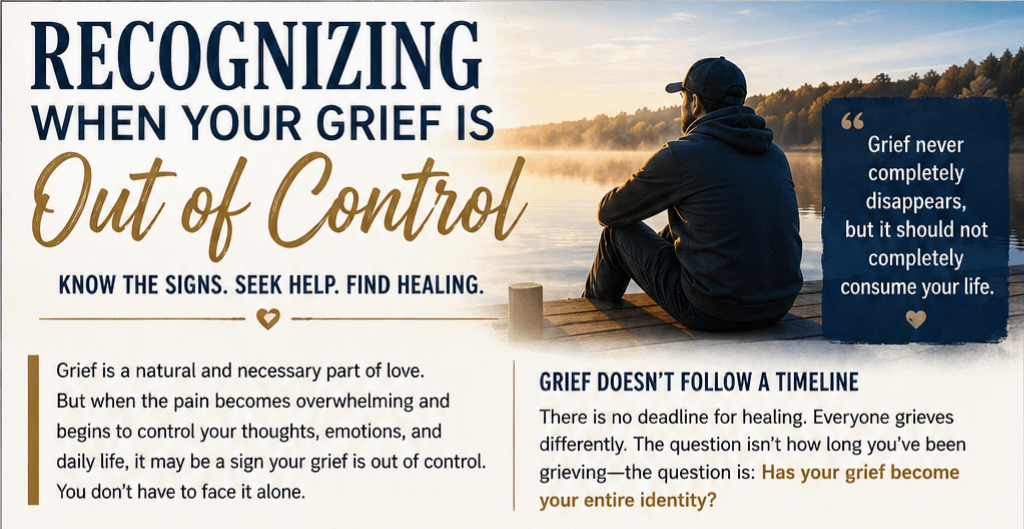
As someone who has experienced the devastating loss of a son, I understand how easy it is to believe that suffering forever is simply the price of loving someone deeply. While grief never completely disappears, it should not completely consume your life.
Recognizing when grief is becoming unhealthy isn’t admitting weakness.
It’s recognizing that your heart needs help carrying a burden that was never meant to be carried alone.
Grief Doesn’t Follow a Timeline
One of the biggest myths about grief is that there is a deadline.
People often hear things like:
- “It’s been a year.”
- “You need to move on.”
- “They’re in a better place.”
- “Time heals everything.”
None of those statements understand grief.
There is no calendar that tells your heart when to stop hurting.
Some people cry every day for months.
Others feel numb for years before emotions finally surface.
Everyone grieves differently.
The issue isn’t how long you’ve been grieving.
The question is:
Has your grief become your entire identity?
When Grief Begins Controlling Your Life
Grief is meant to be felt.
But it should never become the only thing you feel.
If your thoughts, emotions, decisions, and relationships are all controlled by your loss every single day, your grief may have moved beyond healthy mourning.
You may notice that every conversation returns to your loss.
You stop making plans because you assume nothing will ever matter again.
You no longer believe happiness is possible.
Life begins revolving around surviving instead of living.
That isn’t because you don’t love the person who died.
It’s because grief has quietly taken over.
Warning Signs Your Grief May Be Out of Control
You Have Completely Withdrawn From Everyone
Isolation often feels safer.
No one asks uncomfortable questions.
No one expects you to smile.
No one accidentally says something hurtful.
But isolation slowly feeds grief.
If weeks or months go by without meaningful conversations, friendships, family interaction, or social activity, grief may be building walls that become harder to escape.
Healing requires connection.
You Feel Guilty Whenever You Experience Happiness
Many grieving parents believe:
“If I smile, I’m forgetting them.”
“If I laugh, I didn’t love them enough.”
“If I enjoy life, I’m betraying them.”
Nothing could be further from the truth.
Your loved one is not honored by your permanent suffering.
They would likely want you to smile again.
Finding joy doesn’t erase love.
It proves love still lives inside you.
You Can’t Function in Daily Life
Grief affects concentration.
That is normal.
But if months have passed and you are unable to:
- Pay bills
- Maintain hygiene
- Go to work
- Prepare meals
- Care for your family
- Complete simple responsibilities
your grief may be preventing you from functioning.
There is no shame in asking for help.
You’re Using Alcohol or Drugs to Escape
Pain demands relief.
Some people seek that relief through alcohol.
Others use prescription medication incorrectly.
Some turn to drugs.
Some become addicted to gambling, shopping, or other distractions.
None of these remove grief.
They only postpone it.
Eventually, the grief returns—often stronger than before.
You’re Constantly Angry
Grief doesn’t always look like sadness.
Sometimes it looks like rage.
You may find yourself angry at:
- God
- Doctors
- Family
- Friends
- Yourself
- The driver
- Life itself
Anger is part of grief.
But when every interaction becomes hostile or explosive, unresolved pain may be controlling your emotions.
You Think About Death Constantly
Many grieving people say,
“I don’t want to die…
I just don’t want to keep hurting.”
That feeling deserves to be taken seriously.
If thoughts of death become frequent, if you feel hopeless, or if you begin believing people would be better off without you, don’t keep those thoughts to yourself.
Reach out to someone you trust.
Professional help can make an enormous difference.
Seeking help is an act of courage, not failure.
You Refuse to Talk About Your Loved One
Some grieving people can’t stop talking.
Others refuse to say their loved one’s name.
Both extremes can become unhealthy.
Healing often comes through remembering.
Sharing stories.
Looking at photographs.
Laughing through tears.
Keeping memories alive helps keep love alive.
Your Physical Health Is Declining
Grief affects the body.
You may notice:
- Constant exhaustion
- Headaches
- High blood pressure
- Weight gain or loss
- Sleep problems
- Digestive issues
- Panic attacks
Ignoring these symptoms only makes healing harder.
Your heart has been broken emotionally.
Your body often feels the effects too.
Every Day Feels Exactly the Same
One of grief’s greatest dangers is emotional stagnation.
You stop looking forward to anything.
Birthdays don’t matter.
Holidays lose meaning.
The future disappears.
Life becomes surviving one day at a time with no hope of change.
When you stop believing tomorrow could be different, grief has begun stealing your future.
Why Many Fathers Never Notice
Many men were raised to believe:
- Stay strong.
- Don’t cry.
- Handle it yourself.
- Keep moving.
So instead of processing grief…
They bury it.
They work longer hours.
They isolate.
They stay busy.
They become emotionally unavailable.
On the outside, they appear strong.
Inside, they’re falling apart.
Strength isn’t pretending you’re okay.
Strength is admitting when you’re not.
Healing Doesn’t Mean Forgetting
One of the greatest fears grieving parents have is healing itself.
They worry that feeling better somehow means loving less.
It doesn’t.
You can heal…
while still crying.
You can heal…
while still missing them every day.
You can heal…
while carrying their memory forever.
Healing doesn’t replace love.
It allows love to exist without destroying you.
Steps Toward Healing
If you recognize yourself in these warning signs, remember that healing doesn’t happen all at once. It often begins with one small decision.
Consider taking these first steps:
- Talk with someone you trust.
- Join a grief support group.
- Speak with a licensed grief counselor.
- Pray honestly, even if your faith feels shaken.
- Take care of your physical health through sleep, nutrition, and movement.
- Allow yourself moments of joy without guilt.
- Honor your loved one by living a life that reflects the love they gave you.
Each small step is progress.
There Is Hope Beyond the Pain
Losing someone you love changes you forever.
There is no returning to the person you once were.
But there is a path toward becoming someone who carries grief with strength instead of being crushed by it.
Your loved one will always be part of your story.
Their memory deserves to live on.
So do you.
If your grief feels like it has taken control of your life, don’t face it alone. Reaching out for support is not giving up—it is choosing hope. Healing doesn’t mean the pain disappears. It means learning that even with a broken heart, life can still hold purpose, love, and moments of peace.
You are not leaving your loved one behind by healing.
You are carrying them forward in the way you choose to live.
A Father’s Guide to Surviving the Loss of a Child
Leave a ReplyCancel reply