
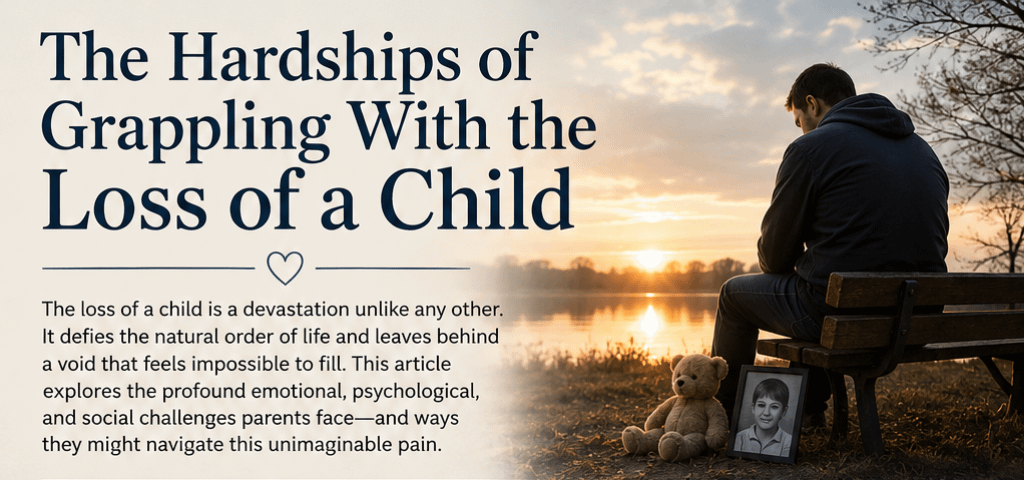
The loss of a child is a devastation unlike any other. It is a heartbreak so profound that it changes the very fabric of a parent’s life. It defies the natural order of existence. Parents expect to guide, protect, and eventually leave this world before their children do. When that order is shattered, the result is not simply grief—it is a life-altering wound that touches every corner of the heart, mind, and soul.
For many parents, the death of a child feels like the end of the world as they knew it. The future they imagined disappears in an instant. Dreams are replaced with memories, and hope often becomes entangled with sorrow. While life continues around them, bereaved parents frequently feel as though time has stopped. They are left standing in the wreckage of a life that no longer exists, trying to understand how to take another step forward.
This journey is one of the most difficult experiences a human being can endure. There is no roadmap, no timetable, and no way to fully prepare for the pain. Each parent’s grief is unique, yet there are common hardships that many face as they learn to live with the unimaginable loss of their child.
Losing More Than a Child
When a child dies, parents lose far more than a son or daughter. They lose a future that was filled with hopes, expectations, and possibilities.
They lose the birthday celebrations that will never happen.
They lose the graduations they dreamed of attending.
They lose the weddings they imagined witnessing.
They lose the grandchildren they may never hold.
They lose ordinary moments that once seemed guaranteed—phone calls, family dinners, holiday traditions, and simple conversations.
The loss extends beyond the physical absence of their child. It reaches into every dream they carried for them.
Many bereaved parents describe feeling as though a part of themselves died alongside their child. This is especially true when the child was deeply involved in their daily lives. Parents often define themselves through their role as caregivers, protectors, and supporters. When that role is suddenly interrupted, they may struggle with questions about their identity and purpose.
Who am I now?
What does my future look like?
How do I continue living when my child cannot?
These questions can linger for years.
The Physical Pain of Grief
Many people who have never experienced child loss assume grief is purely emotional. Parents who have buried a child know otherwise.
Grief often manifests physically.
The chest aches.
The stomach knots.
The body feels exhausted even after hours of sleep.
Some parents experience headaches, muscle pain, digestive issues, panic attacks, or a constant feeling of heaviness.
Many describe it as carrying a weight that never leaves their shoulders.
Sleep becomes difficult. Some fear dreaming because waking up means reliving the reality of the loss. Others cannot sleep at all because their minds replay memories, final conversations, or unanswered questions.
The body remembers trauma, and losing a child is among the most traumatic experiences imaginable.
Living With the Endless “What Ifs”
One of the cruelest aspects of child loss is the endless stream of questions that often follow.
What if I had called them one more time?
What if I had made a different decision?
What if I had noticed something sooner?
What if I could somehow go back and change that day?
Even when parents know intellectually that the loss was beyond their control, their hearts continue searching for answers.
The human mind seeks meaning in tragedy. When no explanation feels sufficient, guilt often rushes in to fill the void.
Parents may blame themselves for circumstances they could never have prevented. They replay events repeatedly, hoping to find something they missed.
This guilt can become one of grief’s heaviest burdens.
Learning to release that guilt is not easy. For many parents, it becomes a lifelong process of reminding themselves that love does not equal control and that some tragedies occur despite their deepest efforts to protect their children.
The Emotional Storm
The grief following child loss is rarely predictable.
One moment, a parent may feel overwhelming sadness.
The next, they may feel anger.
Then numbness.
Then fear.
Then loneliness.
Then guilt for experiencing a moment of happiness.
Grief often arrives in waves. Some waves are small and manageable. Others crash unexpectedly, leaving parents struggling to breathe.
A song on the radio.
A familiar scent.
A social media memory.
A child who resembles their own.
A birthday.
A holiday.
An empty chair at the dinner table.
Any of these can trigger emotions that feel as intense as they did in the earliest days of loss.
Parents frequently describe feeling trapped between two worlds—the world that continues moving forward and the world that stopped the moment their child died.
The Loneliness No One Talks About
One of the most painful hardships of losing a child is the profound loneliness that often follows.
Initially, support may be abundant. Friends send messages. Family members visit. Meals arrive.
But as weeks become months and months become years, much of that support fades.
Meanwhile, the grief remains.
Parents may feel abandoned as others return to their normal lives.
People stop mentioning the child’s name.
Friends become uncomfortable discussing the loss.
Conversations shift away from grief.
The bereaved parent is often left carrying memories that few others speak about anymore.
Many parents begin to feel isolated because they realize that most people cannot truly understand what they are experiencing.
This loneliness can be especially intense for fathers.
Society often expects men to remain strong, stoic, and composed. Fathers may feel pressure to support everyone else while quietly carrying their own grief.
As a result, many suffer in silence.
The Impact on Marriage and Relationships
The loss of a child places tremendous strain on relationships.
Even couples who deeply love one another may discover they grieve very differently.
One partner may need to talk constantly.
The other may withdraw.
One may cry openly.
The other may grieve privately.
Neither approach is wrong, but differences in grieving styles can create misunderstandings.
Partners may mistakenly believe the other is grieving less.
Resentment can develop.
Communication may break down.
At a time when support is needed most, couples sometimes find themselves drifting apart.
The same challenges can occur within friendships and extended family relationships.
People often want to help but do not know how.
Some avoid the subject entirely.
Others offer clichés that unintentionally deepen the pain.
Statements such as “Everything happens for a reason” or “At least you have other children” can feel incredibly hurtful because they minimize a loss that cannot be replaced.
Watching the World Move Forward
Perhaps one of the hardest realities of child loss is watching life continue.
Schools open.
Families celebrate birthdays.
Graduation photos fill social media feeds.
Friends talk about milestones their children are reaching.
Meanwhile, your child remains forever the age they were when they died.
This can create feelings of jealousy, resentment, and sadness.
Parents often feel guilty for experiencing these emotions, but they are a natural part of grief.
They are not signs of bitterness.
They are reminders of love.
Every milestone another child reaches highlights a milestone their own child never had the opportunity to experience.
The Search for Meaning
Many bereaved parents eventually find themselves asking profound questions.
Why did this happen?
What purpose does my life have now?
How do I honor my child’s memory?
How do I continue when part of my heart is gone?
For some, faith becomes a source of comfort.
For others, loss creates a spiritual crisis.
Questions about God, purpose, fairness, and eternity often emerge.
There are rarely simple answers.
Yet many parents eventually discover that meaning does not come from understanding why their child died.
Meaning often comes from how they choose to live afterward.
Some honor their child through advocacy.
Some start charities.
Some support other grieving parents.
Some write, create art, volunteer, or share their stories.
These acts cannot erase the pain, but they can transform love into something that continues impacting the world.
Learning to Carry the Grief
One of the greatest misconceptions about grief is the belief that parents eventually “get over” losing a child.
They do not.
Instead, they learn how to carry it.
The grief changes shape over time.
It becomes woven into the fabric of daily life.
The pain may become less overwhelming, but the love remains.
Parents learn to laugh again without forgetting.
They learn to smile while still missing their child.
They discover that joy and sorrow can exist together.
This is not moving on.
It is moving forward.
There is a significant difference.
Moving on implies leaving the child behind.
Moving forward means carrying their memory into every new chapter of life.
A Love That Never Ends
The death of a child changes everything, but it does not end the relationship between parent and child.
Love does not die.
Parents continue loving their children long after they are gone.
They speak their names.
They celebrate their birthdays.
They remember favorite stories.
They carry photographs.
They feel their presence in quiet moments.
The bond remains.
Though invisible, it is real.
Though painful, it is precious.
The hardships of losing a child are immense and lifelong. There are days when the grief feels unbearable and days when hope quietly returns. There is no finish line, no perfect healing, and no way to replace what has been lost.
But there is love.
And that love becomes the thread that helps bereaved parents endure the unendurable.
Their child’s life mattered.
Their child’s memory matters.
And the love they carry for their child will remain with them for the rest of their days—a testament to a bond that even death cannot break.
A Father’s Guide to Surviving the Loss of a Child
Leave a ReplyCancel reply