
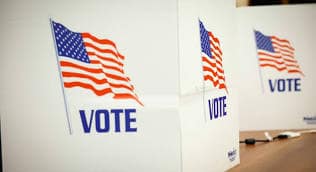
Election Day in the United States is the designated day on which citizens cast ballots for federal offices—most notably for the United States Congress (House and Senate) and, every four years, for the Electoral College (which determines the President and Vice President).
Federal law stipulates that for federal offices, Election Day is held on the Tuesday after the first Monday in November in even-numbered years.
Why that date and day of the week?
The choice of that particular Tuesday in November dates back to the mid-19th century. Here are the key reasons:
November was chosen because in agrarian 19th-century America the harvest was mostly complete by then, weather was still passable, and travel to polling places was feasible.
Tuesday was selected because Sunday was reserved for church, and many rural voters needed a travel day (Monday) to get to their polling place. Wednesday often coincided with market day in many communities.
In 1845 the Presidential Election Day Act (by the 28th Congress) established a uniform date for presidential electors as “the Tuesday next after the first Monday in November”.
What happens on Election Day?
On Election Day:
Registered voters go to their designated polling places to cast ballots (or vote by other means, depending on the state).
At the federal level, all members of the House of Representatives are elected every two years; roughly one-third of the U.S. Senate seats are up for election every two years; presidential elections occur every four years.
State and local elections often coincide with federal elections, though some states or localities hold elections in odd‐numbered years or “off-years”.
After polls close, results are tallied; for presidential elections, the electors meet subsequently and the new term begins in January.
Why does the date matter?
The fact that Election Day falls on a weekday and on a specific Tuesday has implications:
Some argue that holding the election on a weekday (rather than a weekend or making it a federal holiday) may pose barriers to voter turnout for those who cannot easily leave work or take time off.
Making Election Day a federal holiday or moving it to a weekend has been proposed to increase accessibility and turnout.
The uniform date helps ensure consistency across states for federal offices and helps limit the potential influence of early voting in some states affecting others.
Modern context and considerations
Many states now permit early voting and mail voting, which means the bulk of voting may take place before the actual Election Day. This reflects changes in technology, demographics, and voter habits.
While Election Day is a pivotal civic moment, it is also part of an ongoing process of voter registration, campaigning, primaries, and ballot-preparation.
Local logistics such as polling-place hours, staffing, accessibility, and lines still matter—what happens on Election Day is heavily influenced by state and local administration.
Why this matters
Election Day is both symbolic and practical. It is symbolic because it represents the exercise of democratic rights—the act of citizens choosing their representatives. It is practical because it is the focal point of the electoral process, often coming after months of campaigns, primaries, debates, and public discussion.
For voters, being prepared for Election Day means:
Knowing your registration status and your correct polling-place location (or understanding alternatives such as early mail-in voting).
Knowing what is on your ballot (federal, state, local offices and any referenda).
Planning the logistics of your vote: time, transportation, identification (depending on state).
Being aware of your rights and protections under state law regarding voting.
Historical perspective
The creation of a uniform Election Day stems from a desire to reduce strategic timing and inter-state influence. Before the 1845 act, states could hold elections over a wide range of days leading up to a presidential election, which created opportunities for states voting earlier to influence those voting later.
Looking ahead
In contemporary times, discussions remain about whether the traditional format—weekday, single-day voting—is optimal. Debates center on making voting more accessible, reducing barriers, leveraging technology, and ensuring that Election Day truly serves as an inclusive and effective civic moment.
Conclusion
Election Day stands as a cornerstone of civic life in the United States. Understanding its historic roots, legal significance, and practical logistics empowers citizens to participate with greater confidence and clarity. Whether you vote in person, early, or by mail (as allowed by your state), being informed helps ensure your voice is heard when it matters most.
Read More Holidays & National Days
Leave a ReplyCancel reply