Day: February 13, 2026

  • 💋 Kiss Day: A Celebration of Love, Connection, and Affection

    💋 Kiss Day: A Celebration of Love, Connection, and Affection

    Kiss Day, celebrated each year on February 13, holds a special place in Valentine’s Week as one of the most intimate and emotionally expressive days leading up to Valentine’s Day. While gifts and grand gestures often define the season of love, Kiss Day focuses on something far simpler yet deeply powerful — human connection expressed through affection.

    A kiss is more than physical contact. It is a language of emotion, a silent promise, and a moment where feelings are shared without words. Across cultures, generations, and relationships, a kiss remains one of the most timeless symbols of love and closeness.

    The History and Cultural Meaning of Kissing

    Kissing has existed throughout human history as a sign of affection, respect, and unity. Ancient civilizations used kisses in different ways:

    In Ancient Rome, kisses symbolized social rank and respect, with different types reserved for family, friendship, or romance.

    In many European traditions, kisses became greetings between loved ones and close companions.

    Across cultures today, kissing continues to represent emotional trust and connection.

    Although customs vary worldwide, the emotional meaning remains universal — a kiss communicates care and belonging.

    The Emotional Power Behind a Kiss

    A kiss often carries emotions that words struggle to express. It can mean:

    “I’m here for you.”

    “You matter to me.”

    “I love you.”

    “Everything will be okay.”

    Psychologists note that affectionate touch plays a vital role in emotional well-being. A sincere kiss can create feelings of safety and reassurance, helping people feel seen, valued, and emotionally grounded.

    Moments of affection strengthen bonds because they involve vulnerability — allowing another person into your personal space is an act of trust.

    The Science of Kissing: Why It Feels So Powerful

    Behind the romance lies fascinating biology. When people kiss:

    The brain releases oxytocin, strengthening emotional attachment.

    Dopamine increases, creating pleasure and happiness.

    Stress hormones like cortisol decrease, promoting relaxation.

    Heart rates may rise slightly, increasing excitement and emotional awareness.

    These chemical reactions explain why a meaningful kiss can instantly improve mood and deepen emotional connection.

    Types of Kisses and Their Meanings

    Every kiss tells a different story. Understanding these subtle expressions reveals how affection takes many forms.

    💖 Forehead Kiss

    Symbolizes protection, comfort, and emotional security. Often seen as one of the purest forms of affection.

    😊 Cheek Kiss

    Represents friendship, gratitude, and warmth. Common among family and close friends.

    🤝 Hand Kiss

    A gesture of admiration and respect, often associated with old-fashioned romance or honor.

    🔥 Romantic Kiss

    Expresses passion, attraction, and emotional intimacy between partners.

    🌙 Goodbye or Goodnight Kiss

    Offers reassurance and continuity — a promise that connection remains even during absence.

    Why Kiss Day Matters in Modern Life

    Today’s world moves quickly. Messages are typed, emotions are abbreviated, and connection sometimes becomes digital rather than personal. Kiss Day encourages people to slow down and reconnect physically and emotionally.

    It reminds us that relationships thrive not only through communication but through presence — shared moments that cannot be replaced by technology.

    A simple kiss can:

    Repair emotional distance

    Reinforce commitment

    Express appreciation without needing explanation

    Create lasting memories from small moments

    Creative Ways to Celebrate Kiss Day

    Celebrating Kiss Day doesn’t require extravagance. Meaningful experiences matter more than elaborate plans.

    ❤️ Romantic Celebrations

    Plan a candlelit dinner at home.

    Write a love letter describing your favorite memories together.

    Revisit the place where your relationship began.

    Share a slow dance followed by a heartfelt kiss.

    💕 Thoughtful Everyday Gestures

    Surprise your partner with affection during an ordinary moment.

    Start the day with a loving goodbye kiss.

    Express gratitude before sharing a gentle kiss.

    🌍 Long-Distance Love Ideas

    Send a video message blowing a kiss.

    Schedule a virtual date night.

    Mail handwritten notes or photos representing shared memories.

    Kiss Day Beyond Romance

    Kiss Day is not limited to romantic relationships. Affection exists in many forms:

    Parents kissing children goodnight

    Family members greeting one another warmly

    Friends expressing deep appreciation and emotional support

    The day celebrates human closeness itself — reminding us that love exists in many relationships, not just romantic ones.

    The Psychology of Affection and Trust

    Affection builds emotional safety. Studies suggest couples who regularly show physical affection often experience stronger communication and greater relationship satisfaction. Small gestures — holding hands, hugs, and kisses — reinforce emotional bonds over time.

    A kiss becomes meaningful not because of perfection, but because of intention. It shows presence, attention, and emotional investment.

    A Moment That Says Everything

    In many ways, a kiss is a pause in life’s constant motion. Time slows. Distractions disappear. For a brief moment, connection becomes the only thing that matters.

    Kiss Day invites people to be intentional — to express love openly, to appreciate closeness, and to remember that affection is one of the simplest yet most profound human experiences.

    Sometimes the smallest gesture carries the deepest meaning.
  • 🌿 National Apology Day: The Power of Saying “I’m Sorry”

    🌿 National Apology Day: The Power of Saying “I’m Sorry”

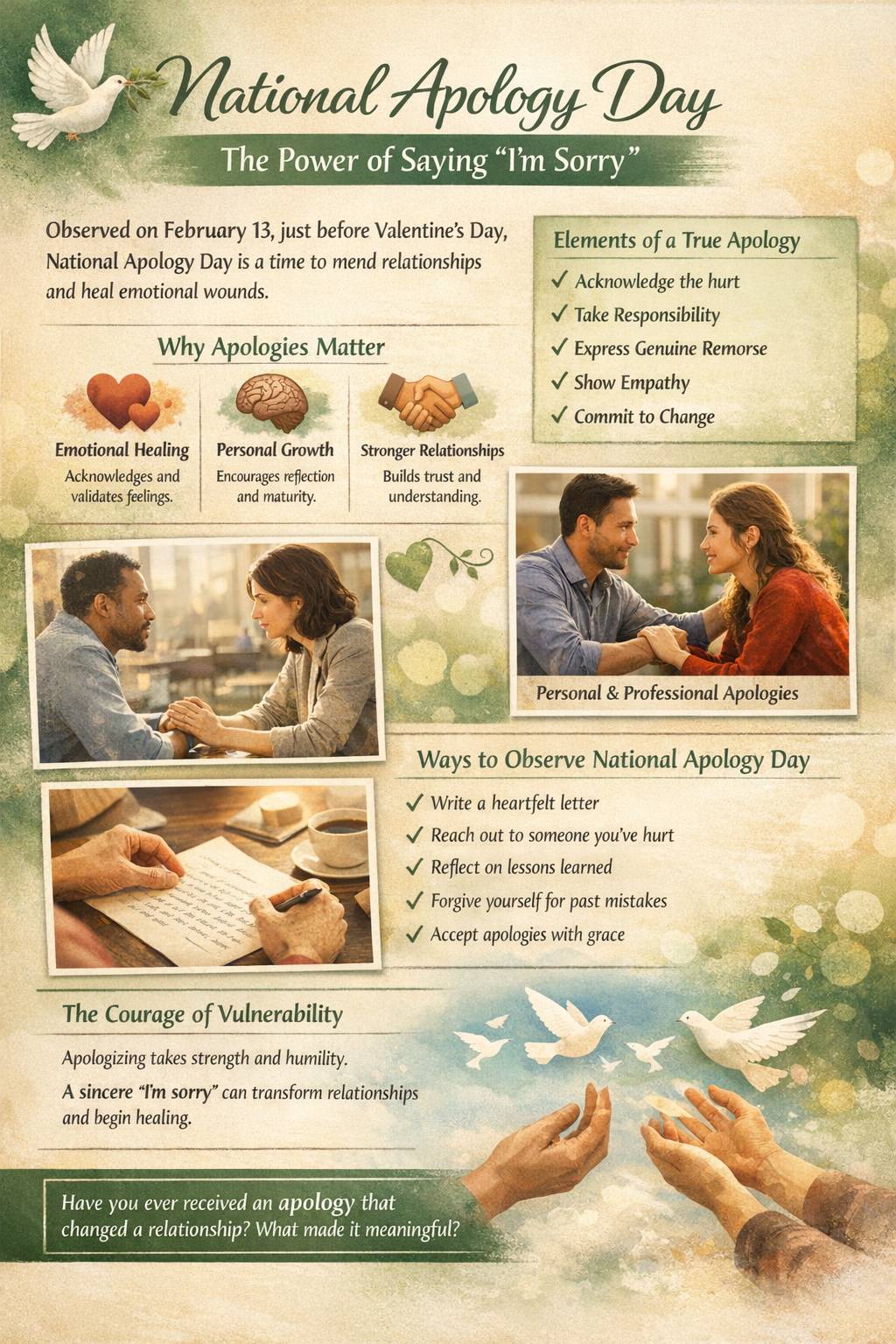
    National Apology Day, observed each year on February 13, serves as a powerful reminder that healing often begins with two simple words: I’m sorry. Falling just before Valentine’s Day — a celebration centered on love and connection — this day encourages people to clear emotional distances, repair broken bonds, and embrace humility as a path toward stronger relationships.

    While apologies may seem small, their emotional impact can be profound. A sincere apology can rebuild trust, soften resentment, and open doors that pride once closed.

    The Purpose Behind National Apology Day

    National Apology Day exists to highlight something many people struggle with: taking responsibility for their actions. In a fast-paced world where misunderstandings happen easily — through conversations, social media interactions, or daily stress — conflicts are unavoidable.

    However, unresolved conflict often lingers longer than the original mistake. Hurt feelings can quietly grow into distance, resentment, or regret. This day encourages individuals to pause, reflect, and choose reconciliation instead of silence.

    Apologizing is not about admitting weakness; it is about valuing relationships more than ego.

    The Psychology of Apologizing

    Research in psychology shows that apologies play a crucial role in emotional well-being and social harmony.

    🧠 Why Apologies Are Hard

    Many people avoid apologizing because they fear:

    Losing respect or authority

    Appearing vulnerable

    Reopening painful conversations

    Being rejected or not forgiven

    Yet avoiding apologies often prolongs emotional discomfort for both parties.

    ❤️ Why Apologies Work

    A genuine apology activates empathy and reduces emotional defensiveness. When someone acknowledges harm, it reassures the other person that their feelings matter. This validation helps restore emotional balance and trust.

    Apologies also reduce guilt and anxiety in the person offering them, creating a sense of closure and emotional relief.

    The Elements of a Meaningful Apology

    A true apology goes beyond habit or obligation. It involves intention and sincerity. Effective apologies typically include five key components:

    Clear Acknowledgment
    Recognize exactly what happened without minimizing it.

    Ownership of Responsibility
    Avoid phrases like “if you felt hurt.” Instead, say “I hurt you.”

    Expression of Genuine Remorse
    Show authentic regret rather than forced politeness.

    Empathy and Understanding
    Demonstrate awareness of how your actions affected the other person.

    Commitment to Change
    Explain how you will act differently moving forward.

    A meaningful apology focuses on healing — not defending oneself.

    Different Types of Apologies

    Not every apology looks the same. National Apology Day recognizes that reconciliation can take many forms.

    🤝 Personal Apologies

    These occur between friends, partners, or family members after misunderstandings or emotional hurt.

    💼 Professional Apologies

    Workplace conflicts often require accountability and respectful communication to rebuild trust among colleagues or teams.

    🌎 Public Apologies

    Leaders, organizations, or communities sometimes issue apologies to acknowledge past harm and begin collective healing.

    💬 Self-Apologies

    Perhaps the most overlooked form — forgiving yourself for past mistakes. Many people carry guilt longer than necessary, preventing personal growth.

    The Role of Forgiveness

    An apology is only one side of reconciliation; forgiveness is the other. National Apology Day gently reminds us that forgiveness does not mean forgetting or excusing harmful behavior. Instead, it means choosing emotional freedom over resentment.

    Forgiveness benefits the person granting it just as much as the person receiving it. Letting go of anger can reduce stress, improve mental health, and restore emotional balance.

    However, forgiveness is a personal process and should never be rushed or forced.

    How to Apologize Effectively

    If you want to use National Apology Day as an opportunity for healing, consider these steps:

    Reflect first — Understand what happened and why it mattered.

    Choose the right moment — Privacy and calmness help sincere conversations.

    Be direct and honest — Avoid excuses or distractions.

    Listen actively — Allow the other person to express their feelings fully.

    Respect their response — Forgiveness may take time.

    Sometimes the goal of an apology is not immediate reconciliation but planting the seed for healing.

    Small Gestures That Make a Big Difference

    Observing National Apology Day doesn’t require grand actions. Meaningful steps include:

    Sending a thoughtful message or handwritten note

    Calling someone you’ve lost touch with after conflict

    Reflecting in a journal about lessons learned

    Practicing empathy in daily interactions

    Offering kindness where tension once existed

    Even acknowledging a minor misunderstanding can prevent larger emotional divides later.

    Apologies in the Digital Age

    Modern communication has changed how people apologize. Text messages and social media make communication immediate, but sincerity can sometimes be lost without tone or body language.

    Whenever possible, meaningful apologies are best delivered:

    Face-to-face

    Through a phone or video conversation

    Or via a carefully written personal letter

    Digital apologies should still carry warmth, clarity, and accountability.

    Why National Apology Day Matters Today

    In a time when disagreements can quickly become divisions, National Apology Day encourages compassion over conflict. It reminds society that emotional intelligence — empathy, accountability, and understanding — is just as important as being heard or proven right.

    Apologies help rebuild not only personal relationships but also communities. They create space for dialogue, healing, and renewed connection.

    Ultimately, apologizing is an act of hope — a belief that relationships are worth repairing.

    A Final Reflection

    Every person carries words they wish they had said differently or moments they wish they could redo. National Apology Day offers a chance to transform regret into action.

    Sometimes the hardest conversations lead to the strongest bonds. A sincere apology can turn distance into closeness, pain into understanding, and endings into new beginnings.

    Because often, healing begins the moment pride steps aside and compassion speaks first.

  • 💖 Galentine’s Day: Celebrating the Power of Friendship and Sisterhood

    💖 Galentine’s Day: Celebrating the Power of Friendship and Sisterhood

    What Is Galentine’s Day?

    Galentine’s Day, celebrated each year on February 13, is a joyful holiday dedicated to celebrating friendship, support, and the powerful bonds between women. While Valentine’s Day focuses on romantic love, Galentine’s Day shines a spotlight on the relationships that often sustain us through every season of life — our friendships.

    The holiday encourages people to pause and appreciate the friends who uplift, encourage, and stand beside them through both triumphs and challenges.

    Where Did Galentine’s Day Come From?

    Galentine’s Day gained popularity after being featured in the television comedy Parks and Recreation, where the character Leslie Knope hosts an annual brunch celebrating her closest friends. In the show, the day is described as:

    “Ladies celebrating ladies.”

    What started as a fictional celebration quickly became a real-world tradition embraced across social media and communities worldwide.

    Why Galentine’s Day Matters

    In a fast-paced world, friendships can sometimes take a back seat to work, family obligations, and daily responsibilities. Galentine’s Day reminds us that friendship is not secondary — it is essential.

    Strong friendships can:

    Reduce stress and loneliness

    Boost emotional well-being

    Provide encouragement during difficult times

    Create lasting memories and shared joy

    Celebrating these bonds reinforces gratitude and connection, helping relationships grow stronger.

    Popular Ways to Celebrate

    There’s no single way to celebrate Galentine’s Day — the beauty of the holiday lies in personalization. Some favorite traditions include:

    🌸 Brunch Gatherings

    The classic celebration! Friends gather for waffles, mimosas, coffee, and heartfelt conversation.

    🎬 Movie or Self-Care Nights

    Spa nights, cozy pajamas, face masks, and favorite films create a relaxing atmosphere focused on connection.

    💌 Thoughtful Gifts & Notes

    Handwritten letters, small gifts, or simple appreciation messages can mean more than anything expensive.

    🎨 Creative Activities

    Painting nights, crafting sessions, or vision-board making allow friends to bond while expressing creativity.

    ❤️ Acts of Appreciation

    Sometimes the best celebration is simply saying:
    “Thank you for being there for me.”

    Galentine’s Day Beyond Romance

    One of the most beautiful aspects of Galentine’s Day is its inclusivity. It’s not limited by relationship status, age, or background. Anyone can celebrate friendship — whether among lifelong friends, coworkers, family members, or chosen family.

    The day shifts the focus from romantic expectations to community, empowerment, and emotional support.

    The Deeper Meaning

    At its heart, Galentine’s Day reminds us that love exists in many forms. Romantic relationships may come and go, but friendships often become the steady foundation of our lives.

    Celebrating friendship teaches us to:

    Show appreciation more often

    Build stronger emotional connections

    Recognize the people who help us grow

    Sometimes, the people who know us best are the friends who walk beside us — laughing with us, supporting us, and reminding us who we are when we forget.

    Final Thoughts

    Galentine’s Day is more than a trendy celebration — it’s a meaningful reminder that friendship deserves recognition and celebration. Whether through laughter over brunch, heartfelt conversations, or simple gratitude, the day encourages us to honor the relationships that make life brighter.

    Because love isn’t only romantic — sometimes, it’s the friend who answers your call, shares your joy, and stays when life becomes difficult.