Category: Grief & Child Loss

  • Grief Hits Harder on Father’s Day

    Grief Hits Harder on Father’s Day

    Advertisements

    For most people, Father’s Day is a celebration. It is a day filled with family gatherings, phone calls, gifts, cookouts, and expressions of gratitude. Social media fills with photographs of fathers and children smiling together, sharing memories, and celebrating the bond they share.

    But for fathers who have lost a child, Father’s Day can be one of the most difficult days of the year.

    It is not simply another holiday. It is a reminder.

    A reminder of the child who should be there.

    A reminder of the memories that were made and the memories that never got the chance to happen.

    A reminder that while the world celebrates fatherhood, a grieving father is carrying a loss that many people cannot fully understand.

    The truth is that grief hits harder on Father’s Day because Father’s Day itself is about the relationship that was forever changed. It highlights the love that still exists while exposing the painful absence that remains.

    The Day Begins Before It Even Arrives

    For many grieving fathers, the pain starts long before Father’s Day itself.

    As the holiday approaches, reminders begin appearing everywhere.

    Store displays showcase Father’s Day gifts. Restaurants advertise special meals. Television commercials focus on fathers spending time with their children. Social media becomes filled with countdowns and celebrations.

    Each reminder can feel like a small emotional wound.

    What is intended to be joyful for most people can become painful for someone carrying the loss of a child.

    The anticipation itself often creates anxiety.

    Some fathers dread the day weeks in advance. They know the emotions that are coming. They know the memories that will surface. They know they will once again face the reality that their child is not here.

    That anticipation can make Father’s Day feel emotionally exhausting before it even arrives.

    A Father’s Identity Never Ends

    One of the most misunderstood aspects of child loss is the impact it has on a father’s identity.

    When a child dies, fathers do not stop being fathers.

    The title remains.

    The love remains.

    The responsibility to remember remains.

    But the daily opportunities to express that fatherhood are suddenly gone.

    Father’s Day can bring difficult questions:

    “Am I still a father?”

    “Do I deserve to celebrate Father’s Day?”

    “Should I acknowledge the day at all?”

    The answer is yes.

    A father remains a father forever.

    Death changes the relationship, but it does not erase it.

    The bond between parent and child does not end because a heartbeat stops. The love that created that relationship continues to exist.

    Many grieving fathers need permission to recognize that they still belong on Father’s Day.

    Their child may no longer be physically present, but they are still fathers.

    Always.

    Missing Their Voice

    One of the most painful parts of Father’s Day after losing a child is missing the simple things.

    It is not always the major milestones that hurt the most.

    Sometimes it is the ordinary moments.

    The phone call.

    The text message.

    The hug.

    The laugh.

    The simple words:

    “Happy Father’s Day, Dad.”

    Those words may have once seemed routine.

    Now they would mean everything.

    Many fathers find themselves staring at old text messages, listening to saved voicemails, or looking through photographs searching for pieces of the child they miss so deeply.

    The silence left behind can feel deafening.

    There is an emptiness where conversation once lived.

    And on Father’s Day, that silence often feels louder than ever.

    Grieving the Future That Was Stolen

    Losing a child means losing far more than a person.

    It means losing an entire future.

    Father’s Day often brings that reality into focus.

    A father may find himself imagining what life would look like if his child were still here.

    Would they have graduated college?

    Would they be married?

    Would they have children of their own?

    Would they be sitting across the table sharing stories and laughter?

    The human mind naturally imagines these possibilities because love naturally looks toward the future.

    When that future disappears, grief fills the space where dreams once existed.

    Many fathers find themselves mourning not only the child they lost but also the life that child never got the chance to live.

    The Hidden Grief of Fathers

    Society often gives mothers more permission to openly grieve.

    People expect mothers to cry.

    People expect mothers to talk about their pain.

    People expect mothers to struggle.

    Fathers are often treated differently.

    Many men receive messages throughout their lives that they should be strong, stay composed, and handle pain privately.

    As a result, many grieving fathers become experts at hiding their emotions.

    They continue working.

    They continue providing.

    They continue carrying responsibilities.

    But inside, they are struggling.

    Father’s Day can expose those hidden wounds.

    The emotions that have been pushed aside throughout the year often come rushing back.

    The grief that has been carefully managed suddenly demands attention.

    Many fathers find themselves overwhelmed by emotions they thought they had under control.

    This is not weakness.

    It is grief.

    And grief has its own timetable.

    When Other Families Celebrate

    One of the hardest parts of Father’s Day is watching other families celebrate.

    Most grieving fathers genuinely want others to enjoy the day.

    They are happy for fathers who get to spend time with their children.

    But that does not erase the pain.

    Seeing fathers surrounded by their children can be a painful reminder of what has been lost.

    Social media can become especially difficult.

    Photographs of family gatherings, vacations, and celebrations may trigger feelings of sadness, jealousy, anger, or loneliness.

    These emotions are normal.

    They do not mean a grieving father is selfish.

    They simply reflect the reality of profound loss.

    You can be happy for someone else while still hurting for yourself.

    Both emotions can exist at the same time.

    The Weight of Guilt

    Many grieving fathers carry guilt.

    Father’s Day often amplifies those feelings.

    They replay decisions.

    They revisit conversations.

    They wonder if they could have done something differently.

    Even when a child’s death was completely beyond their control, many fathers still ask themselves impossible questions.

    “What if I had called?”

    “What if I had noticed something?”

    “What if I had been there?”

    Guilt becomes one of grief’s cruelest companions because it constantly rewrites history.

    The truth is that most grieving fathers did the best they could with the knowledge they had at the time.

    Love does not guarantee control.

    Being a father does not mean having the power to prevent every tragedy.

    Yet many fathers continue carrying guilt long after the loss.

    Father’s Day can bring those feelings back to the surface.

    Keeping Their Child’s Memory Alive

    Many fathers discover that Father’s Day becomes easier when they intentionally honor their child.

    Rather than avoiding memories, they create space for them.

    Some visit a cemetery.

    Others release balloons, light candles, or write letters.

    Some spend time doing activities their child loved.

    Others volunteer, donate, or help someone in need in their child’s memory.

    These traditions do not erase grief.

    But they transform the day from one focused entirely on loss into one that also celebrates love.

    The goal is not to move on from the child.

    The goal is to move forward while carrying the child’s memory with you.

    The Strength to Keep Living

    One of the greatest challenges grieving fathers face is learning how to continue living after unimaginable loss.

    Father’s Day can highlight this struggle.

    Some fathers feel guilty for finding happiness.

    Others feel guilty for laughing.

    Some feel guilty for enjoying life when their child cannot.

    But healing is not betrayal.

    Finding joy does not mean forgetting.

    Building a future does not mean abandoning the past.

    Your child would not want your life to end because theirs did.

    They would want you to continue living.

    To continue loving.

    To continue growing.

    To continue finding purpose.

    That does not mean the grief disappears.

    It means learning to carry grief while still embracing life.

    A Message to Every Father Missing a Child

    If Father’s Day feels unbearable this year, know that your feelings are valid.

    If you cry, it is because you loved.

    If you ache, it is because your child mattered.

    If you feel lonely, it is because a piece of your heart is missing.

    You are not weak.

    You are grieving.

    And grief is the price we pay for love.

    Your child’s life mattered.

    Their story mattered.

    Their memory matters.

    And so does your pain.

    This Father’s Day, allow yourself to remember.

    Speak their name.

    Look at their photographs.

    Tell their stories.

    Celebrate the love that still exists.

    Because while death may have separated you physically, it could never destroy the bond between a father and his child.

    You will always be their father.

    And they will always be your child.

    No holiday, no passing year, and no amount of time can ever change that.

    A Father’s Guide to Surviving the Loss of a Child

  • Grieving Your Child When It’s Father’s Day

    Advertisements

    Father’s Day is a day many men look forward to each year. It is a celebration of fatherhood, family, love, and the special bond between a father and his children. Restaurants fill with families sharing meals, social media becomes flooded with pictures and tributes, and stores display cards that celebrate the joys of being a dad.

    But for fathers who have lost a child, Father’s Day can feel like one of the most painful days on the calendar.

    While others celebrate, grieving fathers are often reminded of what is missing. The child who should be calling, texting, visiting, or sitting beside them is gone. The day that once brought happiness can now bring a wave of sadness, loneliness, and heartache that feels impossible to escape.

    For many bereaved fathers, Father’s Day is not simply another difficult day—it is a reminder of a love that continues to exist despite the absence of the child they cherished.

    The Father’s Day No One Talks About

    Society tends to focus on Father’s Day as a happy occasion. Advertisements show smiling families. Restaurants offer special meals. Children proudly hand over homemade cards and gifts.

    What often goes unseen are the fathers quietly carrying unimaginable grief.

    The father visiting his son’s grave before anyone else wakes up.

    The father sitting alone with old photographs.

    The father staring at a phone that will never ring with his child’s voice again.

    The father who smiles through family gatherings while silently wishing one person were still there.

    These fathers often feel invisible on Father’s Day. While everyone else celebrates fatherhood, they are grieving a child who should still be part of their lives.

    Their pain may be hidden, but it is very real.

    You Are Still a Father

    One of the most painful questions grieving fathers often ask themselves is:

    “Am I still a father?”

    The answer is absolutely yes.

    Fatherhood does not end when a child dies.

    You became a father the moment your child entered your life. You loved them, protected them, taught them, worried about them, and dreamed for them. Nothing—not even death—can erase those experiences.

    Your child may no longer be physically present, but your relationship with them continues through memories, love, and the impact they had on your life.

    You are still their father.

    You always will be.

    No holiday, circumstance, or tragedy can take that away.

    The Weight of Missing Them

    What makes Father’s Day especially difficult is that it highlights the absence.

    You notice the empty chair.

    You notice the silence.

    You notice the missing hug.

    You notice the missing card.

    You notice everything that should be there but isn’t.

    Grief often magnifies what is missing. A father may spend weeks preparing himself emotionally for Father’s Day only to find that the reality is still overwhelming.

    Sometimes it is the smallest things that hurt the most.

    A memory pops up on social media.

    A Father’s Day advertisement appears on television.

    A family walks by holding hands.

    Someone asks what your plans are for Father’s Day.

    In an instant, grief can rise to the surface again.

    The pain is not a sign of weakness. It is a reflection of love.

    The deeper the love, the deeper the loss.

    Grieving the Future That Was Stolen

    When a child dies, fathers do not only lose what existed.

    They lose what was supposed to happen.

    They lose future birthdays.

    They lose future holidays.

    They lose future conversations.

    They lose future milestones.

    Many fathers imagine the life their child would have lived.

    What career would they have chosen?

    Would they have married?

    Would they have become parents themselves?

    What would they look like today?

    Father’s Day often becomes a reminder of all those unanswered questions.

    The future you imagined did not happen, and grieving that future is every bit as real as grieving the past.

    Why Fathers Often Grieve Alone

    Men are frequently taught from a young age to be strong, stay composed, and handle their emotions privately.

    When tragedy strikes, many fathers feel pressure to support everyone else while ignoring their own pain.

    They become the caretaker.

    The problem solver.

    The protector.

    The strong one.

    But underneath that strength is often a broken heart.

    Many fathers find it difficult to talk openly about their grief. Some fear appearing weak. Others worry about burdening friends and family.

    As a result, they suffer quietly.

    Father’s Day can amplify that loneliness.

    The world may recognize mothers who grieve, but grieving fathers often feel forgotten.

    The truth is that fathers grieve deeply.

    Their grief may look different, but it is no less profound.

    When Memories Bring Both Joy and Pain

    Father’s Day often becomes a day of memories.

    You remember teaching your child how to ride a bike.

    You remember family vacations.

    You remember bedtime stories.

    You remember school events, birthdays, and holidays.

    You remember the sound of their laughter.

    These memories can be both comforting and heartbreaking.

    For a moment, the memory makes you smile.

    Then the reality returns, and tears follow.

    This emotional contradiction is common among grieving parents.

    The memories hurt because they matter.

    But they also remind us of the incredible love we shared.

    Honoring Your Child on Father’s Day

    Many bereaved fathers find healing in creating meaningful ways to honor their child.

    There is no right or wrong approach.

    Some fathers visit a cemetery.

    Some release balloons.

    Some light candles.

    Some write letters to their child.

    Some spend time looking through photographs.

    Some volunteer or help others in their child’s memory.

    Others simply sit quietly and reflect.

    The goal is not to avoid grief.

    The goal is to acknowledge the love that remains.

    Your child’s life mattered.

    Their story mattered.

    Their impact continues.

    Finding ways to honor them allows their memory to remain part of your Father’s Day.

    The Gift of Self-Compassion

    One of the most important things grieving fathers can do is give themselves grace.

    You do not have to celebrate if you do not want to.

    You do not have to pretend to be okay.

    You do not have to meet anyone else’s expectations.

    If Father’s Day feels overwhelming, it is okay to step back.

    If you need time alone, take it.

    If you need to cry, cry.

    If you want to laugh while remembering your child, laugh.

    Grief contains many emotions, and all of them are valid.

    Be gentle with yourself.

    You are carrying something incredibly heavy.

    Finding Purpose After Loss

    Many fathers eventually discover that one way to cope with grief is by transforming their love into action.

    Some become advocates.

    Some mentor young people.

    Some support other grieving parents.

    Some volunteer in their communities.

    Others simply become more compassionate toward those who are hurting.

    The love you have for your child does not disappear.

    It seeks somewhere to go.

    Acts of kindness, service, and compassion can become a living legacy for the child you miss.

    Every life touched in their memory keeps a piece of them alive.

    A Message to Every Grieving Father

    If you are grieving your child this Father’s Day, know this:

    You are not forgotten.

    You are not weak.

    You are not alone.

    Your grief is a reflection of your love.

    Your child mattered.

    Your relationship mattered.

    And your role as their father still matters.

    There will always be a place in your heart where your child lives.

    There will always be memories that bring tears.

    There will always be moments when you wish things had turned out differently.

    But there will also be moments when their love gives you strength.

    Moments when their memory makes you smile.

    Moments when you realize that although death changed everything, it could never erase the bond between a father and his child.

    This Father’s Day may be painful.

    It may be lonely.

    It may be filled with tears.

    But it can also be a day of remembrance, love, and honor.

    Because even though your child is gone, your love for them remains.

    And that love will stay with you for the rest of your life.

    You are still their father.

    You always will be.

    A Father’s Guide to Surviving the Loss of a Child
  • Honoring My Son by Helping Others: Finding Purpose After the Loss of a Child

    Advertisements

    There are moments in life that divide time into two parts: before and after.

    For me, the day my son died became that dividing line.

    There was the life I knew before—a life filled with his laughter, his dreams, his presence, and the comfort of knowing he was only a phone call away. Then there was the life after—a life marked by unimaginable grief, silence, and the painful reality that I would never again hear his voice, see his smile, or watch him build the future that should have been his.

    Losing a child is not something a parent ever expects to endure. It goes against the natural order of life. We expect our children to outlive us. We expect to watch them grow older, pursue careers, build families, and create lives of their own. We never imagine standing beside their grave.

    Yet that became my reality.

    The loss shattered my heart in ways I never knew were possible.

    Some days, grief felt like a tidal wave crashing over me without warning. Other days, it felt like a heavy weight on my chest that made it difficult to breathe. Even now, there are moments when the reality of his absence hits me just as hard as it did in the beginning.

    The pain never completely leaves.

    You simply learn how to carry it.

    My Son Was More Than My Child

    My son was not just my son.

    He was my best friend.

    He was the person who understood me better than anyone else.

    When life became difficult, he was there.

    When I struggled, he helped.

    When I needed someone to talk to, he listened.

    His kindness was genuine. He cared deeply about people and had a heart that naturally reached out to those who were hurting. He wasn’t concerned about impressing people or being the center of attention. What mattered to him was making sure the people he loved knew they were loved.

    Those qualities left an impression on everyone who knew him.

    Even today, people still tell stories about the kindness he showed them.

    Stories about how he made them laugh.

    Stories about how he encouraged them.

    Stories about how he helped them when they were going through difficult times.

    Hearing those stories reminds me that while his life was far too short, it was incredibly meaningful.

    The impact he made cannot be measured by the number of years he lived.

    It is measured by the number of lives he touched.

    Learning to Survive the Unthinkable

    After my son died, survival became my primary goal.

    Not living.

    Not thriving.

    Simply surviving.

    There were days when getting out of bed felt like climbing a mountain.

    There were nights when sleep wouldn’t come because my mind replayed memories over and over again.

    I found myself reliving conversations, looking through photographs, and wishing for just one more moment with him.

    One more hug.

    One more conversation.

    One more chance to tell him how much I loved him.

    Grief has a way of making you feel isolated from the rest of the world.

    People continue with their lives.

    The world keeps moving.

    Yet your world has stopped.

    You wonder how others can smile, laugh, and make plans when your own heart is broken beyond words.

    That loneliness can be overwhelming.

    As a father, I also discovered something many grieving fathers experience: people often expect men to stay strong.

    They expect us to hide our emotions.

    They expect us to carry the burden quietly.

    But grief does not care whether you are a man or a woman.

    The loss of a child breaks every parent’s heart.

    Discovering Purpose Through Service

    At some point during my grief journey, I realized something important.

    The love I had for my son had nowhere to go.

    I could no longer express it directly to him.

    I could no longer call him, hug him, or spend time with him.

    Yet the love remained.

    In many ways, it had grown even stronger.

    I needed a place for that love to go.

    That is when I began helping others.

    It started with simple things.

    Checking on someone who was struggling.

    Offering encouragement to another grieving parent.

    Listening to someone who felt alone.

    Helping people navigate difficult seasons of life.

    At first, I didn’t think much about it.

    I simply wanted to ease someone else’s pain because I understood what pain felt like.

    But over time, I realized something profound was happening.

    Every time I helped someone, I felt connected to my son.

    Every act of kindness became a way to honor him.

    Every person I encouraged became part of his legacy.

    Understanding the Power of Shared Pain

    One thing grief teaches you is empathy.

    When you have experienced deep loss, you begin to recognize pain in others more easily.

    You notice the forced smiles.

    The tired eyes.

    The hidden struggles.

    You understand what it means to feel broken while trying to appear okay.

    That understanding has allowed me to connect with people in ways I never could before.

    I know what it feels like to sit in silence because words are too painful.

    I know what it feels like to wonder if life will ever feel normal again.

    I know what it feels like to carry heartbreak into every room you enter.

    Because of that, I can sit beside someone in their pain without trying to fix them.

    Sometimes people don’t need answers.

    Sometimes they simply need someone who understands.

    Keeping His Legacy Alive

    One of my greatest fears after losing my son was that the world would eventually forget him.

    As parents, we never stop thinking about our children.

    We remember every milestone.

    Every achievement.

    Every funny story.

    Every lesson they taught us.

    But as time passes, the world moves forward.

    People stop mentioning their names.

    The phone calls become less frequent.

    The support slowly fades.

    That can be incredibly painful.

    Helping others has become one of the ways I keep my son’s memory alive.

    When I share his story, I honor him.

    When I encourage someone else, I honor him.

    When I choose compassion instead of bitterness, I honor him.

    His life continues to matter because his influence continues through me.

    The Ripple Effect of Kindness

    One act of kindness can change someone’s entire day.

    Sometimes it can change their life.

    A simple conversation can give someone hope.

    A message can remind someone they are not alone.

    A helping hand can restore faith during a difficult season.

    What we often fail to realize is that kindness creates ripples.

    The person you help today may go on to help someone else tomorrow.

    That person may then help another.

    The impact spreads far beyond what we can see.

    I like to believe my son’s legacy lives within those ripples.

    Every life touched by kindness becomes part of a chain reaction of compassion that extends far beyond me.

    Grief and Healing Can Exist Together

    One of the biggest misconceptions about grief is that healing means forgetting.

    It does not.

    Healing does not mean moving on.

    Healing means learning how to move forward while carrying love and loss together.

    I still miss my son every day.

    There are birthdays, holidays, and ordinary moments when his absence feels overwhelming.

    There are still tears.

    There are still difficult days.

    But there is also purpose.

    There is meaning.

    There is a reason to keep going.

    Helping others has not removed my grief.

    What it has done is transform some of that pain into something positive.

    It has allowed me to create light in places where darkness once consumed me.

    A Message to Other Bereaved Parents

    If you have lost a child, I want you to know something.

    You are not alone.

    The road you are walking is incredibly difficult.

    There will be days when you feel like giving up.

    There will be moments when the pain feels unbearable.

    There will be times when you wonder how you can possibly continue.

    Take it one day at a time.

    One hour at a time if necessary.

    And when you are ready, look for ways to let your love continue.

    Maybe it will be through helping others.

    Maybe it will be through sharing your story.

    Maybe it will be through supporting a cause that mattered to your child.

    Whatever form it takes, know that your child’s impact did not end with their death.

    Love is stronger than death.

    Love continues.

    Love finds new ways to live.

    Why I Continue to Help Others

    People sometimes ask why I spend so much time helping others.

    The answer is simple.

    Because helping people keeps my son’s spirit alive.

    Because every act of kindness reminds me of the kind of man he was.

    Because every person I encourage carries a piece of his legacy forward.

    And because love deserves somewhere to go.

    My son may no longer walk beside me, but he walks within my heart every single day.

    His memory motivates me.

    His life inspires me.

    His love guides me.

    So I will continue reaching out to those who are hurting.

    I will continue encouraging those who feel alone.

    I will continue offering hope to those who are struggling.

    Not because it removes my grief.

    Not because it fills the empty space he left behind.

    But because it honors the greatest gift I was ever given—the privilege of being his father.

    And as long as I have breath in my lungs, I will do everything I can to ensure that his light continues to shine through every life I touch.

    A Father’s Guide to Surviving the Loss of a Child

  • Becoming the Man My Son Believed I Could Be

    Advertisements

    There is a saying that we often do not see ourselves clearly. We see our mistakes, our shortcomings, and the things we wish we had done differently. We carry regrets that no one else remembers and criticize ourselves for moments that others have long forgotten. Yet sometimes, there is someone in our life who sees us differently. They see beyond our flaws and into our heart. They see our potential when we are blind to it.

    For me, that person was my son.

    Since his passing, I have spent countless hours reflecting on our relationship, the life we shared, and the man he believed I was. As I navigate the difficult road of grief, I find myself returning to one thought over and over again:

    “I want to become the man my son believed I could be.”

    That thought has become more than a goal. It has become a purpose. It has become a source of strength on the days when grief feels heavier than I can bear.

    The Way Our Children See Us

    Children often see us through a lens of love.

    While we focus on our failures, they often focus on our efforts.

    While we remember the times we lost patience, they remember the times we showed up.

    While we dwell on our imperfections, they remember our sacrifices.

    My son knew my struggles. He saw the challenges I faced. He witnessed moments when life was difficult and uncertain. Yet despite all of that, he never stopped believing in me.

    That belief is something I treasure today.

    He saw a father who loved him.

    He saw a father who fought through hardships.

    He saw a father who kept going.

    Most importantly, he saw a man who could continue growing.

    Sometimes I wonder if he saw more in me than I saw in myself.

    Perhaps that is one of the greatest gifts our children give us. They help us see who we can become.

    After Loss, It Is Easy to Lose Yourself

    The death of a child changes every part of life.

    It changes your mornings.

    It changes your nights.

    It changes your hopes, your dreams, and your plans for the future.

    There are days when grief makes you question everything.

    You question your strength.

    You question your faith.

    You question your purpose.

    You question whether you will ever feel like yourself again.

    I have experienced those days.

    Days when getting out of bed felt impossible.

    Days when I felt broken beyond repair.

    Days when the future seemed empty.

    Days when I wondered what was left for me.

    The pain of losing a child can make you forget who you are. It can make you forget the strengths that carried you through previous challenges. It can make you feel as though the person you once were disappeared alongside your child.

    But grief does not erase who we are.

    It only obscures it.

    Deep beneath the pain, the person our child believed in still exists.

    The challenge is finding that person again.

    The Responsibility of Their Belief

    One of the things I have come to realize is that being loved creates a responsibility.

    When someone believes in you, their belief becomes a gift.

    When someone trusts you, their trust becomes something precious.

    When someone sees greatness in you, it becomes difficult to ignore.

    My son believed I could continue moving forward.

    He believed I could survive difficult times.

    He believed I could help people.

    He believed I could make a difference.

    Now that he is gone, I feel a responsibility to honor that belief.

    Not because I owe perfection.

    Not because I owe success.

    But because I owe effort.

    I owe the willingness to keep trying.

    I owe the willingness to keep growing.

    I owe the willingness to become better than I was yesterday.

    Every step I take toward becoming a stronger man honors the faith my son placed in me.

    Living a Life That Would Make Him Proud

    One of the questions many grieving parents ask themselves is:

    “Would my child be proud of me?”

    It is a painful question because grief often makes us feel like we are failing.

    We struggle.

    We cry.

    We break down.

    We lose motivation.

    We isolate ourselves.

    But being strong does not mean never struggling.

    Being strong means continuing despite the struggle.

    If my son could see me today, I hope he would see a father who refuses to quit.

    I hope he would see a father who still loves deeply.

    I hope he would see a father who still believes in helping others.

    I hope he would see a father who is trying to turn pain into purpose.

    I hope he would see someone who carries his memory with pride.

    The truth is that making our children proud often has less to do with major accomplishments and more to do with how we live each day.

    Choosing kindness.

    Choosing honesty.

    Choosing compassion.

    Choosing faith.

    Choosing perseverance.

    Those choices build a life worth being proud of.

    Turning Grief Into Purpose

    One of the hardest lessons grief teaches is that love does not end when someone dies.

    Love remains.

    It simply changes form.

    The love I have for my son did not disappear when he passed away.

    If anything, it has grown stronger.

    The challenge is figuring out where to put that love.

    Some parents create foundations.

    Some volunteer.

    Some advocate for causes that mattered to their child.

    Some share their story to help others feel less alone.

    For me, writing has become one of those outlets.

    Every article I write about grief, healing, faith, and hope is an extension of my love for my son.

    Every grieving parent I help is another way of honoring his memory.

    Every conversation I have about loss keeps his legacy alive.

    Pain can destroy us, but it can also transform us.

    When we channel our grief into purpose, we create something meaningful from something tragic.

    The Man I Want to Become

    The man my son believed I could be is not perfect.

    He still has bad days.

    He still struggles.

    He still misses his son every single day.

    But he does not give up.

    He faces pain with courage.

    He helps people whenever he can.

    He tells the truth even when it is difficult.

    He treats others with compassion.

    He values faith over fear.

    He chooses growth over bitterness.

    He learns from his mistakes instead of being defined by them.

    Most importantly, he continues moving forward while carrying the memory of his son in everything he does.

    That is the man I want to become.

    Not because I think I will ever fully arrive.

    But because the journey itself matters.

    A Letter to My Son

    Paul,

    There are days when I wish I could hear your voice one more time.

    There are days when I wish I could tell you how much I miss you.

    There are days when I simply wish we had more time.

    You believed in me more than you probably realized.

    You saw strengths I often overlooked.

    You gave me reasons to keep going even during the hardest chapters of my life.

    Now that you are gone, I carry your memory with me every day.

    I promise to keep trying.

    I promise to keep growing.

    I promise to keep helping others.

    I promise to keep living.

    Some days I will stumble.

    Some days grief will knock me down.

    But I will get back up.

    Because I want my life to reflect the faith you had in me.

    I want to become the man you believed I could be.

    And until the day we meet again, I will keep trying to make you proud.

    Love,

    Dad

    Final Thoughts

    The loss of a child leaves a wound that never fully heals. The grief remains because the love remains. Yet within that grief, many parents discover something unexpected: a renewed sense of purpose.

    When we remember how our children saw us, we begin to see ourselves differently.

    We begin to recognize strengths we forgot we possessed.

    We begin to understand that their belief in us did not die with them.

    It continues to live within us.

    Every day is another opportunity to honor that belief.

    Every day is another chance to choose courage over despair.

    Every day is another chance to become the person they always knew we could be.

    For me, that journey continues one day at a time.

    Not because the pain is gone.

    But because my son believed I could keep going.

    And I intend to prove him right.

    A Father’s Guide to Surviving the Loss of a Child
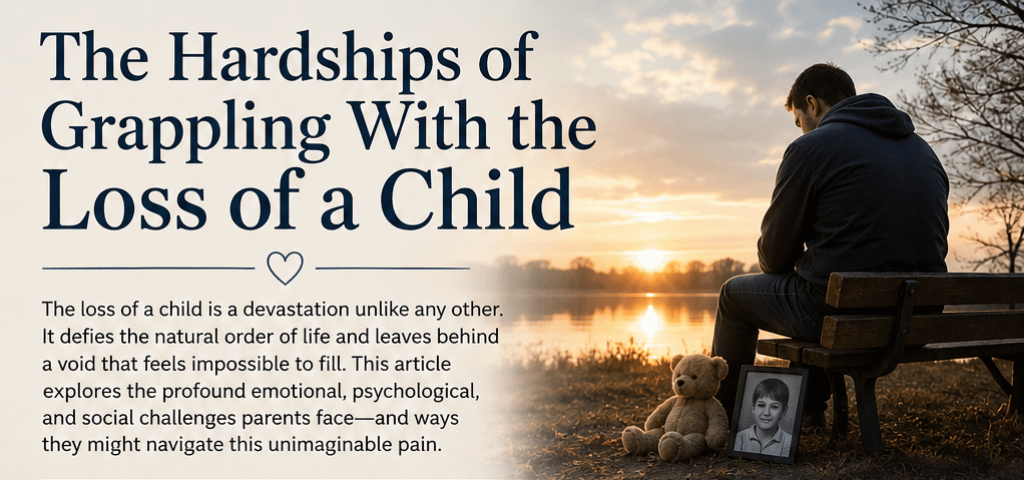
  • The Hardships of Grappling With the Loss of a Child

    Advertisements

    The loss of a child is a devastation unlike any other. It is a heartbreak so profound that it changes the very fabric of a parent’s life. It defies the natural order of existence. Parents expect to guide, protect, and eventually leave this world before their children do. When that order is shattered, the result is not simply grief—it is a life-altering wound that touches every corner of the heart, mind, and soul.

    For many parents, the death of a child feels like the end of the world as they knew it. The future they imagined disappears in an instant. Dreams are replaced with memories, and hope often becomes entangled with sorrow. While life continues around them, bereaved parents frequently feel as though time has stopped. They are left standing in the wreckage of a life that no longer exists, trying to understand how to take another step forward.

    This journey is one of the most difficult experiences a human being can endure. There is no roadmap, no timetable, and no way to fully prepare for the pain. Each parent’s grief is unique, yet there are common hardships that many face as they learn to live with the unimaginable loss of their child.

    Losing More Than a Child

    When a child dies, parents lose far more than a son or daughter. They lose a future that was filled with hopes, expectations, and possibilities.

    They lose the birthday celebrations that will never happen.

    They lose the graduations they dreamed of attending.

    They lose the weddings they imagined witnessing.

    They lose the grandchildren they may never hold.

    They lose ordinary moments that once seemed guaranteed—phone calls, family dinners, holiday traditions, and simple conversations.

    The loss extends beyond the physical absence of their child. It reaches into every dream they carried for them.

    Many bereaved parents describe feeling as though a part of themselves died alongside their child. This is especially true when the child was deeply involved in their daily lives. Parents often define themselves through their role as caregivers, protectors, and supporters. When that role is suddenly interrupted, they may struggle with questions about their identity and purpose.

    Who am I now?

    What does my future look like?

    How do I continue living when my child cannot?

    These questions can linger for years.

    The Physical Pain of Grief

    Many people who have never experienced child loss assume grief is purely emotional. Parents who have buried a child know otherwise.

    Grief often manifests physically.

    The chest aches.

    The stomach knots.

    The body feels exhausted even after hours of sleep.

    Some parents experience headaches, muscle pain, digestive issues, panic attacks, or a constant feeling of heaviness.

    Many describe it as carrying a weight that never leaves their shoulders.

    Sleep becomes difficult. Some fear dreaming because waking up means reliving the reality of the loss. Others cannot sleep at all because their minds replay memories, final conversations, or unanswered questions.

    The body remembers trauma, and losing a child is among the most traumatic experiences imaginable.

    Living With the Endless “What Ifs”

    One of the cruelest aspects of child loss is the endless stream of questions that often follow.

    What if I had called them one more time?

    What if I had made a different decision?

    What if I had noticed something sooner?

    What if I could somehow go back and change that day?

    Even when parents know intellectually that the loss was beyond their control, their hearts continue searching for answers.

    The human mind seeks meaning in tragedy. When no explanation feels sufficient, guilt often rushes in to fill the void.

    Parents may blame themselves for circumstances they could never have prevented. They replay events repeatedly, hoping to find something they missed.

    This guilt can become one of grief’s heaviest burdens.

    Learning to release that guilt is not easy. For many parents, it becomes a lifelong process of reminding themselves that love does not equal control and that some tragedies occur despite their deepest efforts to protect their children.

    The Emotional Storm

    The grief following child loss is rarely predictable.

    One moment, a parent may feel overwhelming sadness.

    The next, they may feel anger.

    Then numbness.

    Then fear.

    Then loneliness.

    Then guilt for experiencing a moment of happiness.

    Grief often arrives in waves. Some waves are small and manageable. Others crash unexpectedly, leaving parents struggling to breathe.

    A song on the radio.

    A familiar scent.

    A social media memory.

    A child who resembles their own.

    A birthday.

    A holiday.

    An empty chair at the dinner table.

    Any of these can trigger emotions that feel as intense as they did in the earliest days of loss.

    Parents frequently describe feeling trapped between two worlds—the world that continues moving forward and the world that stopped the moment their child died.

    The Loneliness No One Talks About

    One of the most painful hardships of losing a child is the profound loneliness that often follows.

    Initially, support may be abundant. Friends send messages. Family members visit. Meals arrive.

    But as weeks become months and months become years, much of that support fades.

    Meanwhile, the grief remains.

    Parents may feel abandoned as others return to their normal lives.

    People stop mentioning the child’s name.

    Friends become uncomfortable discussing the loss.

    Conversations shift away from grief.

    The bereaved parent is often left carrying memories that few others speak about anymore.

    Many parents begin to feel isolated because they realize that most people cannot truly understand what they are experiencing.

    This loneliness can be especially intense for fathers.

    Society often expects men to remain strong, stoic, and composed. Fathers may feel pressure to support everyone else while quietly carrying their own grief.

    As a result, many suffer in silence.

    The Impact on Marriage and Relationships

    The loss of a child places tremendous strain on relationships.

    Even couples who deeply love one another may discover they grieve very differently.

    One partner may need to talk constantly.

    The other may withdraw.

    One may cry openly.

    The other may grieve privately.

    Neither approach is wrong, but differences in grieving styles can create misunderstandings.

    Partners may mistakenly believe the other is grieving less.

    Resentment can develop.

    Communication may break down.

    At a time when support is needed most, couples sometimes find themselves drifting apart.

    The same challenges can occur within friendships and extended family relationships.

    People often want to help but do not know how.

    Some avoid the subject entirely.

    Others offer clichés that unintentionally deepen the pain.

    Statements such as “Everything happens for a reason” or “At least you have other children” can feel incredibly hurtful because they minimize a loss that cannot be replaced.

    Watching the World Move Forward

    Perhaps one of the hardest realities of child loss is watching life continue.

    Schools open.

    Families celebrate birthdays.

    Graduation photos fill social media feeds.

    Friends talk about milestones their children are reaching.

    Meanwhile, your child remains forever the age they were when they died.

    This can create feelings of jealousy, resentment, and sadness.

    Parents often feel guilty for experiencing these emotions, but they are a natural part of grief.

    They are not signs of bitterness.

    They are reminders of love.

    Every milestone another child reaches highlights a milestone their own child never had the opportunity to experience.

    The Search for Meaning

    Many bereaved parents eventually find themselves asking profound questions.

    Why did this happen?

    What purpose does my life have now?

    How do I honor my child’s memory?

    How do I continue when part of my heart is gone?

    For some, faith becomes a source of comfort.

    For others, loss creates a spiritual crisis.

    Questions about God, purpose, fairness, and eternity often emerge.

    There are rarely simple answers.

    Yet many parents eventually discover that meaning does not come from understanding why their child died.

    Meaning often comes from how they choose to live afterward.

    Some honor their child through advocacy.

    Some start charities.

    Some support other grieving parents.

    Some write, create art, volunteer, or share their stories.

    These acts cannot erase the pain, but they can transform love into something that continues impacting the world.

    Learning to Carry the Grief

    One of the greatest misconceptions about grief is the belief that parents eventually “get over” losing a child.

    They do not.

    Instead, they learn how to carry it.

    The grief changes shape over time.

    It becomes woven into the fabric of daily life.

    The pain may become less overwhelming, but the love remains.

    Parents learn to laugh again without forgetting.

    They learn to smile while still missing their child.

    They discover that joy and sorrow can exist together.

    This is not moving on.

    It is moving forward.

    There is a significant difference.

    Moving on implies leaving the child behind.

    Moving forward means carrying their memory into every new chapter of life.

    A Love That Never Ends

    The death of a child changes everything, but it does not end the relationship between parent and child.

    Love does not die.

    Parents continue loving their children long after they are gone.

    They speak their names.

    They celebrate their birthdays.

    They remember favorite stories.

    They carry photographs.

    They feel their presence in quiet moments.

    The bond remains.

    Though invisible, it is real.

    Though painful, it is precious.

    The hardships of losing a child are immense and lifelong. There are days when the grief feels unbearable and days when hope quietly returns. There is no finish line, no perfect healing, and no way to replace what has been lost.

    But there is love.

    And that love becomes the thread that helps bereaved parents endure the unendurable.

    Their child’s life mattered.

    Their child’s memory matters.

    And the love they carry for their child will remain with them for the rest of their days—a testament to a bond that even death cannot break.

    A Father’s Guide to Surviving the Loss of a Child

  • Coping When Others Celebrate Their Children After You Have Lost Yours

    Advertisements

    The loss of a child changes everything.

    It changes the way you see the world, the way you experience time, and the way you interact with other people. It creates a division in your life between who you were before your child died and who you became afterward. Nothing prepares a parent for that kind of pain because there is no greater heartbreak than outliving your child.

    One of the most difficult realities grieving parents face is learning how to live in a world that continues celebrating children when their own child is gone.

    Birthdays still happen.

    Graduation announcements still arrive in the mail.

    Social media continues to fill with photographs of smiling families, first days of school, weddings, grandchildren, vacations, and milestones.

    Meanwhile, you may find yourself wondering what your child would look like today, what they would be doing, or what milestone they should have been reaching.

    For many bereaved parents, these celebrations can feel like emotional landmines. While everyone else is rejoicing, you are quietly carrying a grief that never leaves. It can make you feel isolated, misunderstood, and emotionally exhausted.

    If you have ever struggled while watching others celebrate their children after losing your own, please know this:

    You are not selfish.

    You are not bitter.

    You are not a bad person.

    You are a parent whose heart has been broken by love and loss.

    The Hidden Pain Behind Other People’s Joy

    Many grieving parents are surprised by the emotions that surface when they see others celebrating their children.

    At first, they expect sadness.

    What they do not expect is the mixture of emotions that often accompanies it.

    You may feel happiness for someone while simultaneously feeling devastated for yourself.

    You may genuinely want good things for others while privately wondering why your child was taken.

    You may smile at a friend’s family photo and then cry in your car afterward.

    This emotional conflict is one of grief’s cruelest realities.

    Your heart can hold multiple truths at the same time.

    You can be happy for them.

    You can miss your child desperately.

    You can celebrate someone else’s blessing while mourning your own loss.

    All of those emotions can exist together.

    The Milestones That Hurt the Most

    Certain celebrations tend to trigger grieving parents more than others.

    Birthdays

    Perhaps the most painful reminders are birthdays.

    Every birthday another child celebrates is a reminder of the birthdays your child never reached.

    You may find yourself calculating ages.

    “He would have been 25 today.”

    “She should be turning 30 this year.”

    Every birthday becomes a reminder that your child remains forever the age they were when they died.

    Graduations

    Graduations often carry an especially painful sting.

    You see proud parents taking photographs while imagining your child walking across that same stage.

    You wonder what career they would have chosen.

    What dreams they would have pursued.

    What their future might have become.

    Weddings

    Weddings bring another layer of grief.

    Many bereaved parents mourn the daughter they never got to walk down the aisle or the son whose wedding day they will never witness.

    These are secondary losses—losses connected to the future that disappeared alongside your child.

    Becoming Grandparents

    For many grieving parents, becoming grandparents was a dream they carried for years.

    Watching others enjoy grandchildren may remind you of experiences you may never have.

    This grief is often overlooked by others but deeply felt by those who live it.

    Why Jealousy Is a Normal Part of Grief

    Few emotions create more guilt for grieving parents than jealousy.

    The truth is that jealousy is often a natural response to profound loss.

    You are not jealous because you want another parent’s child to die.

    You are jealous because you desperately wish your own child was still here.

    There is a significant difference.

    Grief constantly compares what is with what should have been.

    Your mind naturally revisits the life your child was supposed to have.

    The future you imagined.

    The dreams you shared.

    The moments that were stolen.

    Feeling jealous of someone else’s blessing does not mean you are a bad person.

    It means you are a grieving parent.

    Social Media Can Make Grief Worse

    Today’s grieving parents face a challenge previous generations never experienced.

    Social media places celebrations directly in front of us every day.

    Years ago, you might hear about a birthday party through a conversation.

    Today, you see dozens of photographs, videos, and posts.

    The reminders are constant.

    Sometimes a simple scroll through Facebook can become emotionally exhausting.

    You may suddenly encounter:

    • Graduation photos
    • Family vacations
    • Wedding announcements
    • Baby showers
    • Birthday celebrations
    • Mother’s Day tributes
    • Father’s Day tributes

    Each image can reopen wounds you worked hard to manage.

    If social media becomes overwhelming, give yourself permission to step away.

    Protecting your heart is not weakness.

    It is wisdom.

    Mute accounts if necessary.

    Take breaks.

    Limit your exposure.

    Your emotional health matters.

    Learning to Set Boundaries Without Guilt

    One of the healthiest things grieving parents can learn is how to set boundaries.

    Many people feel obligated to attend every celebration they are invited to.

    The truth is that grief changes what you can emotionally handle.

    Some days you may be able to attend.

    Other days you may not.

    Both are okay.

    You are not required to force yourself into situations that cause unnecessary suffering.

    A simple response is enough:

    “Thank you for inviting me. I’m so happy for your family. Unfortunately, I’m not able to attend, but I hope you have a wonderful celebration.”

    You do not owe anyone a lengthy explanation.

    You do not need permission to protect your heart.

    The Loneliness No One Talks About

    One of the hardest parts of losing a child is realizing that life moves forward for everyone else.

    Friends continue raising their children.

    Families continue making memories.

    The world continues turning.

    Meanwhile, you may feel frozen in time.

    You remember the exact day your child died.

    The exact phone call.

    The exact moment your world changed.

    Sometimes it can feel as though everyone else has forgotten.

    That loneliness can become overwhelming.

    This is why connecting with other bereaved parents is so important.

    Only another parent who has lost a child truly understands the depth of this pain.

    Support groups, online communities, grief retreats, and counseling can provide a place where you no longer have to explain your grief.

    You can simply be understood.

    Finding Ways to Honor Your Child During Difficult Moments

    When celebrations trigger your grief, consider turning your attention toward honoring your child.

    Many parents find comfort in creating rituals that keep their child’s memory present.

    You might:

    • Light a candle in their memory.
    • Visit their resting place.
    • Write them a letter.
    • Look through photographs.
    • Listen to music they loved.
    • Donate to a charity in their honor.
    • Share a favorite memory with someone.

    These acts remind you that your child’s life still matters.

    Their story did not end because their physical presence ended.

    Love continues.

    Memory continues.

    Connection continues.

    Giving Yourself Permission to Feel Joy Again

    Many bereaved parents struggle with guilt when moments of happiness return.

    They worry that smiling means forgetting.

    They worry that healing means leaving their child behind.

    Nothing could be further from the truth.

    Your child would not want your entire life defined only by sorrow.

    Loving your child and living your life are not opposites.

    You can do both.

    You can carry grief and still laugh.

    You can miss your child and still enjoy a beautiful sunset.

    You can cry for them and still celebrate someone else’s success.

    Healing is not betrayal.

    Healing is learning how to carry love and loss together.

    What Your Child Would Want for You

    Every parent-child relationship is unique, but many grieving parents find comfort in asking a simple question:

    “What would my child want for me?”

    Would they want you isolated forever?

    Would they want you trapped in sadness?

    Would they want you to stop living?

    Most parents know the answer.

    Your child loved you.

    Your child would want peace for you.

    They would want you to continue finding purpose.

    They would want you to keep loving.

    They would want you to keep living.

    Not because they are forgotten.

    But because they are loved.

    The Truth About Moving Forward

    Many people talk about “moving on” after loss.

    Bereaved parents know better.

    You do not move on from losing a child.

    You move forward with it.

    Your child becomes part of every step you take.

    You carry them into every season of life.

    You carry them into every holiday.

    Every birthday.

    Every family gathering.

    Every celebration.

    Their absence remains.

    But so does their love.

    Over time, many grieving parents discover that their child’s memory becomes less about the moment they died and more about the life they lived.

    The love remains.

    The bond remains.

    And somehow, despite the pain, life continues.

    Final Thoughts

    Watching others celebrate their children after losing your own may always hurt.

    Some wounds never completely heal.

    Some milestones will always bring tears.

    Some days will always feel unfair.

    But your grief is not something to be ashamed of.

    It is evidence of a love that continues.

    When celebrations trigger sadness, give yourself grace.

    When you need boundaries, set them.

    When you need support, seek it.

    When you need to cry, cry.

    And when moments of joy return, allow yourself to experience them without guilt.

    Your child’s life mattered.

    Your child’s memory matters.

    And your life still matters too.

    You will never stop being their parent.

    Not for a single day.

    Not for a single celebration.

    Not for a single heartbeat.

    Love like this does not end.

    It simply changes form.

    A Father’s Guide to Surviving the Loss of a Child
    Grief & Child Loss

  • When Your Child Was Your Best Friend

    Advertisements

    There is a special kind of grief that comes when you lose a child. It is a pain that reaches deeper than words can adequately describe. But for some parents, especially those who were exceptionally close to their child, the loss carries another layer of heartbreak that few people understand.

    It is the grief of losing not only your son or daughter but also your best friend.

    Many people assume that parents and children occupy separate roles in each other’s lives. They imagine a relationship built primarily on guidance, discipline, and caregiving. While those things certainly exist, some parent-child relationships grow into something much more. As children become adults, they often become trusted companions, confidants, and closest friends.

    When that child dies, the parent is left mourning two profound losses at once.

    They lose their child.

    And they lose their best friend.

    More Than a Parent and Child

    Not every parent has the same relationship with their child. Some families are close. Others drift apart. But when your child was your best friend, your connection was woven into nearly every part of your daily life.

    You talked every day.

    You shared jokes that nobody else understood.

    You knew each other’s routines.

    You called each other just to check in.

    You celebrated victories together.

    You faced hardships together.

    You were part of each other’s world in a way that went far beyond obligation.

    The bond became one of friendship, trust, and unconditional love.

    For many fathers, especially single fathers, this connection becomes even stronger. Life experiences, challenges, and years of shared memories create a relationship that cannot be easily defined.

    The child who once needed your protection eventually becomes someone who stands beside you through life’s storms.

    And when they are gone, the silence can feel unbearable.

    The Empty Space Nobody Sees

    When people think about grief, they often focus on obvious losses.

    They think about birthdays that will never be celebrated together.

    They think about holidays with an empty chair.

    They think about photographs and memories.

    Those losses are painful beyond measure.

    But what many people do not realize is that bereaved parents also lose the small daily interactions that made life meaningful.

    You lose the person you texted first.

    You lose the person who checked on you.

    You lose the person who made you laugh when life became difficult.

    You lose the person who understood your struggles without explanation.

    You lose the person who simply knew you.

    Friends and family may offer support in the beginning, but eventually life moves forward for them.

    For the grieving parent, however, the absence remains.

    The phone stays silent.

    The conversations stop.

    The shared routines disappear.

    The friendship that once filled your days is suddenly gone.

    When It Was Just the Two of You

    For some parents, their child was not only their best friend but also their closest companion in life.

    Maybe it was just the two of you against the world.

    Maybe you raised them alone.

    Maybe you relied on each other through difficult seasons.

    Maybe you spent years building a bond forged through challenges that others could never understand.

    These relationships become incredibly strong because they are built on shared survival.

    You witness each other’s struggles.

    You celebrate each other’s victories.

    You become each other’s safe place.

    When that child dies, it can feel as though part of your identity dies with them.

    The person who knew your story better than anyone else is suddenly gone.

    The person who shared your memories is no longer here to remember them with you.

    The loneliness that follows can be overwhelming.

    The World Keeps Moving

    One of the hardest realities of grief is discovering that the world continues moving while your own world feels frozen.

    People return to work.

    Friends return to their routines.

    Family members continue with their lives.

    Yet every day, you wake up carrying a loss that remains as real as it was the day it happened.

    You may find yourself wanting to call your child.

    You may still hear their voice in your mind.

    You may instinctively reach for your phone before remembering there will be no reply.

    These moments can happen years after the loss.

    Grief does not follow a schedule.

    Love does not disappear because time has passed.

    And friendship does not end simply because death intervened.

    Missing the Future

    When your child was your best friend, you do not only mourn the past.

    You mourn the future.

    You mourn the conversations that will never happen.

    You mourn the milestones they will never reach.

    You mourn the memories that will never be created.

    You wonder what advice they would have given.

    You wonder what jokes they would have made.

    You wonder how they would have grown and changed over time.

    Part of grief is grieving possibilities.

    The future you imagined disappears alongside the person you loved.

    Carrying Their Influence Forward

    One of the greatest gifts a child can leave behind is the impact they had on your life.

    Their kindness.

    Their strength.

    Their humor.

    Their compassion.

    Their courage.

    These qualities become part of who you are.

    Even after they are gone, they continue shaping the choices you make and the person you become.

    Many bereaved parents eventually discover that honoring their child is not about remaining trapped in sorrow.

    It is about carrying their influence forward.

    It is about living in a way that reflects the lessons they taught you.

    It is about becoming the person they believed you could be.

    Their physical presence may be gone, but their fingerprints remain on your heart forever.

    The Friendship Never Truly Ends

    Death changes relationships, but it does not erase love.

    The bond between a parent and child is unlike any other relationship on earth.

    When that child was also your best friend, the connection becomes even more enduring.

    You may no longer hear their voice.

    You may no longer share conversations.

    You may no longer see their smile.

    But the friendship remains woven into your memories, your thoughts, and your heart.

    Every lesson they taught you.

    Every laugh you shared.

    Every moment you experienced together.

    Those things remain.

    Love survives.

    Memory survives.

    Connection survives.

    Final Thoughts

    When your child was your best friend, losing them leaves a void that few people can truly understand. You are not simply grieving a son or daughter. You are grieving a companion, a confidant, and a cherished friend.

    The loneliness can be profound.

    The silence can be overwhelming.

    The ache can last a lifetime.

    But so can the love.

    And while grief may become part of your story, so does the friendship you shared.

    Nothing—not even death—can erase the years of laughter, trust, support, and unconditional love that existed between you.

    Your child will always be your child.

    Your best friend will always be your best friend.

    And the bond you shared will remain forever written on your heart.

    A Father’s Guide to Surviving the Loss of a Child
    Grief & Child Loss

  • The Loneliness of Losing a Child: What No One Tells Bereaved Fathers

    Advertisements

    Introduction: The Loneliest Club No Father Wants to Join

    There are many forms of loss in life. We lose relationships, careers, homes, dreams, and loved ones. Each loss carries its own pain. Yet there is a loss so devastating that it changes a man forever—the loss of a child.

    For fathers who have buried a son or daughter, life becomes divided into two chapters: before and after.

    Before the loss, life had a certain direction. There were plans, hopes, traditions, conversations, and expectations for the future. A father imagines watching his child grow older, graduate, find love, build a career, and create a family of their own.

    After the loss, those dreams disappear in an instant.

    The future that once seemed certain becomes filled with unanswered questions and unimaginable pain.

    While many people acknowledge the tragedy of losing a child, few understand the profound loneliness that follows. It is a loneliness unlike any other. It is not simply being alone. It is feeling separated from the rest of the world by an experience so devastating that most people cannot comprehend it.

    Bereaved fathers often discover that the grief itself is only part of the struggle.

    The isolation that follows can be just as painful.

    This is the part no one talks about.

    This is what no one tells bereaved fathers.

    The Day the World Changes Forever

    When a child dies, everything changes.

    Not gradually.

    Instantly.

    The phone call.

    The knock at the door.

    The hospital room.

    The accident scene.

    The diagnosis.

    The final breath.

    Whatever form it takes, there is a moment when a father’s world stops turning.

    Nothing afterward feels normal.

    Food loses its taste.

    Sleep becomes difficult.

    Time itself seems distorted.

    Days feel endless while years seem to pass in a blur.

    Many fathers describe feeling as though they are watching life happen around them rather than participating in it.

    People continue going to work.

    Children continue playing.

    Neighbors continue mowing their lawns.

    The world moves forward.

    Yet the grieving father remains frozen in the moment his child was taken from him.

    The disconnect between his reality and everyone else’s becomes the beginning of profound loneliness.

    The Pressure to Be the Strong One

    One of the greatest burdens many fathers face is the expectation that they remain strong.

    Society often views fathers as protectors.

    Providers.

    Problem-solvers.

    The ones who carry the family through difficult times.

    When a child dies, that expectation does not disappear.

    In fact, it often grows stronger.

    Fathers frequently find themselves handling funeral arrangements, supporting grieving spouses, comforting siblings, speaking with relatives, managing finances, and taking care of practical responsibilities.

    While everyone else is allowed to fall apart, many fathers feel obligated to remain standing.

    The problem is that strength can become a prison.

    Many fathers cry in private.

    They grieve behind closed doors.

    They suffer in silence because they believe their family needs them to be strong.

    Over time this creates emotional isolation.

    People see a composed exterior and assume the father is coping better than he really is.

    Meanwhile, inside, he may be completely shattered.

    The Grief No One Sees

    Fathers often become invisible mourners.

    The world tends to focus on the grief of mothers, and rightfully so. A mother’s pain is immense and deserves recognition.

    But in doing so, society sometimes overlooks the father’s suffering.

    People ask how his wife is doing.

    They ask how the family is holding up.

    They ask about the children.

    Rarely do they ask:

    “How are YOU doing?”

    Many fathers feel forgotten in their own grief story.

    They become supporters instead of supported.

    Caregivers instead of cared for.

    The result is a grief that remains largely unseen.

    And unseen grief can become incredibly lonely.

    The Loss of Purpose

    Children give fathers purpose.

    A father often structures his life around providing, protecting, teaching, and supporting his child.

    His schedule changes because of them.

    His priorities change because of them.

    His dreams expand because of them.

    When that child dies, many fathers experience an overwhelming loss of purpose.

    The routines that once filled their days suddenly disappear.

    The responsibilities they once carried vanish.

    The future they envisioned no longer exists.

    Many fathers find themselves asking:

    Why am I still here?

    What am I supposed to do now?

    Who am I without them?

    These questions are not signs of weakness.

    They are natural responses to profound loss.

    When part of your identity disappears, rebuilding your sense of purpose becomes one of grief’s greatest challenges.

    The Empty Bedroom

    One of the loneliest places in the world can be a child’s bedroom after they are gone.

    Everything remains.

    The clothes.

    The shoes.

    The trophies.

    The artwork.

    The photos.

    The unfinished plans.

    For many fathers, entering that room feels like stepping into sacred ground.

    Every object tells a story.

    Every item carries a memory.

    Sometimes fathers avoid the room because the pain feels unbearable.

    Other times they spend hours there because it is the closest they feel to their child.

    The room becomes a physical reminder of love and loss existing side by side.

    It is a place filled with memories.

    And yet it is painfully empty.

    Friends Don’t Know What To Say

    One of the most surprising realities for bereaved fathers is how many relationships change after child loss.

    Some friends become incredible sources of support.

    Others disappear entirely.

    Not because they do not care.

    Because they do not know what to say.

    Death makes people uncomfortable.

    The death of a child makes people terrified.

    Many people worry they will say the wrong thing.

    So they say nothing.

    The silence grows.

    Calls stop.

    Invitations decrease.

    Conversations become awkward.

    Months later, fathers often realize their social circles have become much smaller.

    The tragedy did not just take their child.

    In some cases, it took friendships as well.

    Watching Life Move Forward Without Your Child

    One of grief’s cruelest realities is watching life continue.

    The world keeps moving.

    Schools hold graduations.

    Families celebrate birthdays.

    Friends post photos of milestones.

    Children grow up.

    Meanwhile, your child remains forever frozen in time.

    Every year that passes widens the gap between what is and what should have been.

    You imagine how old your child would be today.

    You wonder what they would look like.

    Who they would love.

    Where they would live.

    Whether they would have children of their own.

    Bereaved fathers often carry two timelines simultaneously.

    The life everyone else sees.

    And the life they imagine their child should be living.

    That invisible timeline can create profound loneliness because it exists only in the father’s heart.

    Holidays Become Different Forever

    The holidays are often portrayed as joyful celebrations.

    For grieving fathers, they can be among the hardest days of the year.

    Christmas.

    Thanksgiving.

    Father’s Day.

    Birthdays.

    Graduations.

    Family gatherings.

    Each occasion serves as a reminder that someone important is missing.

    The empty chair at the table becomes impossible to ignore.

    Many fathers spend weeks preparing themselves emotionally for these dates.

    They smile for family photos.

    Participate in traditions.

    Open gifts.

    Attend celebrations.

    Yet beneath the surface, they are carrying immense sadness.

    The loneliness of grief often feels strongest when surrounded by people.

    Because the person they most want to see is absent.

    The Fear of Being Forgotten

    One of the greatest fears many bereaved fathers carry is not that they will forget their child.

    It is that everyone else will.

    As years pass, fewer people mention their child’s name.

    Fewer memories are shared.

    Fewer stories are told.

    Meanwhile, the father thinks about his child every day.

    He remembers birthdays.

    Favorite songs.

    Funny moments.

    Inside jokes.

    Special traditions.

    He remembers everything.

    The silence surrounding his child’s memory can feel deeply painful.

    Many fathers desperately want others to remember.

    To speak their child’s name.

    To acknowledge their life.

    Because remembering keeps their presence alive.

    Grief Can Strain Relationships

    The loss of a child affects every relationship in a father’s life.

    Marriage.

    Friendships.

    Family connections.

    Work relationships.

    Even relationships with surviving children.

    Each person grieves differently.

    One partner may want to talk constantly.

    The other may become quiet.

    One may seek support.

    The other may withdraw.

    These differences can create misunderstandings and conflict.

    Many fathers feel isolated even within their closest relationships because they struggle to communicate the depth of their pain.

    The loneliness of grief is not always about being physically alone.

    Sometimes it is feeling emotionally disconnected from those around you.

    Fathers Cry Too

    Perhaps one of the most damaging myths about grief is that men should hide their emotions.

    Nothing could be further from the truth.

    Bereaved fathers cry.

    They cry in the shower.

    In their cars.

    Late at night.

    On birthdays.

    During songs.

    While looking at photos.

    While remembering conversations they wish they could have one more time.

    Their tears are not weakness.

    They are evidence of love.

    The depth of grief reflects the depth of the bond.

    A father’s tears are proof that his child mattered.

    That they still matter.

    And that they always will.

    Finding Meaning After Loss

    One of the most difficult journeys a bereaved father faces is learning how to live again.

    Not move on.

    Live again.

    The distinction matters.

    Moving on suggests leaving the child behind.

    Living again means carrying them forward.

    Many fathers eventually find purpose in honoring their child’s memory.

    Some volunteer.

    Some write.

    Some mentor others.

    Some create scholarships.

    Some support grieving families.

    Some simply choose to live in a way that reflects the values their child inspired in them.

    Purpose does not erase grief.

    But it can give grief direction.

    And direction can help fathers navigate the darkest days.

    You Are Still a Father

    One of the most important truths every bereaved father needs to hear is this:

    You are still a father.

    Death does not change that.

    Your child may no longer be physically present.

    But your love remains.

    Your memories remain.

    Your bond remains.

    The world may stop recognizing your role.

    But your heart never will.

    You do not stop being a father because your child died.

    You remain their father for the rest of your life.

    And that identity deserves to be honored.

    Conclusion: The Love Never Ends

    The loneliness of losing a child is unlike any other loneliness.

    It is the loneliness of carrying memories that few people understand.

    It is the loneliness of missing someone every single day.

    It is the loneliness of loving someone who can no longer be held.

    But buried beneath that loneliness is something powerful.

    Love.

    A father’s love does not end at death.

    It survives funerals.

    It survives anniversaries.

    It survives birthdays and holidays.

    It survives years and decades.

    The child may no longer walk beside him, but they continue living within him.

    Every lesson remembered.

    Every story shared.

    Every act of kindness inspired by their memory.

    Every moment spent honoring their life.

    To every bereaved father reading this:

    Your grief is real.

    Your pain is valid.

    Your child mattered.

    And even if the world sometimes forgets to ask how you are doing, know that you are not walking this path alone.

    There are fathers all around the world carrying the same invisible weight.

    Men who understand.

    Men who remember.

    Men who still whisper their child’s name.

    Men who continue loving a child they can no longer see.

    And like you, they remain fathers forever.

    A Father’s Guide to Surviving the Loss of a Child

    Grief & Child Loss

  • How Does Losing a Child Affect the Father?

    Advertisements

    The Loss That Changes a Man Forever

    There are many painful experiences a person may endure throughout life. The loss of a parent, the end of a marriage, financial hardship, illness, and countless other struggles can leave lasting scars. Yet for many fathers, nothing compares to the death of a child.

    The natural order of life suggests that parents should leave this world before their children. Fathers spend years protecting, teaching, guiding, and preparing their children for adulthood. They dream of graduations, careers, weddings, grandchildren, and countless milestones still to come. When a child dies, those dreams die as well.

    The loss of a child is not simply the loss of a person. It is the loss of a future, a relationship, a purpose, and a piece of a father’s own identity.

    Many people assume fathers grieve differently because they hurt less. The truth is that fathers often grieve differently because they have been conditioned to hide their pain. Their suffering frequently remains unseen, buried beneath responsibilities, silence, and expectations.

    Yet beneath that silence often exists a heartbreak that lasts a lifetime.

    The Day Life Splits Into Before and After

    Most fathers who lose a child describe life as being divided into two distinct chapters:

    Before the loss.

    After the loss.

    Everything changes the moment they receive the phone call, hear the diagnosis, witness the accident, or experience the final goodbye.

    The world continues moving forward around them, but their own life seems frozen in time.

    Many fathers can recall every detail of the day their child died:

    • The weather
    • The sounds in the room
    • The exact words spoken
    • The drive to the hospital
    • The moment everything changed

    Years later, those memories remain vivid.

    Life becomes measured not by calendars but by the distance from the loss.

    One year since.

    Five years since.

    Ten years since.

    The pain may change shape, but the date remains permanently etched into a father’s heart.

    The Crushing Weight of Responsibility

    One of the deepest wounds many fathers carry is the belief that they failed.

    A father is often raised to believe his role is to protect his family.

    To keep them safe.

    To solve problems.

    To prevent harm.

    When a child dies, many fathers immediately begin blaming themselves.

    Even when the loss was completely beyond their control, they often think:

    “What if I had done something differently?”

    “What if I had been there?”

    “What if I had noticed something sooner?”

    “What if I could have stopped it?”

    These thoughts can continue for years.

    A father’s mind becomes trapped in endless scenarios, replaying moments repeatedly while searching for answers that may never exist.

    The reality is that many child deaths occur despite loving parents doing everything they possibly could.

    Unfortunately, grief rarely listens to logic.

    The Silent Nature of a Father’s Grief

    Society often gives mothers permission to grieve openly.

    People expect tears.

    People expect emotional expression.

    People offer support.

    Fathers frequently receive a different message.

    Be strong.

    Take care of your family.

    Handle the arrangements.

    Support your spouse.

    Get back to work.

    Hold everything together.

    As a result, many fathers become silent grievers.

    They cry alone.

    They mourn privately.

    They carry unbearable pain without sharing it.

    Some never discuss their grief with anyone.

    The result is that many grieving fathers suffer in isolation while appearing functional on the outside.

    Others mistakenly assume they are coping well because they are not openly emotional.

    In reality, they may be struggling every day just to get out of bed.

    When the World Stops Understanding

    One of the loneliest aspects of child loss is realizing that the world eventually moves on.

    Friends return to normal life.

    Coworkers stop asking how you’re doing.

    Family members mention your child less often.

    The support that arrives immediately after the loss slowly fades.

    But for the father, nothing has changed.

    His child is still gone.

    The empty bedroom remains.

    The memories remain.

    The longing remains.

    Many fathers describe feeling abandoned as time passes.

    People expect healing according to a timeline.

    Grief does not follow a timeline.

    A father may appear fine for months before suddenly breaking down over a photograph, a song, or a simple memory.

    Love does not expire.

    Neither does grief.

    The Emotional Effects of Losing a Child

    The emotional consequences of child loss can be overwhelming.

    Deep Sadness

    The sadness associated with losing a child often feels different from ordinary sorrow.

    It reaches into every area of life.

    Simple tasks become difficult.

    Activities that once brought happiness lose meaning.

    Even joyful moments become bittersweet because the child is missing from them.

    Anger

    Many fathers experience anger after loss.

    Anger at:

    • Doctors
    • Drivers
    • Circumstances
    • The world
    • Themselves
    • God

    This anger often stems from helplessness.

    When there are no answers, anger fills the space where understanding should be.

    Fear

    The loss of one child can create overwhelming fear about losing others.

    Many fathers become hypervigilant.

    They worry constantly about loved ones.

    Every unanswered phone call can trigger panic.

    Every delay can create anxiety.

    The loss teaches them how quickly life can change.

    Guilt

    Guilt may become one of the heaviest burdens.

    Even when fathers bear no responsibility, they frequently feel responsible.

    Guilt often becomes grief’s closest companion.

    Depression After Child Loss

    Depression is extremely common among bereaved fathers.

    Many experience:

    • Loss of motivation
    • Difficulty concentrating
    • Sleep disturbances
    • Appetite changes
    • Isolation
    • Emotional numbness
    • Hopelessness

    Some fathers no longer recognize the person they have become.

    They may continue functioning outwardly while internally feeling disconnected from life.

    The challenge is that many men do not seek help because they believe they should be able to handle it themselves.

    Unfortunately, grief often grows heavier when carried alone.

    The Physical Impact of Grief

    Grief does not affect only emotions.

    It affects the body as well.

    Many fathers report:

    • Chronic fatigue
    • Headaches
    • Muscle pain
    • Digestive problems
    • High blood pressure
    • Difficulty sleeping
    • Weakened immune systems

    The body carries grief just as the heart does.

    Months and years of emotional stress can take a significant physical toll.

    Many fathers discover that grief has changed their health as much as it has changed their emotions.

    Marriage and Relationship Challenges

    The death of a child can place tremendous strain on relationships.

    Parents often grieve differently.

    One parent may want to talk.

    The other may need silence.

    One may cry openly.

    The other may withdraw.

    Neither approach is wrong.

    Yet these differences can create misunderstanding.

    Many fathers love their spouses deeply but struggle to communicate their grief.

    Many mothers interpret silence as emotional distance.

    Many fathers interpret emotional discussions as overwhelming.

    Both are hurting.

    Both are grieving.

    Both miss the same child.

    Learning to respect each other’s grief journey becomes essential for survival.

    The Pain of Milestones Never Reached

    Perhaps one of the most difficult aspects of losing a child is mourning future experiences that will never happen.

    A father grieves:

    • The graduation he won’t attend
    • The wedding he won’t witness
    • The grandchildren he won’t meet
    • The holidays they’ll never share
    • The conversations they’ll never have

    Each passing year creates new losses.

    The child remains the same age in memory while the world continues aging around them.

    Many fathers find themselves calculating:

    “My son would be 25 today.”

    “My daughter would have graduated this year.”

    “My child should be celebrating this milestone.”

    These invisible losses continue throughout life.

    Holidays Are Never the Same

    For grieving fathers, holidays often become emotional battlegrounds.

    The world celebrates.

    Families gather.

    Traditions continue.

    Yet someone important is missing.

    The empty chair speaks loudly.

    The absent laughter echoes through the room.

    Even joyful occasions carry sadness.

    Many fathers learn to smile while simultaneously carrying grief.

    They celebrate for those still present while mourning the one who isn’t.

    This emotional balancing act becomes part of every holiday season.

    The Fear of Forgetting

    As years pass, many fathers develop a profound fear.

    What if I forget?

    What if I forget their voice?

    Their laugh?

    The way they walked?

    The way they smiled?

    The fear of memory fading can become heartbreaking.

    This is why many fathers preserve:

    • Photographs
    • Videos
    • Voice messages
    • Clothing
    • Letters
    • Personal belongings

    These items become treasures because they help keep the connection alive.

    Finding Purpose Again

    For a long time, many grieving fathers simply survive.

    Getting through one day becomes enough.

    Eventually, some discover purpose again.

    Not because they stopped grieving.

    Not because they moved on.

    But because they learned to carry their grief differently.

    Some fathers honor their child through:

    • Charitable work
    • Writing
    • Advocacy
    • Mentoring
    • Support groups
    • Community service

    The goal is not replacing the child.

    Nothing can do that.

    The goal is carrying their love forward.

    A Father’s Love Never Dies

    The greatest misunderstanding about child loss is the belief that grief eventually ends.

    For many fathers, it never truly does.

    The intensity changes.

    The frequency changes.

    The way it is carried changes.

    But the love remains.

    A father never stops being a father because his child died.

    He continues loving.

    He continues remembering.

    He continues missing.

    Years later, he may still talk to his child.

    Think about them daily.

    Wonder who they would have become.

    Celebrate their birthday.

    Honor their memory.

    That love is proof that the relationship never truly ends.

    Final Thoughts

    Losing a child affects every part of a father’s life. It changes how he sees himself, how he sees the world, and how he experiences the future. It can bring sadness, anger, guilt, loneliness, and emotional pain unlike anything he has ever known.

    Yet within that pain exists something equally powerful: love.

    The reason the grief is so deep is because the love is so deep.

    A grieving father may never fully heal from the loss of his child, but he can learn to live alongside the pain. He can find purpose again. He can continue moving forward while carrying memories, love, and the bond that death cannot erase.

    Because no matter how many years pass, no matter how much time separates them, he will always be their father.

    And they will always be his child.


    A Father’s Guide to Surviving the Loss of a Child
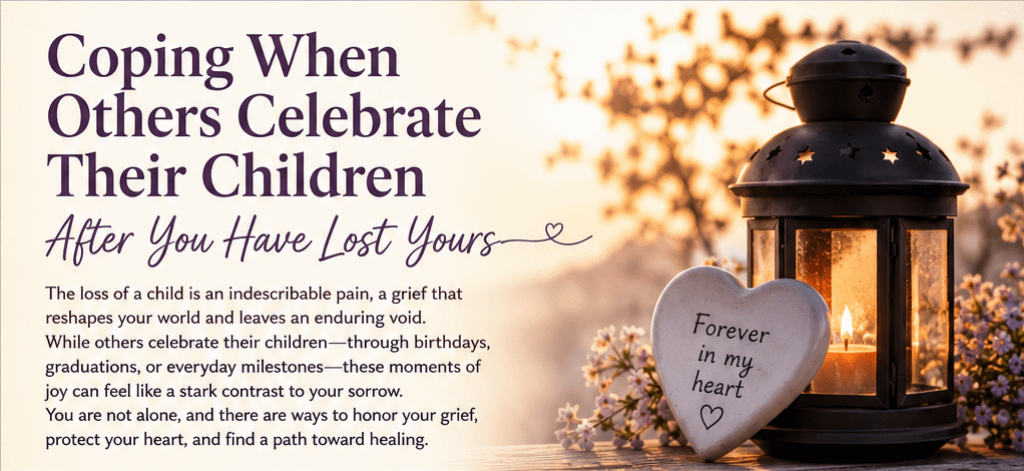
    Grief & Child Loss

  • How Fathers Grieve Differently Than Mothers After the Loss of a Child

    Advertisements

    Understanding the Silent Side of Child Loss

    The death of a child is one of the most devastating experiences a human being can endure. It challenges everything a parent believes about life, fairness, purpose, and the future. It is a loss that reaches beyond words and leaves a permanent mark on the hearts of those left behind.

    When a child dies, both parents suffer an unimaginable heartbreak. The dreams they carried for their son or daughter suddenly disappear. The future they imagined vanishes. The routines, conversations, milestones, and ordinary moments they once took for granted become memories that can never be recreated.

    Yet while mothers and fathers share the same loss, they often experience and express their grief in different ways.

    These differences do not mean one parent hurts more than the other. They do not mean one loved the child more deeply. Instead, they reflect the unique ways individuals process pain, emotion, responsibility, and trauma.

    Unfortunately, society often misunderstands grieving fathers. While mothers are frequently recognized and supported in their grief, fathers are often expected to remain strong, practical, and emotionally composed. Their pain may go unnoticed because it does not always look like traditional grief.

    The reality is that fathers grieve deeply. They grieve intensely. They grieve endlessly.

    Many simply do it differently.

    Understanding those differences can help families communicate better, strengthen relationships after loss, and ensure that fathers receive the support they need during the darkest season of their lives.


    The Bond Between a Father and Child

    Before discussing grief, it is important to understand the depth of a father’s connection with his child.

    For generations, fathers were often portrayed as providers whose primary responsibility was financial support. Modern fatherhood, however, has revealed a much deeper reality.

    Today’s fathers are caregivers.

    They are teachers.

    They are protectors.

    They are coaches.

    They are role models.

    They are best friends.

    Many fathers attend school events, help with homework, coach sports teams, read bedtime stories, and spend countless hours building relationships with their children.

    A father dreams about his child’s future from the moment he learns he will become a parent.

    He imagines:

    • First steps.
    • First words.
    • First day of school.
    • Graduation.
    • Marriage.
    • Grandchildren.
    • Shared experiences throughout life.

    When a child dies, those dreams die too.

    That loss affects fathers every bit as profoundly as it affects mothers.

    The difference often lies in how that pain is expressed.


    Society’s Expectations of Men

    One reason fathers grieve differently is because society teaches men different emotional rules.

    From an early age, many boys hear messages such as:

    • “Man up.”
    • “Be tough.”
    • “Don’t cry.”
    • “Handle it.”
    • “Be strong.”

    Over time, these messages shape how many men respond to emotional pain.

    While girls are often encouraged to express feelings openly, boys are frequently rewarded for appearing strong and self-controlled.

    As adults, these expectations become deeply ingrained.

    When tragedy strikes, many fathers instinctively shift into survival mode.

    Instead of asking:

    “How do I process this pain?”

    they ask:

    “What needs to be done?”

    This mindset often pushes fathers toward action rather than emotional expression.

    The result is a grieving father who may appear calm on the outside while carrying overwhelming pain inside.


    The Pressure to Be the Strong One

    Following the death of a child, fathers often feel a tremendous responsibility to hold the family together.

    While their hearts are shattered, they may immediately focus on:

    • Funeral arrangements.
    • Financial concerns.
    • Household responsibilities.
    • Supporting their spouse.
    • Caring for surviving children.
    • Managing family obligations.

    Many fathers believe they cannot afford to fall apart because others are depending on them.

    Friends and relatives often reinforce this belief by saying things like:

    “You need to stay strong.”

    “Your wife needs you.”

    “Your family depends on you.”

    Although intended as encouragement, these statements can unintentionally communicate that the father’s grief is less important.

    He begins to believe:

    “I can grieve later.”

    “I need to help everyone else first.”

    “I can’t break down.”

    Unfortunately, grief postponed is rarely grief eliminated.

    Eventually, those emotions demand attention.


    Why Fathers Often Grieve in Silence

    One of the most misunderstood aspects of male grief is silence.

    Many fathers become quieter after losing a child.

    They withdraw socially.

    They speak less.

    They spend more time alone.

    Others may assume this means they are avoiding grief.

    The opposite is often true.

    Inside their minds, grieving fathers may replay countless memories:

    The last conversation.

    The last hug.

    The last text message.

    The last birthday.

    The last ordinary day before everything changed.

    These memories circulate constantly.

    Even when a father says little, grief may occupy nearly every waking moment.

    Silence does not mean absence of pain.

    Often, it means the pain is too large for words.


    The Problem-Solver’s Dilemma

    Many fathers naturally approach life through problem-solving.

    When something breaks, they fix it.

    When challenges arise, they look for solutions.

    When loved ones hurt, they try to help.

    The death of a child creates a unique challenge because there is nothing to fix.

    No solution exists.

    No action can reverse the loss.

    No amount of effort can change what happened.

    For fathers who define themselves through helping and protecting, this reality can create crushing feelings of helplessness.

    Many begin asking impossible questions:

    Could I have prevented this?

    Should I have done something differently?

    Did I miss warning signs?

    Was there something I could have changed?

    These questions often persist for years.

    Even when fathers logically know they are not responsible, emotionally they may continue carrying guilt.


    The Hidden Burden of Guilt

    Guilt is one of the most common emotions experienced by grieving fathers.

    Some blame themselves for circumstances surrounding the death.

    Others feel guilty for surviving.

    Still others feel guilty because they believe they failed in their role as protector.

    A father’s instinct is often to keep his child safe.

    When that child dies, many fathers feel they have failed at the most important responsibility they ever had.

    This guilt can become overwhelming.

    Even when family members reassure them, fathers may continue carrying invisible burdens that no one else sees.

    They replay decisions repeatedly.

    They revisit events countless times.

    They search for explanations that may never exist.

    The result is emotional exhaustion layered on top of grief itself.


    Anger as a Form of Grief

    Not all grief looks like sadness.

    For many fathers, grief appears first as anger.

    This anger can be directed toward:

    Doctors.

    Drivers.

    Addiction.

    Disease.

    The legal system.

    Themselves.

    God.

    Life.

    Sometimes anger feels safer than sadness.

    Society often accepts angry men more readily than heartbroken men.

    As a result, fathers may express grief through frustration rather than tears.

    They may become:

    • Irritable.
    • Impatient.
    • Defensive.
    • Emotionally distant.

    Loved ones sometimes mistake these behaviors for indifference.

    In reality, anger is often covering profound heartbreak.

    Beneath the frustration is usually a father struggling to survive unimaginable pain.


    Why Many Fathers Return to Work Quickly

    One behavior that frequently causes misunderstandings is a father’s decision to return to work shortly after losing a child.

    People may wonder:

    Why is he already working?

    Hasn’t he processed his grief?

    Doesn’t he need more time?

    For many fathers, work serves several purposes.

    Work provides structure when life feels chaotic.

    Work offers distraction from constant emotional pain.

    Work creates a sense of normalcy during abnormal circumstances.

    Work helps fathers feel productive when everything else feels broken.

    Returning to work does not mean grief has ended.

    Often, grief accompanies them throughout every workday.

    They simply carry it differently.

    A father may complete his job responsibilities while internally thinking about his child every single minute.


    The Loneliness of the Grieving Father

    One of the most painful realities fathers face after child loss is loneliness.

    Support systems frequently center around mothers.

    Visitors ask how the mother is doing.

    Friends check on the mother.

    Family members focus on the mother’s emotional needs.

    While these efforts are important, fathers can become invisible.

    People assume they are managing.

    People assume they are coping.

    People assume they are okay.

    Many fathers quietly wonder:

    Does anyone realize I lost my child too?

    Does anyone care how I’m doing?

    Am I supposed to handle this alone?

    This loneliness often becomes a secondary grief layered on top of the original loss.


    Fathers and Physical Grief

    Grief affects more than emotions.

    It affects the body.

    Many grieving fathers experience physical symptoms including:

    • Chronic fatigue.
    • Insomnia.
    • Appetite changes.
    • Weight gain.
    • Weight loss.
    • Headaches.
    • Digestive problems.
    • Increased blood pressure.
    • Muscle tension.
    • Chest pain.

    Stress hormones remain elevated for extended periods.

    The body essentially remains in survival mode.

    Many fathers ignore these symptoms because they focus entirely on emotional survival.

    However, physical health often suffers significantly after child loss.

    This is one reason fathers need ongoing medical care and support during grief.


    When Fathers Cry Alone

    A common misconception is that fathers do not cry.

    Many do.

    They simply cry in different places.

    They cry:

    In the shower.

    In the car.

    Late at night.

    At a gravesite.

    During a quiet moment alone.

    After everyone else has gone to bed.

    Some fathers hide their tears because they fear appearing weak.

    Others cry privately because they want to protect loved ones from additional pain.

    These hidden tears often go unseen.

    Yet they are evidence of deep love and profound loss.


    How Child Loss Impacts Marriage

    The death of a child places extraordinary strain on marriages.

    Couples often discover they grieve differently.

    One spouse may want to talk constantly.

    The other may need silence.

    One may seek support groups.

    The other may avoid them.

    One may cry openly.

    The other may withdraw inward.

    Neither approach is wrong.

    The challenge occurs when partners interpret different grieving styles as a lack of love.

    A mother may think:

    “He doesn’t care.”

    A father may think:

    “Nothing I do is enough.”

    Misunderstandings can grow quickly.

    The strongest couples learn to recognize that grief has many languages.

    Different expressions do not indicate different levels of love.


    Fathers Often Grieve Through Action

    Many fathers channel grief into action.

    They establish scholarships.

    Create foundations.

    Organize charity events.

    Volunteer.

    Advocate for causes.

    Support other grieving families.

    Build memorials.

    Raise awareness.

    These actions become a continuation of parenting.

    Although their child is gone physically, fathers still feel compelled to honor and protect their legacy.

    Helping others often provides meaning during unimaginable suffering.

    For some fathers, action becomes an expression of love.


    The Fear of Forgetting

    One fear shared by many grieving fathers is the fear of forgetting.

    They worry about losing details.

    The sound of a voice.

    A favorite phrase.

    A laugh.

    A smile.

    A memory.

    Many fathers hold onto objects because they represent connection.

    A jacket.

    A baseball glove.

    A text message.

    A photograph.

    A voicemail.

    These items become treasures.

    They help fathers maintain a bond with their child.

    The fear is not simply losing memories.

    The fear is losing pieces of the relationship itself.


    The Pain of Milestones

    For grieving fathers, milestones can be devastating.

    Birthdays.

    Graduations.

    Holidays.

    Weddings.

    Father’s Day.

    Anniversaries.

    Every milestone becomes a reminder of what should have been.

    Fathers often imagine:

    What age their child would be.

    What career they might have chosen.

    Whether they would be married.

    Whether grandchildren might have arrived.

    These thoughts can bring overwhelming sadness even years after the loss.

    Grief does not follow a schedule.

    Certain dates can feel as painful decades later as they did in the beginning.


    Why Some Fathers Avoid Talking

    Many fathers avoid discussing grief because they fear reopening wounds.

    Others worry about burdening loved ones.

    Some simply lack the vocabulary to express what they feel.

    This does not mean they do not need support.

    In fact, many fathers desperately need someone willing to listen without judgment.

    Support does not require fixing.

    It requires presence.

    Sometimes the most healing words are:

    “I’m here.”

    “Tell me about your child.”

    “I remember them.”

    “You don’t have to carry this alone.”


    Society Needs to Recognize Grieving Fathers

    One of the greatest changes needed in grief support is recognition.

    Fathers are not secondary mourners.

    They are not supporting characters in the story of loss.

    They are parents.

    They loved deeply.

    They dreamed deeply.

    They lost deeply.

    Every father deserves acknowledgment.

    Every father deserves support.

    Every father deserves compassion.

    Ignoring male grief does not make it disappear.

    It simply forces fathers to carry it alone.


    The Journey Toward Healing

    Healing after child loss is often misunderstood.

    Healing does not mean forgetting.

    Healing does not mean moving on.

    Healing does not mean replacing the child.

    Healing means learning to carry grief while continuing to live.

    For fathers, healing often includes:

    Accepting help.

    Talking honestly.

    Building support networks.

    Honoring memories.

    Taking care of physical health.

    Finding purpose.

    Allowing emotions to exist.

    Healing is not about leaving grief behind.

    It is about learning how to walk forward while carrying it.


    A Father’s Love Never Ends

    Death changes many things.

    It changes routines.

    It changes plans.

    It changes the future.

    But it does not end a father’s love.

    A father remains a father forever.

    The relationship continues in memory, in love, and in the impact the child had on his life.

    Many grieving fathers find comfort in continuing bonds.

    They speak their child’s name.

    Celebrate birthdays.

    Share stories.

    Visit meaningful places.

    Honor traditions.

    These acts keep love alive.

    And love is often what carries fathers through the darkest days.


    Conclusion: Fathers Hurt Too

    When a child dies, a father’s world changes forever.

    He may not express grief the same way a mother does.

    He may not cry publicly.

    He may not talk often.

    He may throw himself into work.

    He may become quiet.

    He may appear strong.

    But beneath that strength is often profound heartbreak.

    Fathers grieve differently than mothers, but differently does not mean less.

    Their pain is real.

    Their tears are real.

    Their loneliness is real.

    Their love is real.

    Every grieving father carries memories, dreams, and a bond that death cannot erase.

    If you know a father who has lost a child, remember him.

    Speak his child’s name.

    Ask how he is doing.

    Listen without judgment.

    Offer support without expectations.

    Most importantly, remind him that his grief matters.

    Because behind every grieving father is a parent whose heart was forever changed by love—and forever broken by loss.

    A Father’s Guide to Surviving the Loss of a Child

    Grief & Child Loss

Exit mobile version