Category: Grief & Child Loss

  • Honoring Paul Murphy on National Sons Day

    Honoring Paul Murphy on National Sons Day

    Advertisements

    “Honoring Paul Murphy” is more than a tribute—it is a testament to how a life, though heartbreakingly brief, can leave a lasting and meaningful imprint on the world.

    Paul Murphy passed away at the tender age of 21, yet his influence far exceeds the years he was given. This tribute speaks of a young man known not for loud accomplishments or public praise, but for something far more powerful: quiet compassion. Paul was the kind of person who noticed when someone needed help and stepped in without hesitation, without expectation, and without seeking recognition.

    He led a life of example. Paul’s selflessness, generosity, and deep care for family, friends, and even strangers defined who he was. He consistently put others before himself, embodying empathy in its purest form. In a world that often celebrates visibility and applause, Paul’s story reminds us that the most meaningful acts are often the ones done quietly, seen only by those whose lives are changed by them.

    Though Paul’s time on earth was short, his spirit continues to inspire empathy, courage, and generosity in those who read his story. His life serves as a gentle but powerful reminder: even small acts of kindness can leave a permanent mark. Paul Murphy’s legacy lives on—not only in memory, but in the hearts and actions of those encouraged to live a little more like him.

    For me, honoring my son means waking up each day with a heart that is both shattered and shining. It means carrying him not in my arms, but in every corner of my spirit. It means understanding that although his life ended, his impact never will.

    He Is the Strength Behind My Steps

    Grief is heavy, but love—his love—is stronger still.
    I used to believe grief was love with nowhere to go. Now I know better.
    My love for him goes everywhere I go. It shows up in my choices, in my resilience, in the moments when I whisper, “I’m doing this for you.”

    His memory pushes me forward on days I want to collapse.
    His light reaches into the darkest hours and gives me just enough strength to try again.
    And every time I choose courage over despair, I am honoring him.

    Living Is the Legacy

    There was a time when laughter felt wrong, when joy felt like betrayal, when moving forward felt like leaving him behind. But grief taught me something profound:

    Living does not erase the love.
    Living does not silence the memories.
    Living does not dishonor the loss.

    Living is how I keep him with me.
    It’s how I carry the story of who he was, and who he made me, into a world that still needs the beauty he inspired.

    Every act of kindness, every moment of gratitude, every breath of hope—these are the gifts I offer in his name.
    His life, though shorter than I ever wanted, continues through the way I choose to shape mine.

    Healing Means Carrying Him Forward

    People say healing means “moving on.” But I refuse that idea.
    I am not moving on—I am moving with him.

    He is woven into the fabric of my days.
    Into my courage.
    Into my resilience.
    Into the quiet moments when I miss him so deeply I can hardly speak.

    Some days I stand tall.
    Some days I barely stand at all.
    But both are sacred. Both count. Both honor a love big enough to survive anything—even loss.

    Finding Him in the Everyday Moments

    Honoring my son isn’t something I do once a year or on special dates.
    I honor him in the small things:

    When I let myself smile, even through tears

    When I choose to believe in tomorrow

    When I help someone else carry their pain

    When I speak his name, without fear, without apology

    When I reflect on the way his presence shaped the best parts of me

    He is there in the sunrise, in the quiet car rides, in the moments when life surprises me with joy I never thought I’d feel again.

    A Promise of Love That Endures

    Losing him changed me forever. But loving him changed me too—and that part will never fade.

    My promise to my son is this:
    I will live a life worthy of the love we shared.

    I will carry him with grace.
    I will seek meaning, even in the brokenness.
    I will choose hope, even when hope feels fragile.
    I will keep going—not because the pain is gone, but because his light deserves a life that continues.

    Every step forward is a tribute.
    Every breath is a testament.
    Every moment of courage is a way of saying,
    “Your life mattered. Your love is still here. And because of you, I will keep living.”

    This day encourages us to re-center on what truly matters—love, family, memory. For those of us who have lost children, it offers a gentle invitation to honor not just loss, but the enduring bonds that remain.

    Although my son is no longer with us, I find solace and strength in helping others and in giving words to my love for him—because family means everything, even across different realms of existence. I hope this tribute encourages anyone reading—who has also known the ache of loss—to find your own meaningful way to remember, honor, and spread light in your loved one’s name.

    A Father’s Guide to Surviving the Loss of a Child

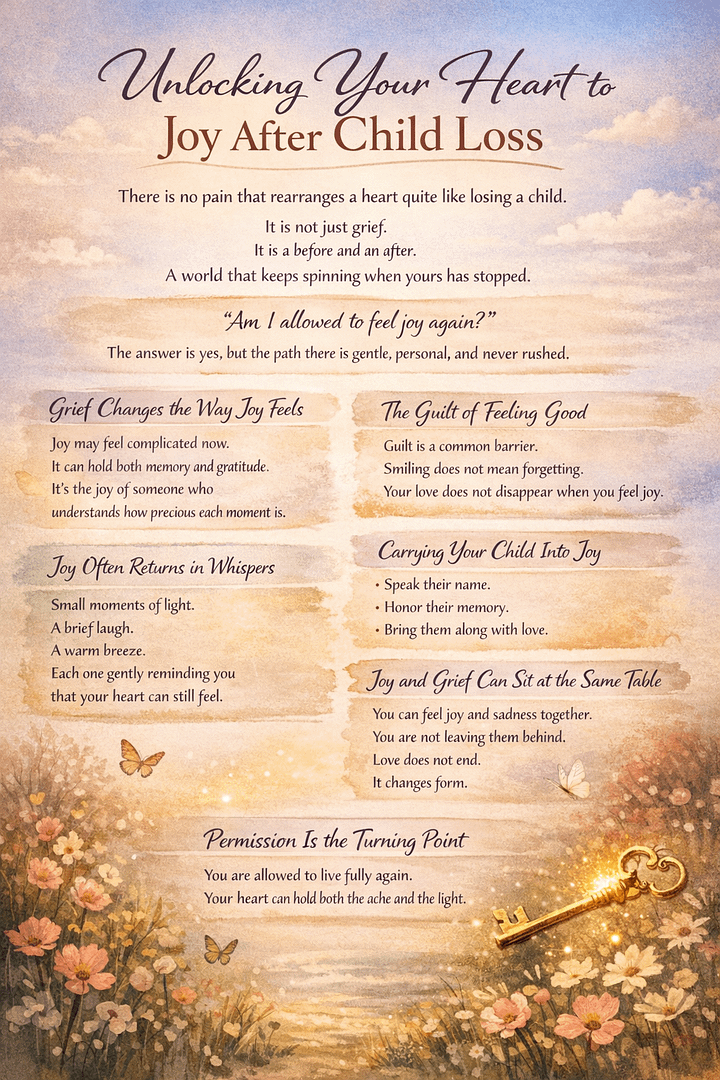
  • Unlocking Your Heart to Joy After Child Loss

    Advertisements

    There is no pain that rearranges a heart quite like losing a child.

    It is not just grief.
    It is a before and an after.
    A world that keeps spinning when yours has stopped.

    People sometimes expect healing to look like “moving on,” but parents who have experienced child loss know the truth: you don’t move on from your child. You move forward with the love, the ache, and the permanent imprint they left on your soul.

    And somewhere along that long, uneven road, a quiet question often rises — sometimes with guilt attached:

    “Am I allowed to feel joy again?”

    The answer is yes.
    But the path there is gentle, personal, and never rushed.

    Grief Changes the Way Joy Feels

    Before loss, joy may have felt spontaneous. Easy. Light.

    After loss, joy can feel complicated — layered with memory, awareness, and the knowledge that life can change in an instant. This doesn’t mean joy is gone forever. It means your heart has depth now that didn’t exist before.

    Grief carves space inside you. At first, that space feels like emptiness. Over time, it can also become room for a different kind of joy — one that holds tenderness, perspective, and profound gratitude for small things.

    This isn’t the joy of ignorance.
    It’s the joy of someone who understands how precious every moment is.

    The Guilt of Feeling Good

    One of the most painful barriers to joy is guilt.

    You might think:

    “If I laugh, it means I’m forgetting.”

    “How can I celebrate anything when my child is gone?”

    “Other people’s happiness feels wrong around my pain.”

    This guilt comes from love. It’s the heart’s way of saying, “They mattered.”

    But your child’s significance was never dependent on your suffering. Your love for them does not shrink when you smile. Your grief does not disappear when you experience something beautiful.

    Two truths can exist together:
    You miss them with your whole being.
    You are still allowed to feel life.

    Joy Often Returns in Whispers

    Joy after child loss rarely announces itself. It slips in quietly.

    A song you used to love that suddenly sounds comforting instead of unbearable.
    A genuine laugh that surprises you.
    A peaceful moment where your mind isn’t replaying the “what ifs.”

    These small openings can feel almost frightening because they remind you that your heart is still capable of feeling — and feeling means vulnerability.

    But each small moment is a thread, gently stitching you back into the living world.

    Your Nervous System Needs Safety First

    After trauma-level grief, your body lives in survival mode. You may feel numb, anxious, exhausted, or disconnected. This isn’t emotional failure — it’s biology.

    Joy returns more easily when your body feels safe enough to soften.

    Simple supports can help:

    Sitting in nature

    Gentle movement like walking

    Talking about your child without being rushed

    Time with people who don’t try to “fix” you

    Quiet rituals that honor their memory

    Safety tells your heart: It’s okay to open a little.

    Carrying Your Child Into Joy

    Some parents worry that if they allow happiness back in, their connection to their child will fade. But love doesn’t work that way.

    You can carry them into moments of joy by:

    Speaking their name

    Keeping traditions alive

    Noticing traits of theirs that live in you

    Dedicating acts of kindness in their honor

    Allowing memories to include smiles, not only tears

    Joy can become a continuation of the love story, not an ending.

    Joy and Grief Can Sit at the Same Table

    One of the most surprising parts of healing is realizing you can laugh and cry in the same day — sometimes in the same hour.

    This is not inconsistency.
    It is emotional wholeness.

    Grief doesn’t leave; it changes shape. And joy doesn’t replace grief; it weaves through it.

    You may attend a celebration and feel both warmth and longing. You may hold a new baby and feel love and heartbreak at once. This coexistence is not a sign that you’re “confused.” It’s a sign that your heart is big enough to hold complexity.

    Permission Is the Turning Point

    Often, the shift toward joy begins when you whisper to yourself:

    “I am allowed to live.”

    Not because the pain is gone.
    Not because you’re “over it.”
    But because your child’s love is part of your life story — not the end of it.

    You surviving.
    You loving again.
    You experiencing light again.

    These things do not betray your child. They are evidence that love did not die with them.

    Joy Will Be Different Now

    The joy that returns may be quieter, deeper, and more sacred than before. It may come with tears close by. It may feel fragile. But it will also feel real.

    It is the joy of someone who knows:
    Life is not guaranteed.
    Moments matter.
    Love outlives presence.

    This kind of joy is not shallow happiness. It is resilience in its most human form.

    You Are Not Leaving Them Behind

    Opening your heart again does not mean walking away from your child. It means carrying them differently — not only in pain, but in love, in memory, and in the way you see the world now.

    They are in your gentleness.
    In your strength.
    In your compassion for others who hurt.

    Your heart continuing to beat, feel, and even find light again is not a betrayal.

    It is a quiet testimony:
    Love does not end. It changes form.

    Joy after child loss is not loud.
    It is a small light that says,
    “I am still here. And so is love.” 🤍

    A Father’s Guide to Surviving the Loss of a Child
  • Another Birthday Without My Son

    Advertisements

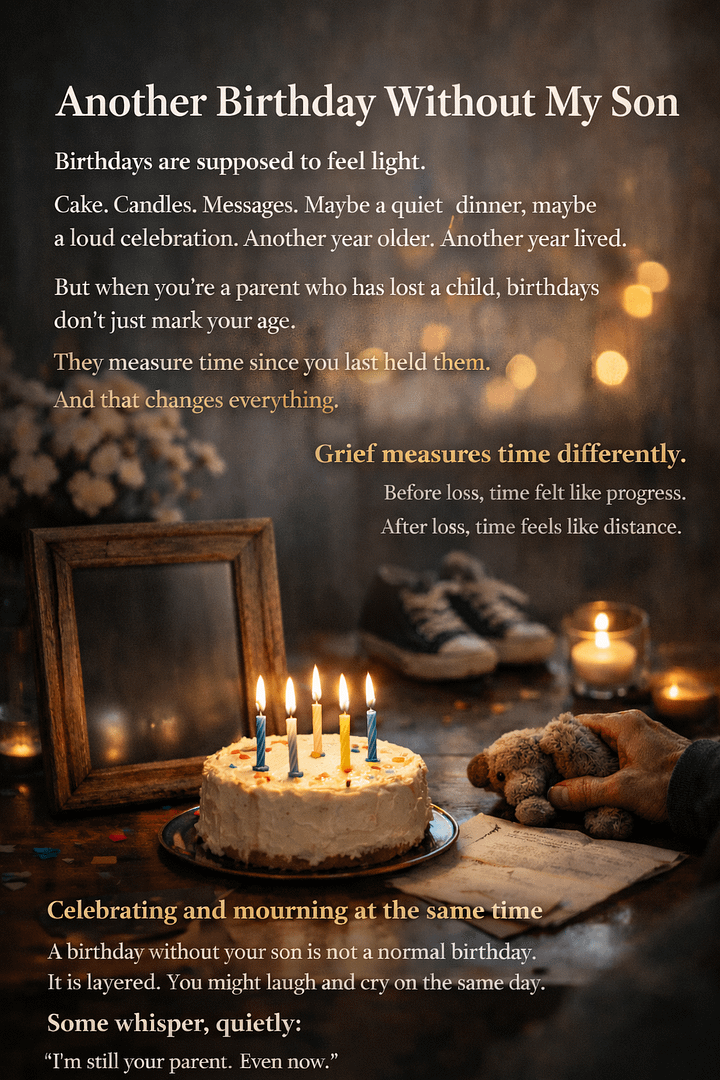
    Birthdays are supposed to feel light.

    Cake. Candles. Messages. Maybe a quiet dinner, maybe a loud celebration. Another year older. Another year lived.

    But when you’re a parent who has lost a child, birthdays don’t just mark your age.

    They measure time since you last held them.

    And that changes everything.

    The Birthday That No Longer Fits

    There’s something disorienting about celebrating your own life when part of your heart is missing. People say, “Happy Birthday!” with genuine kindness, and you smile back — because you know they mean well — but the words land differently now.

    It isn’t that you aren’t grateful to be alive.
    It’s that life feels incomplete in a way that can’t be explained in a party setting.

    A birthday used to mean:

    • Another year of memories

    • Watching your child grow

    • Hearing their voice say, “Happy Birthday, Dad”

    Now it’s a quiet awareness:

    They should be here for this.


    Grief Measures Time Differently

    Before loss, time felt like progress.

    After loss, time feels like distance.

    Another birthday means another year you’ve lived without hearing their laugh. Another year since you’ve seen their face light up. Another year of carrying memories instead of moments.

    And yet, strangely, you carry them into every birthday.

    They are in:

    • The silence between well-wishes

    • The extra chair that exists only in memory

    • The thought that crosses your mind when you make a wish before blowing out candles

    Not for presents.
    Not for success.
    Just for one more moment.


    The Guilt of Being the One Still Here

    Birthdays after losing a child can carry a weight few talk about — survivor’s guilt.

    You wonder things you’d never say out loud:

    • Why do I get more years?

    • Why did their time stop and mine keep going?

    There’s no logic that fixes this. No explanation that makes it sit neatly in the heart.

    But here’s a truth that grief slowly teaches:

    Your continuing life does not betray them.
    It carries them.

    Every year you live is another year their story lives through you.


    Celebrating and Mourning at the Same Time

    A birthday without your son is not a normal birthday.
    It is layered.

    You might laugh and cry on the same day. You might feel okay in the morning and wrecked by evening. You might want company — or none at all.

    All of it is allowed.

    There is no rulebook for how a grieving parent “should” spend their birthday. Some people visit a special place. Some light a candle. Some look through photos. Some avoid the day entirely.

    Some whisper, quietly:

    “I’m still your parent. Even now.”

    Because you don’t stop being a parent when a child dies.
    You just become a parent whose love has nowhere physical to land — so it lives in memory, ritual, and the quiet corners of the heart.


    They Are Part of Every Year You Turn

    Your age is not just a number anymore.

    It’s a timeline of love.

    Every year added to your life is another year you’ve carried them with you. Another year you’ve gotten out of bed, breathed through the ache, and continued — not because the pain is gone, but because love doesn’t end when a life does.

    You are not “moving on.”
    You are moving forward with them inside you.

    And that is one of the hardest, bravest things a person can do.


    If Today Is Your Birthday

    If today feels heavy instead of happy, you are not doing it wrong.

    If you miss your son so fiercely it feels physical, that’s love — still alive.

    If you smile at one moment and cry the next, that’s not weakness. That’s a heart big enough to hold grief and gratitude in the same breath.

    Blow out the candles if you can.
    Or don’t.

    But know this:

    The love between you and your son did not end. It changed form.
    And it still walks with you into every year ahead.

    A Father’s Guide to Surviving the Loss of a Child
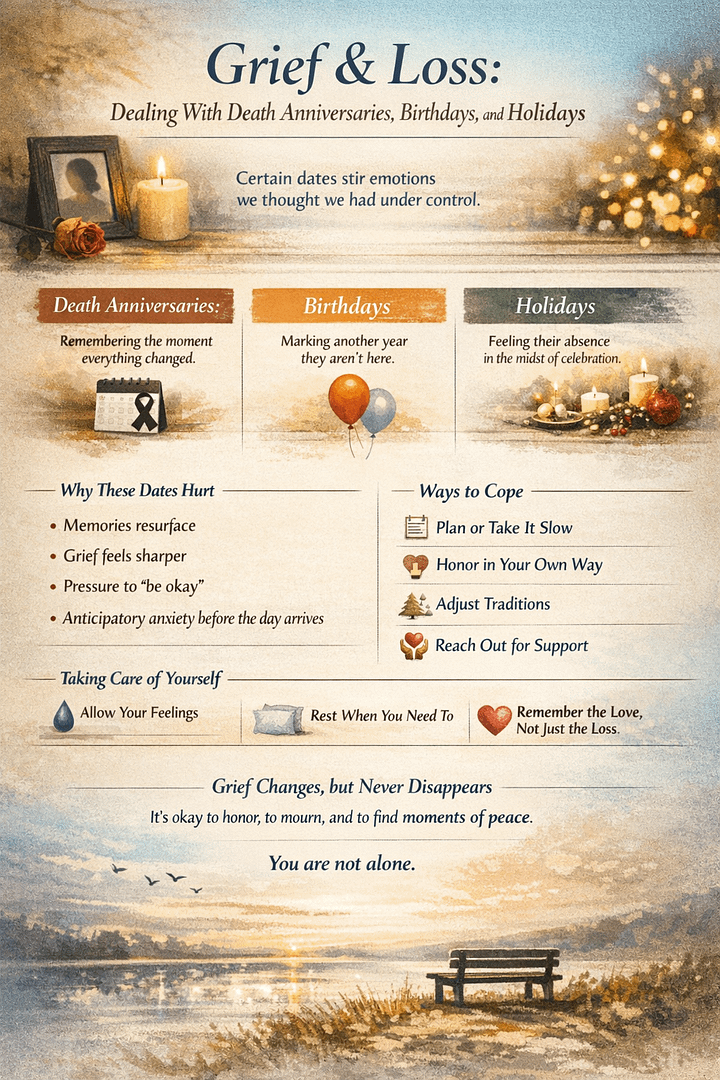
  • Grief & Loss: Dealing With Death Anniversaries, Birthdays, and Holidays

    Advertisements

    Grief has a way of hiding in plain sight.

    On ordinary days, it may sit quietly in the background—manageable, familiar, almost folded neatly into daily life. Then a date appears on the calendar, and suddenly the weight returns. Death anniversaries, birthdays, and holidays don’t just mark time; they reopen memories, emotions, and questions we thought we had already faced.

    For many people, these moments can feel more painful than the loss itself. And when they do, it can be confusing, frustrating, and isolating.

    The Calendar as a Trigger

    Special dates are emotional landmarks. They don’t simply remind us of who we lost—they remind us of who we were before the loss and who we are now.

    A death anniversary often brings the mind back to the moment everything changed: the phone call, the hospital room, the silence afterward. Birthdays remind us that time continues to pass without them—another year they don’t get to live, another candle that won’t be lit. Holidays, meant to symbolize joy and togetherness, can amplify absence in a room full of people.

    Grief becomes louder when the world expects celebration.

    Why These Days Can Feel Worse Than “Random” Days

    Many people are surprised to find that grief intensifies years after a loss, particularly around significant dates. This isn’t a sign of regression—it’s a natural response.

    Our bodies and minds store emotional memory. Even if we don’t consciously remember the date, our nervous system often does. This can show up as:

    • Increased anxiety or irritability

    • Fatigue or brain fog

    • Sudden waves of sadness or anger

    • Trouble sleeping or concentrating

    • A sense of dread with no clear explanation

    This phenomenon, sometimes called anniversary reactions, is deeply human. The body remembers before the mind catches up.

    Anticipatory Grief: The Quiet Build-Up

    Often, the most difficult part isn’t the day itself—it’s the lead-up.

    Days or even weeks before an anniversary or holiday, grief may begin to surface quietly. You might feel emotionally off-balance, distracted, or unusually sensitive. This is known as anticipatory grief, and it can make the days feel long and heavy.

    Naming it matters. Saying to yourself, “This makes sense—this date is coming,” can soften the internal tension. Awareness doesn’t remove the pain, but it gives it context.

    The Pressure to Be ‘Okay’

    One of the most painful aspects of grieving these milestones is the expectation to perform normalcy.

    Early after a loss, grief is acknowledged. Over time, support often fades—not because people don’t care, but because discomfort grows. Society prefers grief to have an expiration date.

    Holidays come with expectations:

    • Be grateful

    • Be joyful

    • Be social

    • Be positive

    When grief doesn’t cooperate, many mourners feel guilt on top of sadness—guilt for not enjoying the moment, guilt for changing traditions, guilt for still hurting.

    But grief doesn’t disappear because the calendar says it should.

    Death Anniversaries: Revisiting the Moment of Loss

    Death anniversaries often bring a replay of details: sights, sounds, conversations, regrets. Even when years have passed, the body remembers the shock.

    Some people find comfort in marking the day with intention—lighting a candle, visiting a grave, journaling, or spending time alone. Others prefer to avoid the date entirely.

    There is no correct response.

    What matters is giving yourself permission to experience the day in a way that feels authentic—not performative.

    Birthdays: Celebrating Absence

    Birthdays can be uniquely painful because they center on life—growth, milestones, and future possibility. When someone is gone, their birthday becomes a reminder of everything they didn’t get to experience.

    Some people choose to celebrate anyway—sharing stories, cooking their favorite meal, donating or volunteering in their name. Others find birthdays too raw and choose quiet reflection instead.

    Both approaches honor love.

    Remembering a birthday doesn’t mean you’re stuck in grief. It means the person mattered—and still does.

    Holidays: Grief in a World That Keeps Celebrating

    Holidays can feel unbearable because they magnify contrast. The world insists on cheer while grief demands honesty.

    Family gatherings highlight empty chairs. Traditions once shared feel incomplete. Even familiar music, scents, or foods can trigger unexpected waves of emotion.

    It’s okay to change traditions. It’s okay to skip gatherings. It’s okay to create something new or simplify everything.

    You’re not betraying the past—you’re adapting to the present.

    Ways to Care for Yourself Through These Dates

    Grief doesn’t need fixing, but it does need care. Some gentle ways to support yourself include:

    Plan with flexibility. Decide ahead of time what you might do, knowing you can change your mind.

    Lower expectations. Productivity, cheerfulness, and social engagement are optional.

    Create a ritual. Even small acts—writing a note, lighting a candle, sitting quietly—can provide grounding.

    Communicate boundaries. Let others know what you need, even if it’s space.

    Stay connected safely. One supportive person can make a difference. You don’t need a crowd.

    Rest intentionally. Grief is exhausting. Fatigue is not weakness—it’s a response.

    How Grief Evolves Over Time

    Grief doesn’t shrink—it changes shape.

    What once felt sharp may become deep and quiet. Some anniversaries may pass gently, others may surprise you with intensity. This unpredictability doesn’t mean healing has failed.

    It means love remains.

    Over time, many people discover they can hold both grief and joy simultaneously. They laugh, love again, build meaning—while still carrying loss.

    This isn’t moving on. It’s moving forward with grief.

    A Gentle Reminder

    If you are approaching a difficult anniversary, birthday, or holiday, know this:

    You are not weak.
    You are not behind.
    You are not doing grief wrong.

    You are responding to loss in the most human way possible.

    If all you manage to do on that day is breathe and survive it, that is enough. And if you find moments of peace—or even joy—that is not betrayal. It is resilience.

    Grief doesn’t end. But neither does love.

    A Father’s Guide to Surviving the Loss of a Child
  • Invisible Pain Day: Honoring the Struggles We Cannot See

    Advertisements

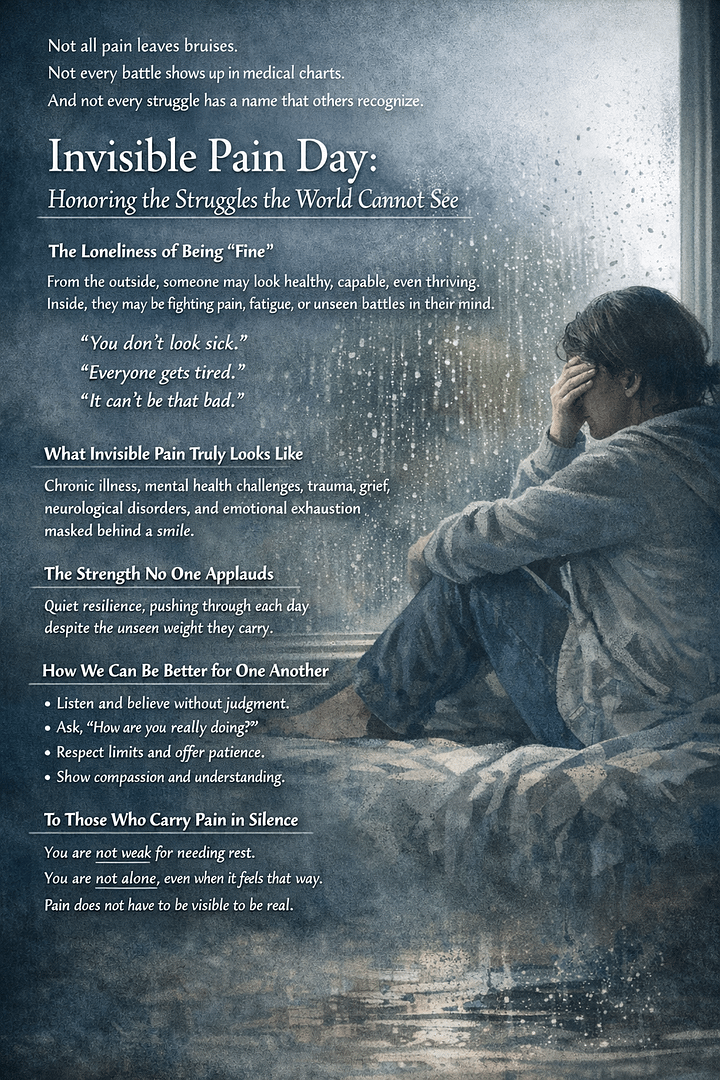
    Not all pain leaves bruises.
    Not every battle shows up in medical charts.
    And not every struggle has a name that others recognize.

    Invisible Pain Day exists to honor the millions of people who carry suffering that cannot be seen on the surface—those living with chronic illness, mental health challenges, trauma, grief, neurological conditions, autoimmune disorders, emotional wounds, and exhaustion that never truly lifts. These are the battles that don’t announce themselves, the hardships that don’t always receive sympathy, and the realities that are too often misunderstood or dismissed.

    The Loneliness of Being “Fine”

    One of the greatest burdens of invisible pain is the expectation to appear normal. From the outside, someone may look healthy, capable, even successful. Inside, they may be navigating constant pain, debilitating fatigue, anxiety that tightens the chest, or memories that resurface without warning.

    Because their struggle isn’t obvious, many people living with invisible pain hear phrases like:
    “You don’t look sick.”
    “Everyone gets tired.”
    “You were fine yesterday.”
    “It can’t be that bad.”

    Often these words are not meant to be cruel—but they can be deeply isolating. When pain isn’t visible, it becomes easier for the world to overlook it. And when someone feels unseen, they may stop trying to explain at all, choosing silence instead of repeatedly defending their reality.

    What Invisible Pain Truly Looks Like

    Invisible pain does not follow one shape or diagnosis. It lives in countless bodies and minds, in ways that rarely make headlines or receive long-term understanding.

    It can look like:

    • Chronic illnesses that fluctuate without warning

    • Mental health struggles hidden behind professionalism and smiles

    • Trauma that quietly shapes reactions, relationships, and trust

    • Grief that never fully leaves, even when life moves forward

    • Autoimmune conditions that attack from within

    • Neurological disorders that disrupt daily functioning

    • Emotional burnout from years of “pushing through”

    • Disabilities that do not match society’s expectations of what disability “looks like”

    Invisible pain may show up as canceled plans, long pauses before answering simple questions, or a person who seems “distant” when they are simply exhausted. It may sound like forced laughter or short replies when energy is gone. It may feel like surviving each day while carrying a weight that no one else can see.

    The Emotional Cost of Being Misunderstood

    Living with invisible pain often means navigating not only symptoms, but also doubt—from others and sometimes from oneself. Many people question their own experience when it is repeatedly minimized. They may wonder if they are being “too sensitive,” “too tired,” or “too weak,” even when their pain is real and ongoing.

    This constant invalidation can lead to:

    • Guilt for needing rest

    • Shame for canceling plans or asking for help

    • Anxiety about being perceived as unreliable

    • Fear of being judged or dismissed

    • Emotional withdrawal to avoid explanation

    When society measures health by appearance, those with invisible pain are often forced into a quiet performance—smiling through discomfort, showing up when they should be resting, and proving their worth through endurance rather than well-being.

    The Strength No One Applauds

    Those living with invisible pain develop a resilience that is rarely recognized. They manage medications, appointments, flare-ups, and emotional strain while continuing to fulfill roles as employees, parents, partners, friends, and caregivers. Their strength is not loud, but it is constant.

    They wake up each day unsure of how their body or mind will feel. They calculate energy before committing to tasks. They learn to adapt, to adjust expectations, to redefine what “success” looks like. They become experts in listening to their limits—often after years of being taught to ignore them.

    But strength should never be mistaken for ease.
    Just because someone continues doesn’t mean the journey is light.
    Just because they smile doesn’t mean they are not hurting.

    Why Invisible Pain Deserves Recognition

    Invisible Pain Day is about more than awareness—it is about validation. It is a reminder that pain does not require physical evidence to be real. That suffering is not less legitimate because it cannot be photographed, measured, or easily explained.

    It calls us to question a culture that praises productivity over well-being, that often asks, “What did you accomplish?” instead of “What did you survive?”

    Invisible pain deserves recognition because:

    • It affects daily functioning, relationships, and mental health

    • It shapes identity and self-worth

    • It requires emotional labor that few acknowledge

    • It demands resilience that often goes unseen

    When we honor invisible pain, we make space for honesty. We tell people they do not have to prove their suffering to deserve compassion.

    How We Can Be Better for One Another

    Invisible Pain Day also asks us to reflect on how we show up for others. Compassion does not require full understanding. We do not need to experience someone’s pain to respect it.

    Here are ways we can offer support:

    • Listen without minimizing. Avoid phrases that dismiss or compare pain.

    • Believe first. Trust people when they tell you they are struggling.

    • Be patient. Energy and ability can change from day to day.

    • Ask with care. “How are you really doing today?” can open space for honesty.

    • Respect boundaries. When someone says they need rest or space, honor it.

    • Offer flexibility. Understanding means allowing people to show up in the ways they can.

    Sometimes, the most meaningful support is not advice or solutions—but simply presence without judgment.

    To Those Who Carry Pain in Silence

    If you are living with invisible pain, know this: your experience is real. Your exhaustion is valid. Your need for rest is not weakness. Your limits do not define your worth.

    You are not dramatic for acknowledging your struggle.
    You are not broken for needing support.
    You are not alone—even when it feels that way.

    Invisible Pain Day is a reminder that you matter, even when your pain cannot be seen. That your strength counts, even when it goes unnoticed. And that your story deserves space, dignity, and compassion.

    Because pain does not have to be visible to be real.
    And healing begins when we choose to truly see one another.

    A Father’s Guide to Surviving the Loss of a Child
  • Trying to Live Again While I Am Broken and Damaged

    Advertisements

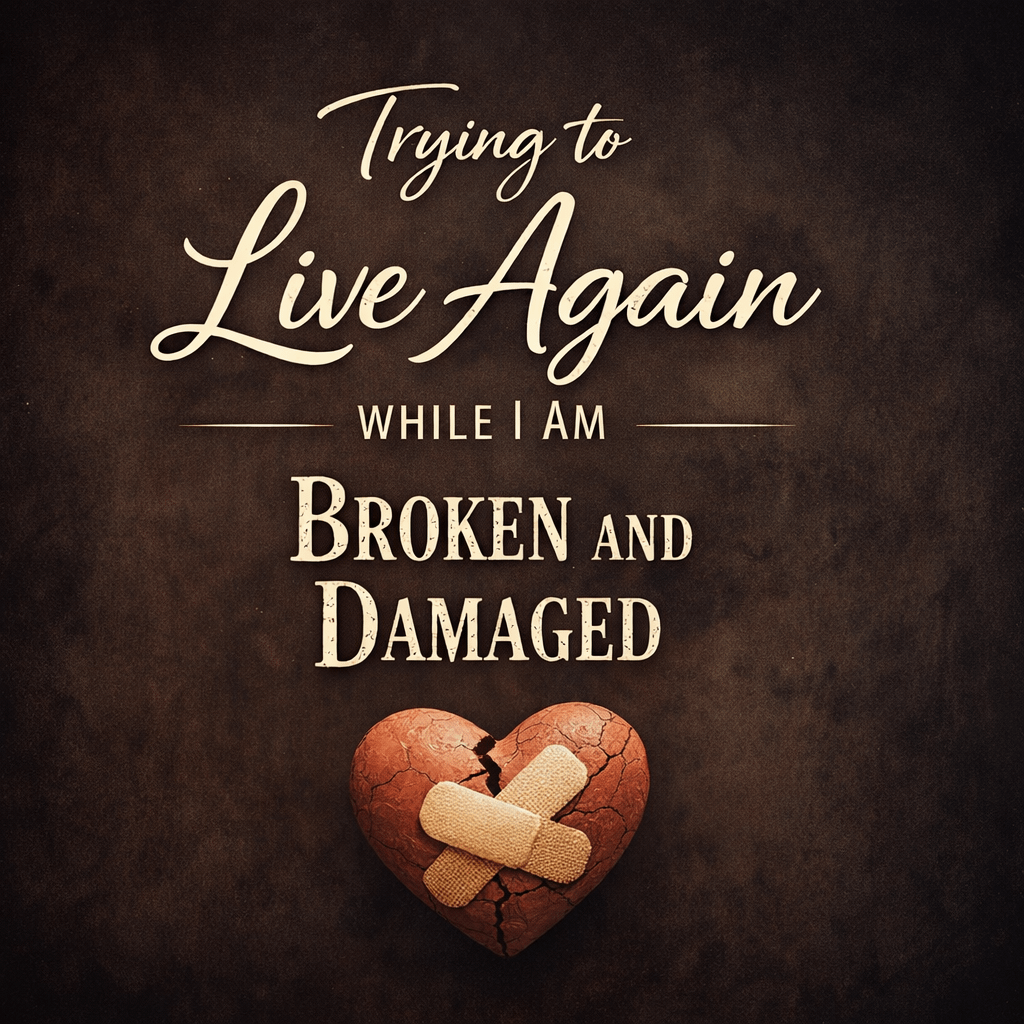
    For the past decade, I have been beaten down, broken and damaged. I have died twice. Paul brought me back to life. Twice. Once in life and once from the afterlife.

    I flatlined from a massive stroke in 2015 and came back because my son needed me. The other time I died was when Paul passed away. That shattered my heart, life and soul into oblivion.

    I have had been living with half of me in the afterlife and the other part of me living like a zombie in this place we call life.

    In my grief, I have pushed away people and have not let myself get anywhere near anything that is good or could help me feel something that is positive or experience any kind of happiness.

    The reason I have done this, is simple. I am broken. I am damaged. Living in fear of happiness being taken away again. Afraid of something or someone killing me again because I trusted in the path of the goodness. I have spent years being scared to pull one half of me from the grave and merge it with half that is here and wanting nothing more to be happy once again.

    Paul’s death is my crucible. Most people believe there are two types of crucibles. The first one is to become stronger from the experience and survive it, and the second one is die. But there’s a third type. The one where you learn to love the fire and choose to stay in it because it’s easier to embrace the pain when it’s all you know anymore. That is what I have been doing all these years. Embracing the pain and staying in the fire. Finally accepting it and moving out of it has been almost equally as hard as my son’s death and living with it.

    Being broken and damaged has changed me. It has reshaped how I see the world, how I trust, how I hope. The person I was before the pain feels like a stranger now—someone who lived without flinching at memories, dates, or certain words. Someone who could love and be happy. Pain, grief, anger, rage, sadness and everything that has happened, has changed me. The change has been hard and painful.

    Trying to live again doesn’t mean I am healed. It doesn’t mean the cracks are gone or that the damage no longer exists. It means I am learning how to exist with the broken pieces still inside me. Some days, I carry them gently. Other days, they cut deep. Both days count.

    There is grief in realizing that life will never look the same. Dreams have shifted. Joy feels unfamiliar. Laughter can arrive unexpectedly—and leave just as fast—sometimes followed by guilt, as if happiness is a betrayal of the pain you carry. But joy does not erase loss, and living again does not mean forgetting. It means allowing space for both.

    When you are broken, progress looks different. It’s not about “moving on.” It’s about learning how to stand in the middle of the wreckage and still choose to stay. It’s about finding small reasons to keep going—morning light through a window, a familiar song, a moment of quiet where the pain loosens its grip just a little.

    You may feel damaged, like something essential inside you has been permanently altered. And maybe it has. But damaged does not mean useless. Broken things can still hold meaning, depth, and beauty. In fact, they often hold more. They understand pain, compassion, and resilience in ways untouched things never could.

    Trying to live again is an act of defiance against everything that tried to take you down. It is choosing life even when it hurts. It is allowing yourself to be unfinished, unhealed, and still worthy of existing fully.

    Bring broken and trying anyway, shows that we are not weak. We are not failing. We are surviving in the most honest way possible. Living again doesn’t require perfection—it only requires presence. And even on our hardest days, our presence matters.

    We are allowed to live again, even in pieces.

    It has been 1530 days since my son died. It has taken Paul that many days to help me accept his death. To accept that I can move forward and let happiness and anything that is good in.

    I accept that I am broken. I accept that I am damaged. I am no longer going to let fear keep me from living and trying. I am not going to forget everything and run. I am going to face everything and rise from the ashes like a phoenix. I am going to try to live. I will get knocked down and get right back up. I will always fight to live from now on.

    A Father’s Guide to Surviving the Loss of a Child


  • Another Year Without Our Loved Ones

    Advertisements

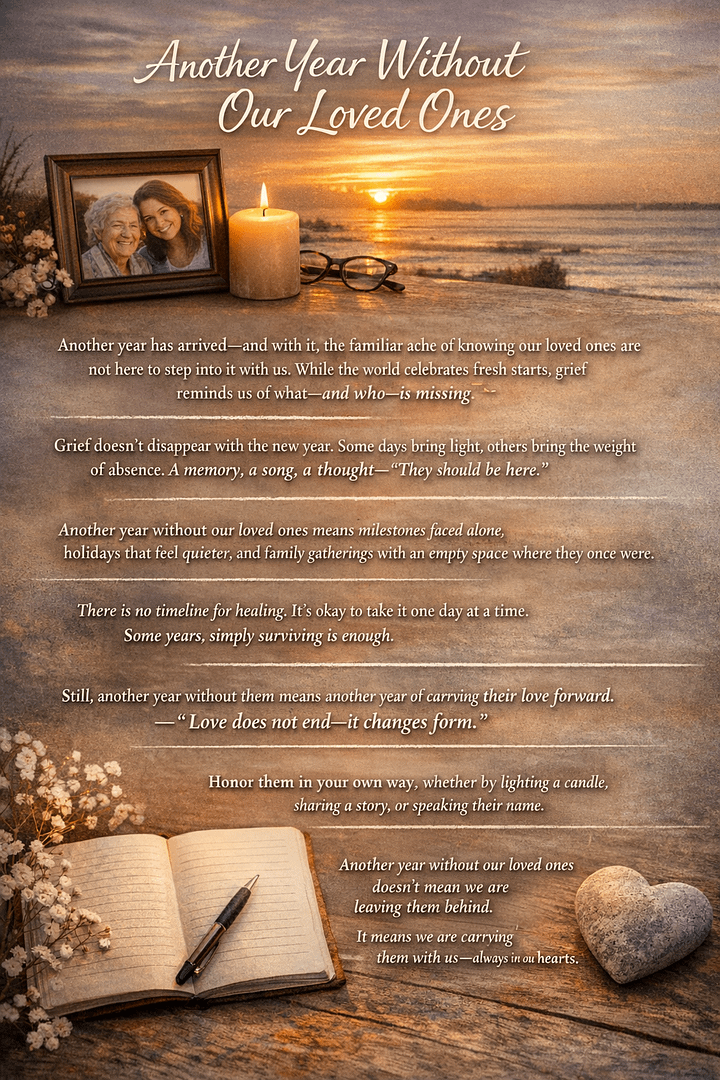
    Another year has arrived—and with it, the familiar ache of knowing our loved ones are not here to step into it with us. While the world celebrates fresh starts and new beginnings, grief often stands quietly in the background, reminding us of what—and who—is missing. For those who have experienced loss, the turning of the calendar can feel less like hope and more like a painful marker of time passed without them.

    Grief does not disappear simply because a year has ended. It does not reset at midnight or fade with resolutions. Instead, it moves at its own pace. Some days feel lighter, filled with moments of peace or even joy. Other days, the absence feels just as sharp as it did in the beginning. A memory, a scent, a familiar song, or a single thought—they should be here—can bring the weight rushing back without warning.

    Another year without our loved ones means facing milestones we never imagined doing alone. Birthdays arrive with mixed emotions. Holidays feel quieter, sometimes lonelier. Family gatherings highlight the empty spaces where laughter once lived. Even ordinary days can carry unexpected grief, because loss doesn’t only show up on special occasions—it lives in the everyday moments too.

    There is often unspoken pressure at the start of a new year to “move forward,” to be hopeful, productive, and positive. But grief does not follow society’s expectations or timelines. Healing is not linear, and there is no finish line. Some years, simply getting through the day is an achievement. Some seasons require rest instead of growth, reflection instead of reinvention. And that is okay.

    Another year without them also brings a deeper understanding of how love continues beyond loss. Though their physical presence is gone, their impact remains woven into who we are. We hear their voice in our thoughts, carry their wisdom in our decisions, and feel their love in the ways we show up for others. Love does not end—it changes form.

    Grief teaches us patience, empathy, and resilience we never asked to learn. It reshapes us, sometimes painfully, but often profoundly. We may not be the same people we were before loss, but that does not mean we are broken. It means we have been changed by love and loss intertwined.

    Honoring our loved ones can look different for everyone. For some, it’s lighting a candle, visiting a special place, or speaking their name out loud. For others, it’s continuing a tradition, helping others in their memory, or simply allowing themselves to feel without guilt. There is no right or wrong way to remember—only what feels true to your heart.

    If this new year feels heavy, you are not failing. You are grieving. And grief is not a sign of weakness—it is a reflection of deep connection. Be gentle with yourself. Take breaks when you need them. Celebrate small moments of peace when they appear, and allow space for sadness when it returns.

    Another year without our loved ones does not mean we are leaving them behind. It means we are carrying them forward—into every memory, every choice, and every step we take. They are still part of our story. And as long as we remember, love remains, unbroken and enduring.

    A Father’s Guide to Surviving the Loss of a Child
  • Dealing with Grief While Getting Ready for the New Year

    Advertisements

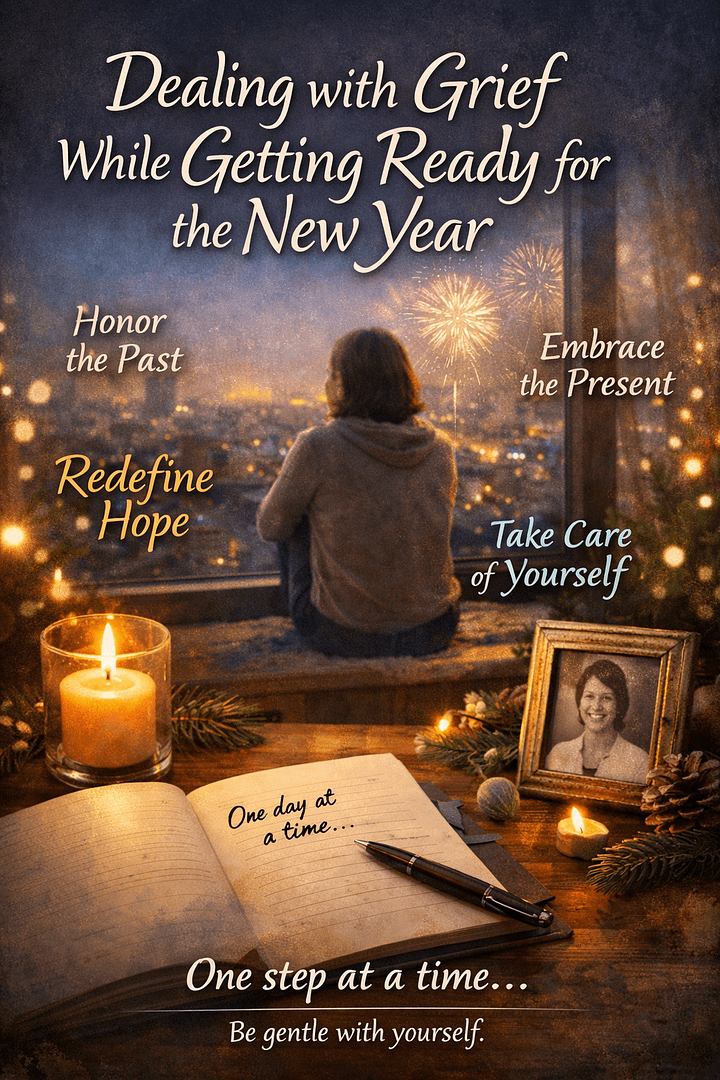
    As the calendar turns and the promise of a new year approaches, the world seems to move forward with energy, celebration, and hope. For those who are grieving, however, this transition can feel heavy and complicated. While others are making resolutions and celebrating fresh starts, you may be carrying loss, memories, and emotions that don’t reset when the year changes. And that’s okay.

    Grief Doesn’t Follow the Calendar

    Grief has no timeline. It doesn’t end on December 31st or soften simply because a new year begins. Anniversaries, holidays, and year-end reflections often intensify feelings of sadness, longing, or emptiness. Instead of pressuring yourself to “feel better” in January, allow yourself to acknowledge that grief may still be part of your journey—and that doesn’t mean you’re failing or stuck.

    Honoring What Was While Stepping Forward

    A new year doesn’t mean leaving your loved one behind. Many people find comfort in carrying memories forward in meaningful ways. This might look like lighting a candle on New Year’s Day, writing a letter to the person you lost, or setting aside quiet time to reflect on the love that still exists. Honoring the past can coexist with moving forward.

    Redefining Hope and Resolutions

    Traditional New Year’s resolutions can feel overwhelming when you’re grieving. Instead of setting big goals, consider gentler intentions.

    • “I will take care of myself when grief feels heavy.”

    • “I will allow joy when it comes without guilt.”

    • “I will ask for help when I need it.”

    Hope doesn’t have to be loud or ambitious. Sometimes hope is simply choosing to keep going, one day at a time.

    Making Space for Mixed Emotions

    Grief often brings a mix of emotions—sadness, gratitude, anger, relief, or even moments of joy. Feeling hopeful about the new year doesn’t mean you’ve forgotten your loss, just as feeling sorrow doesn’t mean you can’t welcome new beginnings. Both can exist together, and giving yourself permission to feel all of it is part of healing.

    Taking Care of Yourself in the New Year

    As you prepare for the year ahead, focus on small acts of care. This could be maintaining a routine, journaling, spending time in nature, or connecting with people who understand your grief. Therapy, support groups, or creative outlets can also be powerful ways to process emotions as the year unfolds.

    Moving Forward at Your Own Pace

    There is no right way to grieve and no deadline for healing. Entering a new year after loss doesn’t require optimism or excitement—it only requires honesty with yourself. Moving forward doesn’t mean moving on; it means learning how to live while carrying love and loss together.

    As the new year begins, may you give yourself grace. Grief may walk beside you, but so can compassion, understanding, and moments of light. One step, one breath, one day at a time is enough.

    A Father’s Guide to Surviving the Loss of a Child
  • Why Christmas Is Not the Same When Your Loved One Has Angel Wings

    Advertisements

    Christmas is often painted as a season of joy, laughter, and togetherness—a time when families gather, traditions are honored, and memories are made. But when someone you love is no longer physically present, Christmas can feel like a stark reminder of loss rather than celebration. When your loved one has angel wings, the holiday no longer looks or feels the way it once did, and that change can be both heartbreaking and disorienting.

    The Empty Spaces Are Everywhere
    Loss reveals itself in the smallest details. It’s in the empty chair at the table, the missing stocking on the mantel, and the absence of a familiar laugh echoing through the house. These empty spaces are not just physical; they live in conversations that feel incomplete and moments when you instinctively turn to share something—only to remember they are no longer there. At Christmas, when togetherness is emphasized, these gaps feel impossible to ignore.

    Memories Come Flooding Back
    The sights, sounds, and scents of Christmas have a powerful way of unlocking memories. A song on the radio, a favorite holiday recipe, or an ornament pulled from storage can instantly transport you back to moments shared with your loved one. These memories can be both comforting and painful. They remind you of the deep love you shared, but they also underscore the ache of their absence. Christmas becomes a season of remembering as much as celebrating.

    Traditions Feel Different—but They Still Matter
    After loss, traditions may feel too heavy to carry. Some people avoid them altogether, while others cling to them for comfort. There is no right or wrong way. Baking cookies might bring tears instead of laughter. Opening gifts may feel hollow. Yet for many, traditions eventually become a bridge—connecting the past with the present. Over time, some families find ways to adapt traditions, honoring their loved one while allowing space for new meaning to grow.

    Grief Has No Holiday Schedule
    Grief doesn’t pause for Christmas. It doesn’t take a break because the calendar says it’s time to celebrate. In fact, grief often feels sharper during the holidays, when expectations of happiness are everywhere. You may feel pressure to “be okay” for others, even when your heart feels shattered. It’s important to remember that grieving during Christmas is not a failure—it’s a reflection of deep love.

    The Complexity of Mixed Emotions
    Christmas after loss is emotionally complicated. You may feel sadness, anger, gratitude, love, and longing all at once. There may be moments of laughter followed by waves of tears. This emotional whiplash can be exhausting. But these mixed emotions are a sign that love still lives on. Feeling joy doesn’t mean you miss them any less, and feeling sorrow doesn’t mean the season holds no beauty.

    Feeling Disconnected From the World
    While others celebrate, you may feel like an outsider looking in. Social gatherings can feel overwhelming, and cheerful messages may feel painfully out of sync with your reality. It’s okay to step back, to say no, or to celebrate in quieter ways. Protecting your heart during this season is not selfish—it’s necessary.

    Finding Ways to Honor Them
    Many people find comfort in creating intentional moments to honor their loved one during Christmas. Lighting a candle in their memory, donating in their name, visiting a special place, or setting aside time to speak their name aloud can bring a sense of closeness. These acts don’t make the pain disappear, but they can soften it by reminding you that love does not end with death.

    A Season of Gentle Acceptance
    Christmas may never return to what it once was—and that’s okay. The goal is not to “move on” but to move forward while carrying your loved one with you. Over time, the sharp edges of grief may soften, even though the love remains unchanged. Christmas becomes less about perfection and more about presence, reflection, and honoring what truly matters.

    Love That Lives Beyond Angel Wings
    When your loved one has angel wings, Christmas becomes a quieter, more tender season. It may be filled with tears, memories, and moments of longing—but also with enduring love. Though the holiday is no longer the same, their spirit lives on in every memory, every tradition adapted, and every moment you hold them close in your heart. Christmas changes, but love never leaves.

    A Father’s Guide to Surviving the Loss of a Child
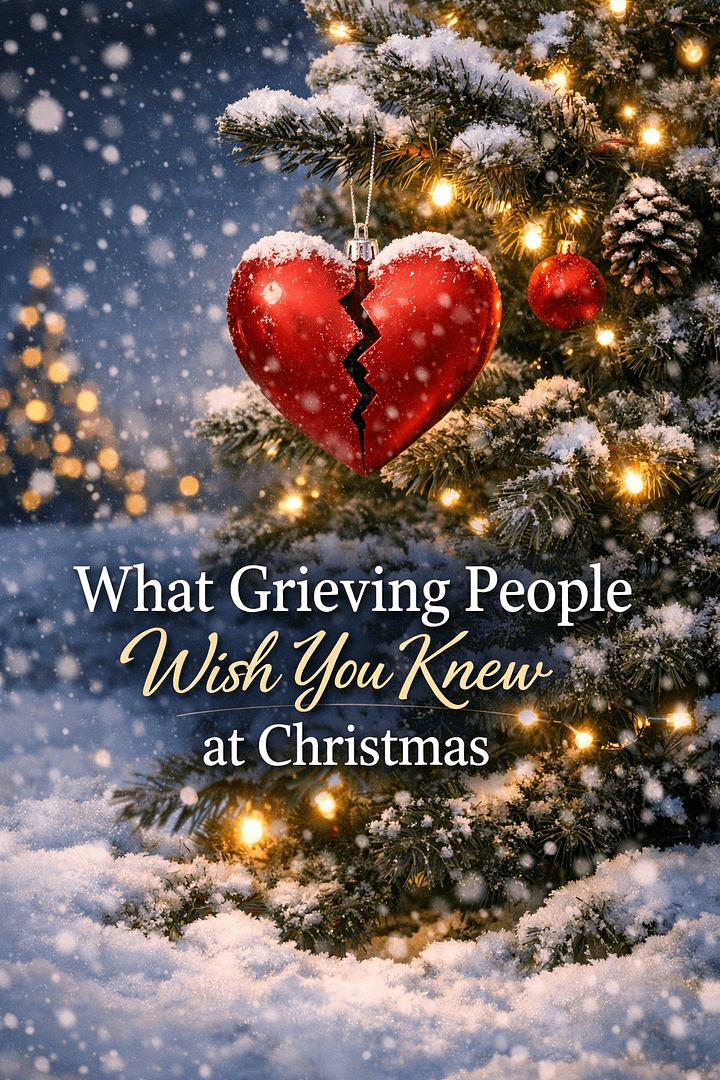
  • What Grieving People Wish You Knew at Christmas

    Advertisements

    Christmas is often described as the most wonderful time of the year—a season filled with lights, laughter, family gatherings, and cherished traditions. But for those who are grieving, Christmas can feel heavy, isolating, and deeply painful. While the world celebrates, grieving hearts are simply trying to survive.

    Here are some things grieving people wish others understood during the Christmas season.

    1. We Still Love Christmas—It Just Hurts Now

    Grief doesn’t erase the love we once had for the holidays. It changes it. Decorations may feel overwhelming, carols may bring tears instead of joy, and traditions can highlight who is missing. We aren’t trying to be negative—we are learning how to exist in a season that no longer looks or feels the same.

    2. Please Say Their Name

    Avoiding the name of the person who died doesn’t protect us—it hurts. Saying their name acknowledges their existence, their impact, and our love. A simple, “I know this must be hard without ___” means more than you realize.

    3. There Is No “Right Way” to Grieve

    Some days we may laugh. Other days we may withdraw. We might attend one event and skip another. Grief doesn’t follow a schedule or social expectations. What looks like strength one day may be pure exhaustion the next.

    4. Invitations Still Matter—even If We Decline

    Being included reminds us we are remembered. Please keep inviting us, even if we say no. Sometimes just knowing we had the option makes the season feel less lonely.

    5. “At Least…” Is Never Comforting

    “At least they’re not suffering.”
    “At least you have other children.”
    “At least you had time with them.”

    These phrases minimize loss, even when well-intended. What helps most is a listening ear and a simple, “I’m so sorry. This is really hard.”

    6. Grief Gets Louder During the Holidays

    Empty chairs, unwrapped gifts, and missing traditions amplify loss. The joy around us can make our sorrow feel even heavier. Christmas doesn’t distract from grief—it often magnifies it.

    7. We May Need Support Long After the Decorations Come Down

    Grief doesn’t end on December 26th. In many ways, it deepens once the noise of the holidays fades. Continued check-ins after Christmas are deeply appreciated.

    8. Small Acts of Kindness Mean Everything

    A text message. A card. A meal. A candle lit in remembrance. These gestures may seem small to you, but to a grieving heart, they are lifelines.

    9. We Are Not Trying to Ruin the Holiday

    If we step away, cry unexpectedly, or seem quieter than usual, it’s not because we don’t care. It’s because love never stops—and neither does grief.

    10. Your Presence Matters More Than Your Words

    You don’t need to fix our pain. You can’t. Just be there. Sit with us. Hold space. Let us talk—or not talk—without pressure.


    A Gentle Reminder

    Grief is love that has nowhere to go. At Christmas, that love often feels overwhelming. Patience, compassion, and understanding go farther than perfect words ever could.

    If you know someone who is grieving this Christmas, the greatest gift you can offer is grace.

    A Father’s Guide to Surviving the Loss of a Child

Exit mobile version