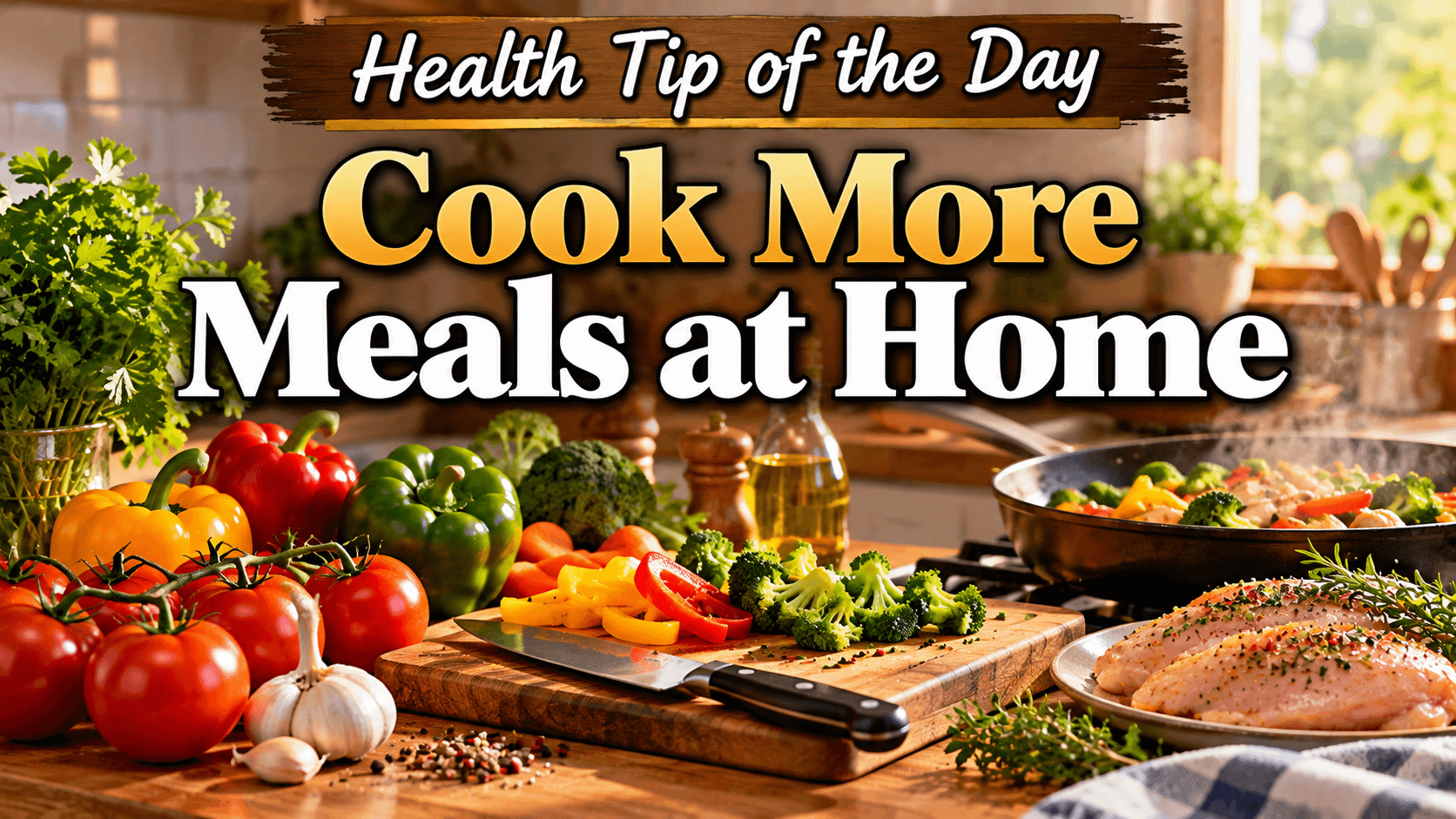
One of the simplest ways to take greater control of your health doesn’t require an expensive diet program, complicated meal plan, or kitchen full of specialty foods.
Cook more meals at home.
With busy schedules, long workdays, family responsibilities, and restaurants or delivery services making food available almost instantly, cooking can sometimes feel like another chore.
But preparing more of your own meals gives you something incredibly valuable: control over what goes into your food.
You decide the ingredients.
You decide the portions.
You decide how much salt, sugar, oil, vegetables, protein, and other ingredients go onto your plate.
And you don’t have to become a gourmet chef to benefit.
A few simple homemade meals each week can be a meaningful step toward healthier eating habits.
You Know What’s Going Into Your Food
One of the greatest advantages of cooking at home is knowing what you’re eating.
When you order food from a restaurant, you might recognize the major ingredients, but you don’t necessarily know how much butter, oil, salt, sugar, dressing, or sauce was used.
At home, you make those decisions.
If a recipe calls for more salt than you want, use less.
If you’d like additional vegetables, add them.
If you want a leaner protein, make the substitution.
If you’d rather use whole grains, you can.
Cooking gives you the ability to adjust meals according to your preferences, dietary needs, and health goals.
Portion Sizes Are Easier to Control
Restaurant portions can sometimes be much larger than what you’d normally serve yourself at home.
And when a large plate is sitting in front of us, it’s easy to continue eating simply because the food is there.
At home, you determine the serving size.
Try building a balanced plate around vegetables and fruits, whole grains or another carbohydrate source, and a source of protein appropriate for your needs.
You can always get more if you’re genuinely hungry.
The point isn’t to make every portion tiny. It’s to become more aware of how much you’re eating instead of letting someone else determine the portion for you.
Cooking at Home Doesn’t Mean Everything Must Be Perfect
This is important.
Healthy eating doesn’t require perfection.
You don’t have to prepare every ingredient from scratch.
You don’t have to spend two hours cooking dinner.
And you certainly don’t need to become a professional chef.
Convenience foods can still have a place in a home kitchen.
Frozen vegetables, canned beans, precooked grains, rotisserie chicken, bagged salads, frozen fruit, canned tuna, eggs, yogurt, and other convenient staples can make homemade meals much easier.
A simple dinner can be completely acceptable.
The goal is to develop a sustainable habit, not create additional stress.
Start With Meals You Already Enjoy
If you’re new to cooking regularly, don’t begin with complicated recipes containing 25 ingredients.
Think about foods you already enjoy eating.
Maybe it’s tacos.
Chicken and vegetables.
Spaghetti.
Soup.
Chili.
Baked potatoes.
Sandwiches.
Stir-fry.
Breakfast for dinner.
Homemade pizza.
Start there.
Learn several simple meals that you can prepare confidently. Once those become routine, gradually add new recipes.
Eventually, you’ll have your own collection of dependable meals for busy nights.
Make Vegetables Easier to Eat
Cooking at home also gives you plenty of opportunities to add vegetables to meals you’re already making.
Add peppers and onions to scrambled eggs.
Put spinach into pasta sauce.
Add vegetables to soup.
Throw broccoli into a stir-fry.
Add lettuce, tomatoes, onions, and peppers to tacos.
Roast vegetables alongside chicken.
Keep frozen vegetables available for nights when you don’t have fresh produce.
You don’t necessarily have to completely redesign your diet.
Sometimes improving what you already eat is easier than trying to replace everything overnight.
Don’t Be Afraid of Frozen Foods
Frozen fruits and vegetables can be extremely useful.
They’re convenient, last longer than fresh produce, and can help reduce food waste.
Keep frozen vegetables available for quick side dishes, soups, casseroles, pasta dishes, or stir-fries.
Frozen fruit works well in smoothies, oatmeal, yogurt, and other meals.
Having nutritious ingredients available makes it easier to cook when you’re tired and tempted to order something.
Meal Planning Can Save You From the “What’s for Dinner?” Problem
One of the biggest barriers to cooking isn’t necessarily cooking itself.
It’s deciding what to make.
You’ve probably experienced it.
You’re hungry.
You’re tired.
You open the refrigerator.
Nothing immediately looks appealing.
Suddenly, ordering food seems like the easiest option.
A little planning can prevent that situation.
Before grocery shopping, decide on several meals you’ll make during the week.
You don’t necessarily need to assign every meal to a specific day.
Simply knowing you have ingredients available for five or six easy meals makes the decision much easier.
Cook Once, Eat More Than Once
You don’t have to cook a completely new meal every night.
Make extra.
If you’re cooking chicken, prepare enough for another meal.
If you’re making chili or soup, make a larger batch.
If you’re preparing rice, cook enough for tomorrow.
Tonight’s roasted chicken might become tomorrow’s chicken tacos.
Vegetables from dinner could go into tomorrow morning’s eggs.
Leftover meat might become a sandwich or salad.
This approach can save considerable time during a busy week.
Keep Your Kitchen Stocked With Basic Ingredients
Cooking becomes much easier when you have versatile ingredients available.
Depending on your preferences, useful staples might include eggs, chicken, fish, beans, rice, potatoes, pasta, oats, frozen vegetables, fresh fruit, canned tomatoes, whole-grain bread, herbs, spices, olive oil, yogurt, cheese, and other foods your household regularly eats.
You don’t need everything on that list.
Build your pantry around what you will actually use.
Buying healthy food doesn’t accomplish much if it sits untouched until you throw it away.
Homemade Doesn’t Automatically Mean Healthy
There’s one important distinction worth remembering.
Cooking something at home doesn’t automatically make it nutritious.
You can prepare foods at home that contain large amounts of saturated fat, sodium, added sugar, or calories.
The benefit of home cooking is that you have greater control.
Use that control.
Experiment with herbs and spices for flavor.
Add vegetables.
Choose cooking methods such as baking, roasting, grilling, steaming, or sautéing when appropriate.
Pay attention to sauces and dressings.
Balance richer meals with vegetables, fruit, and other nutrient-dense foods.
You don’t need to eliminate every food you enjoy.
Think about your overall eating pattern rather than judging your health based on a single meal.
Cooking Can Save Money Too
Cooking at home can also help your budget, especially when you plan meals around affordable staples and actually use the groceries you purchase.
Restaurant meals include more than the cost of ingredients.
You’re paying for preparation, service, packaging, delivery, convenience, and other business expenses.
Instead of thinking that every homemade meal needs to be elaborate, focus on affordable basics.
Rice and beans.
Eggs and potatoes.
Soup and sandwiches.
Chicken and vegetables.
Pasta with vegetables and protein.
Oatmeal with fruit.
Simple food can still be satisfying.
Make Cooking Something You Enjoy
Cooking doesn’t always have to feel like work.
Put on some music.
Listen to a podcast.
Cook with your spouse, partner, children, or friends.
Experiment with a new recipe.
Recreate something you love ordering from a restaurant.
Try foods from another culture.
Have a homemade pizza night.
Make breakfast for dinner.
Turn cooking into part of your routine rather than another obligation hanging over your head.
You might even discover that preparing food becomes something you look forward to.
Don’t Try to Change Everything Tomorrow
If you’re currently eating restaurant, takeout, or delivery meals most days, don’t tell yourself that starting tomorrow you’ll cook every single meal at home.
That’s a difficult standard to maintain.
Start smaller.
If you normally order dinner five nights a week, try cooking two or three.
If breakfast always comes from a drive-through, make breakfast at home a few mornings each week.
If lunch is usually purchased at work, bring leftovers once or twice.
Small improvements repeated consistently can become habits.
And habits are what eventually create lasting changes.
Health Tip of the Day
Cook more meals at home.
Not because restaurant food is automatically bad.
Not because you can never enjoy takeout again.
And not because every meal needs to be perfectly healthy.
Cook at home because it gives you greater control over your ingredients, portions, preparation methods, and overall eating habits.
Start with one meal.
Learn a few simple recipes.
Keep useful ingredients available.
Cook extra for tomorrow.
Experiment.
Make mistakes.
Learn what works for you.
Over time, your kitchen can become one of the most useful tools you have for supporting better health.
What is one meal you love ordering from a restaurant that you would like to learn how to make at home?