
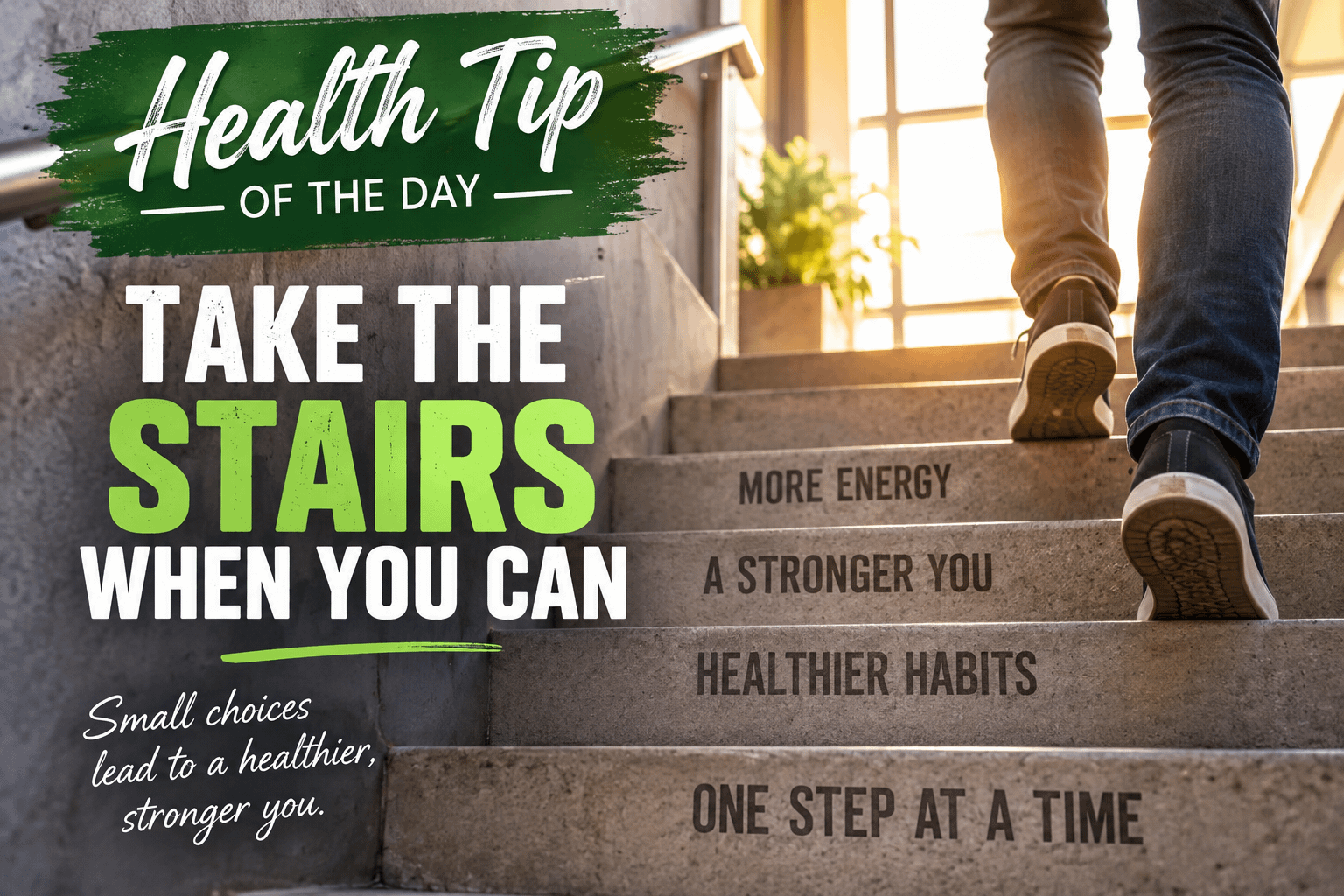
Improving your health does not always require a gym membership, expensive equipment, or a complicated workout routine. Sometimes, some of the most useful changes come from simple decisions you make throughout the day.
One of those decisions is incredibly straightforward:
Take the stairs when you can.
When you have a choice between an elevator, escalator, and a manageable flight of stairs, choosing the stairs can add a little more movement to your day. It might seem insignificant when you are only climbing one or two floors, but those small moments of activity can accumulate over time.
The goal isn’t to turn every staircase into a workout. It’s to recognize opportunities to move your body when doing so is comfortable and appropriate for you.
Small Choices Can Create a More Active Lifestyle
Many people think about exercise as something that has to happen during a designated workout.
You go to the gym.
You walk for 30 minutes.
You ride a bicycle.
You lift weights.
Those are all valuable forms of physical activity, but movement doesn’t have to be limited to scheduled exercise.
Everyday activity matters too.
Walking across a parking lot, doing household chores, carrying groceries, working in the yard, standing instead of sitting, and climbing stairs all require your body to move.
Taking the stairs is especially convenient because staircases are already part of many people’s daily environments. You don’t have to schedule an appointment with them or buy special equipment.
You simply choose them when the opportunity appears.
Why Stair Climbing Can Be Challenging
Walking up stairs requires your body to work against gravity. Your legs repeatedly lift your body upward, which requires more effort than casually walking across a flat surface.
You may quickly notice your heart beating faster or your breathing becoming heavier.
That doesn’t mean you need to race up the stairs.
There is no prize for reaching the top first.
Walk at a comfortable pace, use the handrail when necessary, and stop if you need to rest.
As your body becomes accustomed to more daily movement, activities that once seemed difficult may gradually become easier.
Your Legs Have to Work
Think about what happens every time you climb a step.
You bend your knee, place your foot on the next step, push through your leg, lift your body upward, stabilize yourself, and repeat the movement.
Your lower body is doing considerable work.
Stair climbing involves several major muscle groups, including muscles in your thighs, hips, calves, and glutes. Regularly using those muscles as part of everyday movement can help support functional strength.
Functional strength matters because these are the muscles you rely on for ordinary activities such as getting out of a chair, walking, carrying objects, and moving around independently.
Add Movement Without Adding Another Appointment
One of the biggest obstacles to exercise is time.
People have jobs, families, errands, appointments, responsibilities, and unexpected problems competing for their attention.
Finding another 30 or 60 minutes for exercise isn’t always easy.
That is why incorporating movement into activities you are already doing can be helpful.
If you need to reach the second floor anyway, taking the stairs doesn’t require another trip somewhere. You are simply changing how you reach your destination.
The same philosophy can apply elsewhere.
Park a little farther from the entrance when practical.
Walk around while talking on the phone.
Take a short walk during a break.
Carry groceries inside yourself when you’re able.
Stand up periodically during long periods of sitting.
None of these actions seems dramatic individually.
Together, they can help create a lifestyle where movement becomes part of your normal routine.
Start With What You Can Handle
You don’t need to climb ten flights of stairs tomorrow simply because you decided you want to become healthier.
Start realistically.
Maybe you normally take an elevator to the second floor. Try walking up one flight and taking the elevator the rest of the way if necessary.
Maybe you can comfortably climb two flights.
Start there.
The objective is consistency, not exhaustion.
You want movement to become something you naturally incorporate into your life instead of something so difficult that you immediately begin avoiding it.
Don’t Compare Yourself to Someone Else
Someone else might run up five flights of stairs without stopping.
That doesn’t mean you should.
Health is personal.
Your age, current fitness, mobility, medical history, body weight, medications, injuries, joint health, and many other factors can influence what type and amount of activity is appropriate.
Pay attention to your own body rather than measuring yourself against another person.
If one flight is challenging today, completing that flight may be an accomplishment worth recognizing.
Progress doesn’t have to look impressive to someone else to matter.
Make the Healthy Choice the Automatic Choice
Habits become powerful when you stop having to debate them.
Imagine entering a building and automatically walking toward the stairs instead of thinking:
“Should I take the stairs today?”
That small shift means movement has started becoming part of your routine.
You can create a simple personal rule:
If the stairs are manageable and I feel physically able, I’ll take them.
That removes much of the decision-making.
One floor?
Take the stairs.
Two floors?
Take the stairs if you’re comfortable.
Ten floors?
Maybe taking the elevator part of the way makes more sense.
You don’t have to follow an all-or-nothing approach.
Going Down Counts Too, but Be Careful
People often focus on climbing stairs, but descending them requires control and balance as well.
However, going downstairs can also place different demands on the knees and joints.
Don’t rush.
Use the handrail when needed, watch where you’re stepping, and wear appropriate footwear.
Safety matters more than getting additional exercise.
If descending stairs causes pain or feels unstable, choose the safer alternative.
Know When the Elevator Is the Better Choice
“Take the stairs when you can” includes three important words:
When you can.
There are situations where taking the elevator is absolutely the better decision.
If you have significant joint pain, balance difficulties, mobility limitations, certain heart or lung conditions, dizziness, an injury, or another health concern that makes stair climbing unsafe, don’t force yourself to climb stairs simply because it is generally considered healthy.
The same applies when carrying something heavy or awkward that could increase your risk of falling.
If you’re unsure whether stair climbing is appropriate for your health situation, ask a qualified healthcare professional.
And if activity causes chest pain, severe shortness of breath, fainting, or other concerning symptoms, stop and seek appropriate medical attention.
Don’t Underestimate Five Minutes of Movement
One common mistake people make is believing physical activity only matters when they can dedicate a large amount of time to it.
That mindset can become an excuse to do nothing.
“I don’t have time for a 30-minute workout, so I’ll exercise tomorrow.”
Tomorrow becomes next week.
Next week becomes next month.
Instead, look for opportunities.
You might climb the stairs in the morning, walk for five minutes at lunch, spend ten minutes doing chores after work, and take another short walk later.
Those little periods of activity can help you spend less of your day completely sedentary.
Something doesn’t have to be enormous to be worthwhile.
Build From the Smallest Habit
Healthy living rarely comes from one enormous decision.
It is usually built through hundreds of smaller ones.
Taking the stairs instead of the elevator.
Choosing water instead of another sugary drink.
Adding vegetables to dinner.
Going to bed a little earlier.
Taking a walk instead of spending another 20 minutes scrolling.
Getting up from your chair periodically.
None of these choices alone guarantees perfect health.
But each one moves your routine in a healthier direction.
And once you successfully establish one habit, it can become easier to add another.
You Don’t Need Perfection
There will be days when you take the elevator.
That’s fine.
Maybe you’re exhausted.
Maybe you’re carrying something.
Maybe your knee hurts.
Maybe you’re in a hurry.
Maybe you’re simply not feeling up to it.
One elevator ride doesn’t erase your progress.
Healthy habits shouldn’t become another reason to criticize yourself.
The goal is to make healthier choices more often, not perfectly.
If you take the stairs four times this week and the elevator three times, that’s still four opportunities when you chose additional movement.
Next week, maybe it’s five.
Progress can be that simple.
Turn Ordinary Life Into an Opportunity to Move
Modern life has made it incredibly easy to avoid physical effort.
Elevators take us upstairs.
Escalators carry us between floors.
Cars take us short distances.
Delivery services bring things directly to our doors.
Technology makes life convenient, but convenience can also remove many of the natural opportunities people once had to move throughout the day.
We don’t need to reject convenience completely.
Instead, we can occasionally choose movement when convenience isn’t necessary.
A staircase is a perfect example.
It’s already there.
Your destination is already upstairs.
If you are physically able to climb it safely, those steps become an opportunity to move your body.
One Step Is Still Progress
There is something symbolic about taking the stairs.
You don’t reach the top in one giant movement.
You get there one step at a time.
Health works much the same way.
You don’t transform your health overnight.
You make one decision.
Then another.
Then another.
Some days you will do more.
Some days you will do less.
What matters is continuing to look for opportunities to take care of yourself.
Today’s opportunity might simply be choosing the staircase.
Tomorrow it might be taking a short walk.
Eventually, those small choices can become part of the person you are becoming.
Health Tip of the Day
Take the stairs when you can.
You don’t need to sprint up them or turn every staircase into a fitness challenge. Walk comfortably, use the handrail when appropriate, and choose a safer alternative whenever stairs aren’t suitable for you.
Think of it as one simple way to put a little more movement into a day you were already living.
Your journey toward better health doesn’t always require giant leaps.
Sometimes it begins with one step.
What small opportunity could you use today to move your body a little more?
Leave a ReplyCancel reply