There are certain meals that immediately bring to mind crisp autumn evenings, family gatherings, rustic kitchens, and the comforting aroma of something slowly roasting in the oven. Roast pheasant is one of those dishes.
National Roast Pheasant Day celebrates a traditional game-bird dish that has been enjoyed for generations. While pheasant may not appear on the average American dinner table as often as chicken, turkey, or beef, it has a long culinary history and remains closely connected with hunting traditions, country cooking, seasonal gatherings, and special-occasion meals.
For people who have never tasted pheasant, National Roast Pheasant Day can also be an opportunity to try something different.
Instead of preparing the same chicken or turkey dinner you have made dozens of times, you can explore a bird with its own distinctive flavor and discover why roast pheasant has remained part of traditional cooking for so long.
What Is Pheasant?
Pheasants are game birds recognized for their long tails and, particularly among males of some species, striking plumage.
The ring-necked pheasant is especially familiar in the United States. Although pheasants are strongly associated with American hunting culture today, the ring-necked pheasant is not native to North America. Its ancestry is Asian, and pheasants were introduced into different parts of the world over many centuries.
Eventually, they became established in portions of the United States, particularly in agricultural regions where suitable habitat exists.
Pheasant hunting subsequently developed into an autumn tradition for many hunters and families. In some households, preparing pheasant after a successful hunt became almost as important as the hunt itself.
That connection between the outdoors, food, family, and tradition helps explain why roasted pheasant carries a different feeling from an ordinary weeknight chicken dinner.
It can be a meal with a story behind it.
What Does Pheasant Taste Like?
People who have never eaten pheasant sometimes assume that it will taste exactly like chicken.
There are similarities, but pheasant has its own character.
Pheasant is generally lean, with a flavor that can be richer and somewhat more distinctive than commercially raised chicken. The exact taste can vary depending on whether the bird is farm-raised or wild, its diet, its age, and how it is prepared.
Wild pheasant may have a more pronounced game flavor.
One of the biggest differences is the bird’s leanness. Pheasant generally doesn’t have the same amount of fat that protects some other meats during cooking.
That means preparation matters.
Overcook pheasant and it can become dry. Treat it carefully, however, and you can create a flavorful centerpiece worthy of a holiday or special family dinner.
Why Roasting Is Such a Classic Preparation
Roasting allows pheasant to remain the star of the meal.
Rather than covering its flavor beneath a heavy sauce, traditional roasting can combine the bird with simple ingredients such as butter or oil, garlic, onions, herbs, salt, pepper, and vegetables.
Aromatics such as rosemary, thyme, sage, garlic, lemon, or onion can complement the bird without overwhelming it.
Because pheasant is lean, cooks often use techniques designed to preserve moisture. Depending on the recipe, that might include basting the bird, adding fat, cooking it alongside flavorful vegetables, or serving it with gravy or sauce.
The goal is simple:
Keep the meat flavorful and juicy while allowing its natural character to come through.
A Rustic Roast Pheasant Dinner
National Roast Pheasant Day doesn’t require an elaborate restaurant-style meal.
In fact, pheasant fits beautifully with simple country cooking.
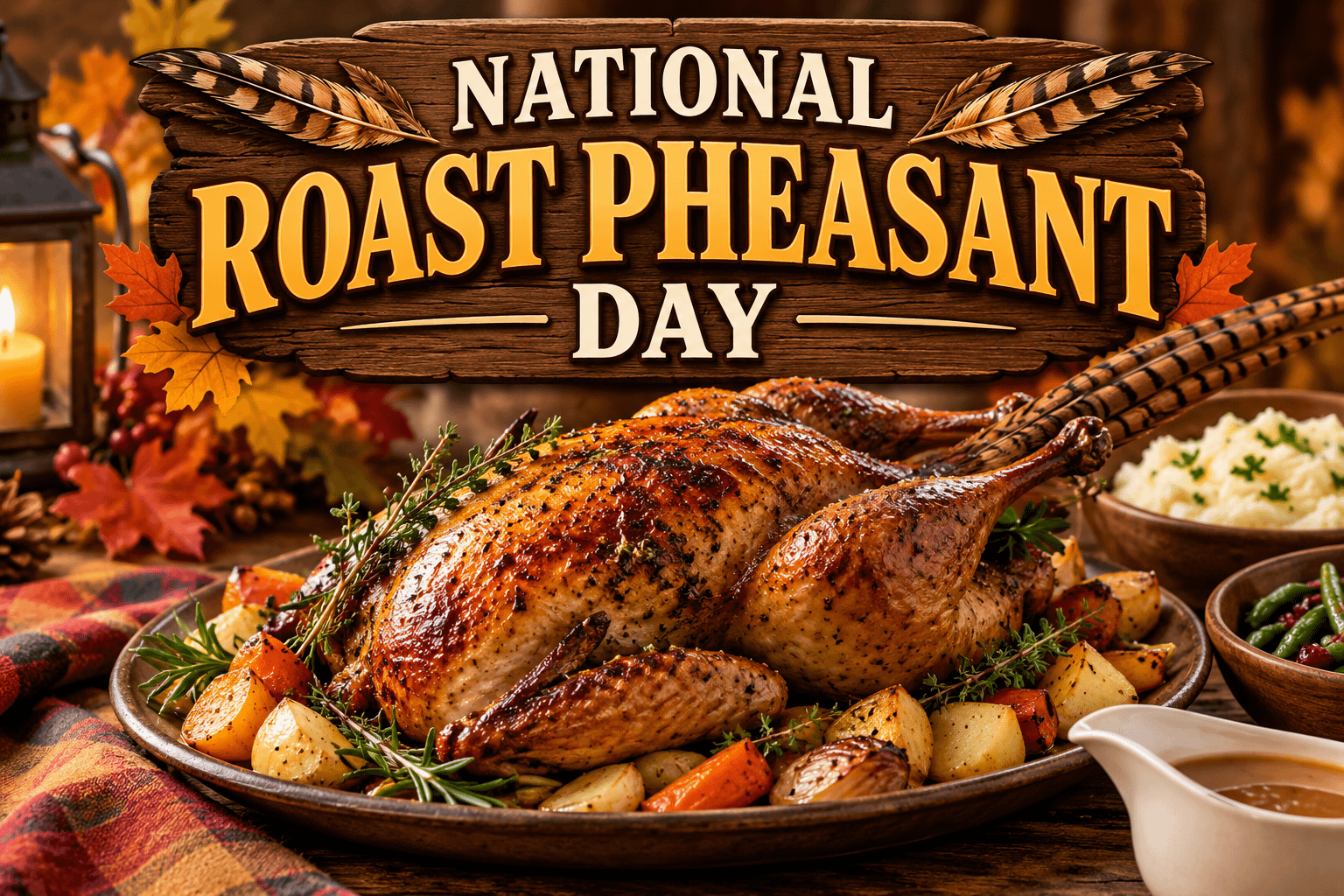
A roast pheasant dinner might include potatoes, carrots, onions, mushrooms, green beans, stuffing, gravy, cranberry sauce, roasted squash, or freshly baked bread.
For an autumn meal, consider serving roast pheasant alongside roasted root vegetables.
Carrots, parsnips, potatoes, sweet potatoes, and onions can be seasoned with herbs and roasted until caramelized around the edges.
You could also prepare mashed potatoes and gravy for a classic comfort-food approach.
If you want something lighter, serve pheasant with roasted vegetables and a fresh seasonal salad.
The side dishes don’t need to compete with the bird. They should complement it.
Simple Roast Pheasant Recipe
If National Roast Pheasant Day inspires you to cook pheasant for the first time, keeping the preparation straightforward is a good place to begin.
Ingredients
- 1 whole pheasant
- 2 tablespoons softened butter or olive oil
- 2–3 cloves garlic, minced
- 1 small onion, quartered
- Fresh rosemary
- Fresh thyme
- Salt
- Black pepper
- 1 lemon
- 1 cup chicken or poultry stock
- Carrots and potatoes, optional
Directions
Preheat your oven to 375°F.
Pat the pheasant dry with paper towels.
Rub the outside of the bird with softened butter or olive oil. Season generously with salt, black pepper, garlic, rosemary, and thyme.
Place the quartered onion and a few pieces of lemon inside the cavity.
Arrange the pheasant in a roasting pan. If desired, surround it with chopped carrots, potatoes, and additional onions.
Pour the stock into the bottom of the roasting pan.
Roast until the bird reaches a safe internal temperature. The USDA recommends cooking poultry to a minimum internal temperature of 165°F, measured with a food thermometer in the appropriate thickest portions of the bird.
Because pheasant is lean and birds can vary considerably in size, relying on temperature rather than cooking time alone is especially important.
Once cooked, remove the pheasant from the oven and allow it to rest briefly before carving.
Use the flavorful pan juices to make gravy or spoon them lightly over the meat.
Turn the Pan Drippings Into Gravy
Don’t throw away those drippings.
They may be one of the best parts of your roast.
After removing the pheasant, transfer the pan juices to a saucepan if necessary. Add a little stock and bring the mixture to a gentle simmer.
You can thicken the gravy using flour or cornstarch.
Season with salt, pepper, herbs, or a small amount of butter until you achieve the flavor you want.
Pour the finished gravy over sliced pheasant and mashed potatoes.
Suddenly, you have the kind of hearty dinner that feels perfect after spending a cold autumn afternoon outside.
The Connection Between Pheasant and Hunting Traditions
For many people, pheasant isn’t simply another ingredient purchased for dinner.
It represents a hunting tradition.
Pheasant hunting has long been associated with rural communities and agricultural landscapes in parts of the United States. Hunters may spend hours walking fields and grasslands with friends, relatives, and hunting dogs.
For some families, these outings become traditions passed between generations.
Parents teach children.
Grandparents tell stories about hunts from decades earlier.
Friends gather every season.
And eventually everyone returns home with another collection of memories.
Preparing and eating the harvested game can be part of that experience.
For people who hunt for food, cooking the bird is the final stage of a process that begins outdoors.
National Roast Pheasant Day can therefore be about more than what’s sitting on the dinner plate.
It can also recognize traditions surrounding food and the outdoors.
Respecting the Food on Your Table
Game meat can also encourage people to think differently about where food comes from.
Most meat purchased at a grocery store arrives cleaned, packaged, and ready to cook. It is easy to become disconnected from the fact that food has an origin long before it reaches the supermarket shelf.
Hunters who harvest game experience that connection much more directly.
Responsible hunting involves regulations, seasons, licensing requirements, conservation programs, and ethical responsibilities.
Whether you personally hunt or simply purchase farm-raised pheasant, the occasion can be a reminder not to waste food and to appreciate what goes into producing a meal.
Pheasant as a Special-Occasion Dinner
You don’t have to be a hunter to enjoy roast pheasant.
Farm-raised pheasant can sometimes be purchased from specialty meat markets, farms, butchers, or online meat suppliers.
That makes National Roast Pheasant Day an opportunity for adventurous home cooks to prepare something outside their normal routine.
Instead of waiting for Thanksgiving to roast a bird, invite a few friends or relatives over and make pheasant the centerpiece of your dinner.
Set the table.
Prepare a few comforting side dishes.
Bake some bread.
Make gravy from the roasting juices.
Finish dinner with apple pie, bread pudding, pumpkin pie, or another seasonal dessert.
Food has an incredible ability to turn an ordinary evening into a memory.
Sometimes all it takes is preparing something you normally wouldn’t.
Tips for Cooking Pheasant
The biggest challenge when preparing pheasant is avoiding dry meat.
Because it is lean, pheasant generally benefits from careful temperature monitoring.
Use a meat thermometer instead of guessing.
Adding moisture to the roasting pan can also help create flavorful drippings for gravy, while butter or oil provides additional richness.
Allowing the bird to rest after cooking is another important step.
And remember that wild birds can differ from farm-raised birds. Age, size, activity, and diet can all influence texture and flavor.
When preparing wild game, proper field handling and food-safety practices are important as well.
Ways to Celebrate National Roast Pheasant Day
The most obvious celebration is also the best:
Cook roast pheasant.
But there are several ways to make the occasion more meaningful.
Try preparing pheasant for the first time. Invite someone who has never tasted it before. Ask an experienced hunter or cook to share their favorite recipe. Prepare traditional side dishes that your family has enjoyed for generations.
You could even turn dinner into a fall gathering.
Serve roast pheasant with mashed potatoes, gravy, roasted vegetables, warm bread, and apple pie. Gather everyone around the table and enjoy a meal without rushing.
If you have hunters in your family, ask them about their favorite hunting memories.
You may discover stories you’ve never heard before.
A Meal That Connects Generations
Some recipes survive because they are convenient.
Others survive because they mean something.
Roast pheasant belongs to the second category for many families.
A grandfather may have prepared it after hunting season.
A father may have taught his children how to cook it.
Friends may have gathered around the same table every autumn for decades.
Eventually, the recipe becomes more than instructions written on a piece of paper.
It becomes part of someone’s story.
And that is one of the most powerful things about food.
The aroma coming from an oven can bring back memories of people, places, and moments from years ago.
Sometimes we don’t realize how meaningful those meals were until much later.
Celebrating Traditional Foods
Modern cooking constantly introduces us to new flavors, techniques, and trends. That creativity is wonderful, but there is also value in remembering traditional dishes.
National food days give us an excuse to rediscover them.
Roast pheasant may never become as common as roast chicken or Thanksgiving turkey, and perhaps that is part of what makes it interesting.
It feels different.
It feels like something prepared intentionally.
It encourages us to slow down, cook a complete meal, gather around a table, and appreciate a culinary tradition that has survived across generations.
Final Thoughts
National Roast Pheasant Day celebrates more than one particular way of cooking a bird.
It celebrates tradition, seasonal food, outdoor heritage, family recipes, and the simple pleasure of gathering around a table for a meal prepared with care.
Whether pheasant has been part of your family dinners for decades or you’ve never tasted it before, the occasion offers an opportunity to try something different.
Roast it with herbs.
Add potatoes, carrots, and onions.
Make gravy from the pan drippings.
Invite family or friends to dinner.
Then sit down together and enjoy the experience.
Because sometimes the best meals aren’t necessarily the most complicated ones.
They’re the meals that encourage us to slow down, share stories, appreciate where our food comes from, and spend a little more time around the table with the people who matter.
Have you ever eaten roast pheasant, and if you have, what is your favorite way to prepare it?