
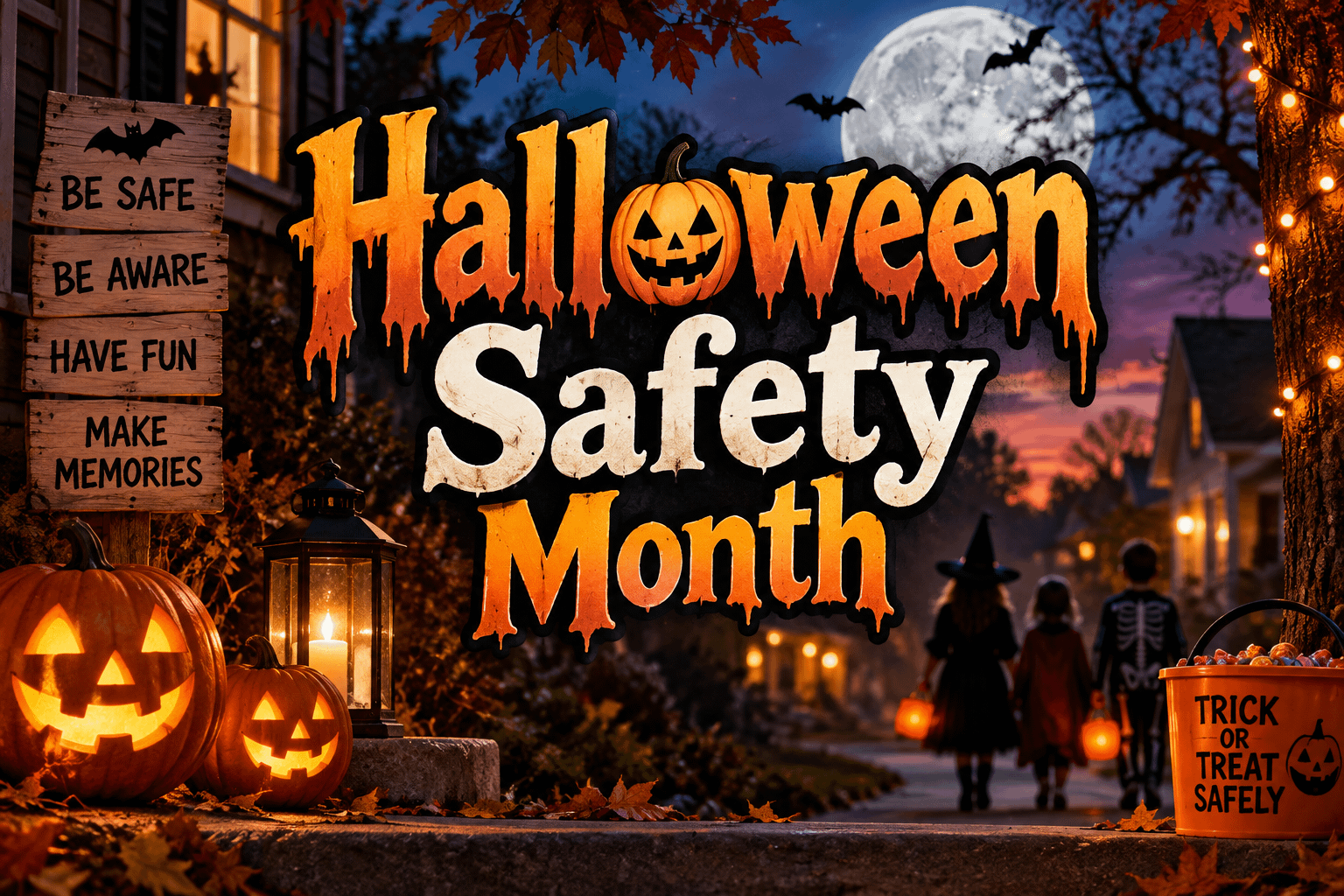
October brings cooler evenings, colorful leaves, pumpkins on porches, creative costumes, haunted attractions, and plenty of candy. For children and adults alike, Halloween can be one of the most exciting celebrations of the year.
But Halloween also brings some situations that require extra attention. Children are walking through neighborhoods after dark, costumes can make it harder to see or move, candles and decorations can create fire hazards, and families may be visiting homes and neighborhoods they do not normally frequent.
That is why Halloween Safety Month is a good opportunity to remind everyone that a few simple precautions can help make Halloween both fun and safe.
The goal isn’t to take the excitement out of Halloween. It is to prepare ahead so children, parents, homeowners, drivers, and pets can all enjoy the celebration with fewer unnecessary risks.
Make Costumes Easy to See
A great Halloween costume should be fun, but visibility should also be considered.
Many popular costumes use black or other dark colors, which can make children difficult for motorists to see at night. Reflective tape, glow sticks, light-up accessories, or small flashlights can help make trick-or-treaters more noticeable.
Costumes should also fit properly. Clothing that drags along the ground can become a tripping hazard, particularly when children are walking up steps, crossing streets, or moving through crowded sidewalks.
Shoes matter, too. Costume footwear may look impressive, but comfortable, properly fitting shoes are usually a better choice for children who will be walking for an extended period.
Masks should not obstruct a child’s vision. If a mask makes it difficult to see clearly to the sides or toward the ground, face paint or makeup may be a safer alternative.
When using face paint, cosmetics, or adhesives, follow the product instructions and use products intended for skin.
Make Trick-or-Treaters More Visible
Halloween often means being outside after sunset.
Give children flashlights, glow sticks, reflective wristbands, or other visible accessories. Reflective material can also be added to costumes, shoes, backpacks, or candy bags.
Children should be reminded that being able to see a car doesn’t necessarily mean the driver can easily see them.
Visibility becomes especially important when children are crossing streets, walking near driveways, or moving between parked vehicles.
Teach Safe Street Crossing
Excited children can become distracted when they see decorated houses, friends, or the promise of more candy across the street.
Before trick-or-treating begins, remind children about basic pedestrian safety.
Cross streets at intersections or designated crossings whenever possible. Look left, right, and left again before crossing. Keep looking while crossing rather than assuming traffic will remain clear.
Avoid running unexpectedly into the roadway or crossing between parked cars.
Phones can also become a distraction. Children and adults should pay attention to their surroundings rather than staring at screens while crossing streets.
A few extra seconds of caution can make a significant difference.
Younger Children Should Have Adult Supervision
Young children should generally trick-or-treat with a responsible adult.
Parents and caregivers can help children safely cross streets, navigate unfamiliar areas, avoid hazards, and keep the group together.
Before leaving home, families can also establish a route.
Knowing where you are going can prevent children from wandering too far or ending up in areas where sidewalks, lighting, or traffic conditions are less suitable.
Older children who are permitted to trick-or-treat without an adult should have clear rules. Parents should know who they are with, where they plan to go, and when they are expected home.
Children should also have a reliable way to contact a parent or trusted adult if plans change or they need help.
Drivers Need to Be Extra Alert
Halloween safety isn’t only the responsibility of trick-or-treaters.
Drivers play an important role.
Neighborhoods that normally have very little pedestrian traffic may suddenly be filled with children and families. Drivers should slow down and remain particularly alert around residential streets, intersections, crosswalks, driveways, and parked cars.
Expect the unexpected.
A child may become excited, distracted, or separated from a group and suddenly enter the street.
Avoid distractions behind the wheel and give yourself additional time to react.
If you are attending a Halloween party where alcohol will be served, plan transportation before the celebration begins. Use a designated sober driver or another safe transportation option.
Check Candy Before Children Eat It
For many children, the candy is the highlight of Halloween.
Parents or caregivers should look through children’s treats before they begin eating them.
Check for damaged or unusually opened packaging and anything that appears questionable. Homemade treats from unknown sources may also deserve additional consideration.
Families managing food allergies need to be particularly careful. Candy and other treats may contain common allergens or may have been manufactured in facilities where cross-contact is possible.
Read labels when available.
Parents of younger children should also watch for treats that may present choking hazards.
Consider Children With Food Allergies
Halloween can be more complicated for children living with food allergies.
Families handing out treats can help make Halloween more inclusive by offering some non-food choices alongside traditional candy.
Ideas might include stickers, pencils, temporary tattoos, small toys, glow sticks, or other inexpensive Halloween-themed items.
Non-food options don’t have to replace candy. They simply provide another choice for children who cannot safely eat certain treats.
A small gesture can help more children participate in the fun.
Be Careful With Candles and Decorations
Halloween decorations create atmosphere, but some can also introduce fire and tripping hazards.
Traditional candles inside pumpkins should be placed where costumes, decorations, children, and pets cannot easily come into contact with the flame.
Battery-powered candles or LED lights can provide a similar glowing effect without an open flame.
Keep exits, walkways, stairs, and sidewalks clear.
Extension cords should be positioned so people are unlikely to trip over them, and outdoor electrical decorations should be appropriate for outdoor use.
Before guests or trick-or-treaters arrive, walk from the sidewalk to your front door and look for anything that could cause someone to stumble.
Keep Your Property Safe for Visitors
If you are handing out candy, remember that many people may approach your home in low-light conditions.
Turn on exterior lights.
Clear leaves, garden hoses, toys, decorations, tools, and other objects from walkways and steps.
Repair or clearly avoid unstable surfaces whenever possible.
If your walkway is wet or slippery, take appropriate precautions.
You may know exactly where every step or uneven section of pavement is located, but a child wearing a costume and walking in the dark does not.
Don’t Forget About Pets
Halloween can be stressful for animals.
Doorbells may ring repeatedly. Strangers wearing masks and costumes may approach the house. Children may shout outside. Doors may be opened frequently.
Even normally calm pets can become frightened or overstimulated.
Consider keeping pets in a quiet, secure area away from the front door while trick-or-treaters are visiting.
Make sure pets have identification in case one accidentally escapes.
Candy should also be kept away from animals. Chocolate and certain other ingredients commonly found in Halloween treats can be dangerous to pets.
Wrappers and candy bags can create additional problems if swallowed.
Halloween is for people; pets don’t need to share the candy.
Plan for Halloween Parties
Adults celebrating Halloween should think about safety as well.
If alcohol is part of the celebration, decide ahead of time how everyone will get home safely.
Hosts can provide water, food, and nonalcoholic drink options.
Guests should never feel pressured to drink, and anyone who has been drinking should avoid driving.
If you’re hosting a party at home, make sure entrances, stairs, and outdoor areas are adequately lit and free from hazards.
Responsible planning doesn’t make a party less enjoyable. It helps everyone get home safely afterward.
Think About Fire Safety
October is also an appropriate time to review household fire safety.
Check smoke alarms and make sure everyone in the household understands what to do if an alarm sounds.
Keep decorations away from fireplaces, heaters, candles, bulbs, and other heat sources.
Some Halloween decorations are made from materials that can burn quickly, so open flames require particular caution.
When possible, choosing flameless decorations reduces unnecessary risk.
Create a Family Halloween Plan
One of the easiest ways to improve Halloween safety is simply to talk about expectations before leaving the house.
Discuss where you’re going, how long you’ll be out, where streets will be crossed, what to do if someone becomes separated from the group, and who children should contact if they need help.
Older children should understand their boundaries and curfew.
Parents can also establish a meeting location in case a group becomes separated.
Planning may only take a few minutes, but those few minutes can prevent confusion later.
Remember That Every Child Experiences Halloween Differently
Halloween can be overwhelming for some children.
Loud noises, flashing lights, crowds, masks, unfamiliar people, and frightening decorations may be difficult for children with sensory sensitivities or other needs.
Some children may not say “trick or treat.”
Some may not make eye contact.
Some may be uncomfortable wearing a costume.
Some may need additional time to choose a treat.
Others may decide they don’t want to approach the door at all.
Patience and kindness can make Halloween more welcoming.
There isn’t one “correct” way for a child to participate.
Safety Doesn’t Have to Take Away the Fun
Halloween should be filled with costumes, laughter, imagination, decorations, friends, and maybe a little more candy than usual.
Safety precautions don’t have to turn Halloween into a night of rules.
Most precautions are simple: slow down, pay attention, improve visibility, supervise children appropriately, check treats, keep walkways clear, protect pets, and make responsible transportation choices.
Halloween Safety Month gives families and communities an opportunity to think about these things before Halloween night arrives.
Preparation allows everyone to concentrate on what Halloween is supposed to be about—having fun and making memories.
A Safer Halloween Starts With All of Us
Parents cannot control every situation their children encounter, and drivers cannot predict every movement of every pedestrian.
But everyone can contribute.
Parents can teach safe habits.
Children can follow agreed-upon rules.
Drivers can slow down.
Homeowners can provide well-lit, clear walkways.
Party hosts can encourage responsible choices.
Neighbors can look out for one another.
And all of us can show a little extra patience on a busy Halloween night.
Sometimes safety comes down to small decisions made at the right moment.
Turn on the porch light.
Put away the phone while crossing the street.
Add reflective tape to a costume.
Replace an open flame with an LED candle.
Slow down when driving through a neighborhood.
Keep the dog safely inside.
Check a child’s candy before they eat it.
None of these actions takes much effort, but together they can help create a safer celebration.
This Halloween, enjoy the costumes, pumpkins, spooky decorations, parties, laughter, and candy. Make wonderful memories with the people you care about while remembering that the best Halloween is one where everyone makes it home safely.
What is one Halloween safety rule you always make sure your family follows?
Leave a ReplyCancel reply