
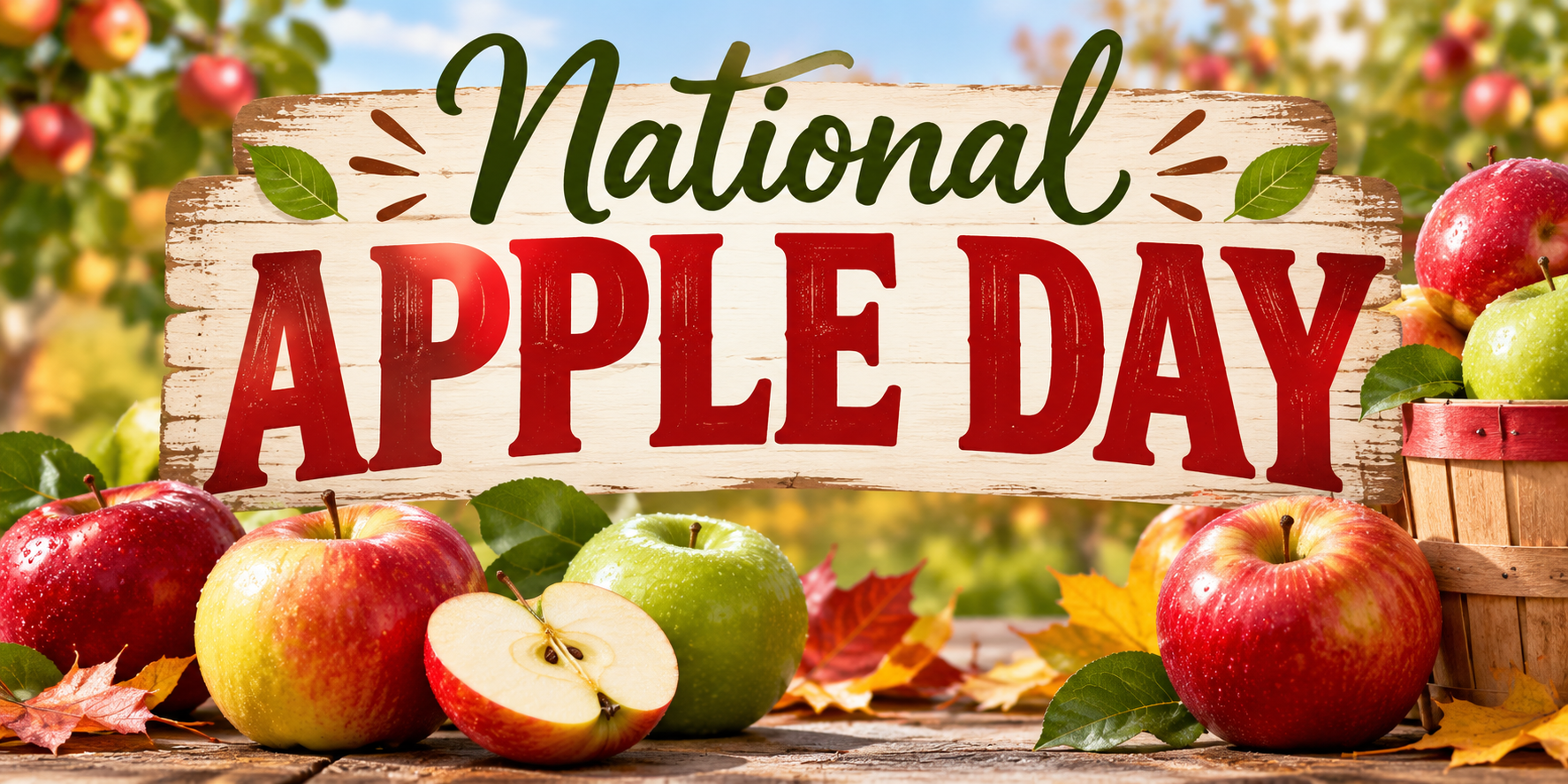
Every year on October 21, National Apple Day gives us a reason to celebrate one of the most familiar, versatile, and beloved fruits around. From a crisp apple picked straight from the tree to warm apple pie coming out of the oven, apples have a special place in our kitchens, traditions, and memories.
Apples are so common that it can be easy to overlook just how remarkable they are. There are thousands of apple varieties around the world, ranging from extremely sweet to wonderfully tart. Some are perfect for eating fresh, while others shine when baked, cooked, pressed into cider, or transformed into sauces and desserts.
National Apple Day is an opportunity to appreciate all of them.
Whether you celebrate by visiting an orchard, baking an apple dessert, trying a variety you have never tasted before, or simply grabbing an apple for an afternoon snack, October 21 is a day to enjoy everything this classic fruit has to offer.
What Is National Apple Day?
National Apple Day is celebrated annually on October 21.
The observance originated in the United Kingdom in 1990, when the environmental organization Common Ground created Apple Day as a celebration of apples, orchards, local communities, and the diversity of the countryside.
While the apple was at the center of the celebration, the idea behind the day was bigger than a single fruit. Apples represented the importance of protecting local varieties, traditional orchards, community knowledge, and agricultural diversity.
Over the years, Apple Day celebrations expanded, and the occasion became associated with farmers markets, orchard events, apple tastings, cider making, cooking demonstrations, games, and community gatherings.
Today, people can celebrate National Apple Day wherever they live.
And fortunately, celebrating is easy.
All you really need is an apple.
The Incredible Variety of Apples
Walk through the produce department of almost any grocery store and you will probably see several varieties of apples.
But those familiar varieties represent only a tiny portion of the apples that exist.
Apples come in an impressive range of colors, textures, flavors, shapes, and sizes.
Some are intensely sweet. Others are noticeably tart. Some are extremely crisp, while others have softer flesh that makes them excellent for sauces or baking.
Popular apple varieties include:
- Gala – Mild, sweet, and great for snacking.
- Fuji – Very sweet, juicy, and crisp.
- Honeycrisp – Famous for its crunchy texture and balanced sweetness.
- Granny Smith – Bright green, firm, and wonderfully tart.
- Red Delicious – One of America’s most recognizable apple varieties.
- Golden Delicious – Sweet, mellow, and useful for both eating and cooking.
- Pink Lady – Crisp with a combination of sweet and tart flavors.
- Braeburn – Firm and flavorful with sweet and slightly spicy notes.
- McIntosh – Juicy and aromatic with a softer texture.
- Jonagold – A cross between Jonathan and Golden Delicious apples with a sweet-tart flavor.
Trying several different varieties is one of the easiest ways to celebrate National Apple Day.
You may discover a new favorite.
Apples Have a Long History
Humans have been enjoying apples for thousands of years.
The ancestors of today’s domesticated apples are believed to have originated in Central Asia. Over centuries, apples traveled along trade routes into Europe and eventually throughout much of the world.
As people cultivated apple trees, they selected fruit with desirable characteristics such as sweetness, size, texture, storage ability, and appearance.
That helped produce the tremendous variety of apples we have today.
European settlers later brought apple seeds and trees to North America, where orchards became increasingly common.
Apples were valuable because they could be eaten fresh, cooked, dried, stored, or pressed into cider.
For families living before modern refrigeration and supermarkets, having fruit that could be preserved or stored for long periods was extremely useful.
Johnny Appleseed and American Apple Culture
Few people are more closely associated with apples in American folklore than Johnny Appleseed.
His real name was John Chapman, and unlike the cartoon image of a man randomly scattering apple seeds everywhere he traveled, Chapman established nurseries and planted apple trees across parts of the American frontier during the late 1700s and early 1800s.
His unusual lifestyle eventually transformed him into a legendary figure.
Generations of American schoolchildren have heard stories about Johnny Appleseed wandering across the country planting apple trees.
While some details became exaggerated over time, Chapman was a real person whose work helped spread apple cultivation across several states.
His story demonstrates just how deeply apples became connected with American culture.
Why Apples Are So Popular
There are plenty of delicious fruits available, but apples have several qualities that have helped them remain popular.
First, they are convenient.
An apple doesn’t require complicated preparation. Wash it, take a bite, and you have a quick snack.
Apples are also portable.
You can put one in a lunchbox, backpack, or bag and take it almost anywhere.
Another advantage is versatility.
Apples work in sweet dishes, savory recipes, beverages, snacks, and baked goods.
You can eat them:
fresh, baked, sautéed, dried, sliced, mashed, roasted, or cooked.
They can become apple butter, applesauce, cider, juice, pie filling, cake, muffins, donuts, pancakes, salads, and countless other foods.
Few fruits can move from breakfast to dinner to dessert as easily as an apple.
Apples and Nutrition
National Apple Day can also be a reminder that simple foods can be nutritious.
A medium apple provides dietary fiber along with vitamin C and various plant compounds. Apples also naturally contain water, which contributes to their refreshing quality.
Eating the peel is especially helpful if you want to get more of the apple’s fiber.
Of course, an apple covered in caramel and candy toppings is very different nutritionally from a fresh apple. That doesn’t mean you can’t enjoy caramel apples on National Apple Day—it simply means preparation matters.
There is room for both.
Enjoy a fresh apple as a snack and save room for a slice of apple pie later.
National Apple Day only comes once a year.
The Famous Saying About Apples
Almost everyone has heard the expression:
“An apple a day keeps the doctor away.”
The phrase shouldn’t be interpreted literally as medical advice. Eating an apple every day cannot guarantee that someone will avoid illness or medical care.
Instead, the saying became a memorable way of connecting fruit with healthy eating.
The expression has survived for generations because it is simple and catchy.
And while apples aren’t magical medicine, including fruits and vegetables as part of a balanced diet is certainly a worthwhile habit.
Apples and Fall Go Perfectly Together
There is something about apples that immediately feels like fall.
Maybe it is because apple harvest season overlaps with cooler temperatures, changing leaves, pumpkin patches, and the beginning of the holiday season.
Apple orchards become destinations for families and friends.
People spend afternoons picking apples, drinking cider, eating apple cider donuts, taking hayrides, navigating corn mazes, and enjoying the autumn weather.
For many people, visiting an apple orchard isn’t simply about bringing home fruit.
It is about creating memories.
A bag filled with freshly picked apples becomes a reminder of an afternoon spent outdoors with people you care about.
That may be one reason National Apple Day feels perfectly placed on October 21.
Apple Pie: An American Favorite
You cannot talk about apples without mentioning apple pie.
Apple pie has become so closely associated with American culture that the expression “as American as apple pie” has been used for generations.
Interestingly, apple pie existed long before the United States.
European versions of apple pies and pastries were being prepared centuries before America became a country.
But Americans embraced apple pie so enthusiastically that it eventually became part of the country’s cultural identity.
Recipes vary widely.
Some people prefer a traditional double-crust apple pie.
Others love Dutch apple pie topped with buttery crumbs.
You can add cinnamon, nutmeg, brown sugar, caramel, walnuts, pecans, raisins, or even cheddar cheese depending on your family’s traditions.
And then comes another important question:
Ice cream or no ice cream?
A warm slice of apple pie topped with vanilla ice cream is difficult to beat.
Delicious Foods You Can Make With Apples
If you have a bag of apples sitting in your kitchen on National Apple Day, you have plenty of possibilities.
Try making apple crisp with cinnamon and a crunchy oat topping.
Bake cinnamon apples and serve them warm.
Make homemade applesauce in a slow cooker.
Add thin apple slices to pancakes or French toast.
Bake apple muffins for breakfast.
Make apple cinnamon oatmeal.
Add apples to a fall salad with nuts and cheese.
Prepare pork chops with sautéed apples.
Make an apple butter spread for toast or biscuits.
Bake apple turnovers.
Make apple fritters.
Prepare caramel apples.
Bake an apple cinnamon cake.
Or keep things incredibly simple and slice an apple before dipping it into peanut butter.
Sometimes the easiest combinations are the best ones.
Apple Cider Is Another Fall Favorite
Apple cider deserves its own place in the National Apple Day celebration.
Fresh cider has a rich apple flavor that immediately brings autumn to mind.
You can drink it cold straight from the refrigerator or warm it on the stove with spices such as cinnamon, cloves, and nutmeg.
Hot spiced apple cider is especially comforting on a cold October evening.
The aroma alone can make your entire kitchen smell like fall.
Apple cider can also be used in cooking and baking.
It can add apple flavor to cakes, donuts, glazes, sauces, marinades, and other recipes.
Visit a Local Apple Orchard
One of the best ways to celebrate National Apple Day is by supporting a local orchard.
Depending on where you live and the growing season, October can still be an excellent time for apple picking.
Many orchards offer much more than fruit.
You may find cider tastings, bakeries, pumpkin patches, hayrides, farm animals, picnic areas, corn mazes, gift shops, and seasonal events.
Buying directly from growers can also introduce you to apple varieties you might never see at a major supermarket.
Ask the orchard staff what they recommend.
Tell them whether you want an apple for eating, baking, applesauce, cider, or pie.
They may point you toward something you have never tried before.
Have an Apple Taste Test
Here’s another fun National Apple Day activity.
Buy several different apple varieties and conduct your own taste test.
Slice each apple and place the pieces on separate plates.
Try them without looking at the labels.
Pay attention to sweetness, tartness, juiciness, crispness, aroma, and texture.
Then rank your favorites.
You might be surprised.
The apple you normally buy may not be the one you like best when compared directly with several other varieties.
This can also be a fun activity for children.
It introduces them to different foods while showing them that even something as simple as an apple can have tremendous variety.
Bake Something With Someone You Love
Food has a wonderful ability to bring people together.
National Apple Day provides a perfect excuse to get into the kitchen with family or friends.
Pull out an old family apple pie recipe.
Teach your children how to make apple crisp.
Invite someone over for warm cider and dessert.
Or experiment with a completely new recipe.
Years from now, people may not remember every ingredient you used.
But they might remember standing around the kitchen together, laughing, talking, and waiting for the smell of cinnamon apples to fill the house.
Those moments are often more valuable than the finished dessert.
Apples Are Connected to Memories
Certain foods can transport us through time.
The smell of an apple pie might remind someone of their grandmother’s kitchen.
Apple cider might bring back memories of visiting a pumpkin patch as a child.
Caramel apples might remind someone of a county fair.
Apple picking might remind parents of taking their children to an orchard when they were young.
Food becomes connected with people, places, seasons, and moments.
That is part of what makes celebrations like National Apple Day meaningful.
They encourage us to slow down long enough to appreciate ordinary things.
How to Celebrate National Apple Day
There is no complicated formula for celebrating October 21.
Eat your favorite apple.
Try a variety you have never tasted.
Visit an orchard or farmers market.
Bake an apple pie or crisp.
Drink fresh apple cider.
Make homemade applesauce.
Prepare caramel apples with your family.
Learn about historic apple varieties.
Support a local apple farmer.
Share apples with friends, coworkers, neighbors, or family.
You could even make National Apple Day an annual tradition.
Every October 21, try a different apple recipe or visit an orchard with someone you care about.
Small traditions can eventually become meaningful memories.
Don’t Forget About Imperfect Apples
National Apple Day is also a good opportunity to think about food waste.
An apple does not need to look perfect to taste delicious.
Slightly bruised or oddly shaped apples can often still be used in recipes.
If apples are becoming too soft for your preferred fresh-eating texture, consider turning them into applesauce, apple butter, smoothies, baked apples, muffins, cakes, or other cooked dishes.
Finding ways to use food before throwing it away can save money while reducing waste.
And sometimes those aging apples sitting on the counter become the perfect excuse to bake something delicious.
Celebrate the Farmers Behind the Apples
Every apple represents agricultural work.
Someone planted and cared for the trees, managed the orchard, monitored the crop, harvested the fruit, sorted it, packed it, transported it, and helped get it to consumers.
Growing apples requires patience.
Apple trees don’t instantly produce a harvest after being planted. Orchards require years of planning and ongoing care.
National Apple Day is therefore more than a celebration of fruit.
It can also be a day to appreciate farmers and agricultural communities.
When possible, consider buying apples directly from local growers, farm stands, farmers markets, or orchards.
A Simple Fruit Worth Celebrating
Sometimes the foods we encounter every day are the easiest ones to take for granted.
Apples aren’t rare.
They aren’t exotic.
Most of us have probably eaten hundreds—maybe thousands—during our lives.
Yet that familiarity is exactly what makes them special.
Apples have been packed into school lunches, baked into holiday desserts, sliced for children’s snacks, pressed into cider, picked during family outings, and served around kitchen tables for generations.
They have traveled through history alongside us.
And on October 21, they get their own day.
Final Thoughts on National Apple Day
National Apple Day on October 21 is a celebration of something wonderfully simple.
The apple.
Sweet or tart.
Red, green, yellow, or somewhere in between.
Fresh from the refrigerator or warm from the oven.
Apples remind us that some of life’s most enjoyable things don’t need to be complicated.
So grab your favorite variety. Visit a local orchard if you can. Bake an apple dessert. Pour yourself a glass of cider. Try an apple you have never tasted before.
Better yet, share one with someone you care about.
Because National Apple Day isn’t only about celebrating a fruit.
It is also about appreciating the farms, traditions, recipes, memories, and people that have made the apple part of everyday life for generations.
Happy National Apple Day!




Leave a ReplyCancel reply