
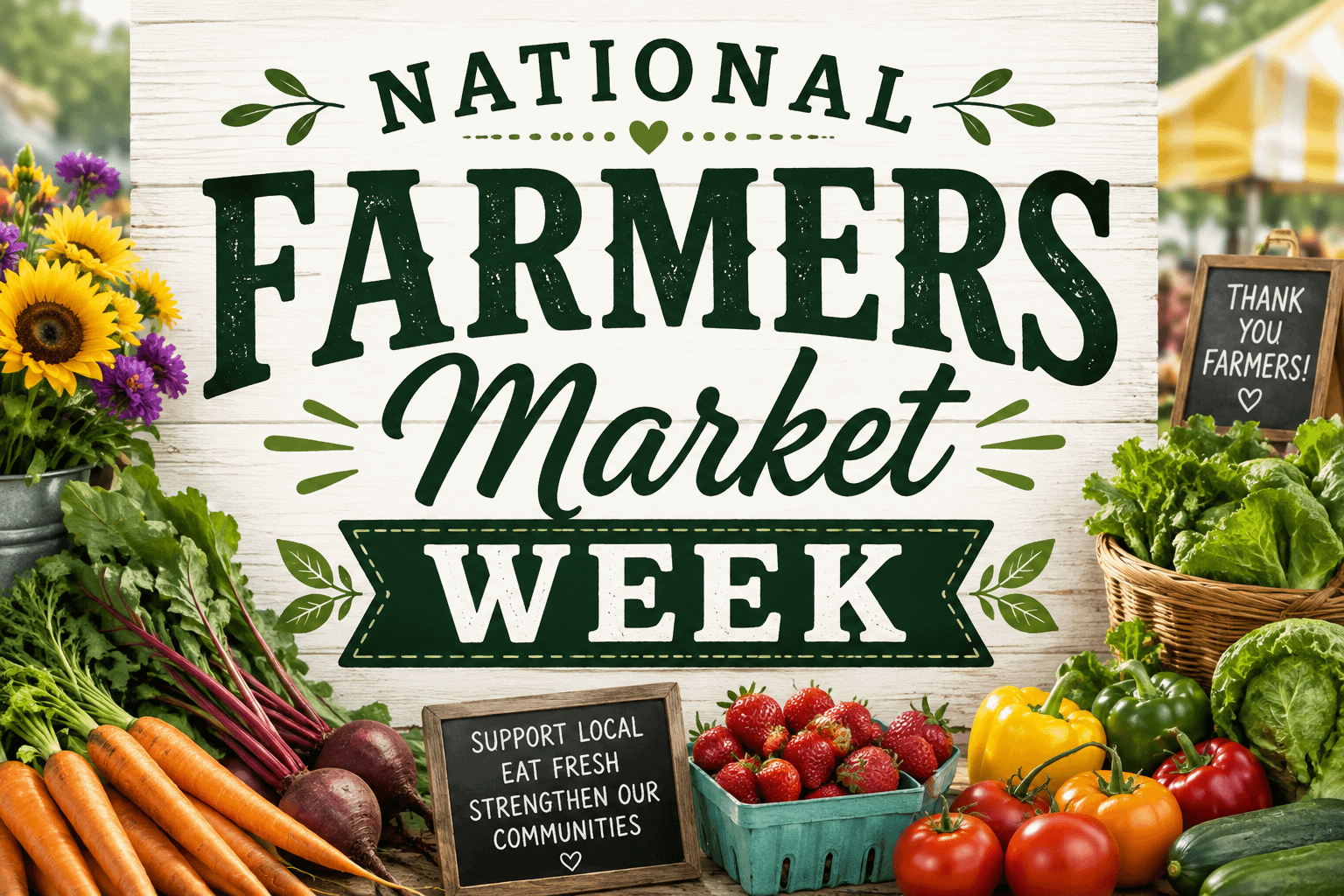
Supporting Local Farmers, Building Stronger Communities, and Celebrating Fresh Food
Every August, communities across the United States celebrate National Farmers Market Week, a nationwide observance that shines a spotlight on the farmers, ranchers, artisans, and small businesses that bring fresh, locally produced food directly to consumers. It’s a week to recognize the importance of buying local, strengthening community connections, and appreciating the people who work tirelessly to grow the food that nourishes our families.
While grocery stores offer convenience, farmers markets provide something much more meaningful—a chance to meet the people behind your food, learn how it’s grown, and support your local economy with every purchase.
From colorful baskets of ripe peaches and juicy tomatoes to homemade breads, local honey, handcrafted soaps, fresh flowers, and artisan cheeses, farmers markets offer an experience that combines shopping, education, and community all in one place.
Whether you’re a longtime market enthusiast or planning your very first visit, National Farmers Market Week is the perfect opportunity to discover why these local markets continue to thrive across America.
The History of National Farmers Market Week
National Farmers Market Week was officially established in 1999 by the United States Department of Agriculture (USDA). The goal was simple yet significant: recognize the growing importance of farmers markets and encourage Americans to support local agriculture.
Although the observance began in the late 1990s, farmers markets themselves have existed for centuries. Long before supermarkets became common, communities relied on local farmers to bring fresh fruits, vegetables, dairy products, meats, and baked goods directly into town.
Over time, industrial farming and nationwide distribution changed the way Americans purchased food. Grocery stores became the primary source for produce, often shipping fruits and vegetables hundreds or even thousands of miles before reaching store shelves.
In recent decades, however, consumers have rediscovered the value of shopping locally. Concerns about food quality, sustainability, nutrition, and supporting small businesses have fueled tremendous growth in farmers markets.
Today, thousands of farmers markets operate throughout the United States, serving millions of shoppers every year and providing an essential link between farms and communities.
Why Farmers Markets Continue to Grow
The popularity of farmers markets isn’t just a passing trend. More people are seeking healthier lifestyles and want to know where their food comes from.
Consumers increasingly value:
- Freshness
- Food transparency
- Supporting local businesses
- Sustainable farming
- Organic growing methods
- Seasonal eating
- Reduced environmental impact
- Personal relationships with producers
Shopping locally creates trust. Instead of wondering how long produce has been sitting in storage or traveling across the country, shoppers can often ask the farmer exactly when the vegetables were harvested.
That level of transparency is something few grocery stores can offer.
Freshness You Can Taste
One of the biggest reasons people love farmers markets is the incredible freshness.
Many fruits and vegetables are harvested the evening before—or even the morning of—the market.
Because produce doesn’t spend weeks in refrigerated trucks or warehouses, it retains:
- Better flavor
- Better texture
- More nutrients
- Longer shelf life once you bring it home
Imagine biting into a tomato that actually tastes like a tomato, or enjoying peaches so ripe that the juice runs down your hands.
Seasonal produce often includes:
Spring
- Strawberries
- Asparagus
- Lettuce
- Radishes
- Spinach
- Peas
Summer
- Tomatoes
- Corn
- Watermelon
- Blueberries
- Peaches
- Zucchini
- Bell peppers
- Cucumbers
Fall
- Apples
- Pumpkins
- Squash
- Sweet potatoes
- Pears
- Brussels sprouts
Winter (depending on climate)
- Citrus
- Kale
- Cabbage
- Carrots
- Turnips
- Winter greens
Eating seasonally allows you to enjoy produce when it’s naturally at its peak.
Supporting Local Farmers and Ranchers
Every dollar spent at a farmers market helps support local agricultural families.
Unlike large grocery chains, where profits are divided among distributors, wholesalers, shipping companies, and retailers, farmers markets allow producers to sell directly to customers.
This means farmers receive a larger share of every sale.
That additional income helps them:
- Purchase new equipment
- Hire local workers
- Improve farming practices
- Expand crop diversity
- Preserve farmland
- Continue family farming traditions
Many small farms operate on tight budgets. Community support often makes the difference between success and closure.
When you shop local, you’re investing in your neighbors.
Strengthening Local Economies
The impact of farmers markets extends well beyond individual farms.
Money spent at local markets tends to remain within the community.
Farmers purchase supplies from nearby businesses.
They hire local employees.
They pay local taxes.
Visitors often stop by nearby restaurants, coffee shops, bookstores, and boutiques after visiting the market.
Economists sometimes refer to this as the “local multiplier effect”—each dollar spent locally circulates through the community several times, benefiting many different businesses.
Supporting farmers markets helps create healthier local economies.
More Than Just Fresh Produce
Today’s farmers markets offer much more than fruits and vegetables.
Depending on your community, you may also discover:
- Farm-fresh eggs
- Grass-fed beef
- Free-range chicken
- Fresh seafood
- Artisan cheeses
- Local honey
- Homemade jams
- Fresh salsa
- Gourmet popcorn
- Fresh pasta
- Olive oils
- Herbs and spices
- Handmade chocolates
- Specialty coffee
- Fresh-roasted nuts
- Homemade pies
- Organic baked goods
- Flowers
- Houseplants
- Candles
- Pottery
- Woodworking
- Jewelry
- Handmade soaps
- Pet treats
Many markets become showcases for local creativity as well as agriculture.
Meeting the People Behind Your Food
Perhaps the greatest benefit of shopping at a farmers market is the personal connection.
Instead of anonymous labels, you meet the individuals who planted, harvested, baked, raised, or crafted the products.
You can ask questions like:
- Is this organically grown?
- What’s the sweetest melon today?
- How should I cook this squash?
- When were these eggs collected?
- Which tomatoes work best for salsa?
- How should I store fresh herbs?
Farmers often enjoy sharing recipes, gardening advice, and cooking tips.
These conversations create trust while helping shoppers make informed decisions.
Health Benefits of Shopping Local
A visit to the farmers market naturally encourages healthier eating.
The colorful displays inspire people to cook more meals at home while increasing fruit and vegetable consumption.
Many nutrition experts recommend filling half your plate with fruits and vegetables.
Farmers markets make that recommendation easier—and more enjoyable.
Fresh ingredients also encourage:
- Less processed food
- More home cooking
- Greater variety
- Seasonal recipes
- Better nutrition
Children who help select fruits and vegetables are often more willing to try new foods, making farmers markets a fun educational outing for families.
Environmental Benefits
Buying local food reduces the distance your food travels.
Many grocery store products travel hundreds or thousands of miles before reaching consumers.
Transportation requires fuel, refrigeration, packaging, and storage.
Local food generally means:
- Lower transportation emissions
- Less packaging waste
- Reduced food waste
- Smaller carbon footprint
- Fresher products
Many local farms also practice sustainable farming techniques that protect soil health, conserve water, and encourage biodiversity.
Supporting these farms benefits both the environment and future generations.
Farmers Markets Build Community
A farmers market is more than a place to shop—it’s often the heart of a community.
Weekend markets become gathering places where neighbors reconnect, children play, musicians perform, and local organizations share information.
Many markets feature:
- Live music
- Cooking demonstrations
- Children’s activities
- Local nonprofits
- Community gardens
- Health screenings
- Fitness demonstrations
- Seasonal festivals
These events create a welcoming atmosphere that encourages people to spend time together while supporting local businesses.
Tips for Making the Most of Your Visit
Whether you’re new to farmers markets or a regular visitor, these tips can help you get the best experience.
Arrive Early
The freshest and most popular items often sell out quickly.
Bring Reusable Shopping Bags
They’re stronger, environmentally friendly, and easier to carry.
Bring a Cooler
If purchasing meat, dairy, or seafood, a small cooler keeps items fresh during your trip.
Carry Small Bills
Many vendors now accept credit cards and mobile payments, but cash can speed up transactions.
Walk the Entire Market
Look around before making purchases so you can compare products, prices, and varieties.
Talk to Vendors
Ask about recipes, storage tips, and what’s currently in season.
Try Something New
Challenge yourself to buy one fruit, vegetable, or specialty product you’ve never tried before.
Ways to Celebrate National Farmers Market Week
Looking for ideas? Here are meaningful ways to participate.
- Visit a local farmers market.
- Buy ingredients for an entirely local dinner.
- Support a first-time vendor.
- Purchase flowers from a local grower.
- Introduce children to seasonal produce.
- Try a new recipe featuring local ingredients.
- Share photos of your favorite market finds.
- Invite family or friends to shop with you.
- Thank the farmers for their hard work.
- Encourage others to buy local.
Even small purchases make a meaningful difference.
Why Buying Local Matters More Than Ever
Small farms face many challenges, including rising operating costs, unpredictable weather, labor shortages, and increased competition.
Choosing to buy directly from local producers helps preserve farmland and keeps family farms operating for future generations.
Every purchase sends a powerful message that fresh food, sustainable farming, and community businesses matter.
Your shopping choices can help ensure that local agriculture remains a vibrant part of your community.
Looking Ahead
Farmers markets continue to evolve with changing consumer needs.
Many now offer:
- Online ordering
- Drive-through pickup
- SNAP and nutrition assistance benefits
- Community-supported agriculture (CSA) information
- Educational workshops
- Seasonal festivals
- Farm-to-table events
As interest in healthy living and sustainable food systems grows, farmers markets are likely to become even more important in communities across the country.
Final Thoughts
National Farmers Market Week is a celebration of the hardworking individuals who grow our food, care for the land, and strengthen our communities. Every visit to a farmers market is an opportunity to enjoy fresher food, support local families, reduce environmental impact, and experience the simple joy of connecting with the people behind your meals.
Whether you leave with a basket of sweet peaches, freshly baked bread, vibrant flowers, or handmade goods, you’re taking home more than quality products—you’re supporting dreams, preserving local agriculture, and investing in the future of your community.
This National Farmers Market Week, take time to explore your local market, meet a farmer, discover something new, and celebrate the incredible value that local food brings to our tables every day.
Read More Holidays & National Days
Leave a ReplyCancel reply