
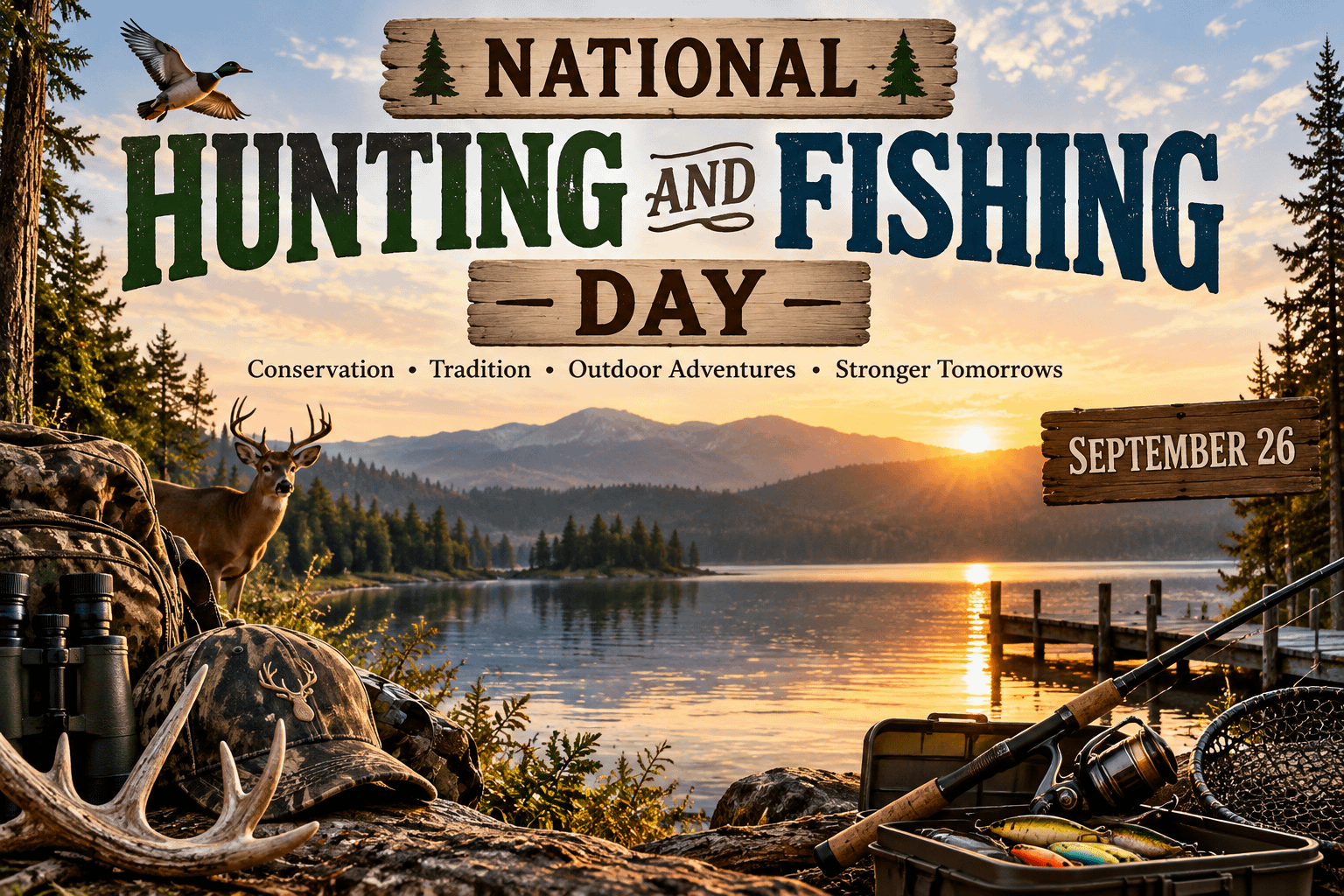
Every year, outdoor enthusiasts across the United States come together to recognize National Hunting and Fishing Day, a celebration of two traditions deeply connected to America’s history, wildlife, families, and wild places.
Observed annually on the fourth Saturday of September, National Hunting and Fishing Day is more than an opportunity to grab a fishing rod, head to the lake, walk through the woods, or spend a morning in a hunting blind. It is also a day to recognize conservation, responsible outdoor recreation, wildlife management, and the generations of people who have passed their appreciation for nature from parents to children and grandparents to grandchildren.
For some people, hunting and fishing provide food for the table. For others, they are recreational activities and opportunities to escape the noise of everyday life. And for many families, they are traditions built around memories that last far longer than any particular hunting or fishing trip.
National Hunting and Fishing Day celebrates all of those connections.
When Is National Hunting and Fishing Day?
National Hunting and Fishing Day is celebrated on the fourth Saturday in September each year.
In 2026, National Hunting and Fishing Day falls on Saturday, September 26.
The observance provides an opportunity to recognize America’s hunters, anglers, conservation organizations, wildlife professionals, and everyone who works to protect outdoor spaces and wildlife populations for future generations.
It can also serve as an invitation for someone who has never hunted or fished before to learn more about responsible participation in these activities.
The History of National Hunting and Fishing Day
Hunting and fishing existed in North America long before the United States became a nation. Indigenous peoples developed sophisticated hunting, fishing, land-management, and stewardship practices adapted to their environments.
As the country developed, hunting and fishing remained important sources of food and eventually became major forms of outdoor recreation.
By the late nineteenth and early twentieth centuries, Americans were also confronting the consequences of habitat destruction, unregulated harvest, commercial exploitation, and declining wildlife populations.
This helped fuel the development of the modern conservation movement.
Sportsmen and conservation advocates became increasingly involved in efforts to establish hunting seasons, fishing regulations, wildlife refuges, habitat protections, and systems for managing wildlife populations.
National Hunting and Fishing Day emerged from this broader conservation tradition.
In 1972, President Richard Nixon signed the first presidential proclamation recognizing National Hunting and Fishing Day. The observance was established to recognize the contributions of hunters and anglers to conservation and encourage responsible participation in outdoor recreation.
More than five decades later, the celebration continues.
Hunting and Fishing Are About More Than the Harvest
People unfamiliar with hunting or fishing sometimes assume the activities are entirely focused on catching a fish or harvesting an animal.
For many participants, however, the experience is much broader.
Fishing can mean sitting beside a quiet lake as the sun rises.
It can mean teaching a child how to tie a fishing knot.
It can mean spending hours talking with someone you love while waiting for a bite.
Hunting can mean waking before sunrise, hiking through difficult terrain, learning how to read animal signs, understanding wildlife behavior, and developing patience.
Sometimes you come home successful.
Sometimes you don’t.
Either way, the experience itself can become the memory.
That is part of what makes hunting and fishing meaningful traditions for so many people.
The Connection to Conservation
One of the most important themes of National Hunting and Fishing Day is conservation.
Hunters and anglers participate in a system in which licenses, permits, stamps, and certain excise taxes help support wildlife and habitat programs.
These funds can contribute to projects involving wildlife restoration, habitat management, fisheries, public access, research, and conservation education.
The connection is significant because healthy hunting and fishing opportunities depend upon healthy ecosystems.
Without clean rivers, thriving wetlands, forests, grasslands, lakes, and other habitats, wildlife populations cannot flourish.
Conservation therefore benefits much more than hunters and anglers.
Protected habitat can benefit birds, mammals, fish, insects, plants, and countless other species while preserving natural areas that hikers, photographers, campers, paddlers, and families can enjoy.
Fishing: Sometimes the Best Part Is Simply Being There
Fishing has a way of slowing life down.
There is something peaceful about standing beside a river or sitting near a lake with a fishing rod in your hands.
You cast.
You wait.
You watch the water.
For a while, emails, deadlines, social media, responsibilities, and everyday distractions can fade into the background.
You may hear birds in the distance.
You might watch sunlight move across the water.
You may spend time talking with someone beside you.
Or you may simply enjoy the silence.
Catching a fish can certainly make the day exciting, but sometimes the most memorable part of fishing has nothing to do with the fish.
It is the time spent outdoors.
Hunting Teaches Patience and Respect
Ethical hunting requires considerably more than simply entering the woods.
Hunters may spend significant time learning about wildlife, habitats, weather, safety, regulations, equipment, and responsible practices.
Patience becomes essential.
Wild animals do not operate according to a hunter’s schedule.
Hours can pass without an opportunity.
That experience can teach an important lesson: nature does not exist simply for our convenience.
Responsible hunting also requires respect for wildlife and adherence to regulations designed to manage populations and protect resources.
Knowing when not to take a shot can be just as important as knowing how to take one safely.
A Tradition Passed Between Generations
Some of the strongest hunting and fishing memories have little to do with trophies.
They are memories of people.
A father teaching his son how to cast.
A mother taking her daughter fishing for the first time.
A grandfather telling stories while sitting beside the water.
Friends gathering before sunrise for another hunting season.
A child proudly catching their first fish.
Someone learning how to clean and prepare a catch for dinner.
These moments become family stories.
Years later, someone may return to the same lake, river, forest, or hunting area and remember the person who first brought them there.
That is how traditions survive.
Someone takes the time to teach the next generation.
Teaching the Next Generation
National Hunting and Fishing Day is an excellent opportunity to introduce young people to outdoor recreation.
The emphasis should always begin with safety, responsibility, conservation, and respect for wildlife.
A child’s first fishing trip does not need to involve expensive equipment or an elaborate destination.
A simple afternoon at a local pond can become an unforgettable experience.
Teach them how to cast.
Show them how to respect wildlife.
Explain why fishing regulations exist.
Teach them to clean up fishing line and other trash.
Show them why protecting the water matters.
If introducing a young person to hunting, appropriate hunter education, close adult supervision, safe firearm practices, and compliance with all applicable state and local laws should come first.
The goal is not simply to create another hunter or angler.
It is to help create another person who understands why the outdoors deserves respect.
Responsible Fishing Matters
Fishing opportunities depend on healthy fish populations and clean aquatic ecosystems.
Responsible anglers can help protect those resources.
That means knowing local regulations before fishing, obtaining required licenses, respecting size and possession limits, properly disposing of fishing line, avoiding unnecessary damage to habitat, and following applicable rules regarding catch-and-release practices.
Regulations can vary significantly depending on location, species, season, and body of water, so anglers should always check current rules through their state wildlife agency before heading out.
Small actions matter.
Discarded fishing line, hooks, plastic containers, and other trash can injure wildlife and damage the places people came to enjoy.
A good rule for any outdoor activity is simple:
Leave the place better than you found it.
Responsible Hunting Matters Too
Ethical hunting depends on safety, preparation, knowledge, and respect.
Hunters should know the regulations governing the species and area they are hunting, understand legal seasons and limits, carry any required licenses or permits, and follow established firearm or archery safety practices.
Hunters should also identify their target and what lies beyond it before considering a shot.
Respect for private property is equally important.
Permission should be obtained when required, gates should be left as instructed, trash should never be abandoned, and landowners’ rules should be followed.
Responsible hunters understand that their actions can influence how the broader public views hunting.
Hunting and Fishing Can Bring People Together
Outdoor traditions have a remarkable ability to connect people.
Two people sitting beside a lake have plenty of time to talk.
A hunting camp can become a place where stories are shared year after year.
Friends who rarely see each other during the rest of the year may reconnect when fishing season arrives.
Families may organize annual trips around these traditions.
Those relationships can become more important than whatever is caught or harvested.
Years later, people may forget how many fish they caught during a particular trip.
They probably will not forget who was sitting beside them.
The Mental Reset of Spending Time Outdoors
Modern life rarely encourages silence.
Phones buzz.
Notifications appear.
Work follows us home.
News and social media seem endless.
Hunting and fishing can offer a temporary escape from that constant stimulation.
You have to pay attention to what is happening around you.
The movement of water.
Changes in the wind.
Animal tracks.
Bird calls.
Clouds gathering in the distance.
The sound of leaves beneath your feet.
Instead of constantly looking at a screen, you begin observing your surroundings.
Even when nothing is caught or harvested, spending a few hours outdoors can still feel worthwhile.
Sometimes the trip you thought was about catching fish turns out to be exactly the quiet afternoon you needed.
Ways to Celebrate National Hunting and Fishing Day
There are many ways to participate, even if you have never hunted or fished before.
You could spend the morning fishing at a local lake, take an experienced friend or family member along, introduce a child to fishing, attend an outdoor education event, visit a wildlife area, learn about conservation programs in your community, volunteer for a habitat or cleanup project, or simply spend time outdoors appreciating the wildlife around you.
Experienced hunters and anglers can use the day to mentor someone new.
Sharing knowledge responsibly helps preserve these traditions.
And you don’t necessarily have to harvest anything to participate in the spirit of the day. Learning about wildlife conservation and protecting natural habitats are meaningful ways to recognize the occasion too.
Cook What You Catch or Harvest
For people who legally harvest fish or game, another meaningful part of the experience can happen in the kitchen.
Preparing food you obtained yourself creates a direct connection between the outdoors and the dinner table.
Fish might be grilled, baked, smoked, or pan-seared.
Wild game can become steaks, burgers, chili, stew, sausage, tacos, and many other dishes.
It also reinforces an important principle of ethical harvest:
Respect the resource and avoid waste.
Using what is legally harvested honors the animal and the effort involved in obtaining that food.
Support Conservation Beyond September
National Hunting and Fishing Day lasts only one day, but conservation requires year-round effort.
People can support conservation by respecting public lands, participating in cleanups, preventing litter, following wildlife regulations, supporting habitat restoration, reporting illegal wildlife activity to the appropriate authorities, and teaching children responsible outdoor behavior.
You can also learn about the wildlife species living in your own community.
Conservation does not always require traveling deep into the wilderness.
Sometimes it begins with understanding the creek, shoreline, wetland, park, or open space near home.
Protecting the Outdoors for Future Generations
Perhaps the greatest responsibility connected to hunting and fishing is ensuring future generations have the same opportunities.
Imagine a child decades from now walking beside a river.
Will the water still be clean?
Will fish still live there?
Will nearby habitat still support wildlife?
Will public access remain available?
Will someone still be willing to teach that child how to cast a fishing line, identify wildlife tracks, or understand the importance of conservation?
Those questions extend beyond any single hunting or fishing season.
They are about stewardship.
We inherited natural resources from generations before us, and we have a responsibility to pass them forward.
More Than a Day About Hunting and Fishing
National Hunting and Fishing Day may sound like a celebration specifically for hunters and anglers, but its broader message reaches much further.
It is about conservation.
It is about responsibility.
It is about family traditions.
It is about food and self-reliance.
It is about protecting wildlife habitat.
It is about putting the phone away and reconnecting with the natural world.
And sometimes it is simply about sitting beside someone you care about while waiting for a fish that never bites.
Because years later, the fish probably won’t be what you remember.
You will remember the sunrise.
You will remember the stories.
You will remember the laughter.
You will remember the silence.
Most importantly, you will remember who was there with you.
Happy National Hunting and Fishing Day
On September 26, 2026, National Hunting and Fishing Day gives us an opportunity to celebrate America’s outdoor traditions while remembering the responsibility that comes with enjoying them.
Whether you spend the day beside a lake, walking through the woods, teaching someone to cast for the first time, preparing a meal from a legal harvest, volunteering for conservation work, or simply appreciating nature, take a moment to recognize what these traditions represent.
Enjoy the outdoors.
Respect wildlife.
Follow local regulations.
Protect the places that make these experiences possible.
Teach the next generation.
And remember that sometimes the greatest thing you bring home from a hunting or fishing trip isn’t something you can put in a cooler.
It’s a memory.
How did you first get introduced to hunting or fishing, and who taught you?
Leave a ReplyCancel reply