
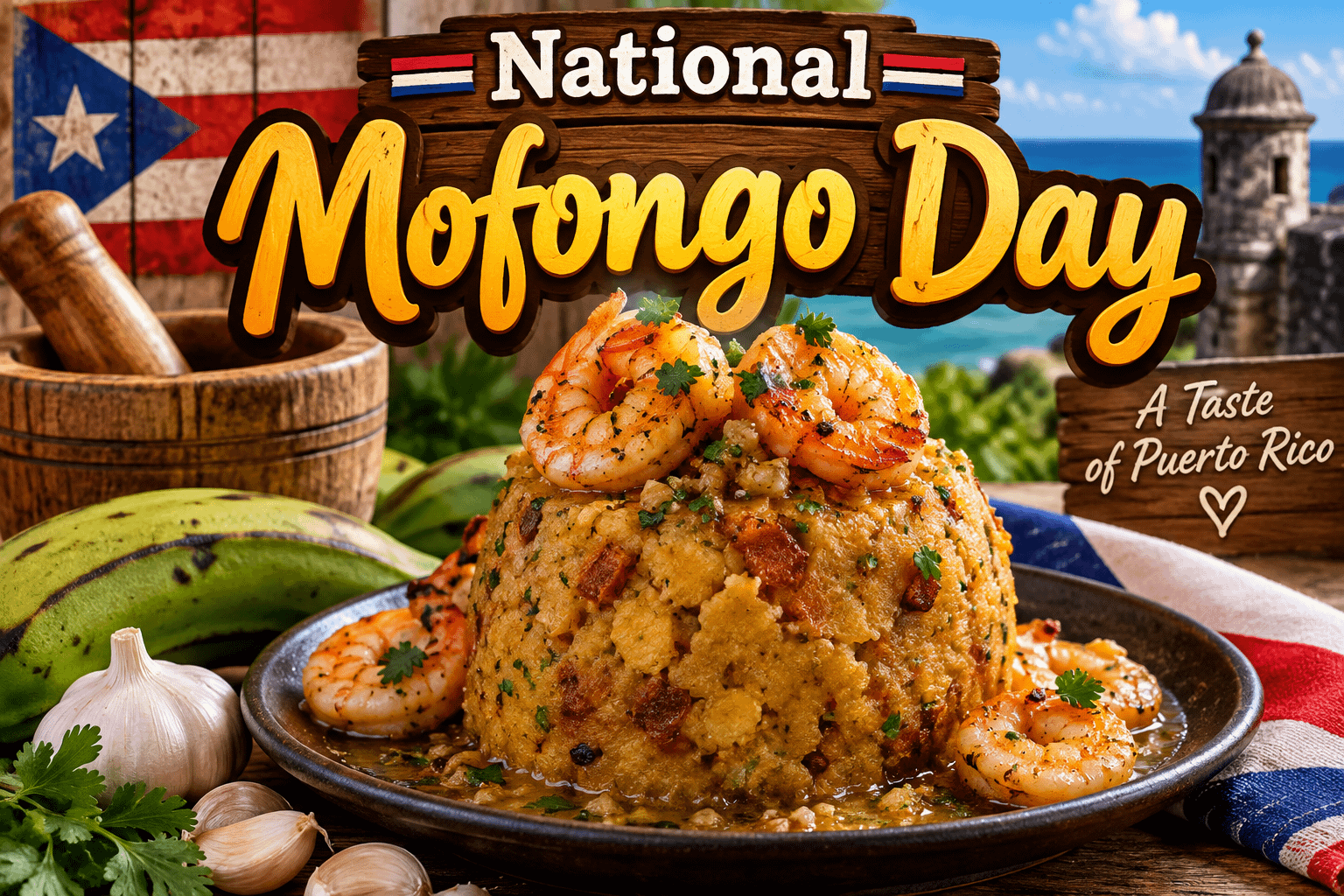
There are certain foods that do much more than satisfy hunger. They tell stories about families, communities, migration, history, and cultural identity. Mofongo is one of those foods.
National Mofongo Day is an opportunity to celebrate the iconic Puerto Rican dish made primarily from fried green plantains that are mashed with garlic, seasonings, and traditionally pork cracklings or chicharrón. The mixture is shaped and commonly served alongside meat, seafood, vegetables, or a flavorful broth.
For Puerto Ricans and fans of Caribbean cuisine, mofongo represents far more than something delicious on a plate. It reflects generations of culinary tradition and the blending of cultural influences that helped shape Puerto Rican cooking.
Whether you have eaten mofongo countless times or have never tried it, National Mofongo Day provides the perfect excuse to discover what makes this dish so special.
What Is Mofongo?
Mofongo begins with green plantains.
Although plantains resemble bananas, they are generally larger, starchier, and used differently in cooking. Green plantains are firm and relatively savory rather than sweet, making them perfect for frying, mashing, and pairing with bold ingredients.
For traditional mofongo, green plantains are peeled, cut into pieces, and fried until tender. They are then mashed—traditionally using a wooden mortar and pestle known as a pilón—with ingredients such as garlic, salt, olive oil or cooking fat, and crispy pork cracklings.
The mashed plantain mixture can then be formed into a mound, ball, or bowl-like shape.
That is only the beginning.
Depending on the recipe and restaurant, mofongo might be stuffed or topped with shrimp, chicken, pork, steak, vegetables, or seafood. It can also be accompanied by broth or sauce, adding moisture and another layer of flavor.
The result is hearty, garlicky, savory, and satisfying.
The Cultural Story Behind Mofongo
One reason mofongo is so fascinating is that its history reflects the cultural influences that shaped Puerto Rico and Caribbean cuisine.
Mofongo is commonly associated with Puerto Rico, but its culinary roots are connected to African food traditions brought to the Caribbean during the colonial period.
West and Central African cuisines include dishes in which starchy ingredients such as plantains, cassava, or yams are boiled or pounded into filling preparations. One dish frequently discussed in connection with mofongo is fufu, a staple with numerous regional variations throughout West and Central Africa.
As African culinary traditions interacted with Indigenous Taíno and Spanish influences in Puerto Rico, new dishes and cooking traditions developed.
Garlic, pork, plantains, herbs, seasonings, and traditional preparation methods eventually became part of Puerto Rico’s distinctive culinary identity.
Mofongo became one of its most recognizable dishes.
That history makes every serving a reminder that cuisine evolves through people, movement, survival, adaptation, creativity, and community.
Why Mofongo Is So Closely Associated With Puerto Rico
Puerto Rican cuisine is filled with bold flavors and comforting foods.
Rice, beans, pork, seafood, plantains, garlic, sofrito, root vegetables, and flavorful seasonings appear throughout the island’s cooking traditions.
Mofongo brings several of those elements together.
It is also incredibly adaptable.
Walk into different Puerto Rican restaurants and you may discover completely different versions of mofongo. One cook may serve a traditional garlic-heavy version with pork cracklings. Another might fill it with shrimp in garlic sauce. Someone else may serve it alongside roasted pork.
Families can also have their own preferred recipes.
That flexibility allows mofongo to remain deeply traditional while continually evolving.
The Importance of the Pilón
One of the most recognizable tools associated with making mofongo is the pilón, a traditional mortar and pestle.
The fried plantains are placed inside the mortar and mashed together with garlic and other ingredients.
This process accomplishes something that a blender or food processor cannot perfectly duplicate.
Instead of completely puréeing the plantains, pounding them allows the cook to control the texture. Some pieces remain slightly chunky while others become smoother, creating the dense but textured consistency associated with good mofongo.
For many families, the pilón itself can also carry cultural and emotional significance.
Kitchen tools are sometimes passed through generations, and preparing traditional foods using familiar methods connects people with parents, grandparents, and ancestors who made those same dishes before them.
Traditional Mofongo Ingredients
Recipes differ, but a basic mofongo usually begins with a relatively small collection of ingredients:
Green plantains: The foundation of the dish. They provide its distinctive texture and mild savory flavor.
Garlic: Mofongo is known for its strong garlic character.
Chicharrón: Crispy pork cracklings add saltiness, richness, and crunch to traditional versions.
Oil: Used for frying the plantains.
Salt and seasonings: These bring everything together.
Broth: Chicken, beef, or another broth may be incorporated or served alongside the finished mofongo.
From there, cooks can personalize the dish with proteins, sauces, vegetables, herbs, and other ingredients.
How to Make Traditional-Style Mofongo
Making mofongo at home takes a little effort, but the basic process is straightforward.
Ingredients
For approximately four servings, you will need:
- 4 large green plantains
- 4–6 garlic cloves
- About 1 cup crushed or chopped chicharrón
- Salt to taste
- Oil for frying
- Olive oil, as needed
- Warm chicken or vegetable broth, as needed
Step 1: Peel the Plantains
Green plantains can be more difficult to peel than ripe bananas.
Cut off both ends and carefully make shallow lengthwise cuts through the skin. Gently remove the peel without cutting too deeply into the plantain.
Step 2: Cut the Plantains
Slice each plantain into pieces approximately one inch thick.
Keeping the pieces relatively uniform helps them cook evenly.
Step 3: Fry the Plantains
Heat cooking oil in a skillet or fryer.
Fry the plantain pieces until they become golden and tender inside. You want them cooked through without becoming overly crispy.
Remove them and allow excess oil to drain.
Step 4: Prepare the Garlic
Mash the garlic with a little salt.
If you have a pilón, this can be done directly inside it.
Step 5: Add the Plantains
Add several fried plantain pieces at a time and begin pounding them with the garlic.
Gradually incorporate the chicharrón.
Continue until everything is thoroughly combined while maintaining some texture.
If the mixture feels excessively dry, add a small amount of warm broth or olive oil.
Step 6: Shape the Mofongo
Press the mixture into a small bowl or mold.
Turn the bowl upside down over the serving plate and gently release it.
You should have a beautiful mound of mofongo ready for toppings, sauce, or broth.
Popular Mofongo Variations
One of the best things about mofongo is how easily it can be customized.
Shrimp Mofongo
Shrimp is one of the most popular additions.
Imagine warm garlic mofongo topped with tender shrimp swimming in a buttery garlic or Creole-style sauce.
The seafood’s tenderness contrasts beautifully with the dense mashed plantains.
Chicken Mofongo
Chicken provides another comforting option.
Seasoned grilled, roasted, stewed, or sautéed chicken can be served over or beside the mofongo.
Chicken cooked with a flavorful sauce works especially well because the mofongo absorbs some of the sauce.
Steak Mofongo
For something particularly hearty, serve mofongo with sliced steak.
Garlic-seasoned steak combined with garlicky mashed plantains creates a filling meal packed with savory flavor.
Pork Mofongo
Pork and mofongo are natural companions.
Roasted pork, pulled pork, fried pork pieces, or other preparations can turn mofongo into an impressive main course.
Seafood Mofongo
Why stop with shrimp?
Lobster, crab, fish, octopus, or combinations of seafood can be paired with mofongo.
Coastal Caribbean flavors and plantains work wonderfully together.
Vegetarian Mofongo
Mofongo does not necessarily have to contain pork.
Leave out the chicharrón and use vegetable broth. Mushrooms, roasted vegetables, beans, avocado, or plant-based proteins can create a satisfying vegetarian version.
Mofongo vs. Trifongo
If you enjoy mofongo, another Puerto Rican dish worth discovering is trifongo.
Traditional mofongo typically focuses on green plantains, while trifongo combines multiple starchy ingredients, commonly including green plantain, ripe plantain, and yuca.
The ripe plantain adds sweetness while yuca contributes another texture.
The combination creates a dish that feels familiar to mofongo lovers but offers a different balance of flavors.
Why Garlic Matters
Ask someone to describe a memorable serving of mofongo, and there is a good chance garlic will be part of the conversation.
Garlic isn’t merely an optional seasoning here.
It is one of the defining flavors.
As the fried plantains are mashed with fresh garlic, the garlic spreads throughout the mixture. Pork cracklings provide saltiness and richness while the plantain offers a neutral base that carries those stronger flavors.
That combination creates the unmistakable savory character of traditional mofongo.
Garlic lovers may want even more by serving the finished dish with garlic shrimp or garlic sauce.
What to Serve With Mofongo
Mofongo can be a meal by itself, particularly when stuffed with meat or seafood, but it also pairs beautifully with other foods.
Try serving it with:
- Garlic shrimp
- Roasted pork
- Grilled chicken
- Steak
- Seafood
- Beans
- Avocado
- Salad
- Stewed vegetables
- Chicken broth
- Creole-style sauces
A small bowl of warm broth alongside mofongo can be particularly satisfying because diners can add broth as they eat.
How to Celebrate National Mofongo Day
The easiest—and most delicious—way to celebrate National Mofongo Day is simply to eat mofongo.
Visit a Puerto Rican restaurant and order a traditional version you’ve never tried before. If you normally order chicken, try shrimp. If you’ve only had seafood mofongo, try roasted pork.
You can also make mofongo at home.
Turn the preparation into a family cooking experience and let everyone create their own version. Prepare several toppings so people can customize their plates.
National Mofongo Day can also be an opportunity to learn more about Puerto Rican culture and history.
Food becomes even more meaningful when we understand the people and traditions behind it.
Support Puerto Rican Restaurants
Another meaningful way to celebrate is by supporting Puerto Rican-owned restaurants, food trucks, caterers, and small businesses.
Instead of simply ordering your meal, ask about their mofongo.
What version do they recommend?
What protein is most popular?
Does their recipe have a special ingredient?
Food creates conversations, and conversations can lead to a greater appreciation of another community’s traditions.
Share the restaurant with friends or post about your meal on social media. A simple recommendation can help introduce other people to Puerto Rican cuisine while supporting a local business.
A Dish That Brings People Together
The most memorable foods rarely exist only because of their ingredients.
They become meaningful because of the experiences surrounding them.
A recipe might remind someone of Sunday dinners at their grandmother’s house.
A certain aroma can instantly transport someone back to childhood.
A meal might remind a person of home even when they live thousands of miles away.
Mofongo carries that kind of meaning for many people.
Its combination of plantains, garlic, pork, broth, meat, and seafood may create the dish, but generations of people have given it its cultural significance.
More Than Mashed Plantains
Someone encountering mofongo for the first time might describe it simply as mashed fried plantains.
Technically, that description isn’t completely wrong.
But it misses almost everything that makes mofongo interesting.
Food carries history.
Recipes travel with people. Ingredients change when communities migrate. Families adjust recipes according to what is available. Techniques are taught from one generation to another.
Eventually, a meal becomes part of a community’s identity.
Mofongo demonstrates how powerful that process can be.
National Mofongo Day Is About Food, Culture, and Community
National Mofongo Day gives us another reason to appreciate one of Puerto Rico’s most beloved culinary creations.
It is a celebration of the humble green plantain transformed through frying, pounding, garlic, seasoning, and creativity into something extraordinary.
It is also an opportunity to recognize the African, Caribbean, Indigenous, and Spanish influences that contributed to Puerto Rican culinary traditions over centuries.
Most importantly, it is a day to gather around the table.
Order mofongo from a local Puerto Rican restaurant. Learn how to make it yourself. Share it with someone who has never experienced Puerto Rican cuisine.
Food has an incredible ability to connect people across generations and cultures.
Sometimes all it takes is one plate.
Happy National Mofongo Day!
Have you ever tried mofongo, and if you could choose any topping—shrimp, chicken, steak, pork, seafood, or vegetables—which would you put on yours?
Leave a ReplyCancel reply