
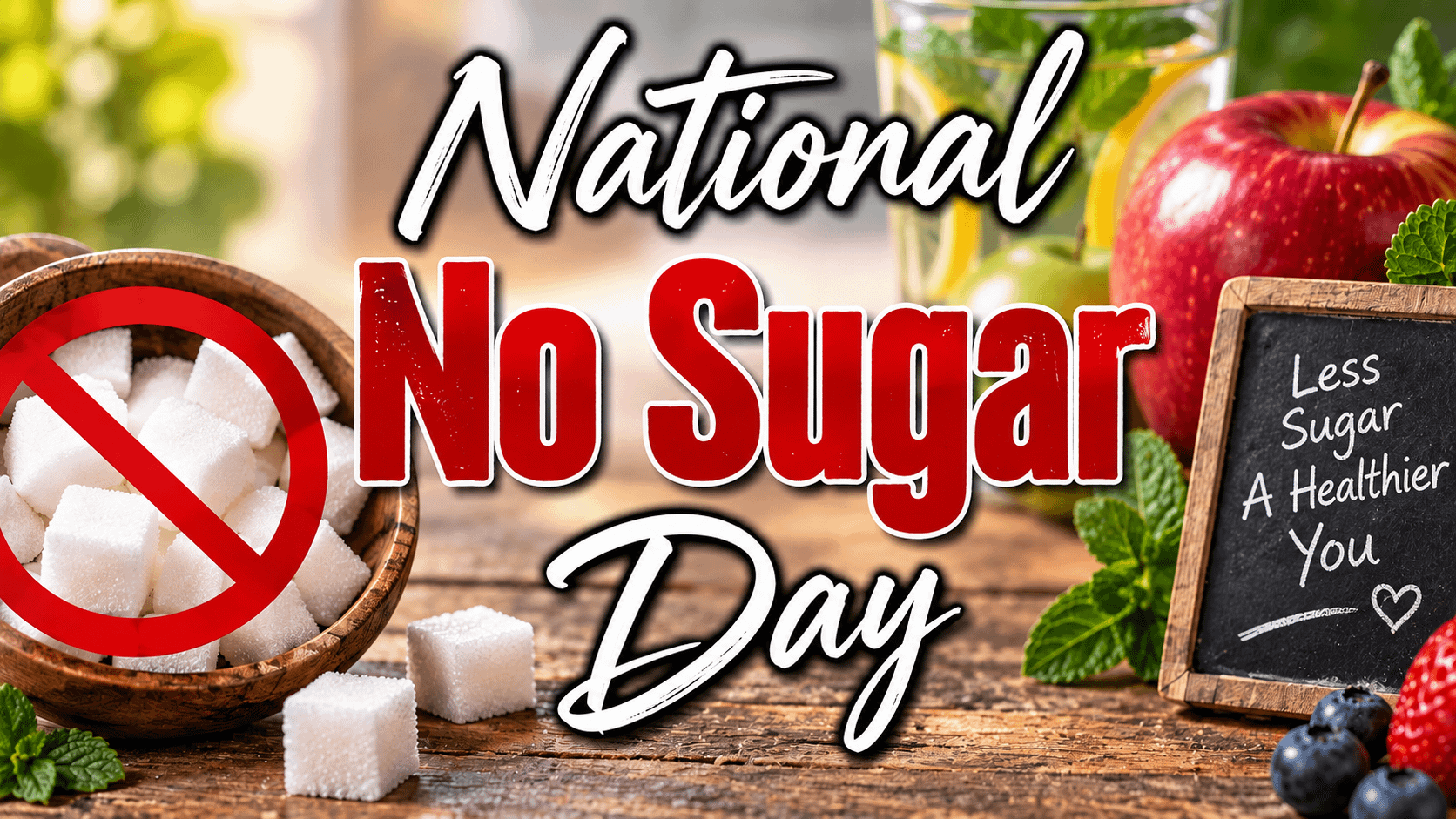
Sugar seems to be everywhere.
It is in our morning coffee, breakfast cereal, soft drinks, desserts, sauces, snacks, and even foods we may never think of as being sweet. For many people, eating added sugar has become such a normal part of everyday life that we rarely stop to think about how much we are actually consuming.
National No Sugar Day offers an opportunity to do exactly that.
Rather than viewing the day as punishment or another restrictive diet challenge, we can use it as a chance to become more aware of what we eat, learn where added sugars are hiding, and discover foods that can satisfy us without depending so heavily on sweetness.
One sugar-free day probably will not transform your health. But one day of paying attention can teach you something that lasts much longer.
What Is National No Sugar Day?
National No Sugar Day encourages people to take a break from added sugar and become more conscious of the amount of sugar in their everyday diets.
The idea sounds simple: spend the day avoiding foods and beverages containing added sugars.
The bigger purpose, however, is awareness.
Most of us recognize the obvious sources of sugar. Candy, cookies, cakes, doughnuts, soda, and ice cream aren’t exactly hiding what they are.
Other sources can be much less obvious.
Added sugars may appear in:
- Flavored yogurt
- Breakfast cereal and granola
- Protein and snack bars
- Coffee drinks
- Ketchup and barbecue sauce
- Salad dressing
- Pasta sauce
- Flavored oatmeal
- Sports and energy drinks
- Sweetened teas
- Some breads and packaged foods
Once you start reading labels, you may be surprised by how many foods contain some form of added sugar.
That makes National No Sugar Day less about simply saying, “I won’t eat dessert today,” and more about understanding what is actually in the foods you consume.
Added Sugar and Naturally Occurring Sugar Are Different
One important distinction is the difference between added sugars and sugars naturally present in foods.
Fruit naturally contains sugars, but it also provides nutrients and fiber. Milk contains naturally occurring lactose along with protein and other nutrients.
Added sugars are sugars and syrups placed into foods during processing or preparation.
So participating in National No Sugar Day does not necessarily mean eliminating every food containing any naturally occurring sugar.
A more practical approach is to focus on eliminating or significantly reducing added sugar.
For example, instead of drinking a fruit-flavored beverage containing added sweeteners, choose water and eat a piece of whole fruit.
Instead of sweetened oatmeal, prepare plain oatmeal and add berries, cinnamon, nuts, or seeds.
Small substitutions can make the challenge much easier.
Why Pay Attention to Added Sugar?
Sugar itself does not need to be treated like an enemy. The bigger concern is how easily large amounts of added sugar can become part of someone’s regular diet.
Sugary beverages are particularly easy to consume quickly. A person can drink hundreds of calories without experiencing the same fullness they might get from eating a meal containing protein, fiber, and whole foods.
Over time, diets high in added sugars can also make it more difficult to maintain an overall nutritious eating pattern.
The goal does not have to be eliminating sugar forever.
For many people, moderation and awareness are more realistic.
National No Sugar Day can simply be a reminder to ask:
How much added sugar am I actually eating?
You might not know until you start looking.
Start With What You Drink
If you want to participate in National No Sugar Day, beverages are one of the easiest places to begin.
Consider what you normally drink throughout the day.
Maybe it is soda.
Maybe it is sweet tea.
Perhaps you start every morning with a flavored coffee loaded with syrups and sweeteners.
For one day, try replacing sweetened beverages with options such as:
Water
The simplest choice is still one of the best.
Sparkling water
Unsweetened sparkling water can provide the carbonation people enjoy without added sugar.
Unsweetened tea
Hot or iced tea can provide plenty of flavor without requiring sweetener.
Coffee without added sugar
If you normally drink very sweet coffee, this might be challenging. Try gradually reducing the amount of sweetener rather than expecting yourself to suddenly love completely unsweetened coffee.
You can also flavor water naturally with lemon, lime, cucumber, mint, or other fresh ingredients.
Read the Nutrition Facts Label
National No Sugar Day is also a great excuse to spend a little more time reading food labels.
In the United States, Nutrition Facts labels generally identify both Total Sugars and Includes Added Sugars.
That distinction is helpful.
A product might contain naturally occurring sugars while having little or no added sugar.
Look beyond marketing claims on the front of the package.
Words such as “natural,” “healthy,” or “wholesome” don’t necessarily tell you how much added sugar a product contains.
Turn the package around and look at the numbers.
You may discover that some of the foods you assumed were healthy contain more added sugar than expected.
Watch for Sugar’s Many Names
Reading the ingredient list can also be useful because added sugar can appear under many names.
Depending on the product, you might see ingredients such as cane sugar, corn syrup, brown sugar, honey, maple syrup, agave, glucose, fructose, sucrose, dextrose, or other sweetening ingredients.
Something being described as natural does not automatically mean you can consume unlimited amounts of it.
Honey and maple syrup may come from natural sources, for example, but they still contribute added sugars when used to sweeten foods.
National No Sugar Day is a good opportunity to start recognizing these ingredients.
What Can You Eat on National No Sugar Day?
Fortunately, avoiding added sugar doesn’t mean spending the entire day hungry.
There are plenty of delicious options.
For breakfast, you might have eggs with vegetables and avocado or plain oatmeal topped with nuts and berries.
Lunch could include grilled chicken, vegetables, beans, and brown rice.
For a snack, try nuts, vegetables with hummus, cheese, plain yogurt, or fresh fruit.
Dinner might include fish, chicken, lean meat, tofu, beans, vegetables, potatoes, or whole grains.
If you want something sweet afterward, fruit can provide natural sweetness without requiring a traditional sugary dessert.
The key is choosing foods that you enjoy.
Healthy eating becomes much more sustainable when it doesn’t feel like punishment.
Be Careful With “Sugar-Free” Foods
There is another important lesson National No Sugar Day can teach us.
A product labeled “sugar-free” isn’t automatically nutritious.
Some sugar-free products contain alternative sweeteners, highly processed ingredients, or nutritional profiles that may not necessarily fit your goals.
You don’t have to replace every sugary food with a packaged sugar-free version.
Sometimes the easiest solution is simply eating more whole or minimally processed foods.
Instead of sugar-free candy, for example, you might choose nuts and fruit.
Instead of a highly processed breakfast bar, you could eat eggs or plain oatmeal.
Use the day to experiment rather than searching for a substitute for every sweet food you normally consume.
What About Artificial and Alternative Sweeteners?
This depends on how you personally want to approach the challenge.
Some people may participate by avoiding only added sugars while continuing to use low- or no-calorie sweeteners.
Others may decide to spend the day avoiding intensely sweet foods altogether.
The second approach can be interesting because it gives your taste buds a break from constant sweetness.
Neither approach needs to become an obsession.
National No Sugar Day should encourage awareness, not fear around food.
Pay Attention to How Often You Crave Something Sweet
One of the most interesting parts of participating may have nothing to do with nutrition labels.
Pay attention to your habits.
When do you automatically reach for something sweet?
Is it after lunch?
During an afternoon slump?
While watching television?
When you’re bored?
When you’re stressed?
After dinner?
Sometimes food habits are connected to routines rather than actual hunger.
You may discover that every evening at 8:00 you start looking for cookies simply because that’s what you’ve always done.
Recognizing the pattern gives you the opportunity to decide whether you actually want the food or are simply following a habit.
Don’t Turn One Day Into a Punishment
National No Sugar Day shouldn’t be about feeling guilty for eating a cookie yesterday or worrying about having cake tomorrow.
Food is part of celebrations, traditions, family gatherings, holidays, and everyday enjoyment.
A balanced lifestyle can include enjoyable foods.
The purpose of a day like this is education.
Maybe you discover that your morning coffee contains more added sugar than you realized.
Maybe you decide to drink fewer sodas.
Perhaps you find an unsweetened breakfast cereal you actually enjoy.
Maybe you learn that your favorite sauce contains a surprising amount of added sugar and find another version you like just as much.
Those small discoveries can be far more valuable than simply completing a 24-hour challenge.
Try a Simple National No Sugar Day Challenge
If you want to participate, keep it straightforward.
For one day:
Drink water or unsweetened beverages.
Avoid obvious sugary foods such as candy, pastries, cookies, and soda.
Check labels for added sugars.
Choose mostly whole or minimally processed foods.
Eat fruit when you want natural sweetness.
Pay attention to when sugar cravings appear.
At the end of the day, ask yourself what you learned.
You don’t need to declare that you’ll never eat sugar again.
Instead, choose one realistic habit you could continue.
Maybe that means drinking water with lunch instead of soda.
Maybe you’ll use half as much sugar in your coffee.
Maybe you’ll save desserts for occasions when you truly want them instead of eating something sweet automatically every night.
Small changes are often easier to maintain than extreme restrictions.
A Day of Awareness Can Become a Healthier Habit
National No Sugar Day isn’t really about proving that you can survive 24 hours without a cupcake.
It’s about paying attention.
Our everyday eating habits develop slowly. We buy the same foods, order the same drinks, and follow the same routines without always questioning them.
Sometimes all it takes is one day of doing things differently to notice those habits.
You may finish National No Sugar Day and decide that your diet is already working well for you.
Or you might discover several easy places where you could reduce added sugar without giving up foods you love.
Either way, you’ve learned something.
And that is what makes awareness days worthwhile.
You don’t have to eat perfectly.
You don’t have to fear sugar.
You don’t have to completely transform your diet overnight.
Simply learn what’s in your food, make intentional choices, and look for small improvements you can realistically maintain.
If you tried going without added sugar for one day, what food or drink do you think would be the hardest for you to give up?
Leave a ReplyCancel reply