There are certain foods that seem to bring people together almost effortlessly. They show up at family dinners, romantic date nights, neighborhood restaurants, holiday tables, and quick weeknight meals.
Pasta is definitely one of them.
From a steaming plate of spaghetti covered in rich tomato sauce to creamy fettuccine Alfredo, cheesy baked ziti, hearty lasagna, and delicate ravioli filled with cheese, pasta comes in countless forms.
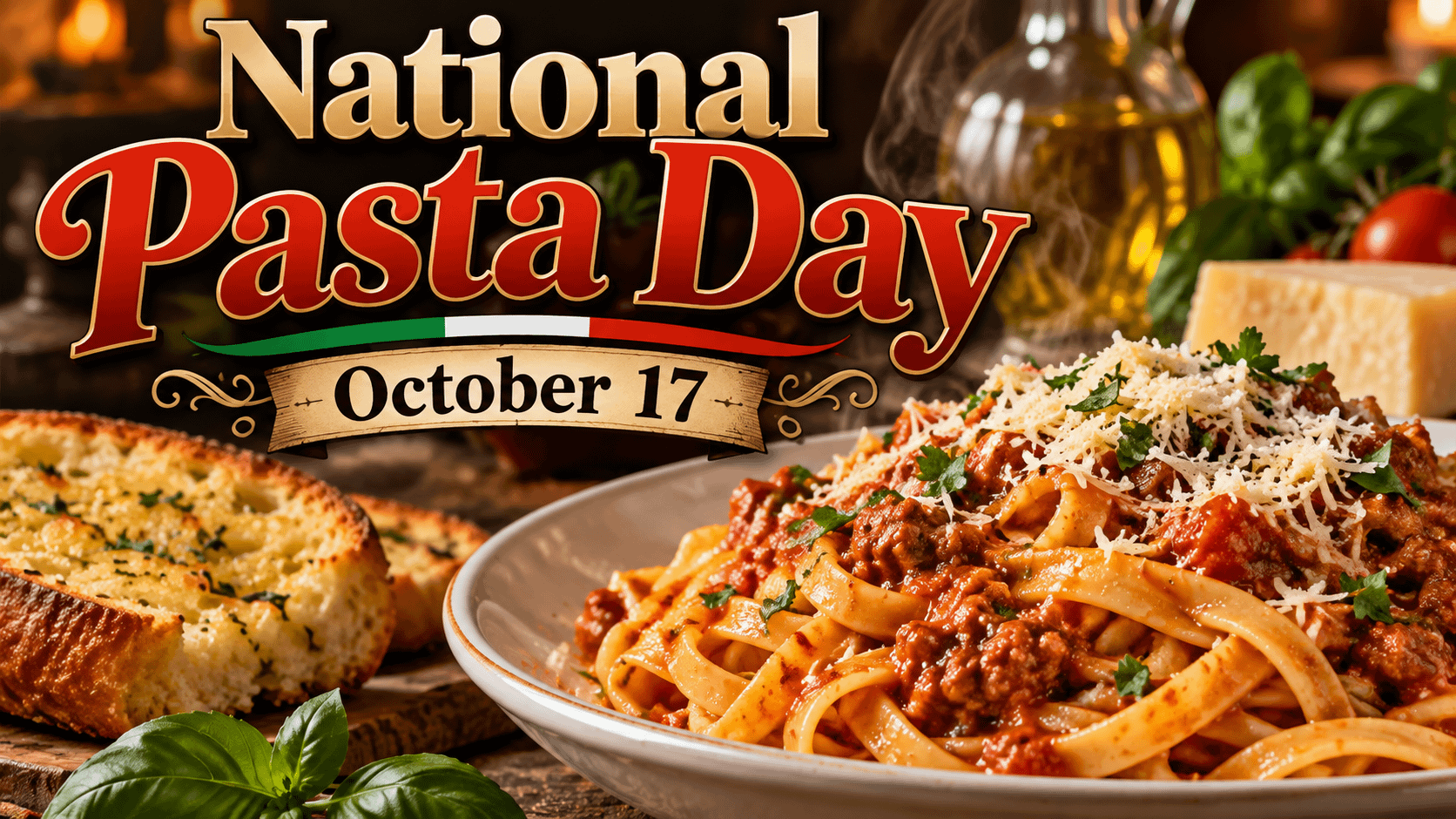
That makes National Pasta Day, celebrated on October 17, a delicious excuse to appreciate one of the most versatile and comforting foods around.
Pasta can be inexpensive and simple, or it can become the centerpiece of an elaborate restaurant-quality dinner. You can cover it in marinara, toss it with garlic and olive oil, bake it underneath layers of cheese, combine it with seafood, or turn it into a cold pasta salad.
There really is a pasta dish for almost everyone.
So grab your favorite noodles, start boiling some water, and let’s celebrate National Pasta Day.
What Is National Pasta Day?
National Pasta Day is a celebration dedicated to pasta in all of its wonderful shapes, sauces, recipes, and traditions.
For pasta lovers, October 17 is the perfect opportunity to prepare an old favorite or experiment with something completely different.
You might make:
- Spaghetti and meatballs
- Fettuccine Alfredo
- Lasagna
- Baked ziti
- Chicken Parmesan with pasta
- Ravioli
- Tortellini
- Penne alla vodka
- Macaroni and cheese
- Linguine with clams
- Pasta primavera
- Carbonara
- Pesto pasta
- Stuffed shells
- Chicken pesto pasta
And that barely scratches the surface.
One of the reasons pasta has remained so popular is its incredible adaptability.
Change the noodle.
Change the sauce.
Change the meat.
Change the vegetables.
Change the cheese.
Suddenly, you have an entirely different meal.
Pasta Has a Long History
Pasta’s history is much more complicated than the popular story that Marco Polo simply brought pasta from China to Italy.
Foods made from combinations of grains and water existed in different forms throughout the ancient world. Pasta-like foods developed over centuries, and dried pasta became particularly important around the Mediterranean because it could be stored and transported.
Italy eventually became deeply associated with pasta, and different regions developed their own shapes, ingredients, sauces, and traditions.
That regional diversity remains one of the most fascinating parts of Italian cuisine.
Certain pasta shapes work especially well with particular sauces.
Thin noodles can complement lighter sauces.
Thicker noodles can stand up to rich meat sauces.
Tube-shaped pasta can capture sauce inside.
Ridged pasta helps sauces cling to the surface.
Stuffed pasta creates an entirely different experience because the flavor is built into the pasta itself.
What may look like a simple bowl of noodles can actually represent generations of culinary tradition.
Did Marco Polo Really Bring Pasta to Italy?
One of the most persistent stories surrounding pasta is that explorer Marco Polo introduced it to Italy after traveling through China.
It makes a great story.
The history, however, is more complicated.
Pasta-like foods existed in the Mediterranean before Marco Polo returned from his travels in the late 13th century. China also has an extraordinarily long tradition of noodles, but noodles and Italian pasta developed within different culinary histories.
Rather than having one simple inventor or origin story, pasta is better understood as part of humanity’s much larger history of turning grains into practical and delicious food.
That story eventually produced the enormous variety of pasta dishes we enjoy today.
Why Pasta Became So Popular
There is a practical reason pasta became such an important food.
Dried pasta stores extremely well.
Before modern refrigeration and supermarkets, foods that could remain edible for long periods were incredibly valuable.
Pasta could be stored, transported, cooked when needed, and combined with whatever ingredients happened to be available.
Those advantages still matter today.
Walk into almost any grocery store and you can buy a box of dried pasta relatively inexpensively. Keep a few boxes in your pantry and you always have the foundation for a meal.
All you need is something to put on it.
Tomato sauce works.
Butter and Parmesan work.
Olive oil and garlic work.
Pesto works.
Cheese sauce works.
Vegetables work.
Meat sauce works.
Sometimes the simplest combinations are the best.
There Are Hundreds of Pasta Shapes
Walk down the pasta aisle and you quickly realize spaghetti is only the beginning.
There are hundreds of pasta varieties and shapes found across Italian cooking traditions.
Some of the most familiar include:
Spaghetti — Long, thin strands that work beautifully with tomato sauces, meatballs, garlic and oil, and many other preparations.
Penne — Short tubes with angled ends. Their shape makes them excellent for capturing sauces.
Rigatoni — Larger tubes with ridges that pair especially well with hearty sauces.
Fettuccine — Long, flat ribbons famously associated with creamy sauces.
Linguine — Long noodles that are flatter than spaghetti and commonly served with seafood.
Farfalle — The famous bow-tie-shaped pasta.
Fusilli — Spiral-shaped pasta that catches sauce between its curves.
Orecchiette — Small pieces whose name translates to “little ears.”
Lasagna — Broad sheets layered with sauce, cheese, meat, vegetables, or combinations of them.
Ravioli — Pasta pockets filled with ingredients such as cheese, meat, vegetables, or seafood.
Tortellini — Small ring-shaped stuffed pasta.
Shells — Pasta shaped like seashells, available in several sizes. Large shells are particularly good for stuffing.
Every shape gives pasta a slightly different texture and eating experience.
The Sauce Changes Everything
Choosing your pasta is only half the fun.
Then comes the sauce.
Tomato-based sauces are among the most familiar choices. A simple marinara made with tomatoes, garlic, herbs, and olive oil can transform an ordinary plate of spaghetti.
But tomato sauce is only one possibility.
Cream sauces create rich and indulgent dishes.
Pesto brings together basil, olive oil, garlic, cheese, and nuts for a bright and aromatic flavor.
Meat sauces can simmer slowly for hours, creating deep flavors that cling beautifully to pasta.
Garlic and olive oil prove that you don’t necessarily need a complicated sauce at all.
Then there are combinations involving mushrooms, seafood, roasted vegetables, sausage, chicken, peppers, spinach, cheeses, and countless other ingredients.
That’s the beauty of pasta.
It gives you a foundation and lets you build from there.
Pasta Is One of the Ultimate Comfort Foods
Food isn’t only about satisfying hunger.
Sometimes food is connected to memories.
Think about the smell of lasagna baking in the oven.
Or spaghetti simmering on the stove.
Maybe macaroni and cheese reminds you of childhood.
Perhaps ravioli reminds you of dinner at your grandparents’ house.
Maybe spaghetti was one of the first dinners you learned how to cook.
Food has an unusual ability to connect moments in our lives.
Pasta does that particularly well because it is often served family-style.
A big pot goes on the stove.
Everyone grabs a plate.
Someone passes the Parmesan.
People talk.
People laugh.
People go back for seconds.
The meal itself becomes part of the memory.
Homemade Pasta Takes Things to Another Level
If you have never made fresh pasta from scratch, National Pasta Day might be the perfect excuse to try.
Homemade pasta can be surprisingly simple.
Basic versions require only a few ingredients, although recipes and regional traditions vary.
The dough is mixed and kneaded before being allowed to rest. Then it can be rolled thin and cut into noodles or shaped into different types of pasta.
A pasta machine makes rolling and cutting easier, but plenty of pasta can be made using a rolling pin and knife.
You don’t have to make it perfectly.
That’s part of the fun.
Your noodles might be uneven.
One ravioli might be enormous while another is tiny.
Your kitchen might end up covered in flour.
That’s okay.
Cooking isn’t always supposed to look perfect.
Sometimes the experience is what makes the meal memorable.
Have a Pasta Night at Home
National Pasta Day is also a great reason to turn an ordinary dinner into something special.
Create your own pasta night.
Pick two or three types of pasta and prepare different sauces.
For example:
Make spaghetti with marinara.
Prepare fettuccine with Alfredo sauce.
Serve penne with pesto.
Add meatballs, grilled chicken, Italian sausage, shrimp, or roasted vegetables as optional toppings.
Then put everything on the table and allow everyone to build their own plate.
Add garlic bread and a large salad, and suddenly you have an entire Italian-inspired feast.
For dessert, finish with something like tiramisu, cannoli, gelato, or cheesecake.
It doesn’t have to be complicated.
The goal is simply to enjoy good food together.
Try a Pasta Dish You’ve Never Had Before
Many of us tend to order the same dishes repeatedly.
We know what we like.
There is nothing wrong with that.
But National Pasta Day provides a perfect excuse to explore.
If you always order spaghetti, try rigatoni.
If you usually choose marinara, try pesto.
If you’ve never eaten gnocchi, give it a try.
Order ravioli with an unusual filling.
Make seafood linguine.
Try pasta with roasted butternut squash.
Experiment with spicy sausage and peppers.
Make a creamy mushroom pasta.
Sometimes discovering a new favorite begins with simply deciding to order something different.
Make Your Favorite Family Pasta Recipe
Family recipes deserve to be preserved.
If someone in your family makes an incredible lasagna, spaghetti sauce, macaroni and cheese, baked ziti, or another pasta dish, ask them how they make it.
Write the recipe down.
Better yet, cook it with them.
Recipes can become pieces of family history.
Years later, preparing that same meal can bring back memories of people, conversations, kitchens, celebrations, and ordinary evenings that turned out to matter more than we realized at the time.
You aren’t simply preserving ingredients and instructions.
You’re preserving a story.
Create the Ultimate Baked Pasta
If you want serious comfort food for National Pasta Day, baked pasta is difficult to beat.
Start with pasta such as rigatoni, penne, or ziti.
Add plenty of sauce.
Mix in ricotta or another cheese if you like.
Add Italian sausage, ground beef, chicken, vegetables, or keep it completely meatless.
Cover everything with mozzarella and Parmesan.
Then bake it until the cheese is melted, bubbling, and beginning to brown around the edges.
That moment when you pull a bubbling pasta casserole from the oven is one of life’s simple pleasures.
Just remember to let it cool for a few minutes before digging in.
That’s usually the hardest part.
Don’t Forget the Garlic Bread
Can you really have a giant pasta dinner without garlic bread?
Technically, yes.
Should you?
That’s another question.
A warm piece of garlic bread is perfect for soaking up the sauce left on your plate.
You can keep it simple with butter, garlic, and herbs or cover it with mozzarella for cheesy garlic bread.
Add a crisp salad on the side and you have the classic combination:
Pasta.
Garlic bread.
Salad.
Simple, satisfying, and delicious.
Pasta Can Be Simple or Sophisticated
Another wonderful thing about pasta is that it fits almost any occasion.
You can make buttered noodles for a quick meal.
You can make spaghetti and meatballs for the family.
You can serve baked ziti at a party.
You can prepare lobster ravioli for a romantic dinner.
You can make a sophisticated seafood linguine for guests.
The same basic food can move effortlessly from an inexpensive Tuesday-night dinner to an elegant restaurant menu.
Few foods have that kind of range.
Celebrate Your Own Way
There aren’t many rules for celebrating National Pasta Day.
You could visit your favorite Italian restaurant.
Cook dinner at home.
Try making pasta from scratch.
Have a pasta potluck.
Experiment with a new recipe.
Make your grandmother’s spaghetti sauce.
Prepare an enormous pan of lasagna.
Or simply boil some noodles and cover them with butter and Parmesan.
If that’s the pasta you love, it counts.
National food days don’t have to be complicated.
Sometimes they are simply reminders to appreciate foods that have become part of everyday life.
October 17 Is a Day for Pasta Lovers
Pasta has survived generations because it manages to be practical, affordable, adaptable, comforting, and delicious at the same time.
It can be humble.
It can be elegant.
It can feed one person or an entire family.
It can carry recipes passed through generations or become the foundation for something completely new.
And perhaps most importantly, pasta has a way of bringing people to the table.
National Pasta Day is a chance to celebrate all of that.
So on October 17, boil the water, choose your favorite pasta, warm up the sauce, grate some cheese, and make yourself a plate worth enjoying.
Don’t worry about counting the noodles.
Just don’t forget the garlic bread.
What is the one pasta dish you could eat again and again and never get tired of?