
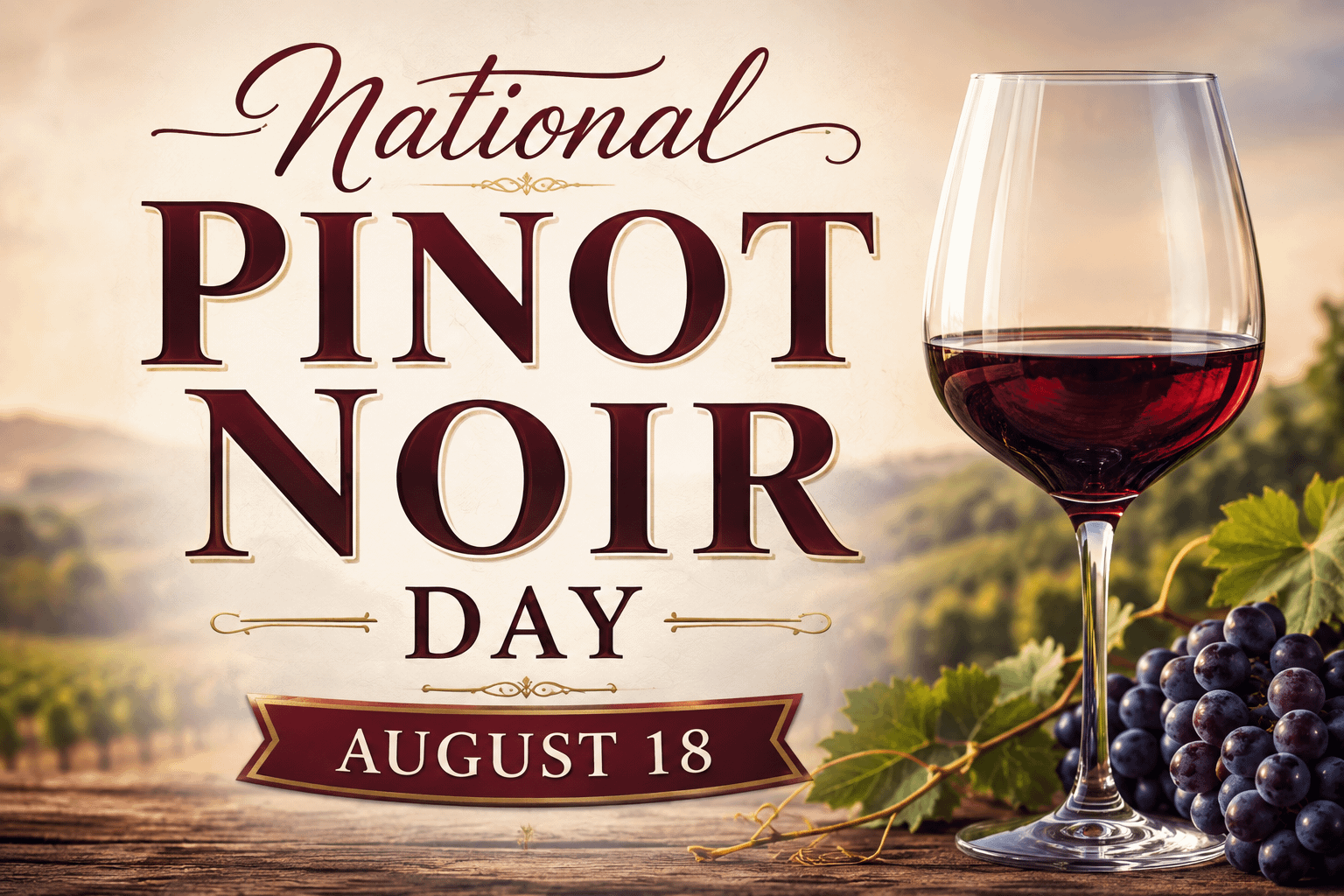
Every year on August 18, wine lovers have an opportunity to raise a glass to one of the world’s most famous, fascinating, and sometimes frustrating grape varieties: Pinot Noir.
National Pinot Noir Day celebrates a wine known for elegance, bright fruit, beautiful aromas, food-friendly acidity, and an extraordinary ability to express the place where its grapes were grown.
For some wine drinkers, Pinot Noir is an approachable red filled with cherry and raspberry flavors. For serious collectors, it can represent some of the most complex and sought-after wines in the world. For winemakers, meanwhile, Pinot Noir can be a demanding grape requiring patience, careful vineyard management, favorable weather, and considerable skill.
That combination of accessibility and complexity is part of what makes Pinot Noir so fascinating.
From the legendary vineyards of Burgundy, France, to California’s coastal wine regions, Oregon’s Willamette Valley, New Zealand, Germany, Australia, and beyond, Pinot Noir has developed a global following.
Whether you’re already passionate about wine or simply looking for something new to try, August 18 is a great day to discover what makes Pinot Noir special.
What Is National Pinot Noir Day?
National Pinot Noir Day is observed annually on August 18 as a celebration of Pinot Noir grapes and the wines produced from them.
Like many food-and-drink observances, the day’s exact origins aren’t especially clear. What matters most to enthusiasts is the opportunity it provides to appreciate the history, vineyards, winemakers, regions, and flavors associated with Pinot Noir.
You don’t have to be a wine expert to participate.
National Pinot Noir Day can be celebrated by opening a favorite bottle, visiting a winery, preparing a meal that pairs well with Pinot Noir, comparing wines from different regions, learning about winemaking, or simply discovering the grape for the first time.
What Is Pinot Noir?
Pinot Noir is a red wine grape variety historically associated with Burgundy, France.
It is typically used to create red wines ranging from delicate and aromatic to remarkably complex and age-worthy.
Compared with grapes used for many powerful red wines, Pinot Noir has relatively thin skins. As a result, Pinot Noir wines frequently appear lighter in color than Cabernet Sauvignon, Syrah, or Malbec.
But lighter color does not mean less interesting.
Pinot Noir can deliver an impressive combination of fruit, flowers, herbs, spices, earth, mushrooms, forest-floor characteristics, and other savory aromas.
Some bottles are immediately approachable, while others develop additional complexity with age.
Where Does the Name Pinot Noir Come From?
The name is French.
“Noir” means “black” in French, referring to the dark color of the grape skins.
“Pinot” is traditionally associated with the shape of the grape clusters, which can resemble a pinecone because the grapes grow in relatively tight bunches.
Together, Pinot Noir can therefore be understood as a reference to the grape’s dark, tightly clustered fruit.
It is a fitting name for a grape that has become inseparable from French wine history.
The Historic Home of Pinot Noir
To understand Pinot Noir, you have to talk about Burgundy.
Located in eastern France, Burgundy has produced Pinot Noir for centuries and remains the grape’s most famous historic home.
Generations of grape growers discovered that Pinot Noir was particularly capable of revealing differences between vineyards.
Two vineyards located relatively close together could produce wines with noticeably different characteristics.
Soil composition, slope, elevation, sunlight, drainage, temperature, weather, and countless other environmental factors could influence the finished wine.
This connection between wine and place helped make Burgundy one of the world’s most closely studied wine regions.
Pinot Noir and the Meaning of Terroir
Pinot Noir is frequently discussed alongside the French concept of terroir.
Terroir refers broadly to the environmental conditions influencing an agricultural product, including factors such as climate, soil, elevation, slope, exposure, and geography.
Pinot Noir is particularly famous for reflecting those differences.
A wine from a cool coastal vineyard may taste noticeably different from one produced in a warmer inland location.
Even when the same grape is used, the finished wines can display different levels of fruit ripeness, acidity, earthiness, spice, structure, and aroma.
For enthusiasts, discovering these differences is one of Pinot Noir’s greatest pleasures.
Why Is Pinot Noir Difficult to Grow?
Pinot Noir has a reputation for being demanding in the vineyard.
Its relatively thin skins can make the grapes vulnerable to certain problems, while its tightly packed clusters require careful attention.
The grape is also sensitive to temperature and weather.
Too much heat can affect the balance between ripeness and acidity, while unfavorable weather during the growing season can create additional challenges.
Growers must carefully manage their vineyards, monitor grape development, and determine the right moment for harvesting.
That delicate nature is one reason exceptional Pinot Noir can be so highly valued.
Producing great Pinot Noir isn’t simply about growing grapes. It’s about creating the conditions necessary for those grapes to express their best characteristics.
What Does Pinot Noir Taste Like?
Pinot Noir doesn’t have one universal flavor profile.
Where the grapes were grown, the vintage, vineyard conditions, ripeness at harvest, fermentation, oak aging, bottle age, and winemaking decisions all influence the finished wine.
However, there are several aromas and flavors commonly associated with Pinot Noir.
Red Fruit
Pinot Noir frequently displays bright red-fruit characteristics, including:
- Cherry
- Raspberry
- Strawberry
- Cranberry
- Red currant
Some warmer-climate examples may show darker or riper fruit characteristics such as plum or black cherry.
Floral Aromas
Some Pinot Noir wines can display delicate floral characteristics, including rose and violet.
These aromas can contribute to the wine’s elegant reputation.
Earthy Characteristics
Pinot Noir is particularly famous for savory and earthy aromas.
Depending on the wine, you might notice impressions reminiscent of:
- Mushrooms
- Forest floor
- Dried leaves
- Herbs
- Soil
- Tea
- Tobacco
These flavors might sound unusual if you’re new to wine, but they can create fascinating complexity when balanced with fruit.
Spice and Oak
When Pinot Noir is aged in oak barrels, additional aromas and flavors may develop, including:
- Vanilla
- Baking spices
- Toast
- Cedar
- Smoke
Ideally, these characteristics complement rather than overpower the grape’s natural fruit and aromas.
Is Pinot Noir Sweet or Dry?
Most traditional Pinot Noir table wines are dry, meaning relatively little residual sugar remains after fermentation.
However, ripe fruit flavors can sometimes make a dry wine seem slightly sweet to inexperienced wine drinkers.
A Pinot Noir bursting with ripe strawberry and cherry flavors may taste fruit-forward without actually containing enough residual sugar to classify it as sweet.
This distinction between fruitiness and sweetness is helpful when exploring wine.
Is Pinot Noir a Light Wine?
Pinot Noir is generally considered a light-to-medium-bodied red wine, although styles vary considerably.
Its comparatively moderate tannins and bright acidity can make it feel softer or more delicate than some Cabernet Sauvignon or Syrah wines.
This makes Pinot Noir appealing to people who want red wine without overwhelming tannins or heaviness.
It also contributes to Pinot Noir’s remarkable versatility with food.
Pinot Noir in the United States
Although Pinot Noir’s history is closely tied to France, the United States has become an important producer.
California and Oregon are particularly well known for American Pinot Noir.
California Pinot Noir
California’s wine industry produces Pinot Noir in several areas, especially regions influenced by cooler coastal conditions.
Notable Pinot Noir-producing areas can be found throughout parts of:
- Sonoma County
- Santa Barbara County
- Monterey County
- Mendocino County
- The Central Coast
- Other cooler California growing regions
Because California contains such diverse climates and geography, California Pinot Noir doesn’t represent a single style.
Some wines emphasize ripe cherry, strawberry, and raspberry flavors, while others can be more restrained, savory, earthy, or structured.
Oregon Pinot Noir
Oregon, and especially the Willamette Valley, has built an international reputation for Pinot Noir.
The state’s cooler growing conditions have helped producers create wines known for acidity, aromatic complexity, red fruit, earthiness, and balance.
Today, Oregon Pinot Noir is an important part of the American wine industry and gives enthusiasts another fascinating style to compare with California and Burgundy.
Pinot Noir Around the World
Pinot Noir’s popularity has spread far beyond France and the United States.
France
Burgundy remains Pinot Noir’s historic benchmark and home to many celebrated vineyards.
United States
California and Oregon offer an enormous variety of Pinot Noir styles, from ripe and fruit-forward to restrained and earthy.
New Zealand
New Zealand has developed an impressive reputation for Pinot Noir, with several regions producing distinctive interpretations of the grape.
Australia
Although Australia is often associated with varieties such as Shiraz, cooler regions also produce noteworthy Pinot Noir.
Germany
Pinot Noir is known as Spätburgunder in Germany and has become an increasingly important part of the country’s red-wine identity.
Chile
Chile’s varied geography and cooler coastal influences allow producers in certain regions to experiment successfully with Pinot Noir.
South Africa
Cooler South African wine regions also produce Pinot Noir, adding yet another regional expression for adventurous wine drinkers to explore.
Pinot Noir’s Role in Sparkling Wine
One of the most interesting things about Pinot Noir is that it isn’t used only to make still red wine.
Pinot Noir is also an important grape in sparkling wine production.
It is one of the principal grape varieties traditionally associated with Champagne, along with Chardonnay and Pinot Meunier.
Although Pinot Noir has dark skins, careful pressing can separate the juice from those skins before substantial color is extracted.
That’s why a dark-skinned grape can contribute to white sparkling wine.
The term Blanc de Noirs, meaning “white from blacks,” is associated with white sparkling wine produced from dark-skinned grape varieties such as Pinot Noir and Pinot Meunier.
Pinot Noir vs. Cabernet Sauvignon
People exploring red wine often wonder how Pinot Noir compares with Cabernet Sauvignon.
While individual bottles vary, Pinot Noir is generally lighter in body, lighter in color, higher in perceived freshness, and lower in tannin than many Cabernet Sauvignon wines.
Cabernet Sauvignon commonly offers darker fruit flavors and a firmer tannic structure.
Pinot Noir frequently emphasizes red fruit, acidity, aromatics, and earthy complexity.
Neither style is inherently better.
They simply provide different wine experiences.
If you’ve found heavier red wines intimidating, Pinot Noir can be an excellent grape to explore.
The Best Foods to Pair With Pinot Noir
Pinot Noir is often considered one of the most food-friendly red wines.
Its bright acidity and generally moderate tannins allow it to complement many foods without overpowering them.
Salmon
Pinot Noir with salmon is a famous example of pairing red wine with fish.
Grilled or roasted salmon has enough richness to stand alongside Pinot Noir, while the wine’s acidity can provide freshness.
Duck
Duck and Pinot Noir can make an excellent pairing because the wine’s acidity helps balance the richness of the meat.
Fruit-based sauces can make the combination even more interesting.
Roasted Chicken
Herb-roasted chicken is another approachable pairing.
Add roasted mushrooms or root vegetables for additional earthy flavors that complement many Pinot Noir wines.
Pork Tenderloin
Pork’s relatively mild flavor provides room for Pinot Noir’s fruit and savory characteristics to shine.
Try roasted pork tenderloin with herbs, mushrooms, apples, or a cherry-based sauce.
Mushrooms
Mushrooms may be one of Pinot Noir’s best partners.
Try it with:
- Mushroom risotto
- Creamy mushroom pasta
- Mushroom pizza
- Grilled portobello mushrooms
- Mushroom-stuffed chicken
- Wild mushroom flatbread
The earthy characteristics found in mushrooms can beautifully echo similar notes in the wine.
Pizza
Pinot Noir doesn’t require fancy food.
It can pair wonderfully with pizza, particularly toppings such as mushrooms, sausage, roasted vegetables, prosciutto, chicken, or herbs.
Charcuterie
Build a board featuring cheeses, cured meats, crackers, nuts, dried fruit, grapes, and preserves.
Add a bottle of Pinot Noir, and you have an easy National Pinot Noir Day tasting experience.
Cheese Pairings for Pinot Noir
Wine and cheese are natural companions, and Pinot Noir works with several styles.
Depending on the wine, consider trying:
- Brie
- Camembert
- Gruyère
- Gouda
- Goat cheese
- Mild cheddar
- Comté
The best pairing depends on the specific Pinot Noir, so experimenting can be part of the fun.
Serving Pinot Noir at the Right Temperature
One common wine mistake is serving red wine too warm.
Pinot Noir is generally best enjoyed slightly cooler than typical room temperature.
A modest chill can emphasize freshness, acidity, and fruit while preventing alcohol from dominating the aromas.
If your bottle has been stored in a warm room, a brief period in the refrigerator before opening can help.
Don’t serve it ice cold, however.
Extremely cold temperatures can suppress the aromas that make Pinot Noir so enjoyable.
Should You Let Pinot Noir Breathe?
Some Pinot Noir can benefit from a little exposure to air.
Opening the bottle before drinking or swirling the wine in a larger glass allows oxygen to interact with the wine and may help reveal additional aromas.
Young, structured Pinot Noir may benefit from more time, while delicate older wines should be handled carefully because prolonged exposure to air can cause them to fade.
For an everyday bottle, simply pouring a glass and giving it several gentle swirls is often enough.
Choosing a Pinot Noir Glass
You don’t need specialized glassware to celebrate National Pinot Noir Day, but glass shape can influence your experience.
Pinot Noir is often served in a glass with a relatively broad bowl.
The larger surface area can help the wine interact with air while the shape helps concentrate aromas toward your nose.
Because Pinot Noir can be highly aromatic, smell is an important part of tasting it.
How to Taste Pinot Noir
National Pinot Noir Day can become more interesting when you slow down and actually taste what’s in your glass.
Start by looking at the wine.
Notice its color and clarity. Pinot Noir often ranges from translucent ruby to deeper red depending on the style and age.
Next, smell it before swirling.
Then gently swirl your glass and smell again.
Do the aromas change?
You might discover cherry, strawberry, raspberry, flowers, herbs, spices, mushrooms, or earthy characteristics.
Take a small sip and allow the wine to move across your palate.
Consider the fruit, acidity, tannins, texture, body, and finish.
Most importantly, ask yourself one simple question:
Do I enjoy it?
Wine appreciation doesn’t require identifying every aroma. Your own enjoyment matters more than finding the “correct” tasting note.
Host a Pinot Noir Tasting
One of the best ways to celebrate National Pinot Noir Day is by organizing a small tasting.
Choose three or four bottles from different regions.
For example, compare:
- California Pinot Noir
- Oregon Pinot Noir
- Burgundy Pinot Noir
- New Zealand Pinot Noir
Pour small samples and taste them side by side.
Consider differences in:
- Color
- Aroma
- Fruit
- Acidity
- Tannin
- Earthiness
- Spice
- Body
- Finish
You may be surprised by how different wines made from the same grape can taste.
Make It a Blind Tasting
Want to make National Pinot Noir Day more entertaining?
Have someone cover the labels or place the bottles in bags.
Taste each wine without knowing its price, producer, or region.
Rank the wines according to personal preference before revealing their identities.
Blind tastings can be eye-opening because they remove expectations based on labels and prices.
Sometimes the least expensive bottle ends up being someone’s favorite.
Visit a Local Winery
If you’re fortunate enough to live near wine country, August 18 is a wonderful excuse for a winery visit.
Look for wineries producing Pinot Noir and ask about:
- Where the grapes were grown
- Vineyard elevation
- Climate
- Harvest dates
- Fermentation methods
- Oak aging
- Vintage differences
- Recommended food pairings
Talking directly with people involved in making wine can give you a new appreciation for how much work goes into each bottle.
Always arrange safe transportation when alcohol is part of an outing.
Create a Pinot Noir Dinner
Turn National Pinot Noir Day into an entire evening by planning dinner around the wine.
Appetizer
Start with Brie, crackers, berries, toasted nuts, and prosciutto.
Main Course
Serve herb-roasted chicken, mushroom risotto, grilled salmon, duck, or pork tenderloin.
Side Dish
Add roasted root vegetables, garlic mushrooms, or herb-roasted potatoes.
Dessert
If you’d like dessert afterward, consider something based around berries or dark chocolate, though sweeter desserts may be better enjoyed separately from a dry Pinot Noir.
The goal isn’t perfection. It’s discovering combinations you enjoy.
How to Celebrate National Pinot Noir Day – August 18
There are many ways to participate.
Try a new region. If you normally drink California Pinot Noir, explore Oregon, France, New Zealand, or another region.
Support a local winery. See whether wineries near you produce Pinot Noir.
Cook a Pinot-friendly meal. Salmon, mushrooms, chicken, pork, duck, and charcuterie are great places to start.
Host a tasting. Invite friends to bring different bottles and compare them.
Learn about wine. Read about Pinot Noir’s history, vineyards, and production methods.
Visit wine country. Spend an afternoon exploring tasting rooms and vineyards.
Share your favorite. Post your bottle on social media and ask others for recommendations.
Start a wine journal. Write down the producer, vintage, region, aromas, flavors, food pairing, and whether you’d purchase the bottle again.
Fun Facts About Pinot Noir
Here are a few facts worth sharing on August 18:
- Pinot Noir has centuries of history in Burgundy, France.
- Its relatively thin grape skins contribute to its generally lighter color and tannin structure.
- Pinot Noir is grown in numerous wine-producing countries.
- California and Oregon are major American producers.
- Oregon’s Willamette Valley has become particularly famous for Pinot Noir.
- Pinot Noir is known as Spätburgunder in Germany.
- The grape plays an important role in sparkling wine production.
- Pinot Noir can display both fruity and earthy characteristics.
- Its sensitivity to growing conditions contributes to its reputation as a challenging grape.
- Pinot Noir is remarkably versatile with food.
- Different vineyards can produce dramatically different expressions of the grape.
- Pinot Noir can range from affordable everyday bottles to extraordinarily rare and expensive wines.
Why Can Pinot Noir Be Expensive?
Not every Pinot Noir is expensive, but premium examples can command significant prices.
Several factors can contribute.
Pinot Noir can be challenging to grow, yields may be limited, vineyard land in prestigious regions can be extremely valuable, and producing high-quality wine often requires intensive vineyard and cellar work.
Limited production can also increase demand for certain wines.
Then there is reputation.
Some vineyards and producers have spent generations building international prestige, and collectors may compete for relatively small quantities of their wines.
Fortunately, enjoying Pinot Noir doesn’t require spending a fortune.
There are approachable bottles produced at many price points.
Pinot Noir for Beginners
If you’re new to Pinot Noir, don’t worry about memorizing wine terminology.
Start by choosing a bottle within your budget and tasting it with food.
Look for flavors you recognize.
Is it fruity?
Earthy?
Spicy?
Smooth?
Tart?
Do you notice cherries or strawberries?
Do you enjoy it more with dinner than by itself?
Then try another bottle from a different region.
Over time, you’ll begin noticing differences naturally.
Wine appreciation is a journey, not a test.
Why Pinot Noir Continues to Fascinate Wine Lovers
Pinot Noir occupies an unusual position in the wine world.
It can be simple enough for a casual weeknight dinner yet complex enough to inspire decades of study and collecting.
It can taste bright and fruity when young or develop fascinating savory characteristics with age.
It can produce still red wine and contribute to elegant sparkling wine.
Most importantly, Pinot Noir can communicate a strong sense of place.
Taste several Pinot Noirs from different regions, and you begin to understand why enthusiasts become fascinated with the grape.
There is always another vineyard, vintage, producer, or region to discover.
Drink Responsibly on National Pinot Noir Day
National Pinot Noir Day should be about appreciation rather than excess.
If you choose to drink alcohol, enjoy it responsibly. Eat food, drink water, keep servings moderate, and never drink and drive.
A tasting doesn’t require full glasses. Small pours can provide more than enough wine to compare different bottles and appreciate their characteristics.
And if alcohol isn’t part of your lifestyle, you can still enjoy learning about Pinot Noir’s history, culinary traditions, agriculture, and role in wine culture without drinking it.
Raise a Glass on August 18
National Pinot Noir Day on August 18 celebrates far more than another bottle of red wine.
It recognizes centuries of agricultural history, generations of winemaking knowledge, distinctive vineyards, regional traditions, and one remarkably expressive grape.
From Burgundy’s historic vineyards to California’s coastal wine country, Oregon’s Willamette Valley, New Zealand, Germany, Australia, and other regions around the world, Pinot Noir continues to evolve while maintaining the elegance and complexity that made it famous.
Perhaps that’s why Pinot Noir inspires such loyalty.
No two bottles are exactly alike.
One may offer fresh cherries and raspberries. Another might reveal mushrooms, herbs, flowers, spice, and forest-floor aromas. One could be bright and refreshing, while another is deeper and more structured.
Each bottle tells a slightly different story.
So this August 18, pour a glass of Pinot Noir, prepare a delicious meal, compare wines with friends, visit a winery, or simply learn something new about this remarkable grape.
You might even discover a new favorite.
Happy National Pinot Noir Day!
Read More Holidays & National Days
Leave a ReplyCancel reply