
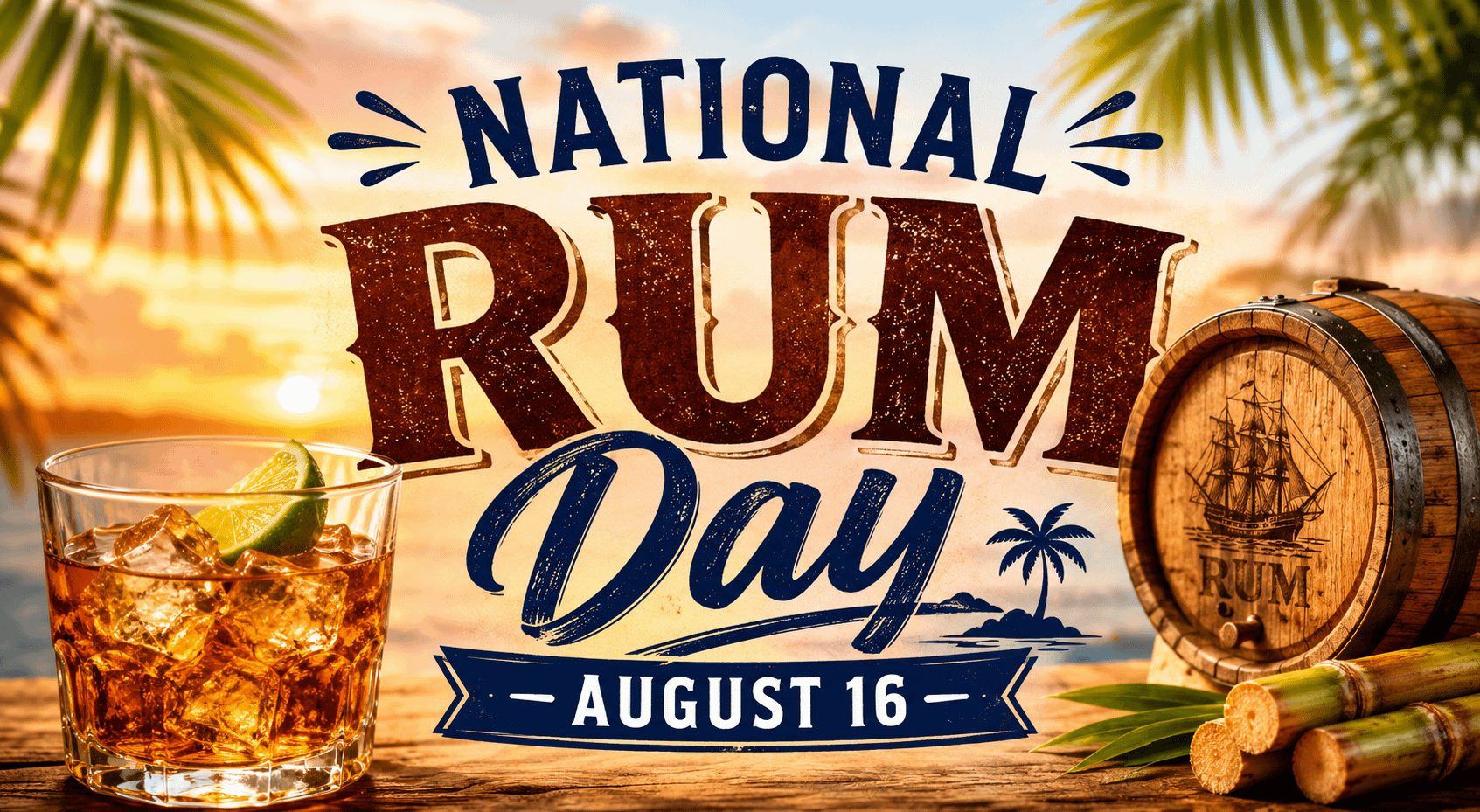
Every year on August 16, rum lovers, cocktail enthusiasts, bartenders, restaurants, and anyone who appreciates a little tropical flavor have a reason to celebrate National Rum Day.
Rum is one of those spirits that can instantly create a feeling. A splash of rum mixed with pineapple and coconut can make you imagine a tropical beach. Fresh mint, lime, and rum can turn an ordinary afternoon into something that feels like a Caribbean getaway. A beautifully aged dark rum, meanwhile, can offer a completely different experience filled with notes of oak, vanilla, caramel, spice, and toasted sugar.
But rum is much more than a tropical cocktail ingredient.
Behind every bottle is a story connected to sugarcane, Caribbean culture, maritime history, colonial trade, cocktail innovation, and centuries of changing drinking traditions.
Rum has been enjoyed by sailors, mixed into some of history’s most famous cocktails, used in desserts and cooking, and transformed into everything from inexpensive mixing spirits to carefully aged premium bottles.
National Rum Day gives us an opportunity to celebrate all of it.
Whether your favorite is a Mojito, Daiquiri, Piña Colada, Mai Tai, Rum Punch, Cuba Libre, or simply a glass of aged rum, August 16 is the perfect day to discover more about one of the world’s most fascinating spirits.
What Is National Rum Day?
National Rum Day is celebrated every year on August 16 in the United States.
Like many unofficial food and beverage holidays, the exact origin of National Rum Day isn’t particularly clear. What is clear is why rum deserves its own celebration.
Few spirits offer quite as much variety.
Rum can be:
- Light and refreshing
- Rich and dark
- Sweet and spicy
- Bold and funky
- Smooth and barrel-aged
- Fruity and tropical
- Simple enough for a two-ingredient mixed drink
- Complex enough to slowly sip and appreciate on its own
That diversity makes National Rum Day something different for everyone.
One person might celebrate with a frozen Piña Colada beside the pool. Someone else might order a classic Daiquiri at a cocktail bar. Another person might enjoy a premium aged rum neat after dinner.
You don’t even have to drink rum to participate. You could make rum cake, prepare a Caribbean-inspired meal, explore the history of rum, learn about sugarcane production, or create a tropical mocktail inspired by famous rum cocktails.
What Exactly Is Rum?
At its most basic level, rum is a distilled alcoholic spirit produced from sugarcane products.
Most rum begins with either:
Molasses — the thick, dark byproduct created during sugar production.
or
Fresh sugarcane juice — used in certain rum-making traditions, including rhum agricole.
Those ingredients contain sugars that can be fermented.
During fermentation, yeast converts those sugars into alcohol. The resulting fermented liquid is then distilled, creating a much stronger spirit.
From there, the possibilities become enormous.
The rum may be filtered and bottled relatively young.
It might spend months or years aging inside barrels.
It could be blended with other rums.
It might be infused or flavored with spices.
The producer may combine different distillation methods, barrel types, ages, or batches to create a particular house style.
That’s why two bottles labeled “rum” can taste dramatically different from one another.
The Story of Rum Begins With Sugarcane
To understand rum, you first have to understand sugar.
Sugarcane was cultivated long before modern rum existed. Over centuries, sugarcane cultivation spread across different parts of the world through trade, migration, conquest, and colonization.
European colonial powers eventually established enormous sugar-producing operations throughout the Caribbean.
Sugar became an incredibly valuable commodity.
Producing refined sugar, however, created something else: molasses.
Molasses was once considered a byproduct of sugar production, but people eventually discovered that it could be fermented and distilled.
The result was rum.
By the 17th century, rum production had become established in parts of the Caribbean.
The spirit was inexpensive, relatively easy to transport, and increasingly popular.
A beverage that began as a practical use for a sugar-production byproduct eventually became internationally recognized.
Barbados and the Early Rum Industry
Barbados is frequently associated with some of the earliest commercial rum production.
The island became an important center of sugar cultivation during the 1600s, and rum production developed alongside the sugar industry.
From there, rum-making traditions expanded and evolved throughout the Caribbean.
Different islands developed their own production techniques, preferences, and flavor profiles.
This regional diversity remains one of rum’s most interesting characteristics today.
A Jamaican rum can taste dramatically different from a rum made in Barbados, Puerto Rico, Cuba, or Martinique.
That’s part of the adventure of exploring rum.
You’re not simply trying different brands.
You’re experiencing different histories, climates, ingredients, distillation techniques, and cultural traditions.
The Darker Side of Rum’s History
Celebrating rum’s history also means acknowledging the painful history connected to its rise.
Caribbean sugar plantations were deeply connected to European colonialism and the exploitation and enslavement of millions of people of African descent.
Sugar production required enormous amounts of labor, and enslaved people were forced to work under brutal conditions.
Because molasses was produced by the sugar industry and rum was produced from molasses, the early commercial rum trade became intertwined with this colonial economic system.
Rum also became part of Atlantic trading networks involving Europe, Africa, the Caribbean, and North America.
This history should not be erased when talking about the development of rum.
National Rum Day can certainly be a fun celebration of cocktails and flavor, but understanding where rum came from gives us a more complete picture of the spirit’s complicated history.
Rum Comes to Colonial America
Rum didn’t remain confined to Caribbean islands.
It became enormously popular throughout Britain’s North American colonies.
Colonial merchants imported molasses from Caribbean sugar-producing regions and used it to produce rum in local distilleries.
New England became particularly well known for rum production.
By the 18th century, rum had become one of the most popular alcoholic beverages in colonial America.
It was consumed in taverns, homes, ports, and communities throughout the colonies.
Rum’s availability and popularity made it an important part of early American drinking culture.
Eventually, American whiskey would become more dominant, especially as settlers expanded westward into regions better suited for growing grains.
But rum had already secured its place in American history.
Rum and the American Revolution
Rum and molasses also became connected to political tensions between Britain and its American colonies.
British attempts to regulate colonial trade in molasses affected merchants and distillers who relied on imported sugar products.
The Molasses Act of 1733 attempted to impose duties on molasses imported into British North America from non-British colonies.
Later, the Sugar Act of 1764 altered those duties while increasing enforcement.
These laws were part of the larger system of taxation and trade regulation that contributed to growing resentment toward British authority.
Rum wasn’t responsible for the American Revolution, of course, but sugar and molasses were part of the complicated economic environment surrounding colonial resistance.
Rum Takes to the Sea
Few beverages have become as closely associated with sailors as rum.
Alcohol was commonly carried aboard ships during the age of sail. Eventually, rum became particularly important within the British Royal Navy.
For generations, British sailors received a daily ration of rum.
That tradition became so deeply connected to naval culture that its eventual end became a historic occasion.
The Royal Navy discontinued the daily rum ration on July 31, 1970.
The day became known as Black Tot Day.
After centuries of tradition, the famous naval rum ration was gone.
What Is Grog?
The word grog is another famous term connected to rum and naval history.
Rum rations were sometimes diluted with water, creating what became known as grog.
Citrus juice could also be incorporated, depending on the circumstances and period.
The practice of mixing rum with water helped create another chapter in the spirit’s maritime legend.
Today, “grog” can refer to various alcoholic mixtures, especially drinks inspired by naval or tropical traditions.
Rum and Pirates: History Meets Legend
You can’t talk about rum without eventually talking about pirates.
Pirates operating in the Caribbean during the age of sail would certainly have encountered rum. The spirit was widely produced and transported throughout the region.
Ships carried barrels of alcohol, and rum was readily available in Caribbean ports.
But popular culture greatly amplified the relationship.
Books, movies, television programs, advertisements, and pirate-themed attractions transformed rum into almost the official drink of fictional piracy.
Today, the image is practically inseparable:
Pirates.
Treasure maps.
Tropical islands.
Wooden barrels.
And rum.
The historical relationship may be more complicated than Hollywood suggests, but the cultural connection is now firmly established.
How Rum Is Made
Rum production can vary considerably depending on the country, producer, and desired style.
However, most rum goes through several basic stages.
Step 1: Sugarcane
Everything begins with sugarcane.
Producers may use molasses created during sugar production or fresh sugarcane juice.
The choice has an enormous impact on the eventual flavor.
Step 2: Fermentation
Yeast is introduced to the sugar-rich liquid.
The yeast consumes sugars and produces alcohol along with various flavor compounds.
Fermentation can dramatically influence a rum’s personality.
Shorter fermentation may create a cleaner spirit, while longer or specialized fermentation methods can contribute more intense aromas and flavors.
Step 3: Distillation
The fermented liquid is distilled.
Rum can be produced using different types of stills, including pot stills and column stills.
Pot stills are often associated with heavier, richer spirits, while column stills can produce lighter and cleaner styles.
Some producers combine rums made using multiple distillation techniques.
Step 4: Aging
Some rum is bottled young, while other rum is aged inside barrels.
Barrel aging can transform the spirit.
Over time, rum interacts with the wood and develops additional flavor, color, and complexity.
Common characteristics may include:
- Vanilla
- Caramel
- Toffee
- Oak
- Baking spices
- Coconut
- Dried fruit
- Tobacco
- Chocolate
- Toasted sugar
Climate plays an important role as well.
Rum aging in warm tropical environments can interact with barrels relatively quickly compared with spirits stored in cooler climates.
Step 5: Blending
Master blenders may combine different barrels, ages, or styles of rum to create a consistent final product.
Blending is an art of its own.
A producer may combine lighter and heavier rums or different ages to create complexity and balance.
Step 6: Bottling
After aging and blending, the rum may be filtered, adjusted to the desired bottling strength, and packaged for sale.
Then it begins its journey to bars, restaurants, stores, and home cocktail enthusiasts around the world.
Understanding the Different Types of Rum
One of the easiest ways to explore rum on National Rum Day is to compare different styles.
White Rum
White rum is generally lighter in flavor and appearance.
Some white rums are aged and then filtered to remove much of their color.
White rum works especially well in refreshing cocktails where you want the rum to complement rather than dominate the other ingredients.
Popular white-rum cocktails include:
- Mojito
- Daiquiri
- Cuba Libre
- Rum Punch
- Piña Colada
Gold or Amber Rum
Gold rum typically has more barrel influence than many white rums.
It can provide flavors such as vanilla, caramel, toasted sugar, and mild spice.
Gold rum is versatile enough for both cocktails and simple mixed drinks.
Dark Rum
Dark rum generally offers richer and more pronounced flavors.
Depending on the bottle, you might encounter notes of molasses, caramel, spice, oak, coffee, chocolate, or dried fruit.
Dark rum is particularly popular in tropical cocktails where a stronger rum flavor is desired.
Aged Rum
Aged rum is where many people discover just how sophisticated rum can become.
Quality aged rum may be enjoyed neat, over a large ice cube, or with a tiny splash of water.
A carefully aged rum can offer layers of oak, vanilla, caramel, spice, fruit, and roasted flavors.
Spiced Rum
Spiced rum contains added spices and flavorings.
Common flavors include:
- Vanilla
- Cinnamon
- Nutmeg
- Clove
- Allspice
Spiced rum works particularly well with cola, ginger beer, apple cider, pineapple juice, and other flavorful mixers.
Overproof Rum
Overproof rum contains significantly more alcohol than typical standard-strength rum.
These powerful spirits can add intensity and flavor to cocktails but should be measured carefully.
More alcohol doesn’t automatically mean better rum.
Balance is always important.
Rhum Agricole
Rhum agricole is traditionally produced from fresh sugarcane juice rather than molasses.
It is especially associated with French Caribbean traditions, including Martinique.
Its flavor can be noticeably different from molasses-based rum, often displaying grassy, earthy, herbal, or vegetal characteristics.
For someone accustomed only to sweeter commercial rum, tasting rhum agricole can be an entirely new experience.
Rum Around the Caribbean
The Caribbean isn’t one single rum-producing culture.
Different islands and countries have developed their own traditions.
Jamaica
Jamaican rum is famous for bold aromas and intense flavors.
Some Jamaican rums have fruity, funky characteristics that immediately stand out in cocktails.
Barbados
Barbados has one of the world’s oldest rum traditions.
Many Barbadian rums are known for balance and complexity.
Puerto Rico
Puerto Rico has become a major center of modern rum production and is especially associated with lighter Spanish-influenced styles.
Cuba
Cuban rum traditions helped influence many classic cocktails, particularly drinks emphasizing lighter, cleaner styles of rum.
The Mojito, Daiquiri, and Cuba Libre all have strong Cuban connections.
Martinique
Martinique is particularly famous for rhum agricole.
Fresh sugarcane juice gives these spirits a character distinctly different from many molasses-based Caribbean rums.
Exploring rum geographically can be one of the most interesting ways to celebrate National Rum Day.
Famous Rum Cocktails
Rum has helped create some of the world’s most recognizable cocktails.
The Daiquiri
The traditional Daiquiri is beautifully simple.
Rum.
Fresh lime juice.
Sugar.
That’s essentially it.
Modern frozen daiquiris can be delicious, but they’re very different from the original classic cocktail.
A properly made traditional Daiquiri is crisp, refreshing, tart, slightly sweet, and perfectly balanced.
The Mojito
The Mojito combines rum with fresh mint, lime, sugar, and soda water.
Few cocktails feel more refreshing on a warm summer afternoon.
The Piña Colada
Rum, pineapple, and coconut come together in one of the most recognizable tropical cocktails ever created.
Whether blended or shaken, the Piña Colada practically tastes like a vacation.
The Cuba Libre
At first glance, the Cuba Libre resembles a simple rum and cola.
The important difference is fresh lime.
That little burst of citrus transforms the drink.
The Mai Tai
The Mai Tai is one of the legendary cocktails associated with tiki culture.
A proper Mai Tai highlights rum rather than burying it underneath excessive sweetness.
Dark ‘n’ Stormy
Dark rum and ginger beer create a bold combination of sweetness, spice, and refreshing carbonation.
Rum Punch
There isn’t one universal recipe for rum punch.
That’s part of the fun.
Rum punches frequently combine rum with tropical fruit juices, citrus, sweeteners, spices, and sometimes multiple types of rum.
Make a Classic Daiquiri for National Rum Day
If you’ve never made a traditional Daiquiri, August 16 is the perfect opportunity.
Ingredients
- 2 ounces white rum
- 1 ounce freshly squeezed lime juice
- 3/4 ounce simple syrup
- Ice
Directions
Add the rum, lime juice, and simple syrup to a cocktail shaker filled with ice.
Shake thoroughly until chilled.
Strain into a chilled cocktail glass.
That’s it.
Three ingredients.
One classic cocktail.
It’s an excellent reminder that great drinks don’t have to be complicated.
Tropical National Rum Day Punch
Hosting a gathering?
A tropical rum punch can bring plenty of summer flavor.
Ingredients
- 2 ounces rum
- 2 ounces pineapple juice
- 1 ounce orange juice
- 1/2 ounce fresh lime juice
- 1/2 ounce grenadine
- Ice
- Orange slice, pineapple wedge, or lime wheel for garnish
Directions
Fill a shaker with ice.
Add rum, pineapple juice, orange juice, lime juice, and grenadine.
Shake until thoroughly chilled.
Strain into a glass filled with fresh ice.
Add your garnish and enjoy responsibly.
For additional carbonation, top it with a splash of sparkling water.
Build Your Own Rum Tasting
National Rum Day can also be an opportunity to actually learn about rum rather than simply mixing another cocktail.
Choose several contrasting styles.
For example:
- White rum
- Gold rum
- Dark rum
- Aged rum
- Spiced rum
- Rhum agricole
Pour only small tasting portions.
Begin by smelling each rum before tasting it.
Look for different aromas.
Do you notice vanilla?
Caramel?
Fruit?
Grass?
Molasses?
Oak?
Spice?
Then take a small sip.
Notice how the flavor develops.
Some rums may taste sweet and approachable. Others may be dry, funky, earthy, spicy, or intensely aromatic.
Comparing them side by side can completely change your understanding of rum.
Rum Isn’t Just for Cocktails
Rum also has a long history in cooking and baking.
Its combination of sweetness, spice, fruit, and caramelized flavors makes it particularly useful in desserts.
Popular rum-inspired foods include:
- Rum cake
- Bananas Foster
- Bread pudding with rum sauce
- Rum balls
- Chocolate rum cake
- Rum raisin desserts
- Pineapple rum cake
- Rum caramel sauce
- Fruitcake
- Rum-glazed desserts
Rum can also appear in savory recipes.
A small amount can add complexity to barbecue sauces, marinades, glazes, and tropical-inspired dishes.
Dark and spiced rums are especially useful when paired with ingredients such as brown sugar, pineapple, bananas, coconut, vanilla, cinnamon, and caramel.
Why Rum Works So Well With Tropical Flavors
Rum’s association with tropical cocktails isn’t accidental.
Many ingredients commonly paired with rum come from regions where sugarcane and rum production became culturally important.
Rum naturally complements:
- Pineapple
- Coconut
- Mango
- Passion fruit
- Orange
- Lime
- Banana
- Guava
- Ginger
- Mint
Citrus provides acidity.
Fruit contributes sweetness and aroma.
Herbs provide freshness.
Spices create depth.
Rum ties everything together.
That’s why bartenders have been able to create such an enormous variety of rum cocktails.
Throw a National Rum Day Party
August is an ideal time for a tropical-themed gathering.
You could create a simple National Rum Day celebration with tropical decorations, Caribbean-inspired food, music, and a small cocktail menu.
Consider serving two or three drinks rather than trying to offer everything.
For example:
Classic Daiquiri
Mojito
Tropical Rum Punch
You could also offer alcohol-free tropical drinks so everyone has something festive to enjoy.
Food could include jerk chicken, grilled pineapple, coconut rice, tropical fruit, seafood, plantains, or Caribbean-inspired appetizers.
For dessert, serve rum cake or banana bread pudding.
The goal doesn’t need to be drinking heavily.
Make the celebration about food, history, music, flavors, and good company.
Create a Rum Cocktail Bar at Home
Another fun idea is setting up a small make-your-own cocktail station.
Provide:
- Rum
- Fresh lime juice
- Pineapple juice
- Orange juice
- Coconut cream
- Ginger beer
- Cola
- Soda water
- Simple syrup
- Fresh mint
- Lime wedges
- Orange slices
- Pineapple
- Ice
Guests can experiment with different combinations.
Make sure everyone knows the approximate amount of alcohol in each serving, and encourage measured pours rather than free-pouring.
Celebrate Without Alcohol
National Rum Day doesn’t have to exclude anyone who doesn’t drink.
Many famous rum cocktails can inspire delicious mocktails.
Try combining pineapple juice, lime, coconut, ginger beer, mint, sparkling water, or tropical fruit syrups.
You could create an alcohol-free Mojito with mint, lime, simple syrup, and soda water.
Or make a tropical cooler using pineapple, orange, lime, and sparkling water.
The tropical flavors associated with rum culture can be enjoyed without alcohol.
Interesting Rum Facts
Here are a few things that make rum especially fascinating.
Rum is made from sugarcane products. Molasses is extremely common, although some styles use fresh sugarcane juice.
Rum has deep Caribbean roots. Commercial rum production developed in the Caribbean centuries ago.
Rum was once enormously important in colonial America. New England became a significant center of rum distillation.
Sailors received rum rations. The British Royal Navy maintained its famous tradition until 1970.
Warm climates influence aging. Tropical temperatures can accelerate interactions between the spirit and its barrel.
White rum isn’t necessarily unaged. Some white rums spend time in barrels before being filtered to remove much of their color.
Not all rum tastes sweet. Depending on how it’s produced, rum can be dry, grassy, earthy, funky, spicy, smoky, fruity, or woody.
Rum can be a serious sipping spirit. Premium aged expressions can offer complexity comparable to other barrel-aged spirits.
Rum and Tiki Culture
Rum also became central to the development of tiki cocktail culture during the 20th century.
Tiki bars became famous for elaborate tropical environments and complex cocktails incorporating different rums, fruit juices, citrus, syrups, spices, and decorative garnishes.
Some drinks combined multiple styles of rum in a single glass.
The objective wasn’t simply to make something strong or sweet.
The best tiki cocktails were carefully constructed so different rums contributed different characteristics.
One might provide richness.
Another might add aroma.
Another could contribute strength or depth.
The result could be extraordinarily complex.
Modern bartenders continue rediscovering and reinterpreting these tropical cocktail traditions.
The Art of Aging Rum
One of the most interesting areas of modern rum appreciation involves aged expressions.
As rum rests inside a wooden barrel, chemical reactions gradually alter its aroma, flavor, texture, and color.
The barrel can contribute vanilla, spice, caramel, toasted wood, and other characteristics.
Meanwhile, some alcohol and water naturally evaporate during aging.
This evaporation is commonly referred to as the angel’s share.
Because Caribbean climates are generally warmer than many traditional whiskey-aging regions, evaporation and barrel interaction can happen relatively quickly.
That makes tropical aging particularly fascinating.
How to Enjoy Aged Rum
If you purchase a quality aged rum for National Rum Day, try tasting it without immediately adding mixers.
Pour a small amount into a glass.
Let it rest briefly.
Smell it gently rather than taking an aggressive inhale.
Take a small sip.
Allow the rum to move across your palate.
Look for different flavors.
You might notice:
Vanilla.
Caramel.
Oak.
Banana.
Coconut.
Dried fruit.
Chocolate.
Coffee.
Baking spices.
Molasses.
Every bottle is different.
You can also add a few drops of water and see whether additional aromas become noticeable.
National Rum Day and Summer
August 16 arrives during the heart of summer in the United States, making the timing almost perfect.
Rum cocktails naturally complement warm weather.
Picture a backyard cookout with grilled food and Mojitos.
A poolside afternoon with Piña Coladas.
A summer evening with Rum Punch.
Or a quiet sunset with a traditional Daiquiri.
Rum’s tropical reputation makes it feel almost designed for summer celebrations.
Pairing Rum With Food
Rum can pair surprisingly well with food.
Lighter rum cocktails work nicely with seafood, grilled chicken, tacos, citrus-marinated dishes, and fresh salads.
Dark and aged rums complement richer foods such as barbecue, roasted pork, smoked meats, chocolate desserts, caramel, and grilled fruit.
Spiced rum pairs naturally with cinnamon, apples, bananas, vanilla, and other warm dessert flavors.
For a National Rum Day dinner, you could build an entire menu around complementary flavors.
Start with tropical fruit or seafood.
Serve jerk chicken or grilled pork.
Add coconut rice and plantains.
Finish with rum cake or grilled pineapple.
Enjoy National Rum Day Responsibly
National Rum Day is meant to be enjoyable, but responsible drinking should always be part of the celebration.
If you choose to drink alcohol:
Eat before and while drinking.
Drink water throughout the celebration.
Measure cocktail ingredients instead of guessing.
Know the strength of what you’re drinking.
Give yourself plenty of time between drinks.
Never drink and drive.
Arrange a designated driver, rideshare, taxi, or other safe transportation when necessary.
And remember that choosing not to drink alcohol is always perfectly acceptable.
You can enjoy the food, history, flavors, and atmosphere of National Rum Day without consuming alcohol.
A Spirit With Centuries of Stories
Rum has traveled an extraordinary path.
It began with sugarcane.
It developed alongside the Caribbean sugar industry.
It became intertwined with colonial trade and slavery.
It traveled aboard ships.
It became part of naval tradition.
It entered colonial American taverns.
It became connected with pirates in history and popular culture.
It helped inspire some of the world’s greatest cocktails.
It became a cornerstone of tropical and tiki drinking traditions.
And today, rum can be found everywhere from neighborhood bars and backyard cookouts to prestigious cocktail programs and collections of premium aged spirits.
Few spirits can tell quite as many stories.
Celebrate National Rum Day on August 16
When National Rum Day arrives on August 16, you have plenty of ways to join the celebration.
Make a traditional Daiquiri and discover how impressive three simple ingredients can become.
Mix a refreshing Mojito.
Blend a tropical Piña Colada.
Prepare a pitcher of Rum Punch for friends.
Bake a homemade rum cake.
Taste several different rum styles.
Learn about Caribbean rum-producing traditions.
Explore the complicated history connecting rum, sugar, trade, colonialism, and maritime culture.
Or simply sit back with your favorite rum cocktail and enjoy a summer evening.
National Rum Day is ultimately about appreciating a spirit that has influenced drinking culture for centuries.
From Caribbean sugarcane fields to colonial taverns, naval ships, tropical resorts, tiki bars, modern cocktail lounges, and home kitchens, rum has become much more than an ingredient.
It has become part of history, culture, food, travel, and celebration.
So here’s to National Rum Day on August 16—a day to discover a new cocktail, learn a little history, enjoy some tropical flavor, and appreciate one of the world’s most versatile spirits.
Celebrate responsibly, enjoy the experience, and raise a glass to the long and fascinating story of rum.
Join the Conversation
What’s your favorite rum drink—a Mojito, Piña Colada, Daiquiri, Mai Tai, Rum Punch, Cuba Libre, rum and cola, or something else?
Share your favorite and let others know what you’ll be enjoying for National Rum Day!
Read More Holidays & National Days
Leave a ReplyCancel reply