
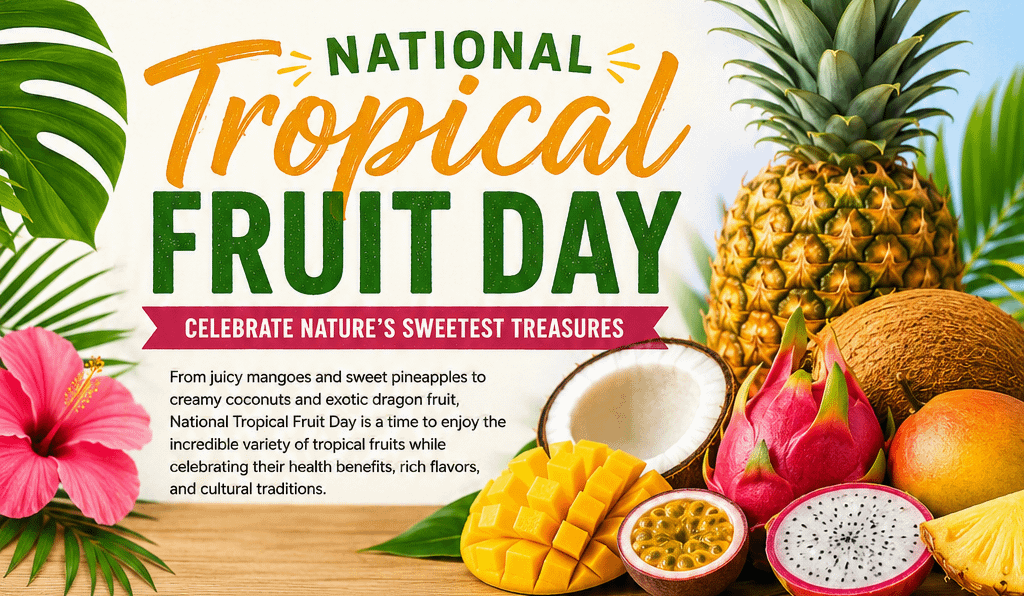
National Tropical Fruit Day is a celebration of the vibrant, flavorful fruits that thrive in warm climates around the world. From juicy mangoes and sweet pineapples to creamy coconuts and exotic dragon fruit, this day is an opportunity to enjoy the incredible variety of tropical fruits while learning about their nutritional benefits, cultural importance, and delicious culinary uses.
Whether you’re blending a refreshing smoothie, preparing a colorful fruit salad, or simply enjoying a perfectly ripe mango, National Tropical Fruit Day reminds us that healthy eating can be both exciting and delicious.
What Is National Tropical Fruit Day?
National Tropical Fruit Day recognizes the many fruits that flourish in tropical and subtropical regions. These fruits are known for their bold colors, refreshing flavors, and impressive health benefits. Many have become pantry staples worldwide, while others remain exciting discoveries for adventurous food lovers.
The day encourages people to:
- Try a new tropical fruit.
- Learn about the countries where these fruits are grown.
- Support local farmers and sustainable agriculture.
- Incorporate more fresh fruit into everyday meals.
- Celebrate the rich diversity of tropical cuisine.
What Makes a Fruit Tropical?
Tropical fruits typically grow in regions that experience warm temperatures year-round with abundant rainfall. These climates provide ideal conditions for fruits that cannot tolerate frost.
Many tropical fruits come from areas including:
- Central America
- South America
- The Caribbean
- Southeast Asia
- Africa
- Pacific Islands
Today, many tropical fruits are grown commercially in warm regions around the world, making them available in grocery stores throughout the year.
Popular Tropical Fruits
Mango
Often called the “King of Fruits,” mangoes are sweet, juicy, and packed with vitamins A and C. They can be enjoyed fresh, dried, blended into smoothies, or added to salsa and desserts.
Pineapple
Known for its perfect balance of sweetness and acidity, pineapple contains bromelain, an enzyme that helps break down proteins. It is delicious fresh, grilled, or mixed into savory dishes.
Banana
One of the world’s most popular fruits, bananas provide potassium, vitamin B6, and natural carbohydrates that make them an excellent energy source.
Papaya
Papaya features bright orange flesh and a sweet, mellow flavor. Rich in vitamin C and digestive enzymes, it’s often enjoyed fresh with a squeeze of lime.
Coconut
Every part of the coconut can be used—from refreshing coconut water to creamy coconut milk and nutrient-rich coconut meat.
Dragon Fruit
With its vibrant pink skin and speckled interior, dragon fruit is as beautiful as it is nutritious. It offers fiber, antioxidants, and vitamin C with a mild, refreshing flavor.
Passion Fruit
Small but intensely flavorful, passion fruit has fragrant pulp that adds tropical sweetness to beverages, desserts, and yogurt.
Guava
Guava is exceptionally rich in vitamin C and offers a unique blend of sweet and tart flavors. It’s commonly used in juices, jams, and desserts.
Lychee
Covered in a rough pink shell, lychees contain juicy, translucent flesh with floral sweetness that makes them a favorite summer treat.
Star Fruit (Carambola)
Named for the star shape revealed when sliced, this fruit has a crisp texture and mildly sweet flavor that makes it perfect for garnishes and fruit platters.
Health Benefits of Tropical Fruits
Tropical fruits are nutritional powerhouses packed with vitamins, minerals, antioxidants, and fiber.
Some of their many benefits include:
Supports Immune Health
Many tropical fruits are excellent sources of vitamin C, which helps strengthen the immune system and supports healthy skin.
Promotes Heart Health
Potassium-rich fruits like bananas and coconuts help maintain healthy blood pressure and support cardiovascular function.
Aids Digestion
Fiber and natural digestive enzymes found in fruits like papaya and pineapple promote healthy digestion.
Rich in Antioxidants
Colorful tropical fruits contain compounds that help protect the body’s cells from oxidative stress.
Natural Energy
Their combination of natural sugars, vitamins, and minerals provides a quick yet nutritious source of energy.
Fun Ways to Celebrate National Tropical Fruit Day
Create a Tropical Fruit Platter
Arrange a colorful assortment of fresh tropical fruits for family or guests. Add yogurt, honey, or chocolate for dipping.
Blend a Tropical Smoothie
Combine mango, pineapple, banana, coconut milk, and ice for a refreshing drink.
Make Homemade Fruit Salsa
Dice mango, pineapple, red onion, cilantro, lime juice, and jalapeño for a delicious topping on grilled chicken or fish.
Grill Fresh Pineapple
Grilling caramelizes the natural sugars, creating an incredible dessert served with vanilla ice cream.
Try Something New
Visit a local international market and purchase a fruit you’ve never tasted before.
Tropical Fruits Around the World
Different cultures have embraced tropical fruits in unique ways.
- Thailand features mango sticky rice.
- Brazil serves fresh açaí bowls.
- Mexico enjoys mango with chili powder and lime.
- Hawaii incorporates pineapple into many local dishes.
- The Caribbean uses coconut in soups, curries, and desserts.
- The Philippines is famous for its sweet mango varieties.
These regional specialties demonstrate how tropical fruits have become essential parts of local traditions and cuisines.
Tropical Fruits in Everyday Cooking
Tropical fruits aren’t limited to desserts. They can enhance both sweet and savory dishes.
Popular uses include:
- Smoothies
- Fruit salads
- Yogurt parfaits
- Sorbets
- Cocktails and mocktails
- Salsa
- Grilled side dishes
- Marinades
- Cakes and pies
- Breakfast bowls
Their versatility makes them perfect ingredients throughout the day.
Sustainability Matters
As demand for tropical fruits grows, supporting sustainable farming practices becomes increasingly important. Purchasing responsibly grown fruit helps protect ecosystems, supports farming communities, and encourages environmentally friendly agriculture.
Choosing locally grown tropical fruits when available or buying certified sustainable imports can make a positive impact.
Interesting Tropical Fruit Facts
- Mango trees can produce fruit for more than 100 years.
- Bananas are technically berries.
- Pineapples take nearly two years to mature.
- Coconut palms can produce fruit for decades.
- Dragon fruit grows on climbing cactus plants.
- Passion flowers produce passion fruit.
- Durian, another tropical fruit, is famous for its powerful aroma.
- Jackfruit is the largest tree-borne fruit in the world and can weigh over 50 pounds.
Final Thoughts
National Tropical Fruit Day is a wonderful reminder that healthy eating can be colorful, flavorful, and fun. Whether you enjoy familiar favorites like bananas and pineapples or venture into more exotic options like dragon fruit, lychee, or passion fruit, tropical fruits bring sunshine to every meal.
Take this opportunity to explore new flavors, support sustainable agriculture, and appreciate the incredible diversity that nature provides. One delicious bite is often all it takes to discover a new favorite fruit from somewhere around the world.
Celebrate National Tropical Fruit Day by filling your plate with nature’s sweetest gifts—and enjoy every vibrant, refreshing bite.
Read More Holidays & National Days
Leave a ReplyCancel reply