
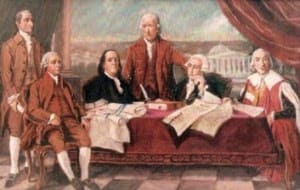
The Treaty of Paris is one of the most significant diplomatic agreements in world history, marking the end of the American Revolutionary War and securing the independence of the United States. Signed on September 3, 1783, in Paris, France, the treaty brought together representatives from the United States and Great Britain to negotiate terms of peace after years of conflict.
Background
The American Revolution, which began in 1775, pitted the thirteen American colonies against British rule. After years of battles, hardships, and international alliances, particularly with France, the war reached a turning point at the Battle of Yorktown in 1781. With British forces defeated there, both sides recognized the need for formal negotiations to end the war.
Negotiations in Paris
Peace talks were held in Paris, with American representatives Benjamin Franklin, John Adams, and John Jay leading the discussions. Britain was represented by David Hartley, a member of Parliament and longtime advocate for reconciliation. The negotiations were not easy, as both sides sought to secure favorable terms, but they ultimately reached a compromise that satisfied the key demands of each party.
Key Provisions of the Treaty
The Treaty of Paris outlined several important terms, including:
Recognition of Independence: Great Britain officially recognized the United States as a free and independent nation.
Territorial Gains: The United States gained control of land stretching from the Atlantic Ocean to the Mississippi River, and from Canada in the north to Spanish Florida in the south.
Fishing Rights: Americans secured the right to fish off the coast of Newfoundland and in the Gulf of St. Lawrence.
Debts and Loyalists: Both nations agreed to honor debts owed to creditors, and the U.S. promised to restore property and rights to Loyalists who had supported Britain during the war.
Impact and Legacy
The Treaty of Paris was a monumental achievement for the young United States, establishing it as a sovereign nation on the global stage. It also reshaped North America’s political landscape by redrawing borders and reducing British influence in the region.
For Britain, the treaty marked the loss of its most prosperous colonies but also opened new opportunities to focus on trade and expansion elsewhere. For the United States, it was the first major test of its diplomatic skill and a foundation for its future growth as a nation.
Conclusion
The Treaty of Paris of 1783 was more than just the end of a war—it was the beginning of a new chapter in history. By securing independence and favorable territorial claims, the treaty gave the United States the chance to thrive as a free nation. More than two centuries later, it remains a symbol of the power of diplomacy in shaping nations and defining destinies.
Read More Holidays & National Days
Leave a ReplyCancel reply