When the weather begins to cool and the colors of fall start appearing, comfort food becomes especially tempting. But comfort food doesn’t have to mean heavy casseroles, deep-fried meals, or dishes loaded with cream and cheese. Sometimes the best fall dinner is one that combines warm seasonal flavors with colorful vegetables, lean protein, and a savory sauce.
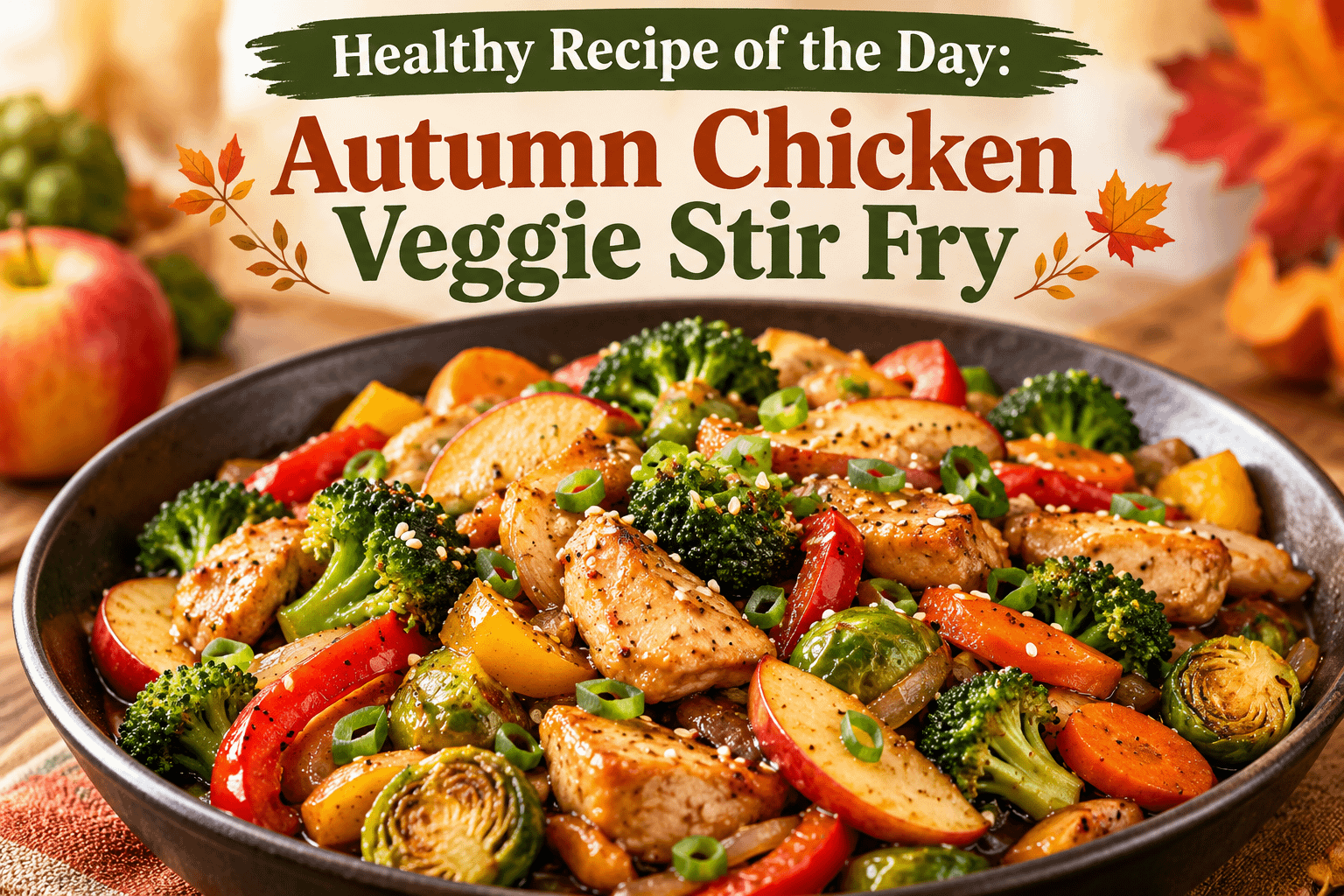
Today’s Healthy Recipe of the Day is Autumn Chicken Veggie Stir Fry, a simple and satisfying meal packed with chicken, seasonal vegetables, and a slightly sweet and savory homemade stir-fry sauce.
This recipe brings together some of the best flavors of autumn in a meal that can be prepared in one skillet or wok. Tender chicken is cooked alongside crisp broccoli, colorful bell peppers, carrots, Brussels sprouts, and apple. Everything is finished with a homemade sauce featuring soy sauce, apple cider vinegar, garlic, ginger, and just enough maple syrup to provide a touch of fall sweetness.
The result is a colorful dinner that tastes like comfort food while still putting vegetables and lean protein at the center of the plate.
Why Autumn Chicken Veggie Stir Fry Is Worth Making
Stir-fries are one of the easiest ways to turn a refrigerator full of vegetables into a complete meal.
They are quick, flexible, and incredibly easy to customize.
Traditional stir-fries often feature familiar vegetables such as broccoli, peppers, onions, mushrooms, and snap peas. This autumn-inspired version keeps some of those favorites while adding seasonal ingredients that give the dish a distinctly fall personality.
Brussels sprouts add an earthy flavor and satisfying texture. Carrots provide natural sweetness. Apples bring a surprising fresh element to the dish, while maple syrup adds just enough sweetness to balance the salty soy sauce and tangy apple cider vinegar.
Chicken provides the protein that transforms everything into a filling dinner.
Best of all, you don’t need complicated cooking techniques or unusual equipment. A large skillet works perfectly.
Ingredients
For the Chicken and Vegetables
- 1½ pounds boneless, skinless chicken breast
- 1 tablespoon olive oil
- 2 cups broccoli florets
- 1½ cups Brussels sprouts, trimmed and halved
- 1 red bell pepper, sliced
- 1 yellow or orange bell pepper, sliced
- 2 medium carrots, thinly sliced
- 1 small yellow onion, sliced
- 1 crisp apple, cored and thinly sliced
- 2 cloves garlic, minced
- 1 teaspoon freshly grated ginger
- Salt and black pepper to taste
For the Autumn Stir-Fry Sauce
- ¼ cup low-sodium soy sauce
- 2 tablespoons apple cider vinegar
- 1½ tablespoons pure maple syrup
- 1 tablespoon water
- 1 teaspoon sesame oil
- 1 teaspoon cornstarch
- ½ teaspoon freshly grated ginger
- 1 small garlic clove, minced
- Pinch of red pepper flakes, optional
Optional Garnishes
- Sliced green onions
- Sesame seeds
- Chopped toasted pecans
- Fresh parsley
- Additional red pepper flakes
Preparing the Chicken
Start by cutting the chicken breasts into small, bite-sized pieces.
Try to make the pieces approximately the same size. Uniform pieces cook more evenly and reduce the chance of having some pieces become dry while others remain undercooked.
Pat the chicken dry with a paper towel and season lightly with salt and black pepper.
Because soy sauce contains sodium, you don’t need much salt on the chicken itself.
Heat the olive oil in a large skillet or wok over medium-high heat.
Once the pan is hot, add the chicken.
Spread the pieces into a single layer rather than piling everything into the center of the skillet. Giving the chicken some room helps it brown instead of steam.
Cook for approximately 5 to 7 minutes, stirring occasionally, until the chicken is browned and cooked through. Chicken should reach a safe internal temperature of 165°F.
Transfer the cooked chicken to a clean plate and set it aside.
Cooking the Autumn Vegetables
Using the same skillet allows the vegetables to pick up some of the flavor left behind by the chicken.
Add the Brussels sprouts and carrots first because they require more cooking time than the softer vegetables.
Cook for about 3 minutes.
Next, add the onion and broccoli.
Continue cooking for another 2 to 3 minutes.
Add the bell peppers and cook for approximately another 2 minutes.
You want the vegetables to become tender while retaining some crispness. One of the pleasures of a good stir-fry is the contrast between juicy chicken, crisp vegetables, and flavorful sauce.
Avoid cooking everything until the vegetables become completely soft.
During the final minute or two, add the minced garlic and grated ginger.
Stir frequently because garlic can burn quickly in a hot skillet.
Don’t Forget the Apple
Apple might sound unusual in a chicken stir-fry, but it works beautifully with these ingredients.
Choose a crisp apple that can withstand a little heat.
Honeycrisp, Pink Lady, Fuji, or Granny Smith are all good choices.
Add the sliced apple near the end of the vegetable cooking process.
The goal isn’t to turn the apple into applesauce. You simply want to warm it and slightly soften the edges while allowing the slices to retain some crispness.
That little burst of sweetness helps give this dish its autumn character.
Making the Homemade Stir-Fry Sauce
In a small bowl, whisk together:
Low-sodium soy sauce, apple cider vinegar, maple syrup, water, sesame oil, cornstarch, ginger, garlic, and optional red pepper flakes.
Continue whisking until the cornstarch is completely incorporated.
The cornstarch helps transform the liquid ingredients into a glossy sauce that coats the chicken and vegetables rather than collecting at the bottom of the skillet.
Pure maple syrup adds sweetness without overwhelming the dish.
You don’t need much.
The purpose isn’t to make a sugary sauce. It is simply there to balance the saltiness of the soy sauce and acidity of the apple cider vinegar.
Bringing Everything Together
Return the cooked chicken to the skillet with the vegetables.
Give the prepared sauce another quick whisk because cornstarch can settle at the bottom of the bowl.
Pour the sauce over the chicken and vegetables.
Stir everything together.
Allow the mixture to cook for another 2 to 3 minutes.
As the sauce heats, it should begin to thicken and coat everything in the skillet.
Remove the pan from the heat once the chicken is hot and the vegetables are coated.
Taste before serving.
You can add a little additional soy sauce if you want more saltiness, apple cider vinegar for additional tang, or red pepper flakes if you prefer some heat.
What to Serve With Autumn Chicken Veggie Stir Fry
This stir-fry can certainly be eaten by itself, particularly if you’re looking for a lighter dinner.
However, there are plenty of healthy ways to turn it into a larger meal.
Brown rice is a classic option. Its slightly nutty flavor pairs particularly well with the autumn vegetables.
Quinoa is another excellent choice and adds additional protein and fiber.
Cauliflower rice works well when you want to increase the vegetable content of the meal.
You could also serve the stir-fry over farro, which has a chewy texture and earthy flavor that feels especially appropriate during fall.
Another option is simply putting the stir-fry into a large bowl and enjoying it exactly as it is.
Why This Is a Balanced Dinner
One of the easiest approaches to healthier eating is building meals around several basic components rather than focusing on complicated diet rules.
This dish naturally provides several of them.
Lean Protein
Chicken breast provides a substantial amount of protein while remaining relatively lean.
Protein can help make meals more satisfying and supports the maintenance and repair of body tissues.
Plenty of Vegetables
Instead of vegetables being a small side dish, they make up a significant portion of this recipe.
Broccoli, Brussels sprouts, peppers, carrots, and onions provide different vitamins, minerals, plant compounds, and fiber.
Using several different colors isn’t just visually appealing—it also encourages variety.
Controlled Added Sugar
Many bottled stir-fry sauces can contain significant amounts of added sugar.
Making your own sauce gives you more control.
This recipe uses only a modest amount of maple syrup for the entire skillet.
Adjustable Sodium
Soy sauce can contain a considerable amount of sodium, which is why low-sodium soy sauce is a useful choice.
You can also reduce the amount further depending on your dietary needs and taste preferences.
The Importance of Eating a Variety of Vegetables
It’s easy to fall into the habit of eating the same vegetables repeatedly.
There is nothing wrong with having favorites, but variety can make healthy eating more enjoyable while providing a broader range of nutrients.
This recipe includes several different vegetables in a single meal.
Broccoli and Brussels sprouts belong to the cruciferous vegetable family.
Carrots provide beta-carotene.
Bell peppers add vitamin C along with bright color.
Onions, garlic, and ginger contribute flavor without requiring large amounts of butter, cream, or sugar.
The apple adds another plant food while providing natural sweetness.
Instead of thinking of healthy food as something you have to tolerate, recipes like this show how vegetables can become the centerpiece of a flavorful dinner.
How to Customize Your Stir Fry
One of the greatest advantages of stir-fry recipes is flexibility.
You don’t have to follow the vegetable list exactly.
If you have vegetables in your refrigerator that need to be used, this is an excellent opportunity.
Try adding:
- Mushrooms
- Green beans
- Zucchini
- Cauliflower
- Snow peas
- Sugar snap peas
- Cabbage
- Butternut squash
- Sweet potato
Keep cooking times in mind.
Harder vegetables such as sweet potatoes and butternut squash should be cut into small pieces and may need to be partially cooked before adding them to the stir-fry.
Softer vegetables should generally be added later.
Want More Heat?
The basic recipe is savory with just a hint of sweetness.
But if you enjoy spicy food, there are several easy ways to increase the heat.
Add crushed red pepper flakes to the sauce.
You can also add sliced fresh chili peppers while cooking the vegetables.
A little chili garlic sauce or sriracha can also work, although you’ll want to check the sodium and sugar content if those are things you’re watching.
Start small.
You can always add more heat, but once the entire skillet becomes extremely spicy, there’s no easy way to remove it.
Meal Prep Friendly
Autumn Chicken Veggie Stir Fry is also an excellent meal-prep recipe.
Prepare the entire skillet and divide it among individual containers.
Add brown rice, quinoa, or cauliflower rice to each container.
Allow everything to cool before covering and refrigerating.
When you’re ready to eat, reheat a portion until the chicken reaches a safe serving temperature.
This can make weekday lunches considerably easier.
Instead of trying to figure out what to eat when you’re hungry and short on time, you already have a balanced meal waiting.
Storage
Store leftover chicken stir-fry in an airtight container in the refrigerator.
For best quality, enjoy it within 3 to 4 days.
Reheat individual portions in the microwave or warm them gently in a skillet.
If reheating on the stovetop, adding a tablespoon or two of water can help loosen the sauce.
Keep in mind that the vegetables will become slightly softer after refrigeration and reheating.
Tips for the Best Stir Fry
There are a few simple tricks that can make a big difference.
Prepare everything before cooking.
Stir-fries cook quickly. Chop your chicken and vegetables and prepare the sauce before heating the skillet.
Use a hot pan.
A properly heated skillet helps vegetables cook quickly while maintaining their texture.
Don’t overcrowd the skillet.
If your skillet is small, cook the chicken in batches.
Overcrowding causes ingredients to steam rather than brown.
Add vegetables according to cooking time.
Hard vegetables go in first. Softer vegetables go in later.
Don’t overcook the apple.
The apple should retain some texture.
Taste before adding more salt.
Remember that the soy sauce already provides plenty of savory flavor.
A Healthy Fall Dinner Doesn’t Have to Be Complicated
Healthy eating can sometimes feel more complicated than it needs to be.
There are endless diets, rules, meal plans, and conflicting pieces of advice about what people should and shouldn’t eat.
But a nutritious dinner doesn’t necessarily require anything complicated.
Start with a lean source of protein.
Add plenty of vegetables.
Use whole-food ingredients whenever practical.
Build flavor with herbs, spices, garlic, ginger, vinegar, citrus, and modest amounts of sauces.
And most importantly, make something you actually enjoy eating.
Autumn Chicken Veggie Stir Fry checks those boxes without feeling like a meal designed around restriction.
It is colorful.
It is filling.
It is warm enough for a cool fall evening.
And it can be sitting on the dinner table surprisingly quickly.
Recipe Summary
Prep Time: 15 minutes
Cook Time: 20 minutes
Total Time: About 35 minutes
Servings: 4–6
Directions
- Cut the chicken into bite-sized pieces and season lightly with salt and pepper.
- Heat olive oil in a large skillet over medium-high heat.
- Cook chicken for 5–7 minutes or until browned and the internal temperature reaches 165°F. Remove from the skillet.
- Add Brussels sprouts and carrots and cook for approximately 3 minutes.
- Add broccoli and onion and cook another 2–3 minutes.
- Add bell peppers and cook another 2 minutes.
- Stir in garlic and ginger.
- Add sliced apple and cook briefly until slightly softened.
- Whisk together all stir-fry sauce ingredients.
- Return chicken to the skillet.
- Pour the sauce over the chicken and vegetables.
- Stir and cook for 2–3 minutes until the sauce thickens.
- Remove from heat.
- Garnish with green onions, sesame seeds, or chopped pecans if desired.
- Serve alone or over brown rice, quinoa, cauliflower rice, or farro.
Final Thoughts
Fall meals don’t have to choose between comforting and nutritious.
This Autumn Chicken Veggie Stir Fry brings those two ideas together.
The chicken provides satisfying protein, the skillet is loaded with colorful vegetables, and the apples, maple syrup, ginger, and apple cider vinegar give the meal a seasonal flavor that separates it from an ordinary stir-fry.
It’s also adaptable enough to become one of those recipes you don’t really need to measure after you’ve made it a few times. Use whatever vegetables you have available, adjust the sauce to your taste, and make the recipe your own.
Sometimes healthier eating isn’t about creating a completely different way of eating.
It’s about finding simple meals you enjoy enough to make again.
What is your favorite fall vegetable to add to a healthy dinner?