
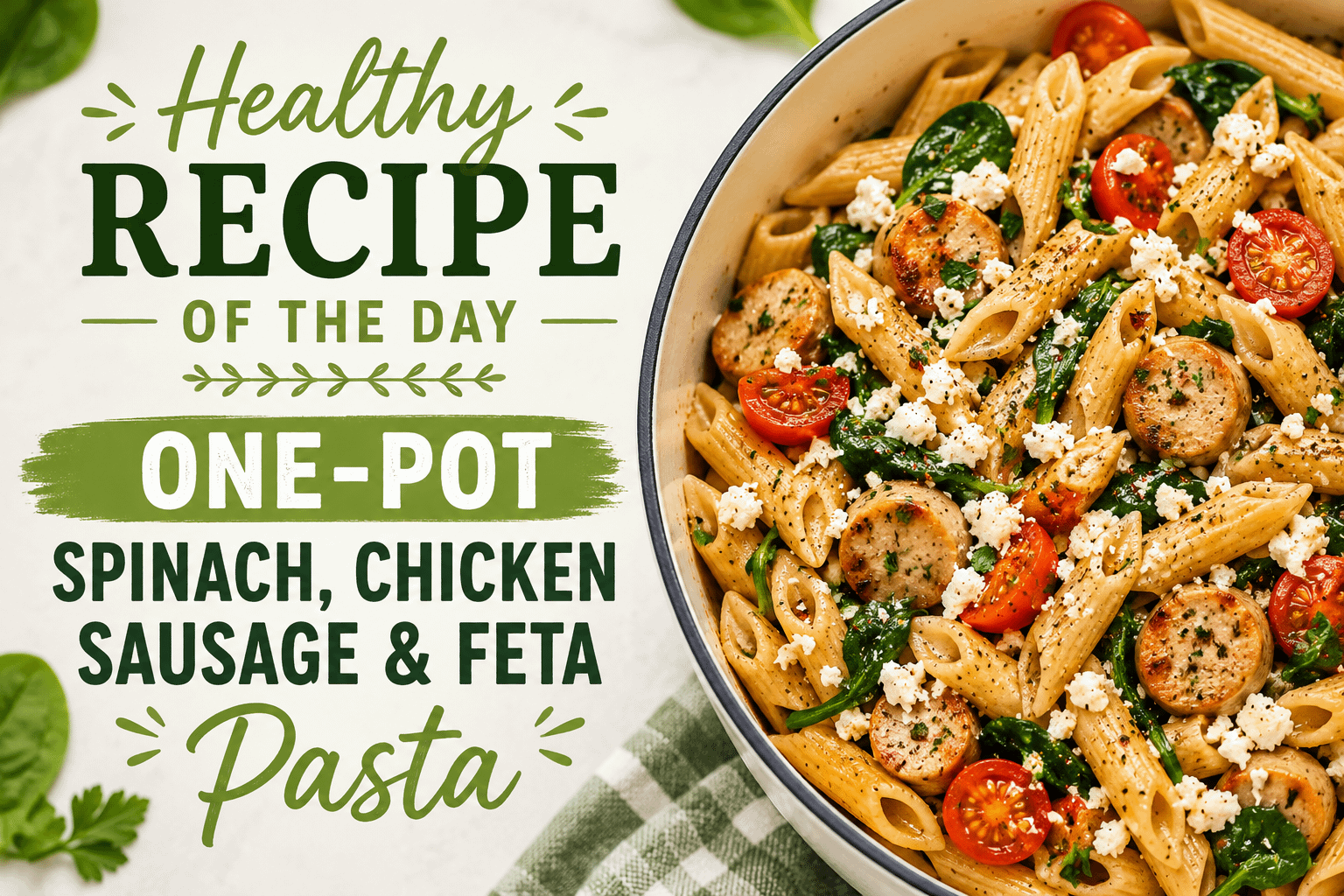
There is something especially satisfying about a dinner that tastes comforting, includes plenty of wholesome ingredients, and doesn’t leave the kitchen covered in dirty dishes. Today’s Healthy Recipe of the Day: One-Pot Spinach, Chicken Sausage & Feta Pasta delivers all three.
This colorful pasta combines tender noodles with savory chicken sausage, fresh spinach, juicy tomatoes, aromatic garlic, and tangy feta cheese. A splash of lemon at the end brightens everything and helps balance the richness of the sausage and cheese.
Even better, nearly everything happens in one pot.
That means less preparation, fewer dishes, and an easier cleanup after dinner.
It’s an excellent recipe for busy weeknights, meal prepping, family dinners, or those evenings when you want something homemade without spending hours in the kitchen.
And while this dish feels like comfort food, it’s also easy to build into a balanced meal with protein, vegetables, whole grains, and healthy fats.
Why One-Pot Meals Are Perfect for Busy Nights
Healthy eating can become difficult when life gets busy.
After a long day, convenience often wins. That’s understandable. When you’re hungry and tired, the thought of preparing multiple ingredients in several different pans isn’t particularly appealing.
That’s where one-pot meals can make healthy home cooking much easier.
Instead of cooking pasta in one pot, vegetables in another, and meat in a skillet, this recipe brings everything together.
There are several advantages:
- Less cleanup
- Fewer dishes
- Simple preparation
- Easy portioning
- Plenty of flavor
- Great leftovers
- Easy customization
- A complete dinner in one dish
There’s another advantage to cooking pasta this way: flavor.
Rather than boiling pasta separately in plain water and draining it, the pasta cooks directly with broth, sausage, tomatoes, garlic, onions, and seasonings.
As it cooks, it absorbs those flavors.
At the same time, starch released from the pasta thickens the remaining cooking liquid and creates a naturally silky sauce.
It’s an easy cooking technique that produces surprisingly delicious results.
Ingredients
For approximately 4–6 servings, you’ll need:
- 12 ounces whole-wheat penne, rotini, bow tie, or another short pasta
- 12 ounces fully cooked chicken sausage, sliced into rounds
- 1 tablespoon olive oil
- 1 small yellow onion, diced
- 3–4 cloves garlic, minced
- 1 pint cherry or grape tomatoes, halved
- 4 cups low-sodium chicken broth
- 1 teaspoon Italian seasoning
- ½ teaspoon dried oregano
- ¼ teaspoon crushed red pepper flakes, optional
- 5 ounces fresh baby spinach
- ¾ cup crumbled feta cheese
- 1 tablespoon fresh lemon juice
- Freshly ground black pepper, to taste
- Fresh parsley or basil, optional
- Fresh lemon zest, optional
How to Make One-Pot Spinach, Chicken Sausage & Feta Pasta
Step 1: Prepare Your Ingredients
Before turning on the stove, spend a few minutes preparing everything.
Slice the chicken sausage into bite-sized rounds.
Dice the onion.
Mince the garlic.
Halve the tomatoes.
Measure the broth, seasonings, pasta, spinach, and feta.
Having everything ready makes the cooking process much smoother because this recipe comes together quickly once you begin.
Step 2: Brown the Chicken Sausage
Heat one tablespoon of olive oil in a large skillet, sauté pan, or Dutch oven over medium heat.
Add the sliced chicken sausage.
Cook for approximately 4–5 minutes, turning occasionally, until the sausage develops some golden-brown edges.
Because most packaged chicken sausage is already fully cooked, you’re primarily heating it through and developing additional flavor.
Don’t rush this step.
Those browned areas add another layer of savory flavor to the finished pasta.
Step 3: Cook the Onion
Add the diced onion directly to the sausage.
Cook for approximately 2–3 minutes, stirring occasionally.
The onion should begin softening and becoming slightly translucent.
As the onion releases moisture, use your spoon to gently scrape up any browned bits from the bottom of the pan.
Those little browned pieces contain plenty of flavor.
Step 4: Add the Garlic
Add the minced garlic.
Cook for approximately 30–60 seconds, stirring constantly.
You want the garlic to become fragrant without allowing it to burn.
Garlic can go from perfectly cooked to bitter very quickly, so keep an eye on it.
Step 5: Add the Tomatoes
Add the halved cherry or grape tomatoes.
Cook for another 2–3 minutes.
Some tomatoes will begin softening and releasing their juices.
Others may remain mostly intact.
That’s exactly what you want.
The softened tomatoes contribute to the sauce, while the remaining pieces give you bursts of fresh tomato flavor throughout the finished pasta.
Step 6: Add the Pasta and Broth
Pour the low-sodium chicken broth into the pot.
Add the uncooked pasta.
Stir in:
- Italian seasoning
- Oregano
- Crushed red pepper flakes, if using
- Freshly ground black pepper
Stir everything thoroughly.
Bring the mixture to a gentle boil.
Step 7: Simmer Until the Pasta Is Tender
Once boiling, reduce the heat to medium-low.
Allow the pasta to simmer according to the cooking time listed on the package, generally around 10–12 minutes.
Stir every couple of minutes.
This is especially important with one-pot pasta because noodles sitting against the bottom of the pan can stick.
You’ll notice something happening as the pasta cooks.
The broth will gradually disappear.
Some is absorbed by the pasta, while some evaporates. Meanwhile, starch released from the noodles begins thickening the remaining liquid.
That’s what creates the light sauce.
If the pasta becomes dry before it is tender, add another ¼ cup of broth or water at a time.
You want enough liquid to finish cooking the pasta without leaving the finished dish soupy.
The Secret to a Creamy Sauce Without Heavy Cream
One of the best things about this recipe is that you don’t need a traditional cream sauce.
There’s no need for cups of heavy cream or large amounts of butter.
Instead, the creaminess comes from three things:
Pasta starch + cooking liquid + feta cheese.
As pasta cooks, it releases starch.
That starch thickens the broth.
When feta is stirred into the warm pasta at the end, some of it softens and mixes with that starchy liquid.
The result is a light, creamy coating that clings beautifully to the pasta.
Step 8: Add Plenty of Spinach
Once the pasta is tender and most of the liquid has been absorbed, add the fresh spinach.
Five ounces may look like an enormous amount when you first put it into the pot.
Don’t worry.
Fresh spinach shrinks dramatically when heated.
Add it gradually if necessary and gently stir until all of the spinach has wilted.
This should only take about 1–2 minutes.
Step 9: Add the Lemon
Remove the pot from the heat.
Add approximately one tablespoon of fresh lemon juice.
This small addition makes a surprisingly big difference.
Lemon adds acidity, which helps balance the salty feta and savory sausage while bringing out the freshness of the tomatoes and spinach.
If you love lemon, add a little freshly grated lemon zest too.
Step 10: Add the Feta
Stir approximately half of the crumbled feta into the warm pasta.
Allow it to soften and partially melt.
Then sprinkle the remaining feta over the top.
Keeping some feta intact gives you little pockets of tangy cheese throughout each serving.
Step 11: Garnish and Serve
Finish with freshly ground black pepper.
You can also add:
- Chopped parsley
- Fresh basil
- Lemon zest
- Additional feta
- Red pepper flakes
Serve while warm.
Why This Pasta Can Be Part of a Balanced Meal
Pasta doesn’t automatically make a meal unhealthy.
What matters is the overall composition of your plate, your portions, and the ingredients you combine with it.
This recipe includes several components that help create a satisfying meal.
Chicken Sausage Adds Protein
Chicken sausage provides a convenient source of protein.
Protein can help make meals more satisfying and plays an important role in maintaining and repairing body tissues.
However, chicken sausage isn’t automatically low in sodium or saturated fat simply because it’s made with chicken.
Different brands can vary significantly.
Compare nutrition labels and choose an option that fits your dietary needs.
Spinach Packs a Lot Into a Small Package
Spinach is one of the easiest vegetables to incorporate into pasta dishes.
It has a mild flavor, cooks in minutes, and dramatically reduces in volume as it wilts.
Spinach provides nutrients including:
- Vitamin A
- Vitamin C
- Vitamin K
- Folate
- Iron
- Potassium
- Fiber
Adding several handfuls to pasta is an easy way to increase the vegetable content of dinner without requiring an additional side dish.
Tomatoes Add More Than Color
Cherry tomatoes bring natural sweetness and acidity to the recipe.
They also provide vitamin C and other beneficial plant compounds.
Tomatoes contain lycopene, an antioxidant responsible for much of their red coloring.
In this recipe, tomatoes serve another important purpose.
Their juices become part of the sauce.
Instead of relying exclusively on butter, oil, or cream for flavor and moisture, you’re getting some of that from vegetables.
Why Use Whole-Wheat Pasta?
Whole-wheat pasta can provide more fiber than traditional refined pasta.
Fiber contributes to digestive health and can help meals feel more filling.
But don’t feel like the recipe fails if you don’t enjoy whole-wheat pasta.
You can use:
- Traditional pasta
- Whole-wheat pasta
- Higher-protein pasta
- Chickpea pasta
- Lentil pasta
Cooking times and liquid requirements may vary with alternative pastas, so check the package directions and adjust accordingly.
Feta: A Little Goes a Long Way
Feta is perfect for recipes where you want noticeable cheese flavor without needing huge amounts.
Its salty, tangy flavor stands out.
Instead of covering the pasta with a thick cheese sauce, you can use a moderate amount of feta and still taste cheese throughout the entire dish.
Because feta can be relatively high in sodium, especially when combined with chicken sausage and broth, using low-sodium broth can help keep the overall sodium level more manageable.
Don’t Underestimate the Lemon
Lemon may be one of the smallest ingredients in the recipe, but it’s one of the most important.
Rich and savory foods often benefit from acidity.
The chicken sausage brings savory flavor.
Feta brings saltiness and creaminess.
Pasta provides comfort and substance.
Lemon cuts through those flavors and gives the finished dish a fresh, bright finish.
Sometimes a squeeze of citrus can reduce the temptation to add extra salt because acidity makes flavors taste more vibrant.
Easy Vegetable Additions
One of the easiest ways to customize this pasta is by adding more vegetables.
Mushrooms
Slice mushrooms and sauté them alongside the onions.
Their earthy flavor works especially well with chicken sausage.
Bell Peppers
Red, yellow, or orange peppers add sweetness, crunch, and additional color.
Broccoli
Small broccoli florets can be added during the final several minutes of cooking.
Zucchini
Diced zucchini cooks quickly and blends easily with tomatoes and spinach.
Kale
Use chopped kale instead of spinach for a heartier green.
Because kale takes longer to soften, add it earlier.
Artichoke Hearts
Artichokes pair especially well with feta, lemon, spinach, and garlic.
Asparagus
Chopped asparagus adds freshness and a slight crunch.
Peas
Frozen peas are incredibly convenient. Stir them into the pasta during the final few minutes.
Make It Even More Mediterranean-Inspired
The basic flavor combination already has a Mediterranean influence, but you can take it further.
Try adding:
- Artichoke hearts
- Kalamata olives
- Roasted red peppers
- Fresh basil
- Fresh parsley
- Extra tomatoes
- Chickpeas
- Lemon zest
Just remember that ingredients such as olives and feta can add considerable sodium, so adjust other salty ingredients accordingly.
Add Beans for Extra Fiber
Want to stretch the meal further?
Add a drained and rinsed can of:
- Chickpeas
- Cannellini beans
- Great northern beans
Beans add additional fiber and plant-based protein while blending nicely with the existing flavors.
They can also help turn one pot of pasta into additional servings, making this an economical option for meal prepping.
Make It Spicy
If you like a little heat, this recipe is easy to spice up.
Increase the crushed red pepper flakes or choose a spicy chicken sausage.
You could also add a few sliced pepperoncini before serving.
The combination of spicy peppers, creamy feta, tomatoes, and lemon is especially flavorful.
Choosing the Best Chicken Sausage
Chicken sausage comes in many varieties, and changing the sausage can completely change the personality of this recipe.
Italian Chicken Sausage
Probably the easiest option.
Italian herbs naturally complement tomatoes, garlic, spinach, and pasta.
Spinach & Feta Chicken Sausage
An excellent choice if available because it reinforces two of the recipe’s primary flavors.
Garlic Chicken Sausage
Perfect for garlic lovers.
Sun-Dried Tomato Chicken Sausage
Sun-dried tomato pairs beautifully with spinach and feta.
Spicy Italian Chicken Sausage
Choose this version when you want your pasta to have more heat.
What If You Don’t Have Feta?
While feta gives this recipe its distinctive flavor, substitutions are possible.
Try:
Goat cheese: Creamier and similarly tangy.
Parmesan: Saltier and nuttier, but delicious.
Part-skim mozzarella: Mild and melty.
Ricotta: Soft and creamy.
The final flavor will be different, but the basic one-pot cooking method still works.
Turn Leftovers Into Tomorrow’s Lunch
This recipe is excellent for meal prep.
Divide the finished pasta into individual airtight containers once it has cooled sufficiently, then refrigerate promptly.
Properly stored cooked leftovers are generally best enjoyed within 3–4 days.
When reheating, you may notice the pasta has absorbed additional liquid.
That’s normal.
Add a tablespoon or two of:
- Water
- Chicken broth
before reheating.
Then stir everything together.
Finish with a little fresh feta or lemon juice to revive the flavors.
Can You Eat It Cold?
You can also transform leftovers into a pasta-salad-style lunch.
Refrigerate the pasta, then add:
- Fresh spinach
- Cucumbers
- Cherry tomatoes
- Red onion
- Fresh parsley
- A squeeze of lemon
It’s an easy way to make leftovers feel like an entirely different meal.
What to Serve With It
This pasta is substantial enough to be served by itself, but you can add a simple side if you’re feeding a larger group.
Good options include:
- Mixed green salad
- Roasted broccoli
- Steamed green beans
- Roasted asparagus
- Cucumber and tomato salad
- Fresh fruit
If you’re trying to increase your vegetable intake, serving a smaller portion of pasta alongside a large salad is an easy way to create additional balance.
Portion Size Matters More Than Labeling Foods “Good” or “Bad”
Healthy eating doesn’t have to mean dividing every food into “good” and “bad” categories.
Pasta can be part of a balanced eating pattern.
Cheese can be part of it.
Sausage can be part of it.
Instead of focusing on eliminating foods, think about what you can add to make a meal more balanced.
Can you add vegetables?
Can you include protein?
Can you increase fiber?
Can you choose a portion that satisfies you without leaving you uncomfortably full?
This recipe does much of that naturally.
The pasta provides carbohydrates, chicken sausage contributes protein, spinach and tomatoes add vegetables, olive oil provides fat, and feta delivers a lot of flavor.
Tips for Making the Best One-Pot Pasta
One-pot pasta is easy, but a few simple techniques can make it even better.
Use a Wide Pot
A wide Dutch oven or deep skillet allows the pasta to cook more evenly.
Stir Regularly
Don’t walk away from the stove for the entire cooking time.
Stir every few minutes to keep pasta from sticking.
Watch the Liquid
Different pasta shapes and brands absorb different amounts of liquid.
Add extra broth gradually if necessary.
Don’t Overcook the Spinach
Spinach only needs a minute or two.
Adding it toward the end preserves more of its color and texture.
Add Feta After Removing the Pot From Heat
You don’t need to aggressively boil the cheese.
Residual heat is enough to soften it.
Taste Before Adding Salt
Chicken sausage, broth, and feta may all contain sodium.
Taste the finished pasta before reaching for the salt shaker.
Budget-Friendly Tips
Healthy meals don’t have to require expensive specialty ingredients.
You can make this recipe more economical by shopping strategically.
Buy whichever short pasta is on sale.
Use frozen spinach when fresh spinach is expensive.
Purchase store-brand low-sodium broth.
Buy feta in a block and crumble it yourself if that’s cheaper in your area.
Use regular tomatoes instead of cherry tomatoes when necessary.
You can also reduce the amount of chicken sausage and add a can of white beans to stretch the protein across additional servings.
The recipe is flexible enough to work with what’s affordable and available.
A Great “Clean Out the Refrigerator” Recipe
This is also the kind of dinner that can help prevent food waste.
Have half a bell pepper left?
Add it.
A handful of mushrooms?
Throw them in.
A little broccoli from yesterday?
Add it near the end.
Half an onion?
Perfect.
A few tablespoons of feta?
Use them.
One-pot pasta provides a foundation that can turn several odds and ends from your refrigerator into a completely new meal.
Family-Friendly Customization
If you’re cooking for people with different preferences, keep the base relatively simple.
Prepare the pasta with chicken sausage, tomatoes, spinach, and feta.
Then place optional toppings on the table:
- Extra feta
- Parmesan
- Crushed red pepper
- Fresh herbs
- Lemon wedges
- Black pepper
Everyone can customize their bowl.
For children or anyone who doesn’t enjoy spinach, chopping the spinach into smaller pieces before adding it can help distribute it more evenly throughout the pasta.
A Dinner That Feels Like Comfort Food
One reason healthier eating plans can be difficult to maintain is that people sometimes assume healthy food must be bland or unsatisfying.
It doesn’t.
This recipe still gives you many of the things people love about pasta night:
Tender noodles.
Savory sausage.
Cheese.
Garlic.
A flavorful sauce.
A warm bowl of comfort food.
The difference is that those ingredients are combined with plenty of vegetables and balanced with fresh flavors like tomatoes, spinach, herbs, and lemon.
That’s a much more sustainable approach to healthy cooking than forcing yourself to eat meals you don’t actually enjoy.
Healthy Cooking Doesn’t Have to Be Complicated
It’s easy to believe that eating healthier requires complicated meal plans, expensive ingredients, or hours of meal preparation.
Sometimes the most effective changes are much simpler.
Cook at home a little more often.
Add another vegetable.
Choose whole grains when you enjoy them.
Pay attention to portions.
Use herbs, spices, citrus, and garlic to create flavor.
Find recipes you genuinely look forward to eating.
Today’s recipe checks many of those boxes without requiring advanced cooking skills.
Why This Recipe Deserves a Spot in Your Weekly Rotation
Every home cook needs several dependable recipes.
These are the dinners you can make without spending an hour deciding what to cook.
This pasta deserves to become one of those recipes because it’s:
Quick.
Easy.
Colorful.
Customizable.
Comforting.
Packed with vegetables.
Great for leftovers.
Made in one pot.
Once you understand the basic method, you don’t even need to make it exactly the same way every time.
Change the vegetables.
Try another chicken sausage.
Switch pasta shapes.
Add beans.
Make it spicy.
Add extra lemon.
The basic formula remains dependable.
Healthy Recipe of the Day: Simple Ingredients, Big Flavor
At its heart, One-Pot Spinach, Chicken Sausage & Feta Pasta proves that healthy home cooking doesn’t need to feel restrictive.
It’s simply about creating meals with a thoughtful combination of ingredients.
Savory chicken sausage gives the pasta plenty of flavor and protein.
Spinach adds a generous helping of greens.
Tomatoes provide freshness and natural sweetness.
Whole-wheat pasta can add extra fiber.
Feta delivers a salty, creamy bite.
Garlic and herbs build flavor.
And fresh lemon brings everything together.
All of it cooks in one pot and can be on the table in roughly 30 minutes.
That’s the kind of healthy recipe that works in real life.
Final Thoughts
Healthy eating becomes much easier when the food you’re making is something you genuinely want to eat.
You shouldn’t have to choose between a satisfying dinner and a meal that includes nutritious ingredients.
Sometimes you can have both.
One-Pot Spinach, Chicken Sausage & Feta Pasta is comforting enough for pasta night, convenient enough for a busy weekday, and flexible enough to change based on whatever you already have in your refrigerator.
Make it exactly as written the first time.
Then make it your own.
Add another vegetable. Experiment with different chicken sausage flavors. Toss in beans. Increase the spinach. Add more lemon. Sprinkle fresh herbs over the top.
The goal isn’t to create a “perfect” meal.
It’s to make wholesome home cooking simple, enjoyable, and realistic enough that you’ll want to do it again.
And when dinner only leaves you with one pot to wash?
That’s a pretty good bonus.
Enjoy today’s Healthy Recipe of the Day!
Leave a ReplyCancel reply