
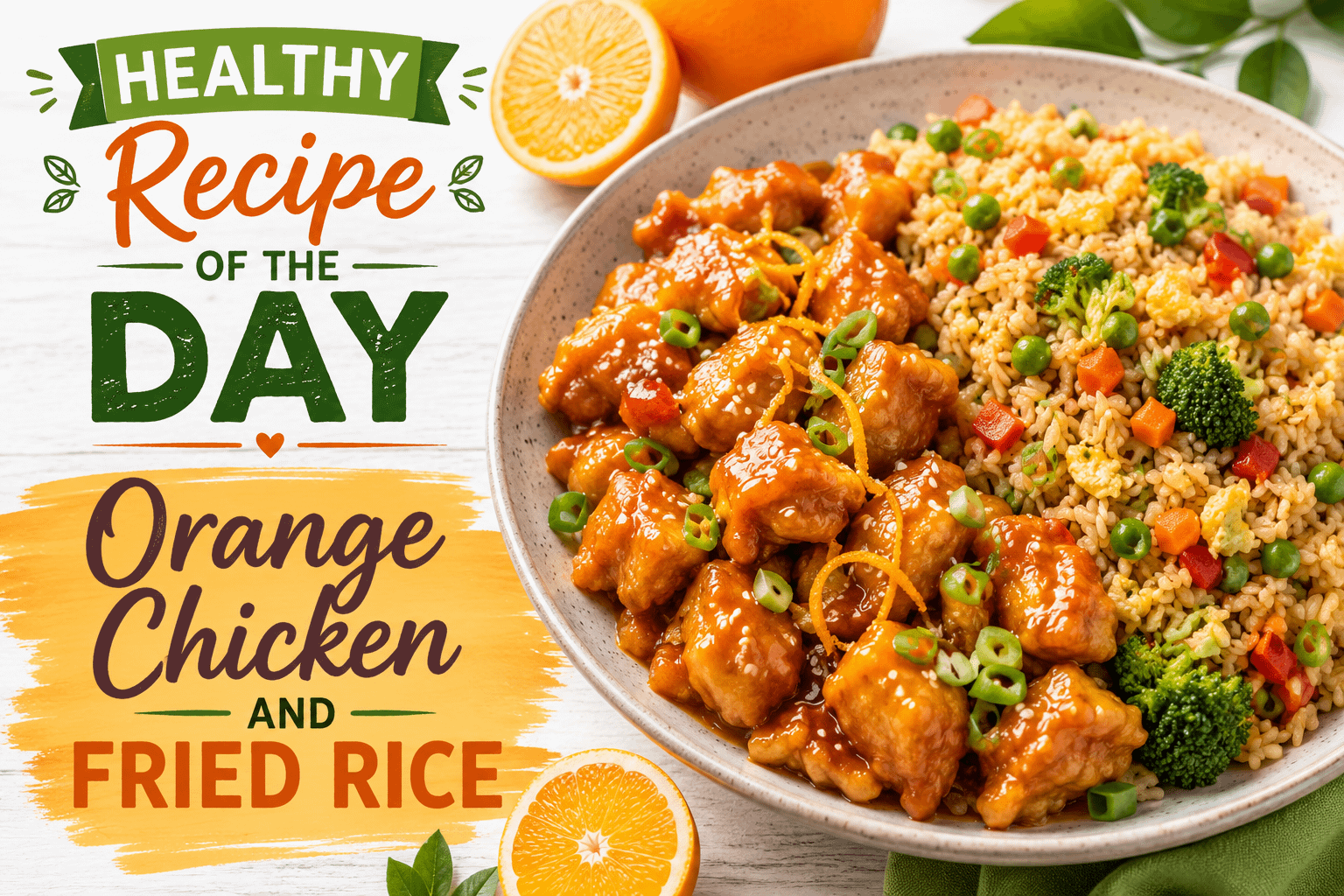
There is something incredibly satisfying about a plate of sticky orange chicken served alongside hot, savory fried rice. The combination of sweet citrus, garlic, ginger, tender chicken, fluffy rice, vegetables, and scrambled egg delivers nearly everything you could want from a comfort-food dinner.
Unfortunately, traditional takeout orange chicken can also come with a lot of breading, frying oil, sodium, and added sugar.
That doesn’t mean orange chicken has to disappear from the menu when you’re trying to make healthier choices.
Today’s Healthy Recipe of the Day: Orange Chicken and Fried Rice takes inspiration from the classic takeout combination and gives it a lighter homemade makeover. Instead of deep-frying battered chicken, we’re cooking lean chicken breast in a skillet and coating it in a fresh orange sauce made with real orange juice, orange zest, garlic, ginger, honey, and reduced-sodium soy sauce.
Then we’re serving it alongside homemade vegetable fried rice filled with brown rice, eggs, peas, carrots, bell peppers, broccoli, and green onions.
The result is a complete dinner that feels like a treat while still incorporating plenty of nutritious ingredients.
Even better, you can have everything ready in around 30–40 minutes, making this an excellent option for busy weeknights.
A Healthier Way to Enjoy a Takeout Favorite
Healthy eating becomes much easier when you don’t feel like you’re constantly giving something up.
Rather than looking at foods as completely “good” or “bad,” it can be more practical to ask a different question:
How can I make this meal work better for me?
Orange chicken is a perfect example.
Instead of removing everything you enjoy about the dish, you can change the cooking method and ingredients.
Deep-fried chicken becomes skillet-cooked chicken.
A heavily sweetened sauce becomes a fresh orange sauce.
Plain fried rice becomes vegetable-packed fried rice.
Large restaurant portions become portions you control yourself.
These changes allow you to keep the flavors that made you want orange chicken in the first place.
Why You’ll Love This Healthy Orange Chicken and Fried Rice
There are plenty of reasons this recipe deserves a spot in your regular dinner rotation.
It’s Packed With Flavor
Fresh orange juice, orange zest, garlic, ginger, soy sauce, sesame oil, and honey create a sauce that delivers sweetness, acidity, saltiness, and plenty of citrus flavor.
No Deep Fryer Required
The chicken is cooked in a skillet with a small amount of oil instead of being battered and submerged in frying oil.
Plenty of Protein
Chicken breast and eggs provide protein that helps make the meal satisfying.
Vegetables Are Built Right In
Peas, carrots, broccoli, bell peppers, and green onions turn ordinary fried rice into a colorful vegetable-packed side.
Easy to Customize
You can adjust the vegetables, sweetness, spice level, rice, and protein based on what you have available.
Family Friendly
The sweet orange sauce makes this a good recipe for introducing additional vegetables to a family meal.
Meal-Prep Friendly
Both the chicken and fried rice can be prepared ahead of time and portioned into containers for future lunches or dinners.
Ingredients
For the Orange Chicken
- 1 ½ pounds boneless, skinless chicken breasts
- 1 tablespoon olive oil or avocado oil
- ½ teaspoon garlic powder
- ½ teaspoon onion powder
- ½ teaspoon paprika
- ¼ teaspoon black pepper
- ¼ teaspoon salt
- 2 green onions, thinly sliced
- 1 teaspoon sesame seeds, optional
Cut the chicken into approximately 1-inch pieces so they cook evenly.
For the Homemade Orange Sauce
- ¾ cup fresh orange juice
- 1 tablespoon finely grated orange zest
- 2 tablespoons low-sodium soy sauce
- 1 ½ tablespoons honey
- 1 tablespoon rice vinegar
- 2 cloves garlic, minced
- 1 teaspoon freshly grated ginger
- ½ teaspoon sesame oil
- ¼ teaspoon crushed red pepper flakes, optional
- 1 tablespoon cornstarch
- 2 tablespoons cold water
The combination of orange juice and orange zest is important. Juice provides sweetness and acidity, while zest delivers a stronger citrus aroma and flavor.
For the Vegetable Fried Rice
- 3 cups cooked and chilled brown rice
- 1 tablespoon olive oil or avocado oil
- 2 large eggs, lightly beaten
- 1 cup frozen peas and carrots
- ½ cup diced red or yellow bell pepper
- ½ cup finely chopped broccoli
- 2 green onions, sliced
- 2 tablespoons low-sodium soy sauce
- 1 teaspoon sesame oil
- ½ teaspoon garlic powder
- ¼ teaspoon ground ginger, optional
- Black pepper to taste
Before You Start: Cook the Rice Ahead of Time
One of the easiest ways to improve homemade fried rice is to start with cold cooked rice.
Freshly cooked rice contains plenty of moisture. When immediately transferred into a hot skillet, it can become soft, sticky, or mushy.
Chilled rice has had time to dry slightly and firm up.
That allows the individual grains to separate more easily when they’re fried.
If possible, cook your rice the night before and refrigerate it.
Don’t have leftover rice?
Cook your rice earlier in the day, spread it across a large baking sheet or shallow container so it cools quickly, and refrigerate it until you’re ready to make dinner.
Step 1: Prepare the Chicken
Pat the chicken dry with paper towels and cut it into bite-sized pieces.
Place the chicken in a bowl.
Season with:
- Garlic powder
- Onion powder
- Paprika
- Salt
- Black pepper
Toss everything together until the chicken is evenly seasoned.
Patting away excess moisture helps the chicken brown more effectively in the skillet.
Step 2: Make the Orange Sauce
Before cooking your chicken, prepare the sauce so it’s ready when you need it.
In a medium bowl, whisk together:
- Fresh orange juice
- Orange zest
- Soy sauce
- Honey
- Rice vinegar
- Garlic
- Ginger
- Sesame oil
- Red pepper flakes
Taste the sauce.
Want it sweeter?
Add another small drizzle of honey.
Want more tang?
Add a little additional rice vinegar.
Want stronger orange flavor?
Add another small amount of orange zest.
In a separate bowl, whisk together the cornstarch and cold water until smooth.
This creates a cornstarch slurry, which will thicken the sauce later.
Don’t add the slurry to the orange mixture just yet.
Step 3: Cook the Chicken
Heat one tablespoon of olive or avocado oil in a large nonstick skillet over medium-high heat.
Once the skillet is hot, add the chicken.
Arrange the pieces in a single layer.
Let them cook undisturbed for a couple of minutes before stirring. This gives the chicken time to develop some golden-brown color.
Continue cooking and turning the chicken until browned and completely cooked through, approximately 6–8 minutes, depending on the size of your pieces.
The USDA-recommended minimum internal temperature for chicken is 165°F (74°C).
If your skillet isn’t large enough to comfortably hold all of the chicken, cook it in batches.
Overcrowding lowers the temperature of the pan and can cause the chicken to steam instead of brown.
Step 4: Turn It Into Orange Chicken
Once the chicken is cooked, reduce the heat to medium.
Pour the prepared orange sauce into the skillet.
Stir everything together and allow the sauce to gently simmer for approximately 2 minutes.
Give your cornstarch slurry another quick stir.
Slowly pour it into the skillet while stirring the sauce.
Within another minute or two, you’ll notice the sauce beginning to thicken.
Continue stirring until the sauce becomes glossy and coats the chicken.
You want enough sauce to cling to each piece without becoming overly thick.
If the sauce gets thicker than you’d like, add a splash of water or additional orange juice.
Remove the skillet from the heat.
Finish with sliced green onions and sesame seeds.
Your orange chicken is ready.
Step 5: Scramble the Eggs for the Fried Rice
Heat another large skillet or wok over medium-high heat.
Add a small amount of your cooking oil.
Pour in the beaten eggs.
Use a spatula to gently scramble them until they’re just cooked.
Transfer the eggs to a clean plate.
You’ll add them back later.
Removing the eggs temporarily prevents them from becoming overcooked while you prepare the vegetables and rice.
Step 6: Cook the Vegetables
Add the peas, carrots, bell peppers, and broccoli to the skillet.
Cook for approximately 3–5 minutes, stirring frequently.
You want the vegetables tender but still colorful and slightly crisp.
This is where you can really personalize the recipe.
If your refrigerator contains vegetables that need to be used, there’s a good chance they’ll work in fried rice.
Step 7: Add the Brown Rice
Add your chilled brown rice directly to the vegetables.
Use your spatula to break apart any large clumps.
Spread the rice around the skillet so as much of it as possible comes into contact with the hot cooking surface.
Cook for approximately 3–4 minutes, stirring occasionally.
You may notice some of the rice beginning to toast slightly around the edges.
That’s exactly what you want.
Step 8: Season the Fried Rice
Return the scrambled eggs to the skillet.
Add:
- Low-sodium soy sauce
- Sesame oil
- Garlic powder
- Ground ginger
- Black pepper
- Green onions
Toss everything together until the vegetables, eggs, seasonings, and rice are evenly distributed.
Cook for another minute or two.
Taste before adding any additional soy sauce.
Remember that you’ll also be serving the fried rice with orange chicken that already contains soy sauce in its glaze.
Step 9: Build Your Orange Chicken Bowl
Now comes the best part.
Add a generous scoop of vegetable fried rice to each bowl.
Top it with your homemade orange chicken.
Spoon a little extra orange sauce over the chicken.
Finish with:
- Green onions
- Sesame seeds
- Orange zest
- Red pepper flakes
For additional vegetables, add steamed broccoli or green beans alongside the chicken.
You now have a colorful homemade orange chicken dinner ready to enjoy.
What Makes This Orange Chicken Healthier?
Making a recipe “healthier” doesn’t necessarily require completely reinventing it.
Sometimes a few meaningful changes can make a big difference.
1. The Chicken Isn’t Deep-Fried
Traditional orange chicken is commonly breaded or battered before frying.
This version skips that process.
The chicken is seasoned and cooked with a relatively small amount of oil.
You still get browned, flavorful chicken without needing a deep fryer.
2. Lean Chicken Breast Provides Protein
Boneless, skinless chicken breast is a convenient source of lean protein.
Protein can help make a meal more filling, especially when combined with fiber-rich vegetables and whole grains.
3. Fresh Orange Adds Real Citrus Flavor
Instead of trying to create orange flavor entirely through sweeteners, this sauce uses fresh orange juice and zest.
Orange zest is especially helpful because it provides concentrated citrus flavor without requiring much additional sweetness.
4. You Control the Added Sugar
Making the sauce yourself allows you to decide exactly how sweet you want it.
Start with a modest amount of honey and adjust only if necessary.
5. More Vegetables
Instead of treating vegetables as an afterthought, they’re incorporated directly into the fried rice.
You can easily increase them even further.
6. Brown Rice Adds Whole Grains
Brown rice provides more fiber than refined white rice while also bringing a slightly nutty flavor and chewy texture to the meal.
Don’t Be Afraid to Use White Rice
While brown rice works wonderfully in this recipe, you don’t have to use it.
If your family strongly prefers white rice, use white rice.
Healthy eating doesn’t have to mean forcing yourself to eat ingredients you dislike.
You could also try:
- Jasmine rice
- Basmati rice
- Wild rice blends
- Quinoa
- Cauliflower rice
- Half brown rice and half cauliflower rice
The best choice is one that helps you create a balanced meal you’ll actually enjoy.
Make Half Rice and Half Cauliflower Rice
One simple way to increase the vegetables while maintaining a traditional fried-rice texture is to combine regular rice with cauliflower rice.
Instead of using three cups of brown rice, try:
1 ½ cups brown rice + 1 ½ cups cauliflower rice
Cook the cauliflower rice with the vegetables before adding your regular rice.
This provides the familiar texture of fried rice while sneaking additional vegetables into the meal.
Load It With Vegetables
Fried rice is one of those recipes that can help clean out your refrigerator.
You don’t have to stick with peas, carrots, bell peppers, and broccoli.
Try adding:
- Mushrooms
- Zucchini
- Snow peas
- Sugar snap peas
- Cabbage
- Edamame
- Corn
- Green beans
- Bok choy
- Bean sprouts
- Water chestnuts
- Celery
- Spinach
Aim for a variety of colors.
Different vegetables contribute different nutrients, textures, and flavors while making your plate more visually appealing.
Make It Spicy
Orange chicken is generally sweet and tangy, but spicy orange chicken is delicious too.
Add crushed red pepper flakes directly to the sauce.
You can also finish your bowl with:
- Chili garlic sauce
- Sriracha
- Fresh jalapeño
- Serrano pepper
- Chili crisp
- Cayenne pepper
If you’re feeding children or people who don’t enjoy spicy food, keep the main recipe mild and put the spicy toppings on the table.
Everyone can customize their own bowl.
Try Chicken Thighs
Chicken breast isn’t your only option.
Boneless, skinless chicken thighs work extremely well with orange sauce.
Thigh meat tends to stay juicy and has a richer flavor.
Cut the thighs into bite-sized pieces and prepare them using the same basic method, making sure they’re fully cooked before serving.
Turn It Into Orange Shrimp
Want to change things up?
Replace the chicken with peeled and deveined shrimp.
Shrimp cooks much faster than chicken, so keep a close eye on it.
Cook the shrimp until opaque and cooked through, remove it from the pan, prepare the sauce, and return the shrimp briefly to coat.
Orange shrimp with vegetable fried rice makes another fantastic homemade takeout-style dinner.
Vegetarian Orange Bowls
You can even use the same general idea for a meatless meal.
Try replacing chicken with:
- Extra-firm tofu
- Tempeh
- Chickpeas
- Cauliflower
- Mushrooms
Cook your chosen protein or vegetable until browned, then toss it with the homemade orange sauce.
Serve it over the same vegetable fried rice.
How to Make the Perfect Orange Sauce
The sauce is the star of this recipe.
A great orange sauce should balance several flavors at once.
Sweet
Orange juice and honey provide sweetness.
Sour
Rice vinegar provides acidity and prevents the sauce from becoming overly sweet.
Salty
Soy sauce adds saltiness and savory depth.
Aromatic
Fresh garlic and ginger bring bold flavor.
Citrus
Orange zest intensifies the orange flavor.
Heat
Red pepper flakes are optional but provide a pleasant contrast to the sweetness.
The key is balance.
Taste your sauce before thickening it and make small adjustments.
Don’t Skip the Fresh Ginger
Fresh ginger may seem like a minor ingredient, but it can transform homemade orange sauce.
Ginger provides warmth and a slightly spicy aroma that works beautifully with citrus.
If you’ve never cooked with fresh ginger before, simply peel a small piece and grate it using a fine grater.
You don’t need much.
A teaspoon can add plenty of flavor.
Orange Zest Is the Secret Ingredient
When zesting your orange, remove only the brightly colored outer layer.
Avoid digging deeply into the white layer underneath, known as the pith, because it can taste bitter.
The aromatic oils in the orange peel give the sauce a stronger orange fragrance and flavor.
A small amount can make the difference between a sauce that tastes vaguely sweet and one that clearly tastes like fresh orange.
Meal Prep Orange Chicken and Fried Rice
This meal is excellent for preparing lunches ahead of time.
After cooking, allow the food to cool appropriately and divide it into meal-prep containers.
Add a portion of fried rice to each container and top with orange chicken.
Store the containers refrigerated and use within approximately 3–4 days.
When you’re ready to eat, reheat the food thoroughly.
For the best results, consider storing extra sauce separately.
A small spoonful added after reheating can help refresh the orange flavor.
Make a Double Batch
If you’re already chopping vegetables and cooking chicken, consider doubling the recipe.
A double batch can give you dinner tonight and several lunches for later.
It can also reduce the temptation to grab something less balanced when you’re busy because you already have a prepared meal waiting in the refrigerator.
Meal prep doesn’t need to mean spending your entire Sunday cooking.
Sometimes it simply means making a little extra dinner.
Portioning Your Orange Chicken Bowl
You don’t need to obsess over perfect measurements to build a balanced bowl.
A simple approach is to make vegetables a major part of the meal, add a satisfying portion of lean protein, and include enough rice to make the meal enjoyable and filling.
For example, your bowl could include:
- Orange chicken
- Vegetable fried rice
- Extra steamed broccoli
- Green onions
- A small amount of additional orange sauce
If you’re especially hungry, adding more vegetables and protein can increase the volume of your meal.
Easy Side Dishes
Orange chicken and fried rice can stand alone as a complete meal, but you can add a side when you’re feeding a larger family.
Consider:
Steamed Broccoli
Broccoli works beautifully with orange sauce and adds another vegetable to your plate.
Cucumber Salad
Cool cucumber provides a refreshing contrast to the warm, sweet orange chicken.
Asian-Inspired Slaw
Shredded cabbage and carrots tossed in a light dressing can add crunch.
Steamed Edamame
A simple side that adds protein, fiber, and color.
Roasted Green Beans
Roasted green beans provide a crisp, savory contrast.
Create an Orange Chicken Bowl Bar
This can also become a fun family-style dinner.
Instead of assembling everyone’s plates, put the ingredients in separate serving dishes.
Set out:
- Orange chicken
- Brown fried rice
- Cauliflower rice
- Steamed broccoli
- Shredded carrots
- Green onions
- Sesame seeds
- Orange wedges
- Chili sauce
- Additional orange sauce
Everyone can build their own bowl.
This is particularly useful when different people in the family have different preferences.
Cooking for Kids
The natural sweetness of orange chicken can make it especially appealing to younger eaters.
If you’re serving children, consider leaving the red pepper flakes out of the main sauce.
You can always add heat to individual portions later.
Cut the chicken into smaller pieces and keep some of the vegetables familiar.
If broccoli isn’t popular, start with peas, carrots, or corn.
Healthy eating habits often develop gradually, and repeated exposure to different foods can be more useful than turning dinner into a battle.
Common Mistakes to Avoid
Even a simple recipe can turn out differently depending on technique.
Overcrowding the Chicken
Too much chicken in a small skillet traps steam.
Cook in batches if necessary.
Using Wet Chicken
Patting the chicken dry helps it brown.
Adding Too Much Cornstarch
A little cornstarch goes a long way.
You want a glossy sauce, not orange-flavored paste.
Using Hot Fresh Rice
Fresh rice is more likely to become mushy.
Use chilled rice whenever possible.
Adding Too Much Soy Sauce
You can always add more.
You can’t easily remove it.
Start conservatively, taste, and adjust.
Overcooking the Vegetables
Fried rice is especially good when the vegetables retain some texture.
Forgetting to Taste
Recipes provide a starting point, but oranges vary in sweetness.
Taste your sauce and adjust accordingly.
Approximate Nutrition
Exact nutrition will depend on your specific ingredients, portion sizes, amount of sauce used, and any substitutions.
A balanced serving provides nutrients from several food groups, including:
Protein: Chicken and eggs
Carbohydrates: Brown rice and vegetables
Fiber: Brown rice, broccoli, peas, carrots, and other vegetables
Healthy fats: Olive or avocado oil
Vitamin C: Fresh orange juice, bell peppers, and broccoli
Rather than focusing only on calories, think about the overall composition of your plate.
A meal containing protein, whole grains, vegetables, and satisfying flavor can be much easier to stick with than one that leaves you hungry an hour later.
How to Store Leftovers
Transfer leftovers to airtight containers and refrigerate promptly.
For best quality, enjoy them within 3–4 days.
You can store the orange chicken and fried rice together for convenience or separately if you want better control over reheating.
How to Reheat
A microwave works perfectly well for meal-prep portions.
Add a tiny splash of water to the rice before reheating if it seems dry.
You can also reheat everything in a skillet over medium heat.
Add a splash of water or orange juice to loosen the sauce if necessary.
Heat leftovers thoroughly before serving.
Healthy Eating Doesn’t Have to Be Boring
One of the biggest misconceptions about healthier eating is that everything has to taste plain.
It doesn’t.
Garlic, ginger, citrus, herbs, spices, vinegar, vegetables, and small amounts of flavorful sauces can completely transform simple ingredients.
A plain piece of chicken and bowl of brown rice might not sound particularly exciting.
Turn that same chicken into orange-glazed chicken, transform that brown rice into vegetable fried rice, and suddenly dinner becomes something you look forward to.
That’s an important difference.
A healthier lifestyle is easier to maintain when the food still brings you enjoyment.
Homemade Doesn’t Have to Mean Complicated
It’s also easy to assume that recreating takeout food at home requires a long list of unusual ingredients or advanced cooking skills.
This recipe proves otherwise.
You’re essentially preparing three things:
Chicken.
Sauce.
Fried rice.
Once you understand those three components, the recipe becomes incredibly flexible.
You can change the protein.
You can change the vegetables.
You can change the rice.
You can change the spice level.
You can even prepare the sauce ahead of time.
That’s what makes recipes like this useful beyond a single dinner.
They teach you a basic cooking formula you can continue adapting.
Turn Leftovers Into Tomorrow’s Lunch
If you have a small amount of orange chicken left but not enough for another complete dinner, don’t waste it.
Turn it into a lunch bowl.
Start with leftover rice or greens.
Add the orange chicken.
Then add whatever vegetables you have available.
Finish with green onions and a small drizzle of orange sauce.
You can even turn leftovers into lettuce wraps by chopping the chicken into smaller pieces and spooning it into crisp lettuce leaves.
A little creativity can turn one dinner into several different meals.
Make Healthy Choices One Meal at a Time
You don’t have to completely change the way you eat overnight.
Small choices add up.
Maybe today it’s making orange chicken at home instead of ordering the deep-fried version.
Tomorrow it might be adding another serving of vegetables to dinner.
Another day it could be replacing a sugary drink with water.
Healthy habits aren’t built through perfection.
They’re built through consistency.
That’s why meals like this can be so helpful.
You aren’t giving up something you enjoy.
You’re simply finding a different way to prepare it.
Final Thoughts
Today’s Healthy Recipe of the Day: Orange Chicken and Fried Rice proves that healthier meals can still deliver the bold, comforting flavors you crave.
Tender skillet-cooked chicken gets coated in a homemade orange glaze bursting with fresh citrus, garlic, and ginger. Vegetable fried rice adds brown rice, eggs, broccoli, carrots, peas, peppers, and green onions to create a colorful and satisfying meal.
There’s no deep fryer required.
There’s no need for a complicated ingredient list.
And there’s no reason healthy food has to feel boring.
Make the recipe exactly as written the first time, then start experimenting.
Add more vegetables.
Make it spicy.
Try cauliflower rice.
Swap chicken for shrimp.
Make a vegetarian version with tofu.
Prepare extra for tomorrow’s lunch.
Healthy cooking becomes much more enjoyable when you stop thinking about everything you “can’t” eat and start discovering new ways to prepare the foods you already love.
So the next time the craving for orange chicken hits, skip the takeout menu and grab your skillet.
A fresh, colorful, homemade dinner might be closer than you think.
Healthy Recipe of the Day Tip
Recreate your favorite restaurant meals at home whenever you can. Small changes to cooking methods, portions, sauces, and vegetables can turn familiar comfort foods into meals that better support your goals without sacrificing flavor.
Question of the Day
What’s one takeout favorite you’d love to see transformed into a healthier homemade recipe?
Share your answer and inspire someone else to try something new in the kitchen!
Leave a ReplyCancel reply