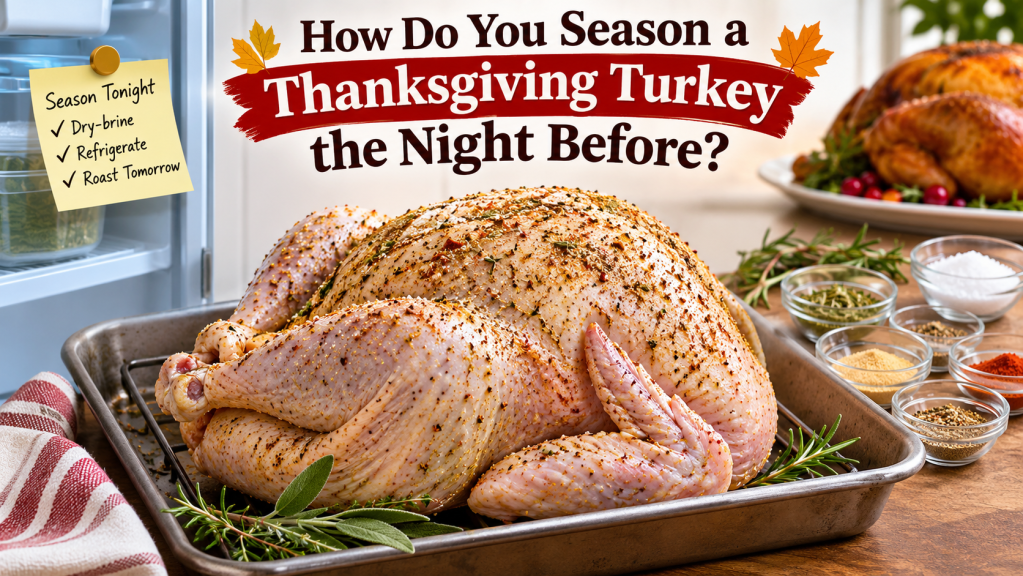
Thanksgiving turkey is often the centerpiece of the holiday dinner, and getting the seasoning right can make the difference between an ordinary roasted bird and one that is juicy, flavorful, and unforgettable. While many home cooks wait until Thanksgiving morning to season their turkey, preparing it the night before is one of the easiest ways to improve its flavor and texture.
Seasoning a Thanksgiving turkey the night before allows salt and spices to work their way into the meat while the bird rests in the refrigerator. This process helps create a flavorful turkey with moist meat, beautifully browned skin, and a delicious aroma that fills the kitchen on Thanksgiving Day.
The best part is that overnight seasoning requires very little extra work. With the right combination of salt, herbs, spices, and proper refrigeration, you can prepare your turkey ahead of time and make Thanksgiving morning much less stressful.
Whether you are cooking your first Thanksgiving turkey or looking to improve a family tradition, understanding how to season a turkey overnight can help you achieve better results.
Can You Season a Thanksgiving Turkey the Night Before?
Yes, you can season a Thanksgiving turkey the night before cooking it. In fact, seasoning a turkey 12 to 24 hours before roasting is an excellent way to develop deeper flavor.
The most effective method is called dry brining. This technique involves rubbing the turkey with salt and seasonings, then allowing it to rest in the refrigerator.
During this resting period, the salt draws some moisture toward the surface of the meat. That moisture dissolves the salt, creating a concentrated seasoning solution that gradually moves back into the turkey.
As the salt works into the meat, it changes how the muscle proteins hold moisture. This can help the turkey retain more juices during roasting.
Overnight seasoning offers several benefits:
-
More flavorful turkey meat throughout the bird.
-
Better moisture retention during cooking.
-
Crispier skin when refrigerated uncovered.
-
Less preparation work on Thanksgiving morning.
-
More consistent seasoning compared with applying spices immediately before roasting.
Although herbs and spices contribute wonderful flavor, salt is the ingredient responsible for most of the deeper seasoning effect.
What Is the Best Seasoning for a Thanksgiving Turkey?
A classic Thanksgiving turkey seasoning combines salt, black pepper, garlic, onion, and traditional poultry herbs.
These ingredients complement the natural flavor of turkey without overpowering it.
Ingredients for Overnight Thanksgiving Turkey Seasoning
For a 12- to 14-pound turkey, you will need:
-
3 tablespoons Diamond Crystal kosher salt, or approximately 1 tablespoon plus 1½ teaspoons Morton kosher salt
-
2 teaspoons freshly ground black pepper
-
2 teaspoons garlic powder
-
2 teaspoons onion powder
-
2 teaspoons dried thyme
-
2 teaspoons dried rosemary, finely crushed
-
1 teaspoon dried sage
-
1 teaspoon paprika
-
1 teaspoon dried parsley
-
1 teaspoon lemon zest, optional
These measurements are intended for a natural, unbrined turkey. Kosher salt brands have different crystal sizes, so their volume measurements are not interchangeable.
If your turkey is labeled self-basting, enhanced, pre-brined, or kosher, check the packaging before adding salt. These birds may already contain significant amounts of salt.
Why These Seasonings Work Together
Salt brings out the natural flavor of turkey and improves moisture retention.
Black pepper adds a gentle warmth that balances the savory herbs.
Garlic powder and onion powder create a rich, familiar roasted-poultry flavor.
Rosemary and thyme contribute earthy, aromatic notes associated with traditional Thanksgiving cooking.
Sage provides the distinctive holiday flavor commonly found in turkey stuffing and poultry seasoning.
Paprika adds mild flavor and contributes to the appearance of the finished skin.
Together, these ingredients create a balanced seasoning blend suitable for most traditional Thanksgiving dinners.
How Do You Season a Thanksgiving Turkey the Night Before?
Seasoning a turkey overnight is simple, but applying the mixture correctly is important.
Step 1: Make Sure the Turkey Is Completely Thawed
Before seasoning, confirm that your turkey has thawed completely in the refrigerator.
A partially frozen turkey is difficult to season evenly, and frozen areas can interfere with proper preparation.
A whole turkey generally requires approximately 24 hours of refrigerator thawing for every 4 to 5 pounds.
For example, a 12- to 14-pound turkey usually needs approximately three to four days to thaw in the refrigerator.
Keep the turkey refrigerated at 40°F or below throughout the thawing process.
Step 2: Remove the Packaging and Giblets
Remove the turkey from its packaging and place it on a clean roasting rack or rimmed baking sheet.
Check both the neck cavity and the main body cavity for the neck and giblet packages.
Remove these items before seasoning.
There is no need to rinse the turkey. Washing raw poultry can spread bacteria around the sink, countertops, and nearby kitchen surfaces.
Step 3: Pat the Turkey Dry
Use paper towels to thoroughly pat the turkey dry.
Pay particular attention to the breast, thighs, wings, and skin folds.
Removing excess surface moisture helps the seasoning adhere more evenly and encourages the skin to dry during refrigeration.
Dry skin is especially important if you want a beautifully browned and crispy Thanksgiving turkey.
Step 4: Prepare the Dry Seasoning Mixture
Combine the kosher salt, black pepper, garlic powder, onion powder, thyme, rosemary, sage, paprika, and parsley in a small bowl.
Mix until the ingredients are evenly distributed.
If you prefer a brighter flavor, add a small amount of finely grated lemon zest.
Avoid adding butter or oil to this dry seasoning mixture if your goal is to achieve the driest possible skin overnight.
Step 5: Season the Entire Turkey
Sprinkle the seasoning mixture evenly over the turkey.
Cover the breast, thighs, drumsticks, wings, and back.
Use your hands to gently distribute the seasoning across the skin.
Do not concentrate all the salt in one area.
For more flavorful breast meat, carefully loosen the skin over the breast and apply a small portion of the seasoning directly to the meat underneath.
Be gentle to avoid tearing the skin.
You can also apply a little seasoning to the exposed surfaces inside the cavity, but most of the mixture should be distributed over the exterior and underneath the breast skin.
Step 6: Refrigerate the Turkey Overnight
Place the seasoned turkey breast-side up on a wire rack inside a rimmed roasting pan or baking sheet.
Refrigerate it for approximately 12 to 24 hours.
For the crispiest skin, leave the turkey uncovered in the refrigerator, provided it is positioned safely away from ready-to-eat foods and raw juices cannot drip onto anything.
The refrigerator’s circulating air helps dry the surface of the skin.
This combination of salt penetration and surface drying is one of the main reasons overnight seasoning works so well.
Step 7: Prepare the Turkey for Roasting
On Thanksgiving morning, remove the turkey from the refrigerator when you are ready to prepare it for roasting.
There is no need to rinse off the dry brine.
If the skin appears damp, gently pat it dry with paper towels.
You can now apply softened unsalted butter beneath the breast skin or lightly coat the outside with oil or melted butter.
Place the turkey in the roasting pan and proceed with your preferred roasting method.
For food safety, avoid leaving the raw turkey at room temperature for an extended period before cooking.
Should You Put Turkey Seasoning Under the Skin the Night Before?
Yes. Applying some seasoning underneath the turkey skin can help flavor the meat more directly.
Turkey skin acts as a barrier between the seasoning and the meat. While salt can gradually penetrate, many larger aromatic compounds from herbs and spices remain closer to the surface.
Placing a portion of the seasoning directly on the breast meat helps distribute flavor where it matters most.
To season under the skin, gently slide your fingers between the breast meat and the skin, beginning near the neck opening.
Carefully loosen the skin without removing it.
Sprinkle a small amount of the seasoning mixture underneath and spread it evenly.
You can also add finely chopped fresh herbs beneath the skin.
However, avoid packing large quantities of herbs or seasoning into one area because this can create uneven flavor.
For a traditional Thanksgiving turkey, a combination of seasoning on the skin and beneath the breast skin works particularly well.
Should You Put Butter on a Turkey the Night Before?
Butter can add wonderful flavor to Thanksgiving turkey, but whether to apply it the night before depends on the results you want.
If your priority is crispy skin, it is generally better to dry-brine the turkey overnight and add butter shortly before roasting.
Butter contains water, and applying a thick layer to the skin before refrigeration can interfere with the drying process.
A practical approach is to season the turkey with a dry mixture the night before and refrigerate it uncovered.
On Thanksgiving morning, gently spread softened unsalted butter underneath the breast skin.
You can also brush the outside with a light coating of melted butter or oil.
This approach combines the flavor benefits of butter with the advantages of overnight dry brining.
Simple Thanksgiving Herb Butter
For a 12- to 14-pound turkey, combine:
-
½ cup unsalted butter, softened
-
1 teaspoon fresh thyme, finely chopped
-
1 teaspoon fresh rosemary, finely chopped
-
1 teaspoon fresh sage, finely chopped
-
1 teaspoon garlic powder
-
½ teaspoon black pepper
Mix until smooth.
Spread most of the butter underneath the breast skin before roasting.
Because the turkey has already been salted overnight, additional salt is generally unnecessary.
Is It Better to Season a Turkey Overnight or Right Before Cooking?
Seasoning a turkey overnight generally produces better results than applying salt immediately before roasting.
When salt is applied just before cooking, much of it remains near the surface.
Although the turkey will still taste good, the seasoning has less time to penetrate the meat.
When salt is applied the night before, it has more time to move into the turkey and improve moisture retention.
The longer resting period also helps the skin dry, which can encourage better browning.
However, seasoning immediately before cooking is still a perfectly reasonable option when time is limited.
The biggest difference comes from allowing the salt sufficient time to work.
How Long Should You Leave Seasoning on a Turkey Before Cooking?
The ideal seasoning time depends on the size of the turkey and your preparation schedule.
| Seasoning time | Expected results |
|---|---|
| 30 minutes | Mostly surface seasoning |
| 2–4 hours | Some salt penetration |
| 8–12 hours | Good flavor development |
| 12–24 hours | Excellent overnight option |
| 24–48 hours | Additional dry-brining time for larger birds |
For most home cooks, seasoning the turkey the night before provides an excellent balance between convenience and flavor.
A larger turkey may benefit from a longer dry-brining period, but the exact amount of salt should be adjusted for the bird’s weight and whether it has already been treated with a salt solution.
Avoid adding more salt each day. The original dry-brine application is generally sufficient.
Should You Cover a Seasoned Turkey Overnight?
You can cover a seasoned turkey overnight, but leaving it uncovered usually produces better skin texture.
When the turkey is uncovered in the refrigerator, air circulates around the skin and helps evaporate surface moisture.
This drying process makes it easier for the skin to brown and crisp during roasting.
If you cover the turkey tightly with plastic wrap, moisture can become trapped against the skin.
The turkey will still absorb salt, but the skin may remain wetter.
If refrigerator space or food safety concerns make uncovered storage impractical, loosely covering the turkey is an acceptable alternative.
Always place the turkey on a rimmed tray on the lowest practical refrigerator shelf to prevent raw poultry juices from contaminating other foods.
Can You Use Fresh Herbs to Season a Turkey Overnight?
Yes. Fresh herbs can add wonderful aroma and flavor to Thanksgiving turkey.
Some of the best fresh herbs include rosemary, thyme, sage, and parsley.
Fresh rosemary provides a strong, woodsy flavor.
Thyme contributes a subtle earthy taste.
Sage adds the traditional savory flavor associated with Thanksgiving poultry.
Parsley offers a lighter herbal note that balances stronger seasonings.
For overnight seasoning, dried herbs are often more convenient because they distribute easily and contain less moisture.
Fresh herbs work particularly well when finely chopped and placed beneath the skin or mixed into herb butter before roasting.
You can also add fresh herb sprigs to the turkey cavity just before cooking.
Do not tightly pack the cavity, as this can interfere with airflow and even cooking.
Should You Put Garlic and Onion Inside the Turkey Overnight?
Garlic and onion can enhance the aroma of roasted turkey, but it is usually better to add fresh aromatics to the cavity shortly before cooking rather than the night before.
For Thanksgiving morning, consider placing the following ingredients loosely inside the cavity:
-
1 onion, quartered
-
1 lemon, halved
-
4 garlic cloves, lightly crushed
-
2 rosemary sprigs
-
3 thyme sprigs
-
2 sage sprigs
These ingredients release aromatic compounds as the turkey roasts.
However, cavity aromatics primarily perfume the interior of the bird and the cooking juices. They do not replace proper seasoning of the meat.
Avoid overfilling the cavity.
If you plan to cook bread-based stuffing inside the turkey, remember that the center of the stuffing must reach 165°F for food safety.
Cooking stuffing separately is generally easier and allows the turkey to roast more evenly.
Can You Season a Butterball or Pre-Brined Turkey the Night Before?
Yes, but you must be careful with additional salt.
Many commercially prepared turkeys are already treated with salt solutions to improve flavor and moisture retention.
These products may be labeled:
-
Self-basting
-
Enhanced with a solution
-
Pre-brined
-
Contains added broth or seasonings
If your turkey has already been salted, applying a full dry brine can make the finished meat overly salty.
Instead, use a salt-free seasoning mixture containing black pepper, garlic powder, onion powder, rosemary, thyme, sage, and paprika.
You can still refrigerate the seasoned turkey overnight to help dry the skin.
Always read the packaging before deciding how much salt to use.
What Are the Most Common Mistakes When Seasoning a Turkey Overnight?
Even though overnight seasoning is straightforward, several common mistakes can affect the finished turkey.
Using Too Much Salt
Excess salt can overpower the natural flavor of turkey.
Measure carefully and consider the weight of the bird, the type of salt, and whether the turkey has already been brined.
Forgetting to Season Under the Skin
Seasoning only the exterior can leave the breast meat less flavorful.
Applying a small amount directly underneath the breast skin can improve the overall taste.
Adding Too Much Moisture
Heavy coatings of butter, oil, or wet marinades can reduce the skin-drying benefits of an overnight dry brine.
For crispy skin, keep the exterior relatively dry until roasting.
Rinsing the Turkey After Seasoning
Rinsing removes some surface seasoning and increases the risk of spreading bacteria around the kitchen.
A properly dry-brined turkey does not need to be rinsed before cooking.
Leaving the Turkey at Room Temperature Overnight
Raw turkey must never be left on the kitchen counter overnight.
Always refrigerate the bird at 40°F or below.
Assuming Seasoning Guarantees Juicy Meat
Even a perfectly seasoned turkey can become dry if it is overcooked.
Use a reliable food thermometer and verify that the thickest parts of the breast and thigh reach at least 165°F, avoiding contact with bone.
What Is the Best Way to Roast a Turkey After Seasoning It Overnight?
Once your turkey has rested with its seasoning overnight, proper roasting is the final step.
Preheat the oven to 325°F or higher.
Place the turkey breast-side up on a roasting rack inside a shallow roasting pan.
Apply herb butter beneath the breast skin if desired.
You may add a small amount of broth to the bottom of the roasting pan to help prevent drippings from scorching, but avoid submerging the turkey.
Roast until the turkey reaches the proper internal temperature.
For a 12- to 14-pound unstuffed turkey roasted at 325°F, cooking commonly takes approximately 3 to 3¾ hours, although actual times vary.
Begin checking the temperature before the estimated cooking time is complete.
Insert the thermometer into the thickest part of the breast and the innermost part of the thigh without touching bone.
Both areas should reach at least 165°F.
If the skin browns too quickly, loosely tent the turkey with aluminum foil.
Once fully cooked, allow the turkey to rest for approximately 20 to 30 minutes before carving.
This resting period makes carving easier and helps reduce the amount of juice lost when the meat is sliced.
How Do You Make Thanksgiving Turkey More Flavorful?
Overnight seasoning is one of the most effective ways to improve turkey flavor, but several additional techniques can make the finished bird even better.
Start with a balanced dry-brine mixture that includes salt and traditional poultry herbs.
Season underneath the breast skin so the meat receives flavor directly.
Use unsalted herb butter before roasting to introduce richness and aroma.
Add fresh rosemary, thyme, garlic, onion, and lemon to the cavity shortly before cooking.
Avoid overcooking the turkey, because properly cooked meat retains a more pleasant texture and flavor.
Finally, allow the turkey to rest before carving.
You can also use the roasted turkey drippings to prepare homemade gravy, which brings additional savory flavor to the Thanksgiving meal.
Frequently Asked Questions
Can you season a frozen turkey the night before?
A turkey should be completely thawed before applying an overnight dry brine. Seasoning a frozen bird makes even distribution difficult and limits how effectively the salt can penetrate the meat.
Do you need to rinse off turkey seasoning before roasting?
No. Dry-brined turkey should not be rinsed before roasting. Rinsing removes seasoning and can spread harmful bacteria around the kitchen.
Can you season a turkey two days before Thanksgiving?
Yes. A natural, unbrined turkey can generally be dry-brined 24 to 48 hours before cooking, provided it remains properly refrigerated. Use an appropriate amount of salt and avoid repeatedly adding more.
Is olive oil or butter better for seasoning turkey?
Both can be useful. Olive oil creates a light coating on the skin, while butter adds a richer flavor. For overnight dry brining, it is usually best to apply the dry seasoning first and add butter or oil before roasting.
Can you use poultry seasoning on a turkey overnight?
Yes. Poultry seasoning is an excellent option because it typically contains herbs such as sage, thyme, rosemary, and marjoram. Combine it with an appropriate amount of salt for an unbrined turkey, or use it without additional salt for a pre-brined bird.
Will seasoning a turkey overnight make it too salty?
Not when the salt is measured correctly for the turkey’s weight and preparation method. Problems are more likely when too much salt is used or when a pre-brined turkey receives an additional full dry brine.
Does overnight seasoning help turkey skin get crispy?
Yes. Refrigerating the turkey uncovered helps dry the skin, which can improve browning and crispness during roasting. Patting the turkey dry before seasoning also helps.
Should you season the turkey cavity overnight?
You may lightly season the exposed interior surfaces, but most of the seasoning should go on the exterior and beneath the breast skin. Fresh cavity aromatics can be added shortly before roasting.
Final Thoughts
Seasoning a Thanksgiving turkey the night before is one of the simplest ways to make holiday cooking easier while improving the flavor of the finished bird.
By applying a balanced mixture of kosher salt, garlic, onion, black pepper, rosemary, thyme, and sage, you give the turkey time to develop a deeper, more satisfying flavor.
Allowing the bird to rest uncovered in the refrigerator also helps dry the skin, making it easier to achieve that beautifully browned, crispy exterior everyone looks forward to at Thanksgiving dinner.
For the best results, season a fully thawed, unbrined turkey approximately 12 to 24 hours before roasting, keep it properly refrigerated, and add herb butter shortly before cooking.
Most importantly, remember that great Thanksgiving turkey does not require complicated ingredients or elaborate cooking techniques. A little preparation the night before, careful seasoning, and proper roasting can produce a delicious centerpiece for your holiday table.
The secret to a flavorful Thanksgiving turkey often begins the night before, long before the oven is turned on.





Leave a Reply