
Thanksgiving turkey is often the centerpiece of the holiday dinner, and one of the most satisfying parts of a perfectly roasted bird is its golden-brown, crispy skin. While tender, juicy meat is essential, beautifully crisp skin adds flavor, texture, and visual appeal to the finished turkey.
Unfortunately, achieving crispy turkey skin can be challenging. Many home cooks struggle with skin that turns out pale, rubbery, or soggy, even when the meat is fully cooked. The good news is that getting crispy skin on a Thanksgiving turkey does not require complicated cooking techniques or expensive equipment.
The secret is understanding how moisture, seasoning, fat, temperature, and airflow affect the roasting process. With proper preparation and a few simple adjustments, you can make a Thanksgiving turkey with beautifully browned, crispy skin while keeping the meat tender and juicy.
What Is the Secret to Crispy Thanksgiving Turkey Skin?
The most important secret to crispy Thanksgiving turkey skin is removing excess moisture before roasting.
Turkey skin contains water, and that moisture must evaporate before the skin can become crisp. When the surface remains wet, the turkey tends to steam rather than brown.
For the best results, focus on four essential steps:
-
Dry the turkey skin thoroughly before cooking.
-
Season the turkey ahead of time and refrigerate it uncovered.
-
Apply a thin layer of oil or another suitable fat before roasting.
-
Roast the turkey with enough heat and airflow to promote browning.
These techniques work together to create the golden, crispy exterior that makes roasted Thanksgiving turkey especially appealing.
Why Does Turkey Skin Sometimes Turn Out Rubbery?
Rubbery turkey skin usually develops when too much moisture remains on the surface during cooking.
Several common mistakes can prevent the skin from becoming crispy.
Excess Moisture on the Turkey
If the turkey is wet when it goes into the oven, the skin must lose that moisture before it can brown properly.
This is especially common with thawed frozen turkeys because moisture can collect on the surface during thawing.
Roasting at Too Low a Temperature
Low roasting temperatures can cook turkey meat successfully, but they may not provide enough surface heat to produce deeply browned skin.
Covering the Turkey Too Long
Covering a turkey tightly with foil traps steam around the skin. While foil can protect portions of the bird from excessive browning, prolonged covering can soften the exterior.
Frequent Basting
Repeatedly pouring pan juices over the turkey adds moisture to the skin and can interfere with crisping.
Overcrowding the Roasting Pan
When the turkey sits directly in accumulated liquid, the underside may become soft rather than crisp.
Understanding these common problems makes it easier to produce better results.
How Do You Prepare a Turkey for Crispy Skin?
Proper preparation begins before the turkey enters the oven.
Step 1: Thaw the Turkey Completely
If you are using a frozen turkey, thaw it safely in the refrigerator.
Allow approximately 24 hours of refrigerator thawing time for every four to five pounds of turkey.
A completely thawed turkey cooks more evenly and is easier to prepare for roasting.
Step 2: Remove Excess Moisture
After removing the packaging, take out the neck and giblets if included.
Use clean paper towels to pat the turkey dry, paying particular attention to the breast, thighs, wings, and areas where moisture collects.
Do not rinse raw turkey under running water. Rinsing can spread bacteria around the sink and nearby surfaces.
Step 3: Season the Skin
Season the turkey with salt, black pepper, and your preferred Thanksgiving herbs.
Salt helps draw moisture from the skin. Given enough time, some of that moisture can evaporate, leaving a drier surface that browns more effectively.
Step 4: Refrigerate the Turkey Uncovered
Place the turkey on a rack inside a roasting pan or rimmed baking sheet.
Refrigerate it uncovered for approximately 12 to 24 hours.
The refrigerator’s circulating air helps dry the skin, improving its ability to become crispy during roasting.
Keep the turkey on the lowest refrigerator shelf, away from ready-to-eat foods, to prevent cross-contamination.
This drying process is one of the most effective ways to improve Thanksgiving turkey skin.
Should You Dry Brine a Turkey for Crispy Skin?
Yes. Dry brining is one of the best methods for producing crispy Thanksgiving turkey skin.
Dry brining involves seasoning the turkey with salt and allowing it to rest in the refrigerator before roasting.
Unlike traditional wet brining, dry brining does not require submerging the turkey in a saltwater solution.
How to Dry Brine a Thanksgiving Turkey
For an unbrined turkey weighing approximately 12 to 14 pounds:
Ingredients:
-
2 to 3 tablespoons kosher salt, adjusted for the salt brand and turkey weight
-
1 teaspoon freshly ground black pepper
-
1 teaspoon garlic powder
-
1 teaspoon dried thyme
-
1 teaspoon dried rosemary
-
1 teaspoon dried sage
Instructions:
-
Pat the turkey completely dry using paper towels.
-
Combine the salt and seasonings in a small bowl.
-
Sprinkle the seasoning evenly over the turkey.
-
Place the turkey on a roasting rack.
-
Refrigerate uncovered for 24 to 48 hours.
-
Remove the turkey from the refrigerator when you are ready to prepare it for roasting.
-
Apply a thin layer of oil before placing it in the oven.
Dry brining improves seasoning throughout the turkey while helping the skin dry.
Important: If your turkey is labeled self-basting, enhanced, pre-brined, or kosher, check the packaging before adding salt. These birds may already contain significant amounts of salt.
Is Butter or Oil Better for Crispy Turkey Skin?
Both butter and oil can improve the flavor and appearance of roasted turkey, but they produce somewhat different results.
Using Butter
Butter adds a rich flavor that complements traditional Thanksgiving seasonings.
However, ordinary butter contains water, which can contribute moisture to the turkey’s surface.
Butter also contains milk solids that may brown quickly during roasting.
Using Oil
Oil contains no water and spreads easily across dry turkey skin.
A thin coating of oil helps the skin brown evenly and can encourage a crisp exterior.
Good choices include olive oil, avocado oil, and canola oil.
Using Both Butter and Oil
For a combination of flavor and crispiness, consider applying seasoned butter beneath the breast skin and a thin layer of oil to the outside.
This allows the butter to flavor the meat while the exterior skin remains relatively dry.
Avoid applying thick layers of butter or oil because excessive fat can collect in the roasting pan.
What Temperature Makes Turkey Skin Crispy?
A moderately hot oven helps turkey skin become golden brown.
One practical approach is to begin roasting at 425°F and then reduce the temperature to 325°F.
Recommended Roasting Method
-
Preheat the oven to 425°F.
-
Place the prepared turkey breast-side up on a roasting rack.
-
Roast at 425°F for approximately 20 to 30 minutes.
-
Reduce the oven temperature to 325°F.
-
Continue roasting until the turkey reaches the proper internal temperature.
-
Check the skin periodically and loosely shield areas with foil if they become too dark.
The initial higher temperature encourages browning, while the lower temperature helps the turkey finish cooking more gently.
Cooking times depend on the turkey’s weight, shape, starting temperature, and oven performance.
Food safety: The turkey must reach at least 165°F in the thickest part of the breast, innermost thigh, and innermost wing, measured without touching bone.
A reliable meat thermometer is more important than following a fixed roasting time.
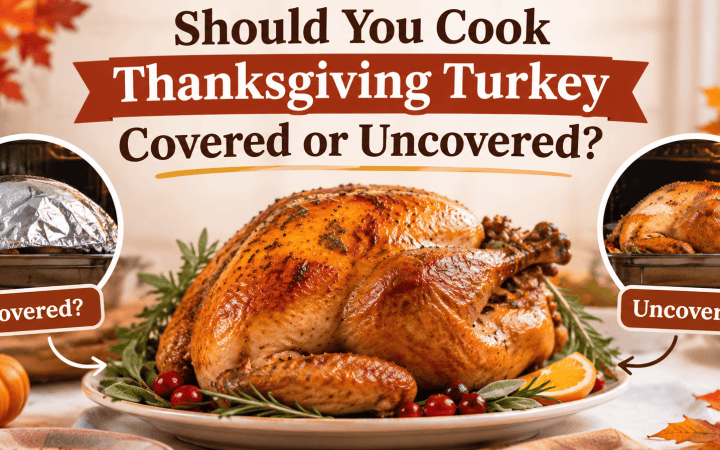
Should You Cover Thanksgiving Turkey With Foil?
If your goal is crispy turkey skin, avoid covering the entire turkey for most of the roasting process.
Foil can trap moisture around the bird and soften the skin.
However, foil is useful when certain areas begin browning faster than others.
For example, the breast may develop a deep golden color before the thighs finish cooking. In that situation, loosely tenting the breast with foil can prevent excessive browning.
Remove any unnecessary covering as cooking progresses.
The goal is to protect the turkey from burning without trapping excessive moisture.
Should You Baste a Turkey to Make the Skin Crispy?
Frequent basting is not necessary for crispy turkey skin.
Although basting is a familiar Thanksgiving tradition, repeatedly pouring pan juices over the turkey can keep the skin wet.
Opening the oven frequently also allows heat to escape, potentially increasing cooking time.
Instead, season the turkey properly before roasting and apply a thin layer of fat to the outside.
If you prefer basting for flavor, do it sparingly rather than every 15 or 20 minutes.
For the crispiest possible exterior, leaving the skin undisturbed is generally the better approach.
Does Baking Powder Make Turkey Skin Crispy?
Baking powder can help promote crispier poultry skin when used correctly.
It changes the surface conditions of the skin and can encourage browning.
However, baking powder is not essential for achieving crispy Thanksgiving turkey.
If you choose to experiment with it, use only a small amount of aluminum-free baking powder mixed into your dry seasoning.
Too much baking powder can produce an unpleasant taste or powdery coating.
For a whole Thanksgiving turkey, thorough drying and proper roasting are more reliable starting points than adding baking powder.
Never substitute baking soda in equal quantities because it can create an unpleasant alkaline flavor.
Should You Roast Turkey on a Rack?
Yes. A roasting rack is especially helpful when trying to achieve crispy turkey skin.
The rack elevates the turkey above the bottom of the roasting pan, allowing hot air to circulate around more of the bird.
It also prevents the underside from sitting directly in accumulated juices.
Without a rack, the turkey may rest in liquid, resulting in softer skin along the bottom.
If you do not own a roasting rack, you can create a temporary platform using thick pieces of onion, carrot, and celery.
Although vegetables do not provide as much airflow as a traditional rack, they help elevate the turkey while adding flavor to the pan drippings.
How Do You Keep Turkey Skin Crispy Without Drying Out the Meat?
One of the biggest challenges when roasting Thanksgiving turkey is achieving crispy skin without overcooking the breast meat.
The key is balancing surface browning with careful temperature monitoring.
Use a Meat Thermometer
Insert a thermometer into the thickest part of the breast without touching bone.
Also check the thigh and wing.
This helps prevent unnecessary additional roasting after the turkey has reached a safe temperature.
Avoid Overcooking
Cooking turkey longer than necessary can dry out the meat.
Do not continue roasting solely to achieve darker skin if the turkey has already reached its safe internal temperature.
Use Butter Under the Skin
A small amount of seasoned butter beneath the breast skin adds flavor without repeatedly wetting the outside.
Avoid Excessive Oven Opening
Opening the oven frequently disrupts consistent roasting temperatures.
Let the Turkey Rest
Resting allows the turkey’s juices to redistribute, making carving easier and helping preserve moisture.
These practices help create a turkey that tastes as good as it looks.
How Long Should You Let a Turkey Rest Before Carving?
Allow a roasted Thanksgiving turkey to rest for approximately 20 to 30 minutes before carving.
Larger birds may benefit from a slightly longer rest.
During this time, the meat’s juices redistribute, helping prevent excessive moisture loss when the turkey is sliced.
To preserve crispy skin, avoid wrapping the turkey tightly in foil.
A tight covering traps steam, which can soften the skin.
If necessary, loosely tent the turkey with foil, leaving room for steam to escape.
Can You Make Turkey Skin Crispy at the End of Cooking?
If your Thanksgiving turkey is fully cooked but the skin is not as crispy as you would like, there are limited ways to improve its appearance.
You may be able to increase the oven temperature briefly while closely monitoring the turkey.
However, additional roasting can dry out the meat.
If the turkey is already at 165°F throughout the required areas, it is generally better to prioritize juicy, properly cooked meat rather than risk overcooking it for slightly crispier skin.
For future Thanksgiving dinners, concentrate on drying the skin before roasting and starting with a sufficiently hot oven.
What Are the Biggest Mistakes That Prevent Crispy Turkey Skin?
Several mistakes can interfere with achieving a beautifully browned Thanksgiving turkey.
1. Skipping the drying process. Wet skin takes longer to brown and may remain rubbery.
2. Using too much butter on the outside. Excess moisture and fat can interfere with even crisping.
3. Covering the turkey for the entire roasting time. Trapped steam can soften the skin.
4. Basting too frequently. Repeatedly wetting the skin can prevent it from drying properly.
5. Roasting directly in pan juices. Skin in contact with liquid will not become crispy.
6. Cooking without a thermometer. Guessing when the turkey is done increases the risk of overcooking.
7. Wrapping the turkey tightly during resting. Steam trapped beneath foil can soften previously crisp skin.
Avoiding these mistakes can make a noticeable difference in the finished turkey.
Frequently Asked Questions About Crispy Thanksgiving Turkey Skin
Should You Put Butter Under or Over Turkey Skin?
For a crispy exterior, placing butter underneath the breast skin and using a thin layer of oil on the outside is a useful approach.
This provides buttery flavor without adding as much moisture directly to the surface.
Does Salt Make Turkey Skin Crispy?
Salt helps remove moisture from the skin during dry brining.
When the turkey is refrigerated uncovered, that moisture can evaporate, allowing the skin to brown more effectively during roasting.
Is It Better to Roast Turkey at 325°F or 350°F?
Both temperatures can produce a properly cooked turkey.
A 350°F oven may encourage somewhat faster browning, while 325°F provides a gentler roasting environment.
Starting at a higher temperature and reducing to 325°F is another option for improving skin color.
Can You Get Crispy Turkey Skin Without Butter?
Yes. Crispy turkey skin does not require butter.
Thorough drying, proper seasoning, good airflow, and appropriate roasting temperatures are the most important factors.
Should You Put Water in the Bottom of the Turkey Roasting Pan?
A small amount of water or broth may help prevent pan drippings from burning, but it should not touch the turkey.
Adding excessive liquid can increase moisture in the roasting environment and may work against achieving crispy skin.
Does Refrigerating Turkey Uncovered Really Work?
Yes. Refrigerating a turkey uncovered allows surface moisture to evaporate.
This creates a drier exterior that is better suited for browning and crisping during roasting.
Final Thoughts: How Do You Get Crispy Skin on a Thanksgiving Turkey?
Getting crispy skin on a Thanksgiving turkey comes down to preparation, moisture control, and proper roasting techniques.
The most effective method is to dry the turkey thoroughly, season it ahead of time, refrigerate it uncovered, and roast it on a rack with a thin coating of oil.
Avoid excessive basting, unnecessary foil covering, and moisture buildup around the bird.
A hot initial roasting temperature can encourage golden-brown skin, while careful thermometer monitoring helps protect the meat from overcooking.
With these simple techniques, you can serve a Thanksgiving turkey that combines beautifully crispy, golden skin with tender, flavorful meat.
The result is a holiday centerpiece that looks impressive, tastes delicious, and makes Thanksgiving dinner even more memorable.




Leave a Reply