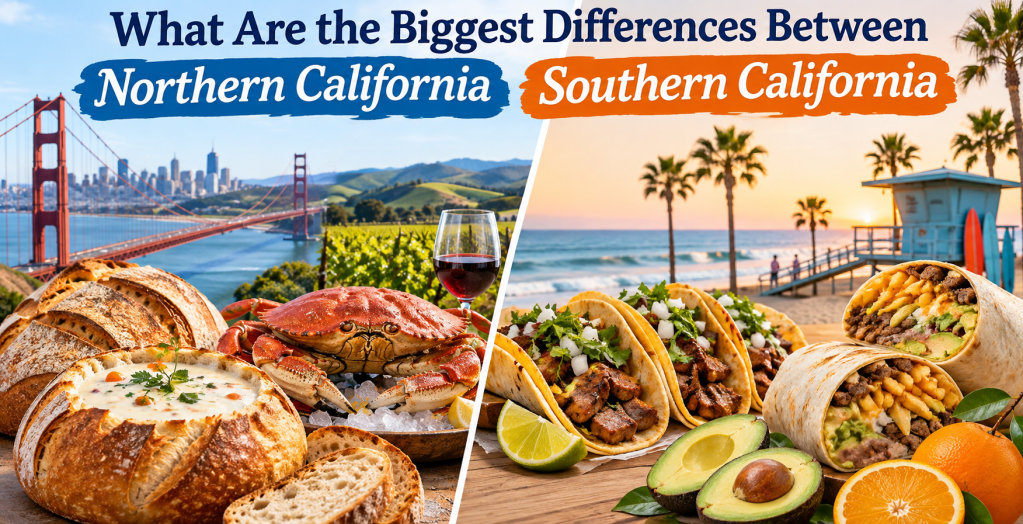
California is one of the most exciting food destinations in the United States, offering an incredible variety of flavors, ingredients, cooking styles, and culinary traditions. However, the food culture in Northern California can feel surprisingly different from what you experience in Southern California.
From San Francisco’s famous sourdough bread and fresh seafood to Los Angeles street tacos and San Diego’s California burritos, each region has developed its own culinary identity.
The biggest differences between Northern and Southern California food come down to cultural influences, climate, local agriculture, popular ingredients, and dining traditions. Northern California is often associated with farm-to-table cooking, seasonal produce, wine-country cuisine, and seafood. Southern California is especially known for Mexican-inspired dishes, street food, beachside dining, and bold multicultural flavors.
Although both regions share California’s commitment to fresh ingredients and culinary creativity, their approaches to food reflect different histories and lifestyles.
Understanding these differences helps explain why California has become such an influential part of American food culture.
What Makes Northern California Food Different From Southern California Food?
The most noticeable difference between Northern and Southern California cuisine is the way each region combines its agricultural resources, cultural traditions, and local lifestyles.
Northern California has developed a strong reputation for seasonal cooking, artisan food production, sustainable agriculture, and innovative restaurants.
Southern California has become internationally recognized for its Mexican-American cuisine, diverse immigrant food traditions, casual dining culture, and creative fusion dishes.
Both regions have exceptional restaurants, fresh seafood, farmers markets, and internationally influenced cuisine. However, certain foods and cooking traditions have become more closely associated with one region than the other.
Northern California Food Characteristics
Northern California cuisine commonly emphasizes:
-
Fresh, seasonal, locally grown ingredients
-
Farm-to-table restaurants and farmers markets
-
Artisan sourdough bread and specialty cheeses
-
Dungeness crab, oysters, and Pacific seafood
-
Wine-country dining and food pairings
-
Seasonal vegetables, mushrooms, and fresh herbs
-
Mediterranean-inspired cooking
-
Traditional San Francisco and Bay Area specialties
Northern California’s food identity is particularly influenced by the San Francisco Bay Area, Napa Valley, Sonoma County, Sacramento Valley, and coastal communities.
Southern California Food Characteristics
Southern California cuisine is especially associated with:
-
Mexican and Mexican-American cooking
-
Street tacos, burritos, and regional Mexican specialties
-
Fresh citrus, avocados, and tropical-inspired flavors
-
Beachside restaurants and outdoor dining
-
Korean, Japanese, Filipino, and other Asian culinary traditions
-
Food trucks and casual neighborhood restaurants
-
Grilled meats, seafood tacos, and fresh salsas
-
Creative fusion dishes and internationally inspired street food
Los Angeles, San Diego, Orange County, and surrounding communities have played major roles in shaping Southern California’s culinary reputation.
1. Northern California Is Famous for Farm-to-Table Cooking
One of Northern California’s most influential culinary contributions is the modern American farm-to-table movement.
This cooking philosophy emphasizes using ingredients grown or produced close to where meals are prepared.
Rather than relying on the same ingredients throughout the year, many Northern California restaurants design menus around seasonal availability.
For example, a spring menu might feature asparagus, peas, artichokes, and fresh herbs. During autumn, restaurants may highlight mushrooms, winter squash, apples, and root vegetables.
The Bay Area played a particularly important role in popularizing this approach.
Restaurants such as Chez Panisse in Berkeley helped establish the idea that high-quality, seasonal ingredients should be the foundation of memorable meals.
Popular Northern California Farm-to-Table Foods
Common examples include roasted seasonal vegetables, locally sourced salads, grilled fish with fresh herbs, artisan bread, mushroom dishes, and meals prepared with regional olive oil.
Northern California’s proximity to agricultural areas makes it possible for restaurants to work closely with farmers, ranchers, and specialty food producers.
However, farm-to-table cooking is not exclusive to Northern California. Southern California also has a strong seasonal food movement, particularly in Los Angeles, Santa Barbara, and San Diego.
The difference is largely one of historical reputation and regional emphasis rather than a strict culinary boundary.
2. Southern California Has a Stronger Mexican Street Food Identity
Mexican food is an essential part of California’s culinary history, but Southern California is especially famous for its Mexican street food traditions.
Los Angeles and San Diego have large and diverse Mexican-American communities whose culinary contributions have shaped the region for generations.
Street tacos, burritos, tamales, tortas, and regional Mexican specialties are everyday foods throughout Southern California.
Los Angeles is particularly well known for its taco stands, food trucks, and neighborhood restaurants serving different regional Mexican cuisines.
Popular Southern California Mexican Foods
Carne asada tacos: Grilled beef served in corn tortillas with onions, cilantro, salsa, and lime.
Fish tacos: Battered or grilled fish served with cabbage, creamy sauces, and fresh salsa.
California burritos: A San Diego specialty commonly filled with carne asada, French fries, cheese, and other ingredients.
Birria tacos: Tortillas filled with richly seasoned, slow-cooked meat, often accompanied by consommé for dipping.
Al pastor tacos: Marinated pork traditionally cooked on a vertical spit and served with onions, cilantro, and sometimes pineapple.
Northern California also has a rich Mexican food culture. San Francisco’s Mission District is especially famous for its Mission-style burritos.
The difference is that Southern California’s taco culture and proximity to the Mexican border have become particularly prominent parts of its regional food identity.
3. Northern California Is More Closely Associated With Sourdough Bread
Few foods are as strongly connected to Northern California as San Francisco sourdough bread.
Sourdough became an important part of San Francisco’s food history during the California Gold Rush.
Unlike bread made exclusively with commercial baker’s yeast, traditional sourdough uses a fermented starter containing wild yeast and lactic acid bacteria.
This fermentation produces the bread’s characteristic tangy flavor and chewy texture.
San Francisco sourdough is especially famous for its crisp crust and distinctive taste.
Popular Ways to Enjoy Northern California Sourdough
Sourdough is commonly served as:
-
Toast with butter or jam
-
Grilled cheese sandwiches
-
Bread bowls filled with clam chowder
-
Sandwiches with local meats and cheeses
-
An accompaniment to seafood dishes
-
Toast topped with avocado, eggs, or seasonal vegetables
Southern California also has excellent bakeries and artisan bread producers, but sourdough remains one of San Francisco’s most recognizable culinary symbols.
4. Southern California Is Famous for Fresh Tacos and Burritos
While Northern California has its own celebrated burrito traditions, Southern California is particularly associated with tacos and several distinctive burrito styles.
The differences between San Francisco and San Diego burritos are especially interesting.
Northern California: Mission-Style Burritos
The Mission-style burrito became famous in San Francisco’s Mission District.
It is typically large and wrapped in a flour tortilla.
Common fillings include rice, beans, meat, salsa, cheese, sour cream, and guacamole.
The ingredients are tightly wrapped into a substantial, portable meal.
Southern California: California Burritos
The California burrito is closely associated with San Diego.
Its defining ingredient is French fries.
A traditional version commonly includes carne asada, fries, cheese, and sometimes guacamole or sour cream.
Unlike the Mission-style burrito, rice and beans are not usually the defining ingredients.
Both styles are popular throughout California, but each represents a different regional tradition.
5. Northern California Has a Stronger Wine-Country Food Identity
Northern California is home to some of America’s most famous wine-producing regions.
Napa Valley and Sonoma County have helped establish California as an internationally respected destination for wine and food.
Restaurants in these areas often emphasize dishes designed to complement local wines.
Popular wine-country meals include roasted chicken, grilled lamb, seasonal vegetables, artisan cheeses, fresh bread, and carefully prepared seafood.
Many restaurants focus on relatively simple preparations that allow the ingredients to stand out.
Why Wine Country Influences Northern California Food
Wine production encourages close relationships among vineyards, farms, restaurants, and specialty food producers.
Cheese makers, olive oil producers, bakeries, and local farms frequently contribute to the region’s culinary culture.
Wine-country dining also emphasizes the experience surrounding a meal, including outdoor settings, seasonal menus, and thoughtful food pairings.
Southern California has important wine regions as well, including Santa Barbara County and Temecula Valley.
However, Napa and Sonoma have become especially influential in shaping Northern California’s national and international culinary identity.
6. Southern California Food Is Strongly Influenced by Beach Culture
Southern California’s coastal lifestyle has contributed to its reputation for fresh, casual, and convenient meals.
Beach communities throughout San Diego, Orange County, and Los Angeles are known for outdoor dining, seafood restaurants, smoothie shops, and casual cafes.
Popular foods include grilled fish tacos, shrimp bowls, fresh salads, breakfast burritos, and sandwiches.
Avocados, citrus fruits, and fresh vegetables appear frequently on menus.
Popular Southern California Beach Foods
Fish tacos are among the most recognizable coastal specialties.
Grilled fish may be served in warm tortillas with cabbage, salsa, lime, and a creamy sauce.
Other popular choices include grilled shrimp, ceviche, avocado toast, smoothie bowls, and fresh fruit.
Southern California’s mild climate makes outdoor dining practical for much of the year, reinforcing the connection between food and coastal recreation.
Northern California also has a vibrant coastal dining culture, but its cooler weather and historic fishing communities have helped establish different regional specialties.
7. Northern California Is Especially Known for Dungeness Crab and Seafood
Seafood is an important part of both Northern and Southern California cuisine.
However, Northern California is particularly associated with Dungeness crab, oysters, and traditional seafood dishes from San Francisco and the surrounding coast.
Dungeness crab is valued for its sweet, delicate meat.
It is commonly served cracked with melted butter, incorporated into salads, or used in pasta and other seafood dishes.
Famous Northern California Seafood Dishes
Cioppino: A tomato-based seafood stew associated with San Francisco’s Italian-American fishing community.
Dungeness crab: Often served simply to highlight its natural sweetness.
Clam chowder in sourdough bread bowls: A well-known San Francisco tourist favorite.
Fresh oysters: Particularly associated with coastal areas such as Tomales Bay.
Grilled Pacific fish: Frequently prepared with seasonal vegetables and fresh herbs.
Southern California also has an extensive seafood tradition, especially around fish tacos, grilled seafood, ceviche, and Mexican coastal cooking.
The distinction is not that one region has better seafood, but that different seafood preparations have become regional signatures.
8. Southern California Has a Distinctive Asian Fusion Food Culture
California’s Asian culinary traditions are extensive and deeply rooted in both northern and southern regions.
San Francisco has one of the oldest Chinese American communities in the United States, while the Bay Area also has strong Japanese, Filipino, Vietnamese, Korean, and other Asian food traditions.
Southern California, particularly Los Angeles and Orange County, has become famous for its diverse Asian restaurant communities and innovative fusion cuisine.
Koreatown in Los Angeles is internationally recognized for Korean dining, while the San Gabriel Valley is celebrated for its wide range of Chinese regional cuisines.
Orange County’s Little Saigon is another major culinary destination.
Popular Southern California Asian-Inspired Foods
Examples include Korean barbecue, Vietnamese pho and bánh mì, Japanese ramen, sushi, Filipino barbecue, and Korean-Mexican fusion tacos.
Los Angeles food trucks helped popularize combinations such as Korean barbecue flavors served in Mexican-style tacos.
These creative dishes demonstrate how Southern California’s communities influence one another.
Northern California has similarly diverse Asian cuisines, but Southern California’s large metropolitan food scene has become especially associated with cross-cultural experimentation and fusion street food.
9. Northern California Often Emphasizes Seasonal Ingredients
Northern California’s agricultural regions provide an enormous variety of ingredients.
The Sacramento Valley, Central Valley, and surrounding farming communities produce fruits, vegetables, nuts, grains, and other agricultural products.
Seasonal availability plays an important role in restaurant menus and home cooking.
During spring, artichokes and asparagus may be especially prominent.
Summer brings tomatoes, peaches, berries, and stone fruit.
Autumn introduces apples, pears, pumpkins, and winter squash.
Winter menus often highlight citrus, leafy greens, and root vegetables.
This seasonal approach is closely associated with Northern California’s farm-to-table identity.
Southern California also produces and uses seasonal ingredients, but its warmer coastal climate and historical agricultural traditions have made avocados, citrus, and other warm-weather produce especially recognizable.
10. Southern California Is More Closely Associated With Avocados and Citrus
Avocados are popular throughout California, but Southern California has a particularly strong historical connection to avocado cultivation.
San Diego County and other southern growing areas have long played important roles in California’s avocado industry.
Avocados appear in numerous regional dishes, including tacos, burritos, sandwiches, salads, and breakfast meals.
Citrus fruits also have a deep connection to Southern California’s agricultural history.
Orange groves once covered large portions of Southern California, especially in areas that later became heavily developed.
Although agricultural production has changed significantly, citrus remains part of the region’s culinary identity.
Common Southern California Avocado and Citrus Dishes
Popular examples include avocado toast, guacamole, citrus-marinated seafood, orange-glazed chicken, avocado salads, and grilled fish with lime.
Fresh lime juice is also a common ingredient in Mexican-inspired dishes and coastal seafood preparations.
These ingredients contribute to the bright, fresh flavors frequently associated with Southern California cooking.
11. Northern California Has Strong Italian-American Food Traditions
Italian-American cuisine has played an important role in San Francisco’s food history.
Italian immigrants helped establish restaurants, bakeries, markets, and fishing traditions that remain influential today.
San Francisco’s North Beach neighborhood is especially associated with Italian-American culture.
One of the region’s most famous dishes is cioppino, a seafood stew developed within San Francisco’s Italian fishing community.
Traditional Italian-American restaurants also serve pasta, pizza, seafood, and other familiar dishes.
Southern California has its own rich Italian-American food culture, but San Francisco’s historic neighborhoods and seafood traditions give Northern California a distinctive connection to Italian-American cuisine.
12. Southern California Is Known for Fast-Casual Food and Food Trucks
Southern California has played an influential role in American fast-food and casual dining history.
The region’s car-oriented development, entertainment industry, and diverse population helped shape a distinctive restaurant culture.
Southern California is associated with drive-in restaurants, burger stands, taco shops, and innovative food trucks.
The original In-N-Out Burger opened in Baldwin Park in 1948, helping establish a fast-food brand that became closely associated with California.
Los Angeles later became an important center for modern gourmet food truck culture.
Food trucks made it possible for chefs to introduce creative dishes without opening traditional full-service restaurants.
Today, Southern California’s casual dining scene includes everything from classic burgers to international street food.
Northern California also has excellent food trucks and fast-casual restaurants, but Southern California’s history of drive-ins, taco shops, and mobile food culture is particularly recognizable.
13. Northern California Has a Strong Artisan Food Culture
Northern California is especially associated with small-scale food production and artisan culinary traditions.
Examples include specialty cheeses, handmade bread, craft chocolate, roasted coffee, olive oil, and fermented foods.
The Bay Area and surrounding agricultural regions have supported many independent food producers.
Farmers markets and specialty grocery stores often feature products made by regional businesses.
This emphasis on craftsmanship complements Northern California’s farm-to-table reputation.
Southern California also has a thriving artisan food industry, particularly in coffee, bakeries, specialty desserts, and independent restaurants.
The difference is largely the way artisan production became central to Northern California’s modern culinary image.
14. Southern California Is Especially Famous for Creative Fusion Food
One of Southern California’s defining culinary characteristics is the blending of different food traditions.
Los Angeles is home to communities representing culinary cultures from around the world.
As these traditions interact, chefs and home cooks create dishes combining ingredients and techniques from multiple cuisines.
Examples include Korean barbecue tacos, sushi burritos, Mexican-inspired pizzas, and Asian-influenced burgers.
Some combinations become widely popular, while others remain neighborhood specialties.
Southern California’s fusion food culture reflects its multicultural population and willingness to experiment.
Northern California also has a long history of culinary innovation and fusion cooking, particularly in the Bay Area.
Both regions have contributed to modern American cuisine, but Los Angeles has become especially visible for its creative street-food combinations.
15. Breakfast Traditions Differ Between Northern and Southern California
Breakfast is another area where regional differences become noticeable.
Northern California breakfast menus often highlight artisan bread, seasonal produce, specialty coffee, and ingredients sourced from local farms.
Southern California breakfast culture is especially associated with breakfast burritos, Mexican-inspired dishes, avocado toast, smoothies, and beachside cafes.
Popular Northern California Breakfast Foods
Common choices include sourdough toast with eggs, seasonal fruit pancakes, mushroom omelets, artisan pastries, and locally roasted coffee.
Popular Southern California Breakfast Foods
Popular choices include breakfast burritos, huevos rancheros, chilaquiles, avocado toast, breakfast tacos, and smoothie bowls.
These foods are available across California, and many have origins outside the state.
The distinction lies in which dishes are most closely associated with each region’s dining identity.
Northern California vs. Southern California Food: Side-by-Side Comparison
| Food category | Northern California | Southern California |
|---|---|---|
| Culinary identity | Farm-to-table and seasonal cooking | Mexican-inspired and multicultural street food |
| Famous bread | San Francisco sourdough | Flour tortillas and artisan breads |
| Famous burrito | Mission-style burrito | California burrito |
| Seafood specialties | Dungeness crab, cioppino, oysters | Fish tacos, ceviche, grilled seafood |
| Agricultural influence | Seasonal produce, wine grapes, specialty crops | Avocados, citrus, regional produce |
| Dining culture | Wine-country restaurants, farmers markets | Taco shops, food trucks, beach cafes |
| Historic food influence | Italian-American, Chinese-American, European traditions | Mexican-American, Asian, and diverse immigrant traditions |
| Popular breakfast | Sourdough toast, pastries, seasonal dishes | Breakfast burritos, chilaquiles, avocado toast |
| Famous food destination | San Francisco, Napa, Sonoma | Los Angeles, San Diego, Orange County |
These comparisons describe regional associations, not exclusive differences. California’s food traditions frequently overlap.
What Foods Is Northern California Most Famous For?
Northern California has several foods that visitors frequently associate with the region.
Some of the most recognizable include:
-
San Francisco sourdough bread
-
Mission-style burritos
-
Cioppino seafood stew
-
Dungeness crab
-
Clam chowder in sourdough bread bowls
-
Fresh oysters
-
Wine-country cuisine
-
Seasonal farm-to-table dishes
-
Artisan cheeses
-
Garlic fries, especially associated with Bay Area sporting events
These foods represent different aspects of Northern California’s history, agriculture, and restaurant culture.
What Foods Is Southern California Most Famous For?
Southern California is known for a different collection of regional favorites.
Some of the most recognizable include:
-
Carne asada street tacos
-
San Diego California burritos
-
Baja-style fish tacos
-
In-N-Out burgers
-
Korean barbecue tacos
-
Breakfast burritos
-
Avocado toast
-
Chilaquiles
-
Fresh ceviche
-
Korean barbecue and other internationally influenced dishes
These foods reflect Southern California’s Mexican heritage, multicultural communities, and casual dining traditions.
Is Northern California Food Healthier Than Southern California Food?
Neither region is automatically healthier than the other.
Both Northern and Southern California offer an enormous range of nutritious and indulgent meals.
Northern California’s farm-to-table reputation may encourage the use of seasonal vegetables, whole foods, and minimally processed ingredients.
Southern California’s coastal dining culture frequently emphasizes fresh produce, grilled seafood, avocado, and lighter meals.
However, both regions also enjoy burgers, fried foods, rich desserts, and substantial restaurant portions.
The nutritional quality of a meal depends more on its ingredients, preparation methods, and portion sizes than on where it is served.
A grilled fish taco with vegetables can be nutritious, just as a seasonal Northern California salad can be.
Likewise, either region can produce meals high in calories, sodium, or saturated fat.
Which Region Has Better Mexican Food?
This is one of California’s most debated food questions.
Southern California has a particularly strong reputation for Mexican cuisine because of its proximity to Mexico, longstanding Mexican-American communities, and enormous variety of regional Mexican restaurants.
Los Angeles and San Diego are famous for tacos, burritos, birria, seafood dishes, and countless other specialties.
Northern California also has outstanding Mexican food, particularly in San Francisco’s Mission District, Oakland, San Jose, and agricultural communities throughout the region.
Mission-style burritos have become one of Northern California’s most influential contributions to Mexican-American food culture.
Ultimately, the better region depends on the type of Mexican food someone prefers.
A person who loves San Diego-style California burritos may prefer Southern California, while someone who enjoys large Mission-style burritos may favor Northern California.
Neither region can claim a monopoly on excellent Mexican cuisine.
Which Region Has Better Seafood?
Northern California and Southern California offer different seafood experiences.
Northern California is especially famous for Dungeness crab, oysters, cioppino, and seafood served in historic waterfront restaurants.
Southern California is particularly associated with Baja-style fish tacos, ceviche, grilled fish, and Mexican coastal seafood preparations.
Northern California seafood traditions often emphasize local catches and relatively simple preparations.
Southern California seafood dishes frequently incorporate citrus, chiles, fresh salsa, and Mexican-inspired seasonings.
Both regions have excellent seafood, and freshness depends on the restaurant, supply chain, season, and type of fish or shellfish.
How Does California’s Climate Influence Its Food?
California’s geography and climate contribute significantly to regional food differences.
Northern California includes cool coastal areas, fertile valleys, mountains, and major agricultural regions.
Southern California includes warm coastal communities, inland valleys, mountains, and desert environments.
These different landscapes influence agricultural production, seasonal availability, and dining habits.
Northern California’s cooler coastal climate has historically supported dishes such as seafood stews, while its agricultural regions provide a wide variety of seasonal produce.
Southern California’s mild coastal weather encourages outdoor dining and supports a strong culture of casual restaurants and fresh meals.
However, both regions contain multiple climate zones, and agricultural production is not neatly divided by a north-south boundary.
The Central Valley, Central Coast, and other areas also play major roles in supplying food throughout the state.
Why Are Northern and Southern California Food Cultures So Different?
The differences developed through a combination of geography, migration, agriculture, economics, and history.
Northern California’s culinary identity was influenced by the Gold Rush, San Francisco’s development as a major port, European and Asian immigration, and the growth of wine-producing regions.
Southern California’s culinary identity was shaped by its longstanding Mexican heritage, cross-border connections, the expansion of Los Angeles, Asian and Latin American immigration, and the growth of automobile-oriented communities.
The two regions also developed different restaurant traditions.
Northern California became especially influential in modern seasonal American cuisine.
Southern California became particularly influential in Mexican-American fast-casual dining, fusion street food, and the evolution of American fast food.
These histories explain why each region has recognizable specialties even though they share many ingredients and culinary influences.
Frequently Asked Questions
What is the biggest difference between Northern and Southern California food?
Northern California is more closely associated with farm-to-table cooking, sourdough bread, Dungeness crab, and wine-country cuisine. Southern California is especially famous for Mexican-inspired street food, California burritos, fish tacos, and multicultural fusion dishes.
Is Northern California food more expensive?
Not necessarily. Both regions have expensive fine-dining restaurants and affordable neighborhood establishments. Prices depend on the city, restaurant, ingredients, and dining experience.
Why is San Francisco sourdough so famous?
San Francisco sourdough became closely associated with the city’s Gold Rush history and baking traditions. Its fermented starter produces a distinctive tangy flavor and chewy texture.
What food is Los Angeles best known for?
Los Angeles is particularly famous for street tacos, diverse regional Mexican cuisine, Korean barbecue, burgers, and innovative fusion street food.
What food is San Diego best known for?
San Diego is especially associated with California burritos, carne asada fries, fish tacos, and Mexican-inspired coastal cuisine.
Does Northern California have good Mexican food?
Yes. Northern California has a rich Mexican food culture, including San Francisco’s famous Mission-style burritos and numerous regional Mexican restaurants throughout the Bay Area and beyond.
Is Southern California food spicier?
Southern California’s prominent Mexican and Asian culinary traditions offer many spicy dishes, but spice levels vary considerably. Both regions have restaurants serving mild and intensely spicy food.
Which region is better for food lovers?
Both are excellent destinations. Northern California is particularly appealing to visitors interested in seasonal cooking, artisan food, seafood, and wine-country dining. Southern California offers outstanding Mexican cuisine, international restaurants, street food, and creative fusion dishes.
Final Thoughts: Northern California vs. Southern California Food
Northern and Southern California have developed two distinctive culinary identities, but both contribute to the state’s reputation as one of America’s most exciting food destinations.
Northern California is especially celebrated for its farm-to-table traditions, sourdough bread, fresh seafood, artisan products, and wine-country cuisine.
Southern California is particularly famous for its Mexican-American food culture, street tacos, California burritos, multicultural restaurants, and creative fusion dishes.
The biggest difference is not the quality of the food, but the traditions and influences that shape it.
Northern California often highlights seasonal ingredients and regional agricultural connections, while Southern California is especially recognized for its street food, coastal dining, and cultural diversity.
Yet the two regions have much more in common than their culinary stereotypes suggest. Both celebrate fresh ingredients, innovation, immigrant food traditions, and the freedom to experiment with flavors.
Whether you are enjoying sourdough and Dungeness crab along the San Francisco waterfront or eating carne asada tacos near the beaches of San Diego, you are experiencing a different side of California’s extraordinary food culture.
And perhaps that is what makes California cuisine so special: there is no single way to define it.
From Northern California’s historic food traditions to Southern California’s vibrant street food scene, the state’s culinary diversity offers something for almost every taste.

Leave a Reply