
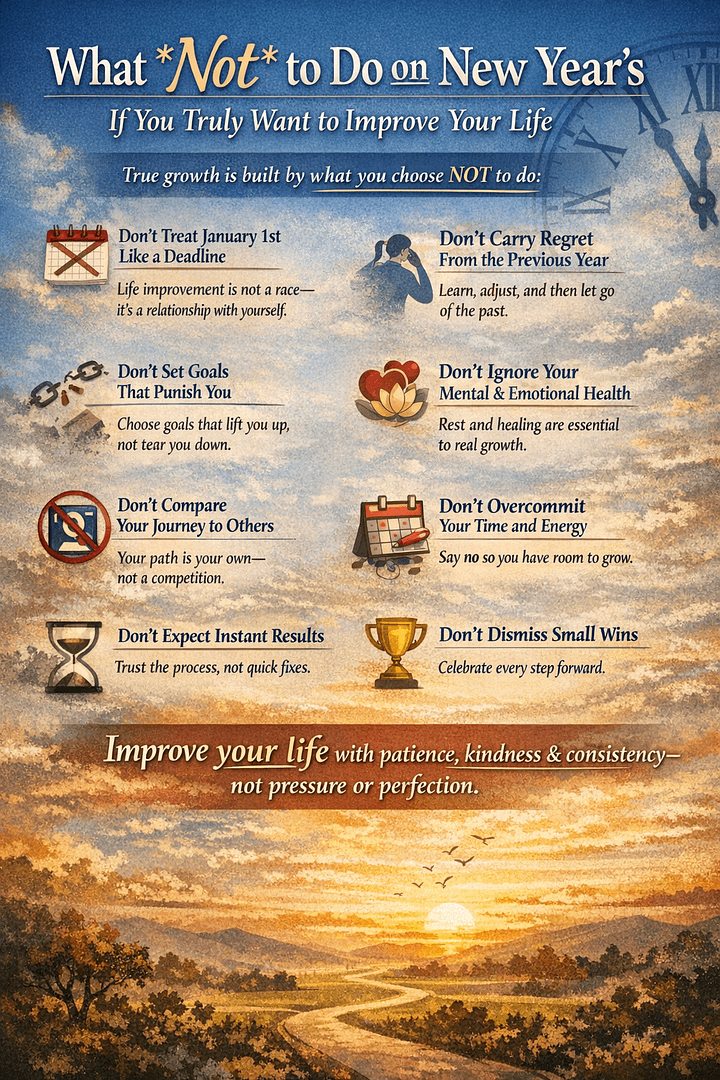
The arrival of a new year often comes with loud messages telling us to do more, be more, change faster. While the idea of a fresh start can feel inspiring, it can also create unnecessary pressure. Many people begin the year exhausted, overwhelmed, or discouraged—long before any real progress is made.
If the goal is lasting improvement rather than temporary motivation, it’s just as important to know what not to do as it is to know what to do. True growth isn’t born from force; it’s built through awareness, compassion, and consistency.
1. Don’t Treat January 1st Like a Deadline
One of the biggest mistakes people make is believing they must have everything figured out by the first day of the year. This mindset turns the new year into a test instead of an opportunity.
Life doesn’t reset overnight. Growth is ongoing, and meaningful change happens gradually. When you pressure yourself to “start perfectly,” you risk giving up as soon as things feel uncomfortable.
Life improvement is not a race—it’s a relationship with yourself.
2. Don’t Set Goals That Punish You
Resolutions rooted in self-criticism—lose weight because I’m not enough, work harder because I failed, fix everything that’s wrong with me—are rarely sustainable. When goals come from shame, they drain motivation rather than build it.
Improvement should feel supportive, not harsh. If a goal makes you feel anxious, exhausted, or inadequate before you’ve even begun, it may be time to rethink it.
Choose goals that add to your life, not ones that make you feel smaller.
3. Don’t Compare Your Journey to Someone Else’s Progress
At the start of the year, social media becomes flooded with bold declarations, vision boards, and success stories. While inspiring to some, this constant comparison can quietly sabotage your confidence.
Everyone starts the year with different circumstances, struggles, and resources. Comparing your chapter one to someone else’s chapter ten will only make you feel behind—even when you’re exactly where you need to be.
Your path is valid, even if it looks quieter or slower than others’.
4. Don’t Carry Regret From the Previous Year
Many people enter the new year dragging the emotional weight of what they didn’t accomplish. Unfinished goals, missed opportunities, and past mistakes can linger like shadows.
But regret doesn’t create change—it creates fear. The lessons of the past year are meant to guide you forward, not keep you stuck.
You are allowed to learn, adjust, and move on without punishment.
5. Don’t Ignore Rest, Healing, and Emotional Health
Self-improvement is often framed around productivity, achievement, and hustle. What’s rarely discussed is how deeply important rest and emotional well-being are to long-term growth.
If you’re mentally drained, emotionally grieving, or physically exhausted, pushing harder won’t fix it. Healing is not a delay—it’s a requirement.
A well-rested, emotionally supported person grows faster than a burned-out one.
6. Don’t Overcommit Your Time and Energy
New year enthusiasm can lead to saying yes to every plan, project, and promise. Before long, you’re overwhelmed, resentful, and stretched too thin.
Growth requires space. When your calendar is packed, there’s no room to reflect, adjust, or breathe.
Learning to say no is one of the most powerful acts of self-improvement.
7. Don’t Expect Immediate Results
We live in a world that celebrates overnight success, but real change rarely works that way. Expecting quick outcomes sets you up for disappointment and self-doubt.
Consistency may feel boring, but it’s where transformation lives. Small habits repeated daily will always outperform dramatic bursts of effort.
Trust slow progress—it lasts longer.
8. Don’t Dismiss Small Wins
Many people overlook progress because it doesn’t feel “big enough.” But improvement is built from countless small choices that often go unnoticed.
Waking up earlier, setting one boundary, choosing rest, or showing kindness to yourself—these are victories worth honoring.
Small steps, taken consistently, create powerful change.
Final Reflection
The new year is not about becoming someone new. It’s about becoming more honest, more compassionate, and more aligned with who you already are.
Let go of pressure. Release comparison. Replace perfection with patience.
True life improvement doesn’t begin with grand resolutions—it begins with treating yourself like someone worth caring for.
And that choice can start today, no matter what day the calendar says.
Read More Of Health & Wellness
Leave a ReplyCancel reply