
For many men, the phrase “be a good man” sounds simple. Work hard. Keep your word. Protect your family. Treat people with respect. Help those in need. Stay humble. Be loyal. Forgive. Love deeply.
Yet many men quietly discover an uncomfortable truth.
Sometimes being a good man hurts.
Not because goodness is wrong—but because goodness often comes with sacrifice, disappointment, and heartbreak. In a world that sometimes rewards selfishness over integrity, good men can find themselves carrying burdens that few people ever notice.
Here’s why.
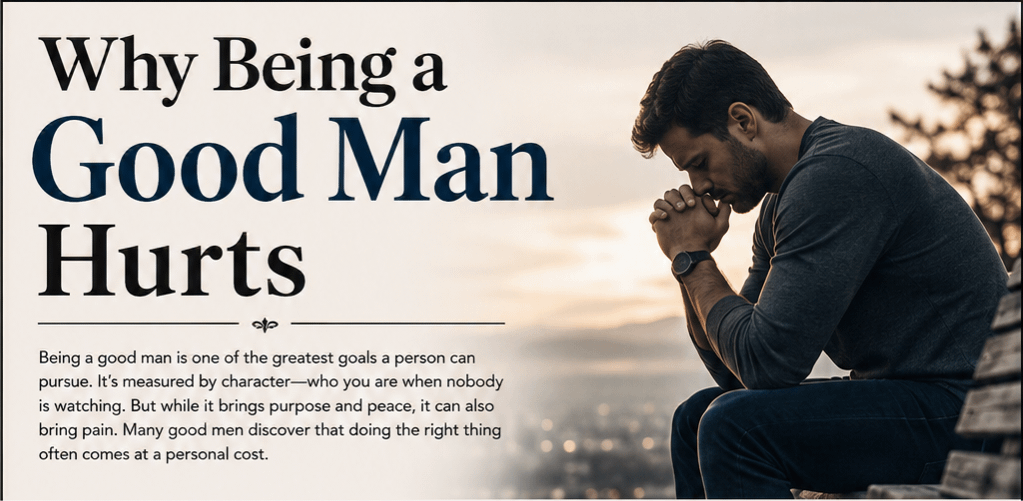
Why Being a Good Man Hurts
Being a good man is one of the greatest goals a person can pursue. It isn’t measured by wealth, status, popularity, or power. It’s measured by character—who you are when nobody is watching.
A good man chooses honesty over deception, responsibility over excuses, kindness over cruelty, and loyalty over convenience. He strives to protect the people he loves and leaves every place better than he found it.
But while being a good man brings purpose and peace, it can also bring pain.
Many good men discover that doing the right thing often comes at a personal cost.
Good Men Give More Than They Receive
Good men naturally become givers.
They stay late at work.
They help friends move.
They answer late-night phone calls.
They fix problems.
They carry heavy burdens without complaint.
Over time, many become the person everyone depends on.
The problem is that people often grow accustomed to receiving without asking whether the good man has anything left to give.
He pours into everyone else’s cup while his own slowly empties.
Eventually, exhaustion replaces fulfillment.
They Feel Responsible for Everyone
A good man often believes it’s his job to protect everyone around him.
If someone is hurting, he wants to fix it.
If the bills are piling up, he’ll work longer hours.
If his family struggles, he blames himself.
If relationships fail, he wonders what he could have done differently.
That sense of responsibility is admirable—but it can also become crushing.
Some burdens were never his to carry.
Their Kindness Gets Mistaken for Weakness
Kindness is not weakness.
Unfortunately, not everyone sees it that way.
Some people mistake patience for passivity.
Compassion for vulnerability.
Forgiveness for permission.
Generosity for endless availability.
Instead of appreciating a good man’s heart, they exploit it.
They ask for more.
They expect more.
They give less.
Eventually the good man begins wondering why doing the right thing seems to attract the wrong people.
Good Men Often Stay Silent
Many men were raised believing they should never complain.
Be strong.
Handle it.
Figure it out.
Don’t burden anyone.
So they carry stress privately.
Financial pressure.
Marriage struggles.
Grief.
Depression.
Fear.
Loneliness.
They become experts at appearing okay while quietly falling apart inside.
The world often praises their strength without ever asking how much it costs.
Loving Deeply Means Hurting Deeply
Good men don’t love halfway.
They invest completely.
When they become fathers, they devote themselves to their children.
When they marry, they commit fully.
When they call someone a friend, they mean it.
Because they love deeply, they grieve deeply.
When relationships end…
When trust is broken…
When betrayal happens…
When a loved one dies…
The pain cuts much deeper because their love was genuine.
The same heart that makes someone a good man is also the heart most capable of being broken.
They Rarely Hear “Thank You”
Many responsibilities carried by good men become invisible.
The mortgage gets paid.
The lawn gets mowed.
The car gets repaired.
The children are protected.
The family feels secure.
People often notice these things only when they stop happening.
The countless sacrifices become expected rather than appreciated.
Good men rarely seek applause.
But appreciation matters more than many people realize.
Sometimes a sincere “thank you” carries more weight than expensive gifts.
They Keep Their Word Even When It Costs Them
Integrity isn’t convenient.
Keeping promises sometimes means sacrificing comfort.
Showing up when you’re tired.
Paying debts when money is tight.
Remaining faithful when temptation appears.
Doing what’s right when no one would ever know otherwise.
Character costs something.
A good man’s word becomes valuable precisely because he refuses to break it.
They Feel Like They Must Be Strong All the Time
Society often tells men:
Don’t cry.
Don’t show weakness.
Don’t admit fear.
Don’t fall apart.
Many good men become emotional reservoirs.
They absorb everyone else’s pain while hiding their own.
Eventually the pressure builds.
No one is meant to carry life alone.
Strength is not pretending you’re invincible.
Real strength is knowing when to ask for help.
Being Good Doesn’t Guarantee Fairness
One of life’s hardest lessons is this:
Being a good person does not protect you from suffering.
Good men lose jobs.
Good men get divorced.
Good men are betrayed.
Good men bury loved ones.
Good men battle illness.
Good men lose children.
Life isn’t always fair.
But character determines how we respond when life isn’t fair.
A Good Man Doesn’t Keep Score
Many good men quietly love without expecting repayment.
They help because it’s right.
They forgive because bitterness destroys peace.
They serve because love requires action.
But even the strongest heart grows weary if every relationship becomes one-sided.
Healthy relationships involve mutual care.
Good men must remember that allowing others to give back isn’t selfish.
It’s healthy.
Why Some Good Men Become Bitter
Pain changes people.
Repeated disappointment can harden even the kindest heart.
When kindness is abused…
When loyalty is betrayed…
When honesty is mocked…
When sacrifice goes unnoticed…
Bitterness begins whispering:
“Stop caring.”
“People aren’t worth it.”
“Protect yourself.”
Some men listen.
Others continue choosing goodness anyway.
That choice requires incredible courage.
The Courage to Stay Good
Being a good man doesn’t mean becoming a doormat.
It doesn’t mean allowing abuse.
It doesn’t mean tolerating manipulation.
It means having both compassion and boundaries.
A good man can forgive while walking away.
He can love without losing himself.
He can protect his peace without abandoning his principles.
Strength and kindness were never meant to compete.
The strongest men often possess both.
When Grief Changes a Good Man
For fathers who have buried a child, the pain reaches a level few people can imagine.
Many grieving fathers wonder whether goodness mattered at all.
They prayed.
They worked.
They loved.
They protected.
Yet tragedy still came.
Grief doesn’t erase goodness.
It tests it.
Some fathers discover that even after unimaginable loss, they still choose compassion.
They still encourage others.
They still help those who are hurting.
Not because life has become easy—but because suffering has taught them the value of kindness.
That is one of the purest forms of strength.
Being Good Is Never Wasted
The world may not always reward integrity.
People may overlook your sacrifices.
Some relationships may fail despite your best efforts.
Some acts of kindness may never be acknowledged.
But none of it is wasted.
Every child who watches you learns what character looks like.
Every person you encourage carries your words longer than you realize.
Every promise you keep strengthens your own integrity.
Every act of compassion leaves a mark on the world.
Goodness may not always receive applause.
But it always leaves a legacy.
Final Thoughts
Being a good man hurts because it requires sacrifice. It asks you to love when love is risky, to forgive when forgiveness is difficult, and to remain honest in a world where shortcuts often seem easier.
There will be moments when your kindness is misunderstood, your loyalty is taken for granted, and your efforts go unnoticed. Those moments can make you question whether being good is worth it.
It is.
Not because it guarantees an easy life, but because it shapes the kind of man you become. True strength is not measured by how much power you have over others. It is measured by your ability to remain compassionate without becoming weak, honest without becoming bitter, and faithful to your values even when no one is watching.
The world needs more good men—not perfect men, but men of integrity, courage, humility, and love. If being a good man has brought you pain, don’t let that pain convince you to abandon your character. Let it refine it.
Your goodness may hurt at times, but it has the power to heal lives, inspire others, and leave behind a legacy that will outlive you.
Share this:
- Share on X (Opens in new window) X
- Share on Facebook (Opens in new window) Facebook
- Share on LinkedIn (Opens in new window) LinkedIn
- Share on Reddit (Opens in new window) Reddit
- Share on Tumblr (Opens in new window) Tumblr
- Share on Pinterest (Opens in new window) Pinterest
- Share on Telegram (Opens in new window) Telegram
- Share on Threads (Opens in new window) Threads
- Share on Bluesky (Opens in new window) Bluesky
Leave a ReplyCancel reply