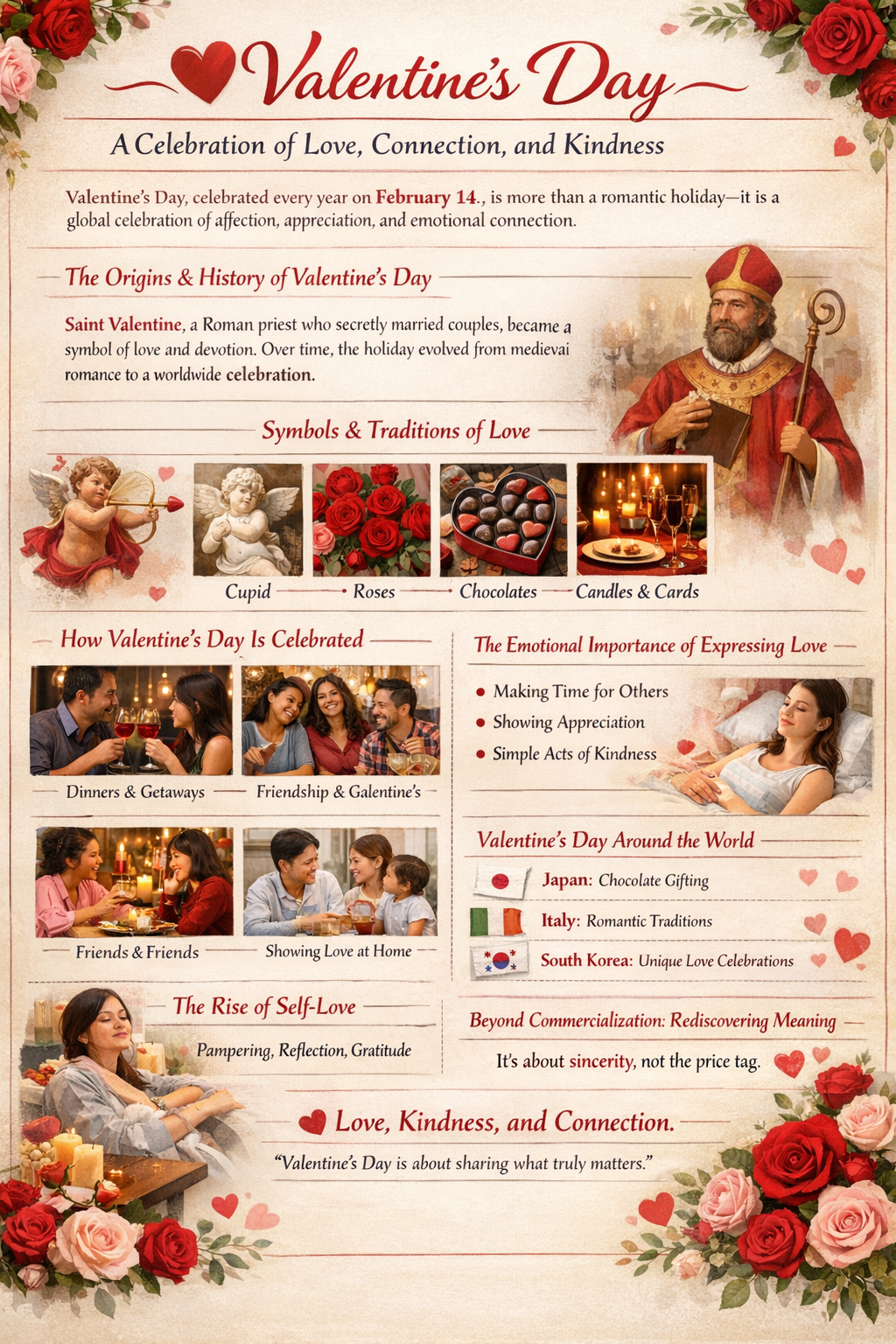
Valentine’s Day, celebrated every year on February 14, is more than a romantic holiday—it is a global celebration of affection, appreciation, and emotional connection. From grand romantic gestures to quiet moments of gratitude, the day encourages people to express love openly and intentionally.
Though often associated with couples, Valentine’s Day has evolved into a celebration that embraces friendships, family bonds, compassion, and self-care, reminding us that love exists in many beautiful forms.
The Origins and History of Valentine’s Day
The roots of Valentine’s Day reach back to ancient Rome and the story of Saint Valentine, remembered for acts of kindness and devotion. Legends describe him as a priest who secretly married couples during a time when such unions were forbidden, believing love deserved protection and respect.
Over centuries, the holiday blended religious tradition with folklore. By the Middle Ages, Europeans believed February marked the beginning of birds’ mating season, strengthening the association between the date and romance. Writers and poets began linking the day with courtly love, inspiring handwritten notes and poetic declarations that became early Valentine messages.
The tradition expanded rapidly during the 18th and 19th centuries when printed greeting cards made expressions of affection accessible to everyone. Today, Valentine’s Day is celebrated worldwide, crossing cultures and generations.
Symbols and Traditions of Love
Valentine’s Day is rich with symbols that communicate emotion without words. Many traditions we recognize today carry deeper meanings:
Hearts symbolize emotional connection and sincerity.
Red roses represent passion, admiration, and deep affection.
Chocolates and sweets express sweetness and generosity.
Greeting cards preserve personal messages and memories.
Cupid, the playful winged figure from Roman mythology, represents love’s unpredictable and magical nature.
These symbols help people communicate feelings that can sometimes be difficult to say aloud.
How Valentine’s Day Is Celebrated Today
Modern celebrations vary widely depending on culture, personality, and relationship styles. Some people embrace elaborate romantic plans, while others focus on meaningful simplicity.
Romantic Celebrations
Couples often celebrate with:
Candlelit dinners or home-cooked meals
Weekend getaways or shared experiences
Personalized gifts or handwritten love letters
Recreating meaningful memories together
Friendship and Community
In recent years, celebrations have expanded to include:
“Galentine’s” or friendship gatherings
Appreciation gifts for close friends
Classroom exchanges among children
Acts of kindness within communities
Family Traditions
Families may celebrate by:
Sharing special desserts or meals
Giving small tokens of appreciation
Teaching children the value of gratitude and kindness
The Rise of Self-Love on Valentine’s Day
One of the most meaningful modern shifts is the focus on self-love. Many people now use Valentine’s Day as an opportunity to reconnect with themselves.
Self-love celebrations might include:
Taking a personal day to rest and recharge
Journaling or reflecting on personal growth
Practicing gratitude and mindfulness
Treating oneself to something meaningful
Recognizing your own worth strengthens the ability to love others authentically.
The Emotional Importance of Expressing Love
Love is a universal human need. Studies consistently show that emotional connection improves mental well-being, reduces stress, and strengthens resilience. Valentine’s Day serves as a reminder to express appreciation before opportunities pass.
Simple gestures often carry the greatest emotional impact:
Saying “I appreciate you”
Checking in on someone who feels lonely
Offering forgiveness or reconciliation
Spending uninterrupted time together
These moments create lasting memories far beyond material gifts.
Valentine’s Day Around the World
Different cultures celebrate the holiday in unique ways:
Japan: Women traditionally give chocolates, while men reciprocate a month later on White Day.
Italy: Couples gather in romantic cities and exchange small love tokens.
South Korea: Multiple love-themed celebrations occur throughout the year.
United States: Celebrations range from romantic dinners to school exchanges and community events.
Despite cultural differences, the message remains universal—love connects humanity.
Beyond Commercialization: Rediscovering Meaning
While Valentine’s Day is often associated with shopping and gifts, its deeper purpose lies in emotional expression. Love does not require expensive gestures; sincerity matters far more than scale.
A handwritten letter, shared laughter, or simply being present can mean more than any store-bought item.
❤️ Final Reflection
Valentine’s Day endures because it speaks to something timeless within us—the desire to love and be loved. Whether celebrated with a partner, friends, family, or in peaceful solitude, the day invites us to slow down and recognize the relationships that give life meaning.
In the end, Valentine’s Day is not defined by roses or chocolates, but by the courage to express what truly matters:
Love, kindness, and connection.
Leave a Reply