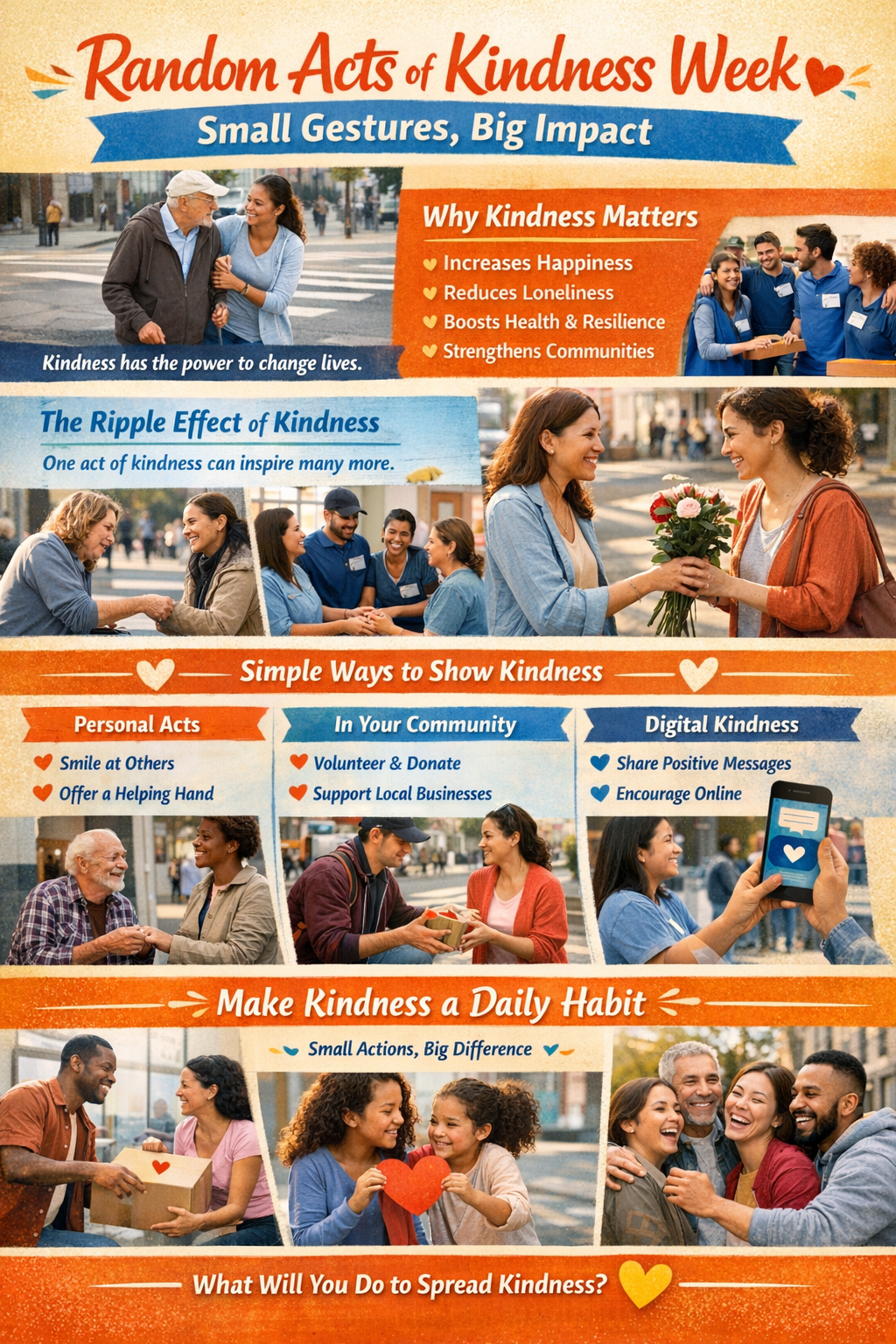
Every year, Random Acts of Kindness Week reminds us that kindness is one of the most powerful forces we possess — and one that costs nothing to give. In a world often filled with busy schedules, digital distractions, and daily stress, this special week encourages people to pause, look around, and intentionally brighten someone else’s day.
Kindness may seem simple, but its impact is profound. A thoughtful gesture, a caring word, or a moment of compassion can shift someone’s entire outlook. Random Acts of Kindness Week celebrates these moments and inspires individuals and communities to make kindness a daily habit rather than an occasional act.
The Meaning Behind Random Acts of Kindness Week
Random Acts of Kindness Week was created to promote compassion and inspire people to practice generosity without expectation of reward. The emphasis is not on recognition or publicity but on sincerity — doing something good simply because it is the right thing to do.
Unlike organized charity events, kindness during this week often happens quietly:
Anonymous good deeds
Unexpected help
Genuine encouragement
Simple human connection
These actions remind us that kindness doesn’t require wealth, status, or influence. Anyone, anywhere, can participate.
Why Kindness Is More Important Than Ever
Modern life can sometimes feel disconnected. Social media comparisons, fast-paced routines, and personal struggles can leave people feeling unseen or isolated. Kindness helps rebuild connection by reminding individuals that they are valued and not alone.
Studies have shown that acts of kindness can:
Increase happiness and life satisfaction
Lower feelings of loneliness
Strengthen emotional resilience
Improve physical health through reduced stress
Create stronger social bonds
When kindness becomes common, communities become safer, more supportive, and more understanding places to live.
The Ripple Effect of Kindness
One of the most beautiful aspects of kindness is its ability to multiply. A single act often inspires others to “pay it forward,” creating a chain reaction that spreads far beyond the original moment.
For example:
Someone receives unexpected help and later helps another person.
A compliment boosts confidence, encouraging kindness toward others.
A supportive message motivates someone during a difficult time.
Kindness travels in ways we may never see. A brief interaction today could influence decisions, attitudes, and relationships long into the future.
Everyday Opportunities for Kindness
Kindness does not need to be grand or dramatic. In fact, the smallest gestures are often the most meaningful because they show genuine awareness of others.
💛 Simple Personal Acts
Smile and make eye contact with people you encounter
Say “thank you” sincerely
Check in on a friend you haven’t spoken to recently
Offer patience during stressful situations
🏡 Kindness at Home
Listen without interruption
Express appreciation to loved ones
Help with chores without being asked
Write a heartfelt note of gratitude
🌎 Community Kindness
Volunteer your time or skills
Support local businesses
Donate unused items to those in need
Help someone carry groceries or navigate a challenge
💻 Digital Kindness
Share encouraging posts instead of negativity
Defend kindness in online discussions
Celebrate others’ successes
Send uplifting messages privately
Online spaces, often criticized for negativity, can become powerful platforms for encouragement when kindness leads the conversation.
The Science Behind Kindness
Kindness is not just emotionally rewarding — it is biologically beneficial. When people perform acts of kindness, the brain releases chemicals such as dopamine, serotonin, and oxytocin, which contribute to feelings of happiness, connection, and trust.
This neurological response explains why helping others often leaves people feeling energized and fulfilled. Scientists sometimes refer to this experience as the “helper’s high,” showing that kindness supports both mental and physical wellness.
Kindness in Challenging Times
Acts of kindness become especially meaningful during periods of hardship. Whether someone is dealing with loss, stress, financial difficulty, or emotional struggles, small gestures can provide comfort and hope.
You may never know what someone is facing internally. A kind word or thoughtful action can serve as a reminder that compassion still exists — and sometimes that reminder is enough to help someone keep going.
Teaching Kindness to Future Generations
Random Acts of Kindness Week also provides an opportunity to teach children and young adults the importance of empathy. When kindness is modeled consistently, it becomes part of a person’s character.
Parents, educators, and mentors can encourage kindness by:
Praising compassionate behavior
Encouraging sharing and cooperation
Teaching gratitude practices
Demonstrating respect in everyday interactions
Children who learn kindness early often grow into adults who value community, understanding, and inclusion.
Making Kindness a Year-Round Habit
The ultimate goal of Random Acts of Kindness Week is lasting change. While the celebration lasts only a week, its message encourages a lifelong commitment to compassion.
You can extend kindness beyond the week by:
Setting a daily kindness intention
Keeping a gratitude journal
Practicing patience during conflict
Looking for opportunities to help without being asked
Over time, kindness becomes less of an effort and more of a natural response.
The Lasting Power of One Kind Act
History and everyday life both show that change often begins with small actions. A single moment of compassion can restore faith, strengthen relationships, and inspire hope.
Kindness reminds us of our shared humanity. It bridges differences, softens hardships, and creates connections that words alone cannot express.
This Random Acts of Kindness Week, remember: you don’t need to change the entire world. You only need to change one moment for one person — and that moment may change everything.
Leave a Reply