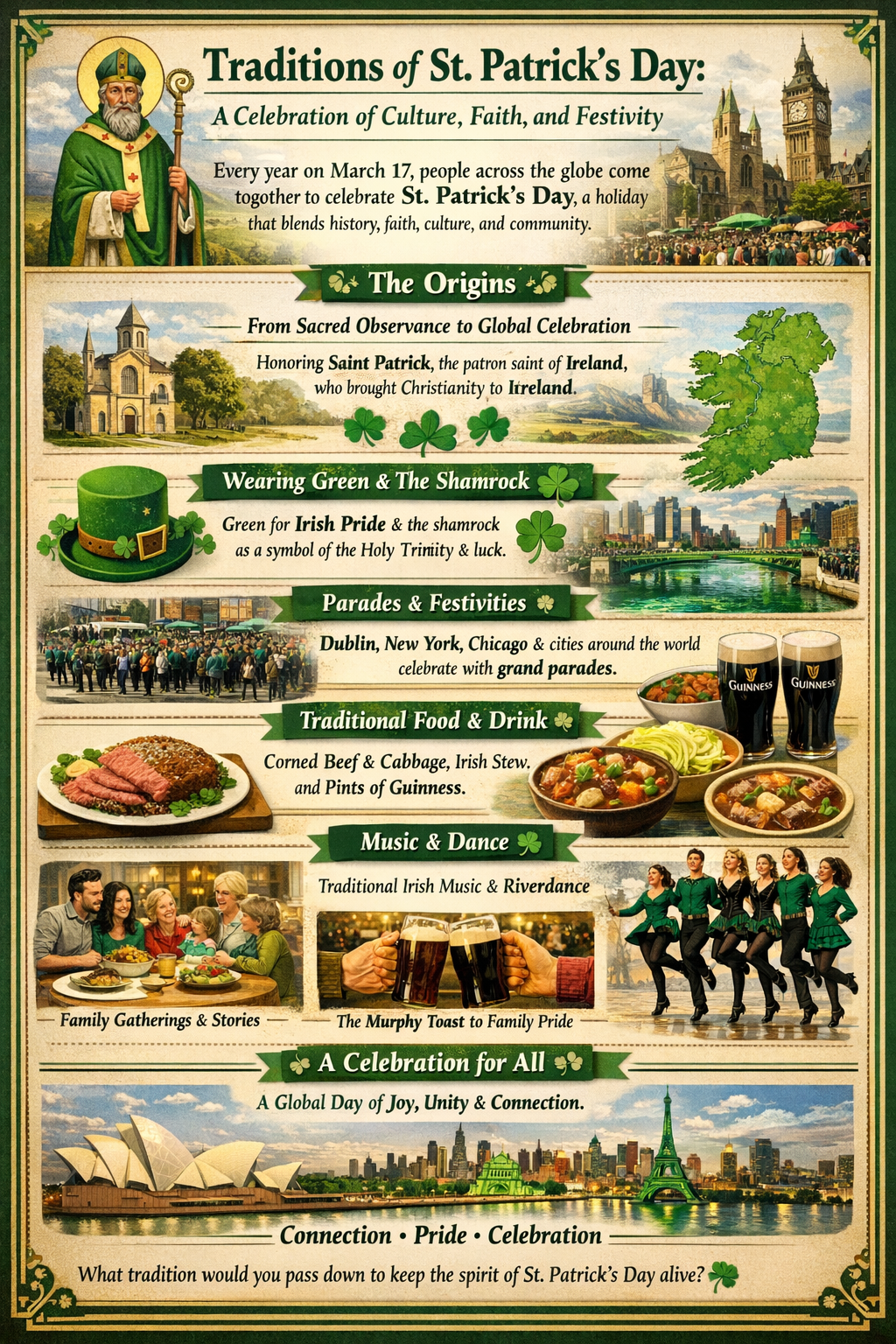
Every year on March 17, people across the globe come together to celebrate St. Patrick’s Day, a holiday that blends history, faith, culture, and community into one vibrant experience. What began as a solemn feast day honoring Saint Patrick has grown into a worldwide celebration of Irish identity—rich with traditions that continue to evolve while staying rooted in centuries of meaning.
The Origins: From Sacred Observance to Global Celebration
St. Patrick’s Day marks the death of Saint Patrick, the missionary credited with spreading Christianity throughout Ireland. For centuries, the day was observed primarily as a religious holiday. Families attended church, shared quiet meals, and reflected on faith.
It wasn’t until Irish immigrants carried their traditions to countries like the United States that the celebration began to transform. In these new lands, St. Patrick’s Day became a powerful expression of identity—especially for communities seeking connection, pride, and belonging in unfamiliar places.
The Evolution of Traditions
Wearing Green: Identity, Rebellion, and Belonging
While today it’s a fun and festive custom, wearing green has deeper historical roots. Originally, blue was associated with Saint Patrick, but green became a symbol of Irish nationalism during political struggles. Over time, it evolved into a universal sign of celebration.
Now, green is everywhere—clothing, accessories, decorations, and even food. It’s not just a color; it’s a shared language of joy and identity.
The Power of the Shamrock
The humble shamrock carries both spiritual and cultural significance. Its connection to the teachings of Saint Patrick makes it a symbol of faith, while its presence in Irish folklore ties it to luck and protection. Today, it’s one of the most recognizable icons of the holiday worldwide.
Parades: A Living Expression of Heritage
Modern St. Patrick’s Day parades are grand, energetic, and deeply symbolic. Cities like Dublin host multi-day festivals celebrating Irish art, music, and culture. In the United States, cities such as New York City and Chicago transform into green-filled spectacles.
These parades are more than entertainment—they are a tribute to resilience, immigration, and cultural pride. Generations march together, representing families, organizations, and shared history.
Food Traditions: A Blend of Old and New
Traditional Irish meals were simple and hearty, often centered around potatoes, bread, and meats. In Ireland, dishes like lamb stew and soda bread remain staples.
In contrast, Irish-American traditions introduced corned beef and cabbage—a meal born out of adaptation and necessity. Though not originally Irish, it has become synonymous with the holiday in places like the United States.
Food on this day is about more than taste—it’s about gathering, sharing, and remembering.
Music, Dance, and the Soul of Ireland
Irish culture is deeply rooted in storytelling, and music is one of its most powerful forms. On St. Patrick’s Day, traditional tunes fill homes, pubs, and streets. Instruments like fiddles and bodhráns create a rhythm that feels both ancient and alive.
Dance also plays a key role. Performances inspired by productions like Riverdance showcase precision, discipline, and cultural pride. These performances connect generations and bring history to life in motion.
Faith and Reflection in a Modern World
Despite the global celebrations, many still honor the religious significance of the day. Church services remain an important tradition, particularly in Ireland, where the spiritual roots of the holiday are still deeply respected.
For some, the day is a balance—celebration paired with reflection, joy grounded in gratitude.
Murphy Traditions on St. Patrick’s Day 🍀
For those who carry the Murphy name, St. Patrick’s Day often feels deeply personal. The surname Murphy—derived from Ó Murchadha, meaning “descendant of the sea warrior”—is one of the most widespread names in Ireland. With that history comes a strong sense of pride, identity, and connection.
A Name That Carries History
Murphy families often use this day to reflect on their lineage. Stories of ancestors who lived, struggled, and sometimes emigrated from Ireland are shared and preserved. It’s a day where history isn’t distant—it’s alive in conversation.
Generations at the Table
Food becomes a centerpiece for Murphy traditions. Families gather—sometimes across multiple generations—to share meals, laughter, and memories. Recipes may be passed down, slightly changed over time, but always carrying meaning.
For many Murphys, the table represents more than nourishment—it represents continuity.
The Murphy Toast
A common tradition among Murphy families is raising a toast—not just to the holiday, but to the name itself. It’s a moment of pride, of remembrance, and of unity.
Sometimes the toast is simple. Other times, it’s accompanied by stories, laughter, or even a few tears. Either way, it connects past and present in a meaningful way.
Wearing Heritage with Pride
While many wear green, Murphy families often take it a step further—custom shirts, family crests, or coordinated outfits that highlight their surname. It’s a visible way of honoring identity and celebrating together.
Music, Laughter, and Storytelling
If there’s one thing that defines Murphy gatherings, it’s the atmosphere. Music plays, stories are told, and laughter fills the room. Humor, resilience, and warmth—hallmarks of Irish culture—are on full display.
It’s not about perfection. It’s about presence.
Creating New Traditions
Modern Murphy families continue to build on the past. Whether it’s traveling to Ireland, documenting family history, or simply starting new rituals with younger generations, the tradition evolves.
Each year adds another layer to the story.
A Celebration That Belongs to Everyone
What makes St. Patrick’s Day so powerful is its inclusivity. You don’t have to be Irish—or a Murphy—to take part. The holiday has become a global symbol of joy, resilience, and connection.
From small family gatherings to massive public celebrations, the spirit remains the same: come together, honor the past, and celebrate the present.
More Than a Day—A Feeling
At its core, St. Patrick’s Day is about identity and belonging. It’s about remembering where you come from, appreciating where you are, and sharing that journey with others.
For Murphy families, it may carry an extra layer of meaning—but its message is universal.
Connection. Pride. Celebration.
Leave a Reply