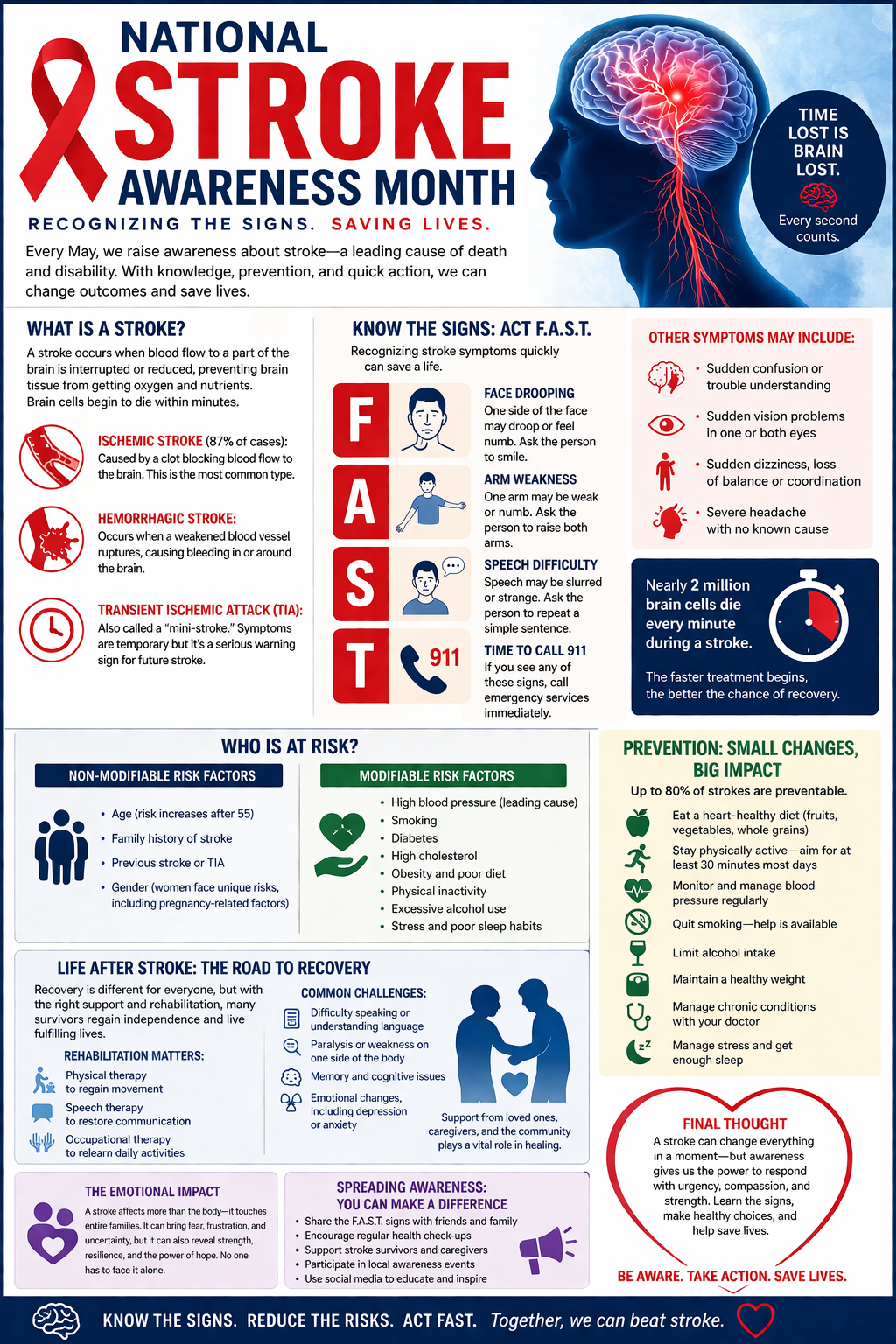
Every May, National Stroke Awareness Month serves as a powerful reminder that knowledge can save lives. A stroke can strike without warning, changing a life in seconds—but with awareness, prevention, and fast action, outcomes can be dramatically improved. This month is about more than statistics—it’s about people, families, and the strength to act when it matters most.
Understanding Stroke: A Race Against Time
A stroke occurs when the brain is deprived of oxygen-rich blood. Because brain cells begin to die within minutes, stroke is often described as a “brain attack.” The faster treatment begins, the better the chances of survival and recovery.
The Three Types of Stroke
Ischemic Stroke (87% of cases):
Caused by a clot blocking blood flow to the brain. This is the most common type and often linked to narrowed or blocked arteries.
Hemorrhagic Stroke:
Occurs when a weakened blood vessel ruptures, causing bleeding in or around the brain. High blood pressure is a major contributor.
Transient Ischemic Attack (TIA):
Often called a “mini-stroke,” TIAs are temporary but serious warning signs. Symptoms may go away quickly, but they should never be ignored—they often signal a future stroke risk.
The Urgency: Why Every Second Counts
When a stroke happens, nearly 2 million brain cells die every minute. That’s why immediate medical attention is critical. Treatments such as clot-busting medications or surgical procedures can significantly reduce damage—but only if administered quickly.
Delays in treatment can lead to:
Permanent brain damage
Loss of speech or mobility
Cognitive impairment
Death
Time lost is brain lost.
Recognizing the Signs: Think F.A.S.T.
Knowing the warning signs can empower you to act without hesitation:
F – Face Drooping: One side of the face may droop or feel numb. Ask the person to smile.
A – Arm Weakness: One arm may be weak or numb. Ask them to raise both arms.
S – Speech Difficulty: Speech may be slurred or strange. Ask them to repeat a simple sentence.
T – Time to Call 911: If any of these signs are present—even briefly—call immediately.
Additional Symptoms to Watch For:
Sudden confusion or trouble understanding
Sudden vision problems in one or both eyes
Sudden dizziness, loss of balance, or coordination
Severe headache with no known cause
Even if symptoms disappear, seek help right away—it could be a TIA.
Who Is at Risk?
Stroke does not discriminate—it can affect anyone at any time. However, certain factors increase risk.
Non-Modifiable Risk Factors:
Age (risk increases after 55)
Family history of stroke
Previous stroke or TIA
Gender (women face unique risks, including pregnancy-related factors)
Modifiable Risk Factors:
These are the ones you can take control of:
High Blood Pressure: The leading cause of stroke
Smoking: Doubles the risk
Diabetes: Damages blood vessels over time
High Cholesterol: Leads to artery blockages
Obesity and Poor Diet
Physical Inactivity
Excessive Alcohol Use
Stress and Poor Sleep Habits
Prevention: Small Changes, Big Impact
Up to 80% of strokes are preventable, making lifestyle choices incredibly powerful.
Steps You Can Take Today:
Eat a heart-healthy diet (low in sodium, rich in fruits, vegetables, and whole grains)
Stay physically active—aim for at least 30 minutes most days
Monitor and manage blood pressure regularly
Quit smoking—help is available, and it’s never too late
Limit alcohol intake
Maintain a healthy weight
Manage chronic conditions with your doctor
Preventing a stroke isn’t about perfection—it’s about consistency and commitment.
Life After Stroke: The Road to Recovery
A stroke doesn’t just impact the body—it affects every part of a person’s life. Recovery is often a long and emotional journey that requires patience, resilience, and support.
Common Challenges After a Stroke:
Difficulty speaking or understanding language
Paralysis or weakness on one side of the body
Memory and cognitive issues
Emotional changes, including depression or anxiety
Rehabilitation Matters:
Recovery often involves a team approach:
Physical therapy to regain movement
Speech therapy to restore communication skills
Occupational therapy to relearn daily activities
Support from loved ones and caregivers is essential—and so is hope. Many stroke survivors go on to lead meaningful, fulfilling lives.
The Emotional Impact: More Than a Medical Event
A stroke doesn’t just affect the individual—it touches entire families. It can bring uncertainty, fear, and grief for the life that once was. But it can also reveal strength, resilience, and the power of community.
For many, recovery becomes a story of perseverance—one step, one word, one day at a time.
Spreading Awareness: You Can Make a Difference
National Stroke Awareness Month is a call to action for everyone:
Share the F.A.S.T. signs with friends and family
Encourage loved ones to get regular health check-ups
Support stroke survivors and caregivers
Participate in local awareness events or fundraisers
Use social media to educate and inspire others
You don’t have to be a medical professional to save a life—you just need to recognize the signs and act quickly.
Final Reflection
A stroke can change everything in a moment—but awareness gives us the power to respond with urgency, compassion, and strength. This month, take the time to learn, to share, and to care.
Because when it comes to stroke, knowledge isn’t just power—it’s lifesaving.
Leave a Reply